

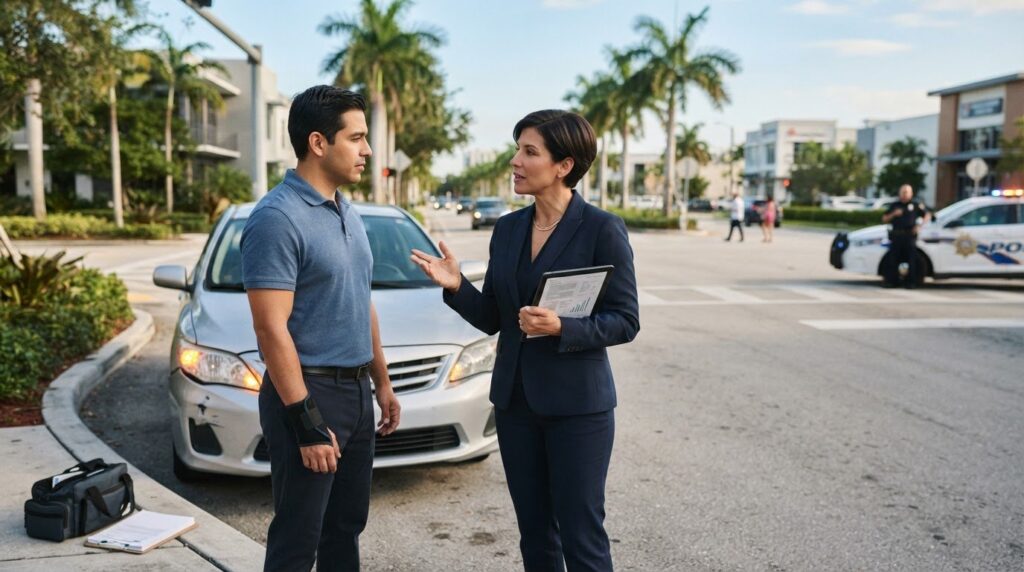

What if the steps you take after a crash matter as much as the insurance company’s first offer? When you’re hurt, it’s natural to worry about medical care, missed income, and what to say to an adjuster. A car accident lawyer in Florida can help protect your interests while you focus on recovery.
A stronger claim starts with careful documentation, not rushed negotiations. Get medical attention, keep records of your treatment and expenses, and preserve available crash evidence. Florida law sets deadlines and rules that may affect an injury claim, so acting promptly can help protect important evidence and your options.
This guide explains what to prioritize after a Florida crash, what can affect an injury claim, and how legal support may help with investigation, evidence, and insurer communications. Charles Injury Law represents people injured in motor vehicle accidents throughout Florida. The firm handles claims on a contingency-fee basis, so clients pay no attorney fees unless it recovers compensation.
Key Takeaways
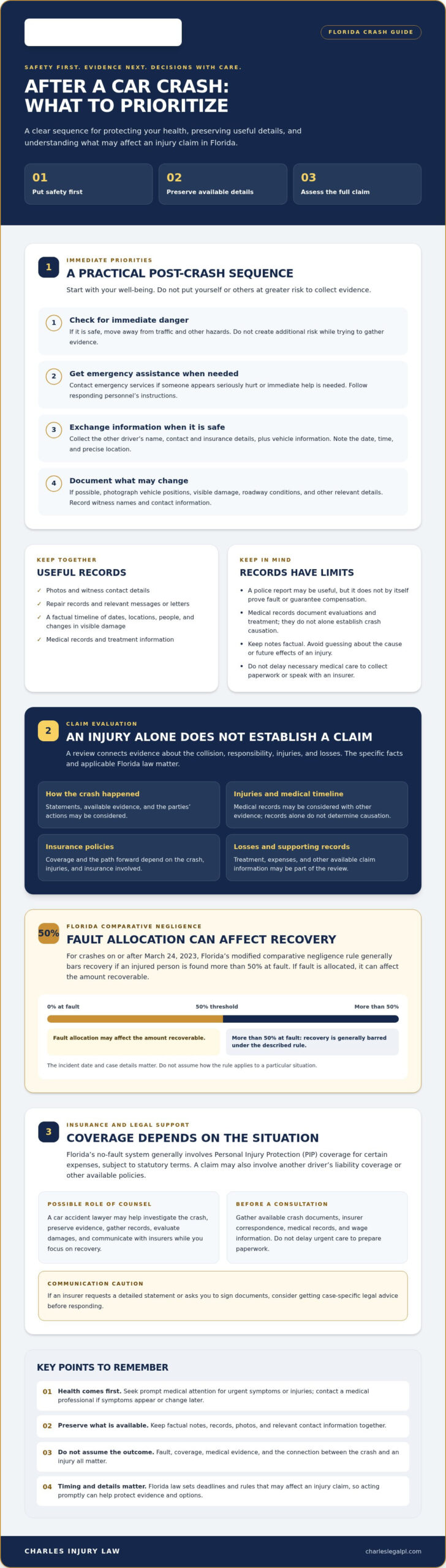
- Use an ordered post-crash checklist to prioritize safety, emergency help when needed, information exchange, and documentation.
- An injury alone doesn’t establish a legal claim; liability, insurance coverage, medical records, and the connection between the crash and your injuries all matter.
- A car accident lawyer in Florida may help organize evidence and handle insurer communications while you focus on recovery.
- Prepare for a legal consultation by gathering available crash documents, insurer correspondence, medical records, and wage information, without delaying urgent care.
- Learn how Personal Injury Attorney in Fort Lauderdale investigates Florida crash claims, preserves evidence, evaluates damages, and prepares to negotiate or litigate when necessary.
Florida Car Accident Steps: Safety and Documentation
Injuries, uncertainty, and insurance calls can feel overwhelming after a crash. Start with safety, then preserve what you can. These early details may help a car accident lawyer in Florida investigate what happened, but your health comes first.
- 1. Check for immediate danger. If it’s safe, move away from traffic and other hazards. Don’t put yourself or others at greater risk to gather evidence.
- 2. Get emergency assistance when needed. Contact emergency services if someone appears seriously hurt or immediate help is needed. Follow the instructions of responding personnel.
- 3. Exchange information. When it’s safe, collect the other driver’s name and contact and insurance details, along with vehicle information. Note the date, time, and precise location of the collision.
- 4. Document the scene. If possible, photograph vehicle positions, visible damage, relevant roadway conditions, and other details that may change. Write down witness names and contact information.
Keep your notes factual. Avoid guessing about what caused the crash or how an injury will affect you. If an insurer requests a detailed statement or asks you to sign documents, consider getting case-specific legal advice before responding. A Lawyer can advise on legal matters, but the right guidance depends on the facts of your case.
What information should you preserve after a Florida crash?
Save photographs, contact details, repair records, and relevant messages or letters when available. Keep a simple timeline with dates, locations, the people involved, witness information, and changes in visible vehicle damage. Organize materials in one place and retain copies. Crash documentation can help counsel investigate events and preserve relevant evidence. A police report may be useful, but it doesn’t by itself prove fault or guarantee compensation.
If the collision involved a pedestrian, details about the person’s location and the surrounding scene may be relevant. Learn more about pedestrian accident claims.
When should you seek medical care after a collision?
Seek prompt medical attention for urgent symptoms or injuries. If new or changing symptoms appear later, contact a medical professional rather than dismissing them. Medical records can document evaluations and treatment over time. They may be considered alongside other evidence, but documentation alone doesn’t establish that a collision caused a particular condition. Don’t delay necessary care to collect paperwork or speak with an insurer.
For support with a Florida car accident injury claim, Charles Injury Law investigates crashes, preserves evidence, gathers records, and communicates with insurers. The firm states that clients pay no attorney fees unless it recovers compensation. Call Now: (954) 390-2228 Available 24 Hours a Day, 7 Days a Week
How Florida Car Accident Injury Claims Are Evaluated
Medical records can show that you were examined and treated. They don’t, by themselves, establish who was legally responsible, whether the collision caused a particular condition, or what insurance may cover. Evaluating a claim means connecting evidence about the crash, fault, injuries, and losses. Those questions depend on the specific facts and applicable Florida law.
A review may consider how the collision occurred, statements and other available evidence, the parties’ actions, applicable insurance policies, and the medical timeline. For crashes on or after March 24, 2023, Florida’s modified comparative negligence rule generally bars recovery if an injured person is found more than 50% at fault. If fault is allocated, it can affect the amount recoverable. The incident date and case details matter, so don’t assume how the rule applies to your situation.
How do fault and insurance coverage affect a claim?
Florida’s no-fault system generally involves Personal Injury Protection (PIP) coverage for certain expenses, subject to statutory terms. A claim may also involve questions about another driver’s liability coverage or other available policies. The applicable coverage and path forward depend on the crash, the injuries, and the insurance involved. A car accident lawyer in Pembroke Park can review those details rather than relying on assumptions about what a policy covers.
A crash report can be one source of information, but it doesn’t alone resolve liability or prove entitlement to compensation. The Florida Department of Highway Safety and Motor Vehicles explains how to obtain a Florida traffic crash report. Counsel may compare it with other evidence, such as witness accounts, photographs, medical records, and vehicle damage.
Which losses may be considered in an injury claim?
Depending on the evidence and applicable law, claimed losses may include documented medical expenses, anticipated future care, lost wages, and reduced ability to earn income. Keep bills, treatment records, and wage information where available. Future costs and earning capacity require support; they shouldn’t be treated as established simply because they’re expected or feared.
Pain and suffering and emotional distress also require individualized evaluation. Their consideration can depend on the injury, its effects, supporting evidence, and the legal requirements that apply. No record or category of loss guarantees a particular result.
If you’re unsure how fault, coverage, or documented losses fit together, case-specific legal guidance can help clarify the issues. Charles Injury Law investigates motor vehicle crashes, gathers relevant records, evaluates damages, and communicates with insurers. The firm can also negotiate or litigate when necessary. Its representation is on a contingency-fee basis, meaning clients pay no attorney fees unless the firm recovers compensation.
When a Car Accident Lawyer Can Help with Insurers and Evidence
Some car accident claims may seem straightforward at first. But managing medical records, tracking expenses, responding to insurer requests, and assessing how the crash affected you can become difficult while you’re recovering. If fault is disputed, injuries continue, or an insurer questions the claim, the process may call for more than routine paperwork.
Handling a claim alone means keeping documents organized, following communications, and evaluating how the collision affected your health and finances. With attorney support, counsel can investigate the crash, preserve relevant evidence, gather medical records, and communicate with insurers. Each case is different. Strategy and potential claim value depend on the evidence, the injury’s impact, available insurance, and applicable Florida law.
What does a car accident lawyer do during a claim?
Counsel may review crash materials, locate and preserve evidence, gather treatment records, and consult qualified professionals when appropriate. An attorney can also manage insurer communications and evaluate documented losses, including the potential need for future care. That work helps build an evidence-based claim, but it doesn’t guarantee a particular outcome. Learn more about Florida car accident representation.
If you’re unsure how to respond to an insurer or what records to provide, a car accident lawyer in Florida can review the circumstances and help you understand your options before you make decisions about the claim.
How can you assess whether legal help fits your situation?
Consider whether your injuries are serious or ongoing, the facts of the crash are disputed, the insurer is challenging your account, or claim management is taking time away from recovery. These are practical reasons to seek guidance, not a guarantee that a particular legal approach is necessary. Searches such as “lawyers for auto accidents” or “auto accident lawyers near me” may help you identify options to evaluate.
Ask what the lawyer will handle, how updates will be shared, and how fees work. Charles Injury Law states that clients pay no attorney fees unless the firm recovers compensation. This doesn’t mean every case is accepted. If you’re searching for a “personal injury firm near me,” compare the firm’s stated services and communication practices. You may also see searches for “attorneys for personal injuries,” “attorneys personal injury,” “injury lawyer near me,” or “personal injury lawyer near me.” Focus on whether the lawyer can assess your specific crash and explain next steps clearly.
Charles Injury Law investigates crashes, preserves evidence, communicates with insurers, and can negotiate or litigate when necessary. A conversation with counsel can help you understand whether support fits your situation.
How to Prepare for a Consultation with a Florida Car Accident Attorney
A consultation is easier when you have a few key details ready, but don’t postpone urgent medical care or delay asking for legal guidance because a document is missing. Start with what you have. A clear timeline and a short list of questions can help a car accident lawyer in Florida understand your concerns and explain possible next steps.
What documents and details may be useful to gather?
Bring or make available any records connected to the crash and its effects. You don’t need to organize everything perfectly. These materials may help counsel understand the situation and identify what else could be relevant.
- Crash report or other available crash documents, photographs, and vehicle information.
- Names and contact details for witnesses or people involved, if available.
- Medical records, appointment details, and information about treatment received so far.
- Insurance policies, claim information, and letters, emails, or messages from insurers.
- Repair records, bills, and information about missed work or changes in income.
If a record is still being prepared or you can’t locate it, say so. Counsel can discuss what may be obtained or reviewed later. Read about personal injury claim support to learn more about the firm’s practice.
What should you ask about fees and communication?
Use the conversation to understand how the firm would approach your case. Ask who will communicate with you, how often you can expect updates, what investigation may be needed, and how questions should be raised. You can also ask what the potential next steps are and what information would help assess your claim.
Discuss fees before making a decision. Charles Injury Law states that clients pay no attorney fees unless the firm recovers compensation. Ask to review the written fee agreement so you understand its terms, including any costs or expenses that may be addressed separately. Don’t assume that “no attorney fees unless recovery” means there can never be other charges.
Online searches such as “injury lawyer near me” or “personal injury lawyer near me” can help you find options, but focus on whether the lawyer listens, explains the process clearly, and answers your questions directly. Bring a written list so important concerns don’t get lost during the discussion. If you’re ready to talk about your crash, contact Charles Injury Law.
Call Now: (954) 390-2228 Available 24 Hours a Day, 7 Days a Week
Get Help from Charles Injury Law After a Florida Car Accident
After a crash, medical records, repair information, insurer messages, and questions about missed work can quickly pile up. Charles Injury Law represents people injured in motor vehicle accidents throughout Florida, including in Fort Lauderdale and in Miami. The firm can review the available information and explain how investigation and legal advocacy may fit your situation.
What happens when Charles Injury Law reviews an accident claim?
The firm’s stated process may include investigating the crash, preserving relevant evidence, gathering medical records, evaluating damages, and communicating with insurers. These steps help build a clearer picture of what happened and how the injuries affect you. The firm may also obtain expert opinions when appropriate.
Negotiation or litigation depends on the facts and applicable law in Florida. No approach can guarantee a particular result. If an insurer disputes responsibility, challenges the connection between the crash and an injury, or questions the documented losses, a careful review can help identify the issues that need attention. Learn more about Florida car accident lawyer services.
A car accident lawyer in Pembroke Park should be prepared to explain the claim process in plain language. Charles Injury Law states that clients receive direct attorney communication and responsive updates. You can ask what evidence may be needed, how insurer contact will be handled, and what could happen if a negotiated resolution isn’t reached. The firm is prepared to litigate when necessary, while decisions about a specific claim depend on its circumstances.
How can you contact the firm and discuss fees?
Charles Injury Law is available 24 hours a day, 7 days a week. During an initial contact, you can describe the collision, your current concerns, and any records already available. You can also ask how the firm would evaluate the matter and what information may help with that review. You don’t need to have every document in hand to start the conversation.
The firm states that clients pay no attorney fees unless it recovers compensation. Ask to review the written fee agreement and clarify its terms, including how any case-related costs are addressed. This gives you a chance to understand the arrangement before deciding whether to move forward.
If you’re ready to discuss your accident and possible next steps, contact Charles Injury Law. The firm’s role is to investigate the claim, protect relevant evidence, and pursue accountability based on the facts, without promising a particular outcome.
Call Now: (954) 390-2228 Available 24 Hours a Day, 7 Days a Week
Take the Next Step Toward Protecting Your Claim
After a Florida crash, prioritize medical care and keep available records of treatment, expenses, missed work, and insurer communications. A claim depends on its evidence, the injuries involved, available coverage, and applicable Florida law. If managing those details feels like too much, a car accident lawyer in Pembroke Park can review your situation and explain possible next steps.
Charles Injury Law investigates crashes, preserves evidence, gathers records, evaluates damages, and communicates with insurers. The firm also states that clients receive direct attorney communication and responsive updates. It reports millions of dollars recovered for injured clients, but past results don’t guarantee a particular outcome. The firm’s contingency-fee arrangement means clients pay no attorney fees unless it recovers compensation; review the written fee agreement to understand its terms.
You don’t have to sort through the process alone. Call Now: (954) 390-2228 Available 24 Hours a Day, 7 Days a Week to discuss your crash and ask questions about your options. A clear conversation can help you decide what comes next, while you focus on your recovery.
Frequently Asked Questions
Do I need a car accident lawyer after a crash in Florida?
Not every crash requires legal representation, but getting advice may help if you’re injured, fault is disputed, or an insurer questions your claim. A car accident lawyer in Pembroke Park can review the available evidence, insurance, and medical records and explain possible next steps. Consider seeking guidance if managing communications and documentation is becoming difficult while you recover.
How soon should I contact a car accident lawyer in Florida?
Consider contacting a lawyer promptly, especially if you have injuries, unanswered questions about coverage, or concerns that evidence could become harder to locate. Early guidance may help you understand what records to preserve and how to handle insurer communications. Don’t delay urgent medical care while gathering paperwork. The timing and legal options for a claim depend on its facts and applicable Florida law.
What should I bring to a car accident lawyer consultation?
Bring whatever you have, but don’t postpone asking for guidance because a document is missing. Useful items may include crash reports, scene and vehicle photographs, insurance information, insurer letters or messages, medical records, repair documents, and wage information. A brief timeline of the collision, treatment, and missed work can also help counsel understand your concerns and identify questions that need further review.
How do Florida no-fault and PIP rules affect a car accident claim?
Florida’s no-fault system generally involves Personal Injury Protection, or PIP, which may cover certain expenses after a crash under applicable rules. It doesn’t necessarily resolve who caused the collision or determine every available source of compensation. Coverage, eligibility, and the path for pursuing a claim depend on the policy, injuries, and circumstances. A case-specific review can clarify how Florida law applies.
What compensation may be available after a Florida car accident?
Depending on the evidence, applicable law, and available coverage, a claim may involve documented medical expenses, future medical care, lost wages, or reduced earning capacity. Pain and suffering and emotional distress may also be considered, but require individual evaluation. Keep relevant bills, treatment records, and wage information. No category of loss guarantees compensation, and the potential recovery depends on the facts of the claim.
How do car accident lawyers charge for their services?
This is a contingency-fee arrangement. Before deciding whether to hire a lawyer, review the written fee agreement and ask how it addresses case-related costs or expenses. Don’t assume that no attorney fees unless recovery means there can never be other charges. The agreement’s terms control.
Can I still speak with a lawyer if an insurance company has contacted me?
Yes. An insurer’s contact doesn’t prevent you from seeking legal advice. A lawyer can review the communications and help you understand what information is being requested and how to respond. Avoid guessing or speculating about disputed details. Charles Injury Law represents injured clients throughout Florida, including in Fort Lauderdale, in Miami, in West Palm Beach, in Boca Raton, in Delray Beach, in Boynton Beach, in Lake Worth, in Orlando, and in Tampa.
Disclaimer
The information provided on this blog is for general informational purposes only and does not constitute legal advice. Viewing this content does not create an attorney-client relationship with the firm. You should not act or rely on any information contained herein without seeking legal advice from a qualified attorney regarding your individual situation.