

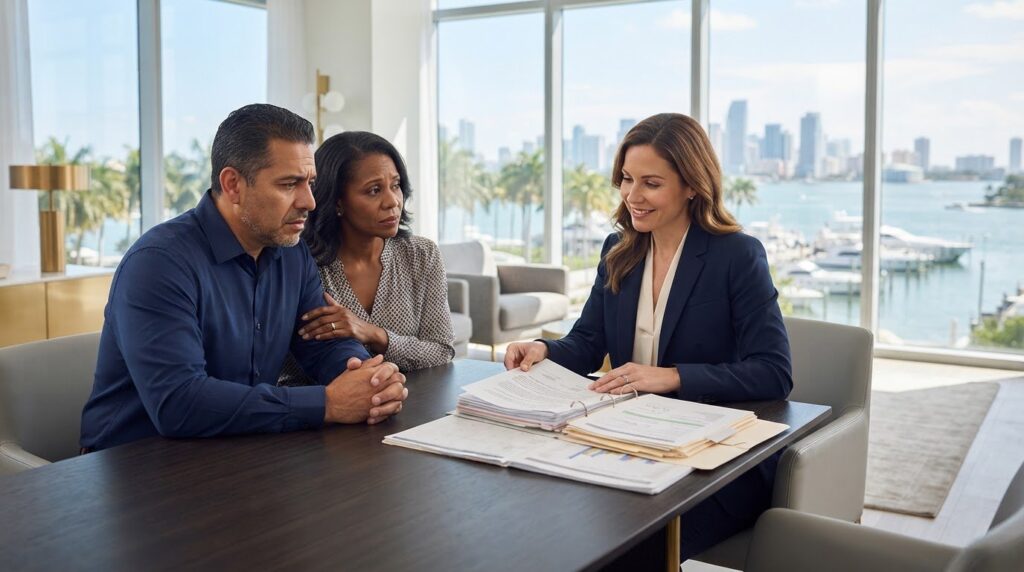
If you’re asking, “Do I need lawyer for foreclosure?” the answer depends on the stage of the case and the legal issue involved. In Florida, a homeowner generally has 20 days after being served with a foreclosure complaint and summons to file a written response. Don’t ignore court papers or assume the matter can wait. Promptly ask qualified Florida counsel to review the documents and explain what dates and requirements apply to your situation.
It’s understandable to worry about losing your home, missing a deadline, or choosing counsel whose practice doesn’t fit your needs. This article explains what to organize before seeking advice, what to ask in a consultation, and how to distinguish foreclosure defense from a possible foreclosure-sale surplus issue. Personal Injury Attorney in Fort Lauderdale represents injury clients throughout Florida, including Fort Lauderdale, Miami, West Palm Beach, Boca Raton, Delray Beach, Boynton Beach, Lake Worth, Orlando, and Tampa. Its listed services focus on personal injury, not foreclosure defense. Confirm the firm’s current scope before contacting it about a surplus question. Call Now: (954) 390-2228 Available 24 Hours a Day, 7 Days a Week
Key Takeaways
- Whether you need lawyer for foreclosure depends on the issue and the stage of the case. Look for a lawyer whose practice includes that specific matter.
- Organize foreclosure papers, relevant dates, and key facts before seeking advice. This helps you explain what has happened and ask focused questions.
- Compare lawyers based on relevant experience, communication, the scope of representation, and written fee terms. Asking each lawyer the same questions makes comparisons easier.
- Foreclosure defense and foreclosure-sale surplus matters are different. Charles Injury Law’s listed services focus on personal injury, not foreclosure defense. Confirm its current scope before contacting the firm about a surplus issue.
- Personal injury and auto accident searches describe different legal needs from foreclosure searches. Choose counsel based on the issue you need addressed.
Need a Lawyer for Foreclosure in Florida? Start by Identifying Your Situation
Foreclosure papers can make the next step feel unclear. The right legal help depends on what’s happening and how far the matter has progressed. If you’re searching “need lawyer for foreclosure,” first identify whether you need help responding to a case, understanding a possible sale, or asking about funds after a sale.
Foreclosure defense and surplus-funds assistance are separate legal matters. Foreclosure defense addresses a pending action and the homeowner’s position in that case. Surplus-funds assistance concerns a possible claim after a foreclosure sale. A lawyer’s experience with one doesn’t automatically establish experience with the other. The legal process of foreclosure can vary by jurisdiction. Use general overviews for background, not as a substitute for advice about a Florida matter.
Which foreclosure problem are you trying to solve?
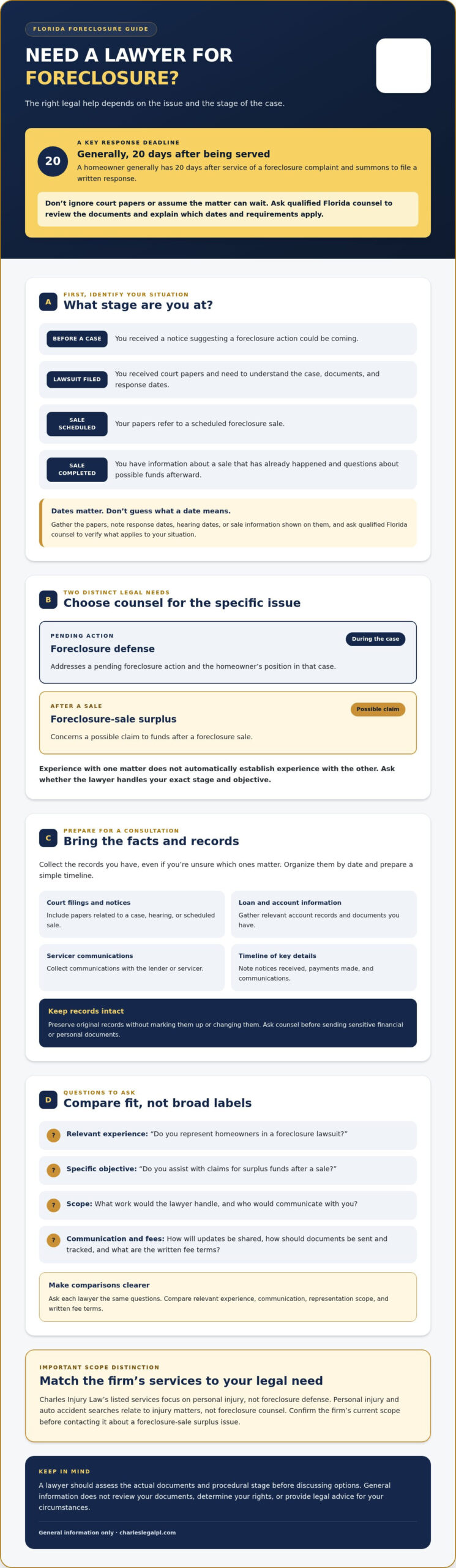
Start with the documents and the current stage. You may have received a notice suggesting a foreclosure action could be coming, a filed lawsuit, papers referring to a scheduled sale, or information about a sale that has already happened. Each situation raises different questions and may call for different counsel.
Gather every document you received. Note response dates, hearing dates, or sale information printed on the papers. Don’t assume what a date means or rely on a general online explanation. Promptly ask qualified Florida counsel to review the documents and help verify any dates that may affect your situation.
Why the type of lawyer matters
Ask directly whether the lawyer handles your exact stage and objective. For example, ask, “Do you represent homeowners in a foreclosure lawsuit?” or “Do you assist with claims for surplus funds after a sale?” Find out what work the lawyer would handle and who would communicate with you. Clear answers help you assess whether the practice fits your problem, without relying on broad labels or promises.
This article provides general information only. It doesn’t review your documents, determine your rights, or provide legal advice for your circumstances.
Charles Injury Law’s listed services focus on personal injury, not foreclosure defense. Confirm the firm’s current scope before contacting it about a foreclosure-sale surplus issue. Personal injury and auto accident searches relate to injury matters, not foreclosure counsel.
Call Now: (954) 390-2228 Available 24 Hours a Day, 7 Days a Week
What a Florida Foreclosure Lawyer Can Assess Before You Decide
A consultation gives you a chance to explain what has happened, share relevant records, and ask focused questions. It also helps counsel understand which issue you need addressed. A lawyer may review loan and account information, communications with the servicer, court filings, notices, and any documents concerning a scheduled or completed sale. Which records matter depends on your circumstances.
A lawyer should assess the actual documents and procedural stage before discussing options. Questions for review may include whether the records appear complete, what the court papers say, what stage the case has reached, and whether a potential response or another path should be explored. These are topics to discuss, not promises that a particular option applies or will produce a certain result. The Consumer Financial Protection Bureau offers general information about consumer rights in foreclosure. Individualized guidance requires a review of your situation.
If you’re searching “need lawyer for foreclosure,” use the consultation to clarify more than the legal issue. Ask how the lawyer will communicate, how you’ll receive case updates, and how to send and track documents. Clear expectations can help you stay organized as the matter moves forward.
Documents and details to gather for a consultation
Collect the records you have, even if you’re unsure which ones matter. Organize them by date and prepare a simple timeline of notices received, payments made, and communications with the lender or servicer. Preserve original records without marking them up or changing them. Before sending sensitive financial or personal documents, ask counsel which materials are needed and how to share them securely.
- Notices, letters, and other loan communications.
- Court papers, including documents showing scheduled events.
- Payment records and notes of calls or other conversations.
- Property-sale documents, if a sale has been scheduled or completed.
Don’t assume a document is unimportant because it looks routine. Let counsel decide what bears on the questions you need answered.
Questions to ask about experience and case handling
Be direct. Ask whether the lawyer handles your specific stage and issue, and what the proposed representation would cover. Then ask who will be your main contact, how updates are provided, and how to send urgent questions. Before deciding to retain counsel, request a clear explanation of the fee arrangement, any expenses, and the work included in the engagement.
Those answers help you compare fit and communication, not predict an outcome. For a foreclosure matter, seek advice from qualified Florida counsel whose practice includes the issue you’re facing.
Call Now: (954) 390-2228 Available 24 Hours a Day, 7 Days a Week
How to Compare Foreclosure Lawyers Without Relying on Promises
Choosing counsel is not a contest in who sounds most certain. Compare whether a lawyer handles your specific foreclosure issue, explains the proposed work clearly, communicates in a way you can follow, and provides understandable written fee terms. If you’re asking, “Do I need lawyer for foreclosure?” use consultations to assess fit, not to chase a guaranteed result.
Be cautious if someone promises a particular outcome, makes dramatic claims without reviewing your documents, or pressures you to sign before you understand the agreement. A responsible lawyer should explain what can be assessed, what remains uncertain, and what the representation will and won’t cover. The Florida Bar foreclosure information can provide general background, but it can’t evaluate your individual case.
Check whether the lawyer handles your exact foreclosure issue
Ask about experience with your stage, the documents you have, and the result you’re seeking. Confirm directly whether the lawyer represents homeowners defending foreclosure actions, handles post-sale surplus matters, or both. General real estate experience alone doesn’t establish that a lawyer takes on your particular foreclosure issue. Ask for a plain-language explanation of the proposed work before deciding.
Compare communication, fees, and written terms
Use the same questions in each consultation, then record the answers. This makes differences easier to spot and gives you something concrete to review before retaining counsel.
| Criteria | Questions to ask | Consultation notes |
|---|---|---|
| Relevant experience | Do you handle my specific stage and issue in Florida? | ________________ |
| Scope of work | What will you handle, and what is outside the engagement? | ________________ |
| Communication | Who will be my main contact? How will updates and urgent questions be handled? | ________________ |
| Fees and costs | How are fees and costs handled? Can you explain the terms in writing? | ________________ |
Before signing, read the engagement agreement carefully. Check that it matches what you understood about the work, fees, costs, and communication. Ask for clarification on any unclear term. If the answers don’t address your objective, keep looking for counsel whose practice fits it.
If your question concerns possible foreclosure-sale surplus assistance, confirm whether Charles Injury Law currently handles that issue before reaching out. The firm’s listed services focus on personal injury, not foreclosure defense. For that limited inquiry, you can contact Charles Injury Law to ask about its current scope. Call Now: (954) 390-2228 Available 24 Hours a Day, 7 Days a Week
What to Do Now if You Received Florida Foreclosure Papers
Receiving foreclosure papers can feel overwhelming. Focus first on preserving the information and getting advice specific to your situation. Don’t assume a notice, court filing, or lender communication all require the same response. The documents and their dates matter. Promptly ask qualified Florida counsel to review them and explain what questions need attention.
A practical first-response checklist
Keep the papers together and make a record of what arrived and when. A clear file can help a lawyer understand the sequence without relying on memory.
- Save every notice, envelope, court document, and relevant message or letter. Keep copies, and don’t alter the originals.
- Write down when and how each item arrived, such as by mail or personal delivery, if you know.
- Note any hearing, response, or sale dates printed in the documents. Ask counsel to help verify what they mean and whether they affect your situation.
- Prepare a brief timeline of key events and a short list of questions you want answered.
Use the court name, case number, and other identifying details shown on your papers when asking about the case. Rely on the documents themselves rather than guessing which case or court is involved.
Avoid assumptions while seeking advice
A lender’s letter, a filed lawsuit, and a sale notice may call for different questions. Don’t assume that calling the lender pauses a court case, changes a scheduled date, or resolves what the court papers require. Likewise, don’t ignore papers or sign, pay, or file anything based only on a general online explanation. First seek individualized legal guidance from a Florida lawyer who reviews the records.
If a date appears on the papers, raise it promptly when contacting counsel. Ask what the document is, what the date refers to, and what next steps may apply to your circumstances. A lawyer can’t assess those questions accurately from a summary alone if the underlying records haven’t been reviewed.
Charles Injury Law’s listed services focus on personal injury, not foreclosure defense. If your question is specifically about a possible foreclosure-sale surplus, confirm whether the firm currently handles that issue before relying on it for assistance. You may contact Charles Injury Law to ask about its current scope, but this is not an invitation to seek foreclosure-defense representation.
Call Now: (954) 390-2228 Available 24 Hours a Day, 7 Days a Week
Choose the Right Next Step: Foreclosure Defense or Sale-Surplus Help
The right next step depends on what you’re trying to address. Defending an active foreclosure case and asking about possible funds after a foreclosure sale are distinct legal issues. A lawyer who handles one may not handle the other. If you’re searching “need lawyer for foreclosure,” match the lawyer’s confirmed practice to your specific objective before deciding whom to contact.
Be clear about the firm’s scope, too. A planned article about Florida foreclosure-sale surplus does not establish that the firm currently represents people in surplus matters. Don’t assume the firm handles either issue, and don’t interpret general legal experience as proof of foreclosure-specific representation.
When the issue is defending a foreclosure case
If you’ve received foreclosure papers or are facing a pending case, seek a Florida lawyer whose confirmed practice includes foreclosure defense. Explain what stage the case has reached and ask whether the lawyer can review your specific documents. Ask what the proposed representation would cover and how the lawyer will communicate about your matter. Experience in an unrelated field doesn’t establish experience defending foreclosure cases.
When the question involves surplus after a foreclosure sale
A surplus question concerns a possible issue after a foreclosure sale, not the defense of a pending foreclosure lawsuit. The facts, records, and legal questions may differ. Don’t assume that funds are available, that you qualify to claim them, or that a particular firm handles these matters. Any explanation of Florida procedures, eligibility, or timing should be checked against current authoritative sources before you rely on it.
For a question specifically about foreclosure-sale surplus, you may contact Charles Injury Law to ask whether it currently handles that issue and whether your circumstances fit its scope. The firm’s listed information does not confirm that service, and no recovery is guaranteed. If the firm can’t assist, seek counsel whose confirmed practice includes the issue you need addressed.
Personal injury and auto accident searches describe injury-related legal needs, not foreclosure representation. Choose counsel based on the legal issue, not a keyword or broad practice label.
Call Now: (954) 390-2228 Available 24 Hours a Day, 7 Days a Week
Take Your Next Step With the Right Counsel
The right legal help depends on your foreclosure stage and goal. Keep your documents organized, verify dates with qualified Florida counsel, and compare lawyers based on relevant foreclosure experience, clear communication, and written representation terms. If you’re searching “need lawyer for foreclosure,” make sure the lawyer handles your specific issue, whether that means defending a case or asking about a possible post-sale surplus.
Charles Injury Law represents injury clients throughout Florida, including Fort Lauderdale, Miami, West Palm Beach, Boca Raton, Delray Beach, Boynton Beach, Lake Worth, Orlando, and Tampa. The firm’s listed services focus on personal injury, not foreclosure defense. Its current scope for foreclosure-sale surplus matters must be confirmed. Don’t assume representation or a particular outcome.
Call Now: (954) 390-2228 Available 24 Hours a Day, 7 Days a Week
Careful questions and the right documents can help you take a more informed next step. If you need foreclosure counsel, contact a Florida lawyer whose confirmed practice includes your issue. For an injury matter, contact Charles Injury Law to ask about its personal injury services.
Frequently Asked Questions
Do I need a lawyer for foreclosure in Florida?
Not every situation has the same answer, but a Florida lawyer who handles foreclosure matters can review your documents and explain questions specific to your case. If you’re searching “need lawyer for foreclosure,” consider the stage of the matter, the papers you received, and your goal. A threatened action, filed case, scheduled sale, or post-sale question may call for different legal experience. General information can’t replace individualized advice.
When should I contact a Florida foreclosure lawyer?
Contact qualified Florida counsel promptly if you receive court papers, a notice referring to a sale, or another communication you don’t understand. Preserve the documents and note any dates printed on them. Ask the lawyer to review the actual records and explain what those dates mean for your situation. Don’t rely on a general online source to interpret a court document or determine what action may be appropriate.
Can a lawyer stop a foreclosure sale in Florida?
No lawyer can promise that a foreclosure sale will be stopped. A lawyer whose practice includes Florida foreclosure defense can review the case stage, court documents, and relevant facts, then explain whether any options may apply. The answer depends on the individual matter and requires document review. Be cautious of anyone guaranteeing a specific result or urging you to sign an agreement before explaining the proposed work and its limits.
What documents should I bring to a foreclosure consultation?
Bring the documents you have, including court papers, notices, envelopes, loan or servicer communications, payment records, and any papers referring to a scheduled or completed sale. Prepare a dated timeline of when documents arrived, payments made, and important communications. Keep originals unchanged, and ask the lawyer how to share sensitive records. Include a list of questions and note any hearing or sale dates shown in the papers.
How do I choose a foreclosure defense lawyer in Florida?
Ask whether the lawyer handles your specific stage of foreclosure defense in Florida and will review your actual documents. Compare the proposed scope of representation, who will communicate with you, how updates are provided, and the written explanation of fees and costs. Read the engagement agreement before signing. A lawyer should explain uncertainties and limits, not promise a particular outcome or pressure you to make a quick decision.
What happens if my home has already been sold at foreclosure?
A completed sale raises different questions from defending an active foreclosure case. Gather the sale-related documents and promptly ask qualified Florida counsel to review them. If you’re asking about possible surplus funds, don’t assume funds are available or that you’re eligible to claim them. The relevant facts, records, and applicable procedures need to be checked for your specific circumstances. General information can’t determine your rights or next steps.
Disclaimer
The information provided on this blog is for general informational purposes only and does not constitute legal advice. Viewing this content does not create an attorney-client relationship with the firm. You should not act or rely on any information contained herein without seeking legal advice from a qualified attorney regarding your individual situation.