


A foreclosure sale can leave money behind, but that doesn’t mean it automatically reaches the former homeowner. If you’re trying to get surplus funds you are owed from foreclosure sale proceeds, the answer depends on more than the sale price. In Florida, ownership and the claims of subordinate lienholders can affect who receives the remaining money.
It’s understandable to want a clear answer about whether funds remain, who has priority, and how quickly you need to act. This guide explains what foreclosure surplus funds are and how Florida law addresses ownership and competing claims. It also covers records to gather and why recovery offers deserve careful review.
Personal Injury Attorney in Fort Lauderdale represents people injured in motor vehicle accidents, pedestrian incidents, and premises-liability cases. The firm serves clients in Fort Lauderdale, Miami, West Palm Beach, Boca Raton, Delray Beach, Boynton Beach, Lake Worth, Orlando, and Tampa. People searching for a personal injury firm near me, attorneys for personal injuries, attorneys personal injury, an injury lawyer near me, a personal injury lawyer near me, lawyers for auto accidents, or auto accident lawyers near me can learn about the firm’s injury services through its website.
Start by gathering the foreclosure case information, proof of ownership, sale details, and notices about liens or judgments. The right next steps depend on the specific sale and claims involved. Knowing those details can help you understand what questions the records raise and protect your opportunity to pursue any surplus that may be yours.
Key Takeaways
- A foreclosure sale price above the mortgage balance doesn’t automatically determine who receives any remaining funds.
- Florida law and the foreclosure record help shape eligibility and priority, especially when subordinate lienholders also claim an interest.
- To understand what surplus may be available, review ownership records, sale details, and notices about claims.
- Gather the foreclosure case number and relevant documents before deciding what steps to take.
- For help with a motor vehicle accident or another injury matter, Call Now: (954) 390-2228 Available 24 Hours a Day, 7 Days a Week.
What Are Foreclosure Sale Surplus Funds in Florida?
Foreclosure sale surplus funds are proceeds potentially left after a foreclosure sale pays the foreclosing creditor and other valid claims, subject to Florida law and the court’s determination of who is entitled to the remainder.
A property selling for more than the mortgage balance does not automatically mean the former owner will receive the difference. The sale price is only one part of the picture. The amount potentially available for distribution depends on the claims against the property, their legal priority, and the records in the foreclosure case. To understand how those issues arise, it helps to review the general foreclosure process.
How can a foreclosure sale create excess proceeds?
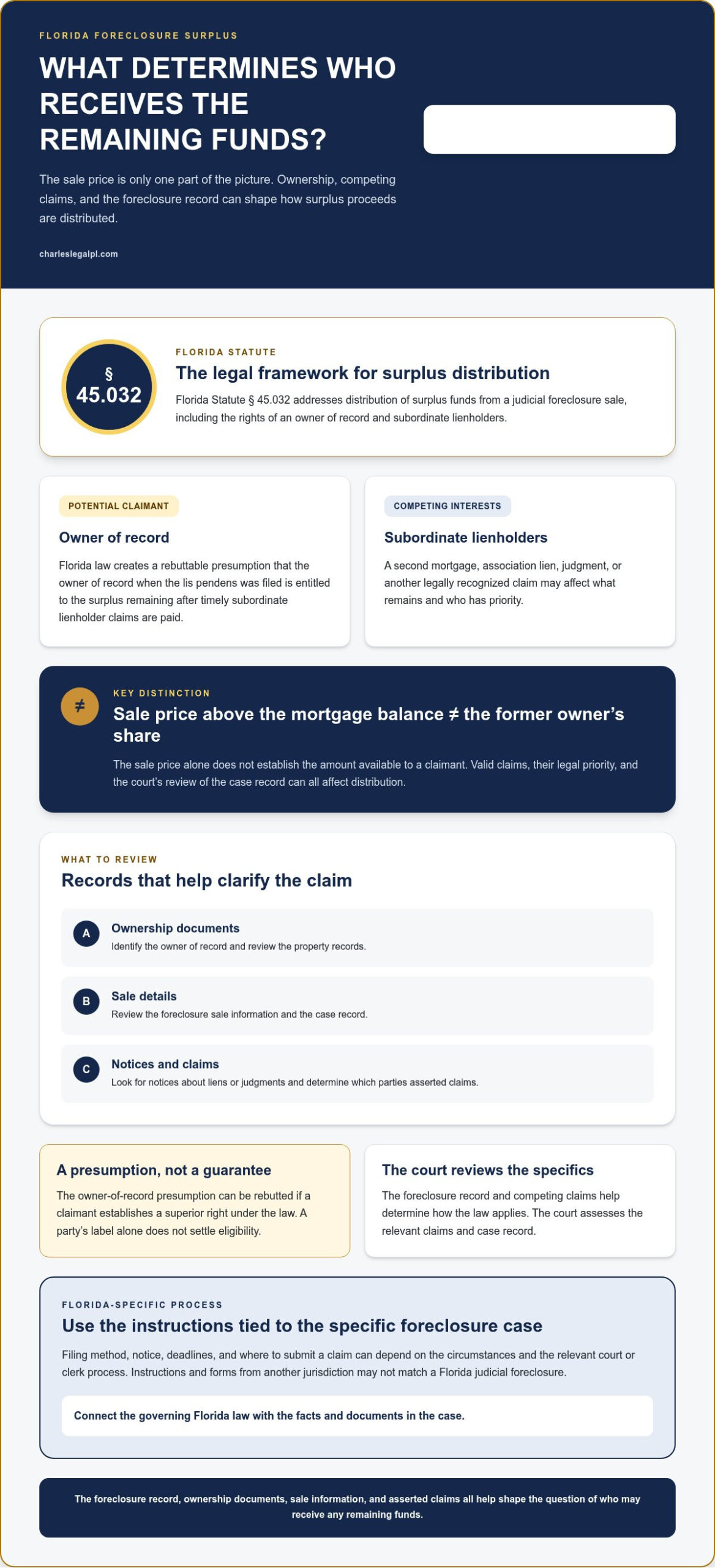
A foreclosure sale converts the property into sale proceeds. The foreclosing creditor’s secured debt is addressed, but other valid claims may also have to be considered before any remaining funds can be distributed. Florida Statute § 45.032 governs the distribution of surplus funds from a judicial foreclosure sale.
The sale price alone doesn’t establish a claimant’s final share. A second mortgage, an association lien, or another legally recognized claim may affect what remains and who has priority. The court must assess the relevant claims and case record. A difference between the sale price and the first mortgage balance is not, by itself, proof that the former owner can collect the entire difference.
Who may have an interest in the surplus?
The former owner and subordinate lienholders may have interests to assert. Florida law creates a rebuttable presumption that the owner of record when the lis pendens was filed is entitled to the surplus remaining after timely subordinate lienholder claims are paid. A lis pendens is notice of a lawsuit affecting property. The presumption can be rebutted if a claimant establishes a superior right under the law.
Other parties may also assert a legally recognized interest, depending on the property records and foreclosure case. Recorded mortgages, association liens, judgments, ownership documents, and notices can all matter. A label such as “former owner” or “lienholder” doesn’t settle the question on its own. Eligibility depends on the specific facts, applicable Florida law, and the court’s review of competing claims.
If you’re trying to get surplus funds you are owed from foreclosure sale proceeds, distinguish the sale’s gross proceeds from the amount that may ultimately be distributed to you. Reviewing the foreclosure record can help clarify what claims were raised and what questions remain. For help with an injury claim, Call Now: (954) 390-2228 Available 24 Hours a Day, 7 Days a Week.
How Florida Law Can Affect a Foreclosure Surplus Claim
Florida law sets the framework for determining who may claim surplus funds, but the foreclosure case record helps show how that framework applies. The property records, parties named in the case, sale information, and claims asserted can all matter. General information can help you understand the issues, but it can’t determine eligibility without review of the actual case.
Which Florida rules and records should readers understand?
Florida Statute 45.032 addresses the disbursement of surplus funds from a judicial foreclosure sale, including the rights of an owner of record and subordinate lienholders. The statute is a starting point, not a substitute for examining the case. The foreclosure record can help identify the owner of record, whether other parties asserted claims, and which court handled the matter.
Keep general concepts separate from case-specific requirements. The filing method, notice, deadline, and place to submit a claim can depend on the circumstances and the relevant court or clerk process. Don’t assume one form or filing sequence applies to every case. Before acting, review the current Florida statute and the instructions tied to the specific foreclosure record.
Why don’t out-of-state foreclosure instructions transfer?
Foreclosure procedures vary by jurisdiction and by the type of sale. For example, guidance written for a nonjudicial foreclosure elsewhere may describe a process that doesn’t match a Florida judicial foreclosure. Court forms from another jurisdiction are examples of that jurisdiction’s process, not Florida claim documents. Following instructions from another state can leave you relying on the wrong forms, deadlines, or filing location.
Use Florida authority for a Florida foreclosure claim. To get surplus funds you are owed from foreclosure sale proceeds, connect the governing Florida law with the facts and documents in the specific case. If a notice is unclear or the record raises questions, identify those issues before deciding how to proceed. For help with a motor vehicle accident or another injury matter, Call Now: (954) 390-2228 Available 24 Hours a Day, 7 Days a Week.
Who Gets Foreclosure Surplus Funds When Claims Compete?
More than one person or entity may claim an interest in the same foreclosure surplus. The former owner may assert a right to the remainder, while subordinate lienholders may seek payment based on recorded interests in the property. Other claimants may also rely on ownership or case records. A claimed debt alone doesn’t establish that the claimant has priority or is entitled to the funds.
Florida Statute § 45.032 provides a rebuttable presumption that the owner of record when the lis pendens was filed is entitled to surplus funds remaining after timely claims by subordinate lienholders are paid. That presumption is important, but it doesn’t mean the former owner always receives the entire surplus. The case record and the evidence supporting each claim can affect distribution.
How can liens, judgments, or ownership interests affect distribution?
- Former owner: Review ownership documents and records showing who held title when the lis pendens was filed. Determine whether another claimant has filed a timely, supported claim.
- Subordinate lienholder: Review the recorded mortgage or lien, the amount claimed, and filings in the foreclosure case. Consider whether the claim was timely and how Florida law treats its priority.
- Other claimant: Review the documents supporting the asserted ownership or financial interest, along with notices and case filings. Determine whether the records establish a legally recognized claim to this particular surplus.
What if another person or company claims the funds?
Take the claim seriously, but verify it against the record. Notices, court filings, lien records, and supporting documents can help reveal what the claimant is asserting and whether the claim is disputed. Compare those materials with the foreclosure record. A letter or demand stating that money is owed doesn’t, by itself, determine who is entitled to the surplus.
Be careful before signing an assignment, release, or settlement document. An assignment may transfer rights, while a release or settlement may affect your ability to pursue a claim. Understand what the document transfers or resolves and how it affects your interests before agreeing. No claimant’s success is automatic. If you want to get surplus funds you are owed from foreclosure sale proceeds, the specific claims and records matter. For help with an injury matter, Call Now: (954) 390-2228 Available 24 Hours a Day, 7 Days a Week.
What Steps Can Help You Pursue Surplus Funds in Florida?
Preparation starts with the foreclosure record, not a promise that funds will be awarded. Organize what you have, identify what’s missing, and verify the Florida court or clerk process for the specific case. Deadlines, notices, and document requirements can affect a claim, so address unresolved questions promptly.
What records should a claimant gather?
Collect the documents connected to the property, sale, and any claim. Preserve originals when possible, and keep copies of every notice, filing, payment record, and communication you receive. If a document is missing, note that gap instead of making assumptions about its contents.
- 1. Locate the foreclosure case number. Use it to identify the case record and the court involved.
- 2. Gather sale information. Keep available sale notices, sale records, and any communication about proceeds or funds held for distribution.
- 3. Collect ownership records. Assemble documents showing ownership and any transfer or change that may relate to the property or case.
- 4. Save claim-related documents. Include notices, filed claims, lien or judgment records, payment information, and correspondence from anyone asserting an interest.
- 5. Verify the next procedural step. Confirm the relevant Florida court or clerk process, applicable deadlines, and required documents for this particular case. Don’t rely on a generic form or filing sequence.
How can you recognize risky surplus-recovery offers?
Slow down if a company pressures you to sign quickly, won’t clearly explain its fees, or asks you to transfer your rights. An assignment may affect who can pursue the funds. Before signing an assignment, release, or settlement, understand what rights you’re giving up, what the agreement costs, and how it may affect your claim. Be cautious with requests for sensitive personal or financial information, and share it only after you understand who is requesting it and why.
If an offer refers to a lien or debt, compare that claim with the case record and supporting documents. A demand alone doesn’t establish priority or entitlement. Careful record review matters, especially if a deadline is approaching or claims conflict.
For information about Charles Injury Law’s personal injury services, contact Charles Injury Law. The firm represents people injured in car, truck, rideshare, pedestrian, and premises-liability incidents. Call Now: (954) 390-2228 Available 24 Hours a Day, 7 Days a Week.
When to Get Help With a Florida Foreclosure Surplus Claim
A surplus claim can turn on details that a general guide can’t resolve. If ownership is disputed, a lienholder or judgment creditor has asserted a claim, a notice is unclear, or you’re unsure about a deadline, the foreclosure record and the relevant Florida law are central to understanding the issues.
When does a surplus claim call for case-specific review?
Pay close attention when claimants disagree about who owned the property, whether a lien or judgment affects the funds, or whether a claim or notice was properly addressed. Timing can matter, too. If a notice identifies a response date or you’re uncertain whether a deadline applies, don’t rely on assumptions. Review the notice and case record promptly.
An online explanation can describe general Florida rules, but it can’t determine your entitlement. That requires examining the actual case documents, ownership history, competing claims, and applicable procedure. Case-specific legal guidance can help identify gaps, explain which issues need verification, and clarify possible next steps without promising a particular result.
What should readers expect when contacting the firm?
For an injury matter, be ready to explain what happened and share the documents you have, such as accident records, medical information, and communications from an insurance company. If records are missing, say so. A clear review begins with the facts available, not guesses about what a missing document might contain.
Charles Injury Law represents people injured in motor vehicle accidents, pedestrian incidents, and premises-liability cases. You can discuss an injury matter directly with the firm and ask questions about the information involved. No outcome is guaranteed, and each injury claim depends on its facts and applicable legal requirements.
If you’re trying to get surplus funds you are owed from foreclosure sale proceeds, the foreclosure record and Florida law are key to understanding the issues. For help after a car, truck, rideshare, or pedestrian accident, contact Charles Injury Law to discuss your injury matter.
Call Now: (954) 390-2228 Available 24 Hours a Day, 7 Days a Week
Take the Next Step With Your Foreclosure Records
A foreclosure sale can leave proceeds available for distribution, but the sale price alone doesn’t establish who receives them. Florida law, ownership records, and competing claims all matter. Gather the case number, sale documents, notices, and ownership records, then verify the process and any deadlines that apply to your specific case.
If you’re trying to get surplus funds you are owed from foreclosure sale proceeds, don’t leave unclear notices or another party’s claim unexamined. Reviewing the relevant records can help identify questions about ownership, liens, or procedure. No guide can determine your entitlement without the facts of your case.
Charles Injury Law represents people injured in motor vehicle accidents, pedestrian incidents, and premises-liability cases. For help with an injury matter, contact the firm. Call Now: (954) 390-2228 Available 24 Hours a Day, 7 Days a Week.
For a foreclosure surplus issue, start with the documents you have and identify what needs review under the Florida process. For an injury claim, contact Charles Injury Law to discuss your situation.
Frequently Asked Questions
What are surplus funds from a foreclosure sale?
Surplus funds are money that may remain after a foreclosure sale and payment of the foreclosing creditor and other valid claims. The sale price alone doesn’t determine how much, if any, is available to a former owner. In Florida, the foreclosure record and Florida Statute § 45.032 help govern distribution. A former owner’s potential share depends on competing claims and the applicable facts, not simply the difference between the sale price and mortgage balance.
Can a former homeowner claim foreclosure surplus funds in Florida?
Yes, a former homeowner may be entitled to claim surplus funds, but payment isn’t automatic. Florida law creates a rebuttable presumption that the owner of record when the lis pendens was filed is entitled to remaining surplus after timely subordinate lienholder claims are paid. The case record and any competing claims still matter. Ownership at a different point in time or a claim from another party may affect the analysis, so review the specific records.
How do I claim surplus funds after a foreclosure sale in Florida?
Start by locating the foreclosure case number and gathering sale records, ownership documents, notices, and any correspondence about claims to the funds. A claim must be pursued through the process for the specific Florida case, so verify the relevant court or clerk, filing requirements, and any applicable deadline. The records and case-specific process determine what issues need attention.
How long does it take to receive foreclosure surplus funds in Florida?
There’s no single timeframe that applies to every Florida foreclosure surplus claim. Processing may depend on the case record, the claims asserted, whether entitlement is disputed, and the applicable court or clerk process. Florida law provides that funds unclaimed within one year after the foreclosure sale are presumed unclaimed and remitted to the state’s Division of Unclaimed Property. Don’t treat that period as a guaranteed payment schedule or a substitute for checking case-specific deadlines.
Can a lienholder or creditor claim foreclosure surplus funds?
Yes, a subordinate lienholder may claim an interest in foreclosure surplus funds in Florida. A second mortgage, association lien, or another asserted claim may affect distribution if it is legally recognized and satisfies applicable requirements. The creditor’s assertion alone doesn’t prove priority or entitlement. Florida law and the foreclosure record must be considered together, including the nature of the claim and relevant filings. The former owner may be entitled to what remains after valid, timely subordinate claims are addressed.
Should I sign an agreement with a foreclosure surplus recovery company?
Review any agreement carefully before signing. A company may ask you to assign rights to the surplus, but an assignment isn’t required simply because someone offers to help pursue funds. Check what rights the document transfers, what fees or deductions it describes, and whether it includes a release or settlement. Don’t let pressure tactics rush your decision. If the terms are unclear, seek case-specific legal guidance before signing or sharing sensitive personal or financial information.
Do foreclosure surplus forms from other jurisdictions work in Florida?
Don’t assume they do. Foreclosure rules and forms are jurisdiction-specific, and documents prepared for another state’s court process may not fit a Florida case. Use Florida law and the instructions tied to the court or clerk handling the foreclosure instead. The correct filing method and supporting documents can depend on the case record and the claim being made. If a form’s origin or purpose is unclear, have it reviewed before relying on it or submitting it.
Disclaimer
The information provided on this blog is for general informational purposes only and does not constitute legal advice. Viewing this content does not create an attorney-client relationship with the firm. You should not act or rely on any information contained herein without seeking legal advice from a qualified attorney regarding your individual situation.