

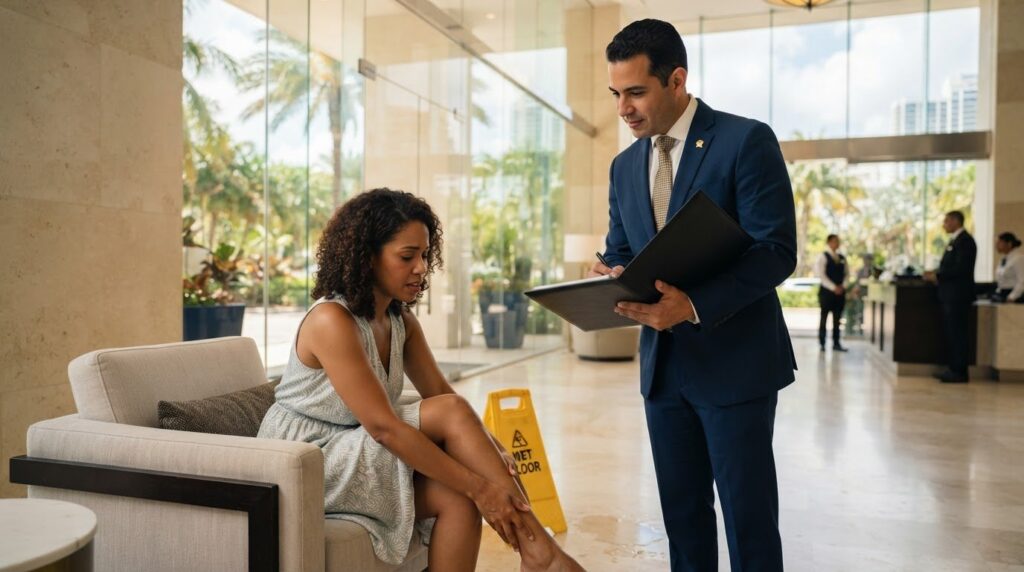

What if the IHG name on the hotel sign doesn’t tell you who controlled the area where you were hurt? After an injury, you may be focused on treatment, missed work, and calls from insurers. A lawyer for injury IHG claims can help investigate who may be responsible and what evidence could matter.
It’s reasonable to expect a hotel to take guest safety seriously. But the brand name alone may not identify who owned, managed, or maintained the specific property or location involved. Charles Injury Law investigates those details and advocates for injured people throughout Florida, including in Miami and Fort Lauderdale.
This article explains which facts may shape a hotel personal injury claim, how to document an incident and preserve useful evidence, and what to consider before speaking with an insurer. It also covers how legal representation may help you pursue accountability and compensation while focusing on recovery.
Key Takeaways
- An IHG name alone doesn’t establish who may be legally responsible; property-specific facts matter.
- A lawyer for injury IHG claims can investigate who controlled, inspected, or maintained the area where the incident occurred.
- Photographs, witness details, medical records, and communications may help document what happened and its effects.
- Prioritize your safety and medical care, then report the incident factually and preserve relevant information.
- Charles Injury Law can investigate the claim, communicate with insurers, and evaluate potential damages while you focus on recovery.
Injured at an IHG Hotel in Florida? Start With the Incident, Not the Brand Name
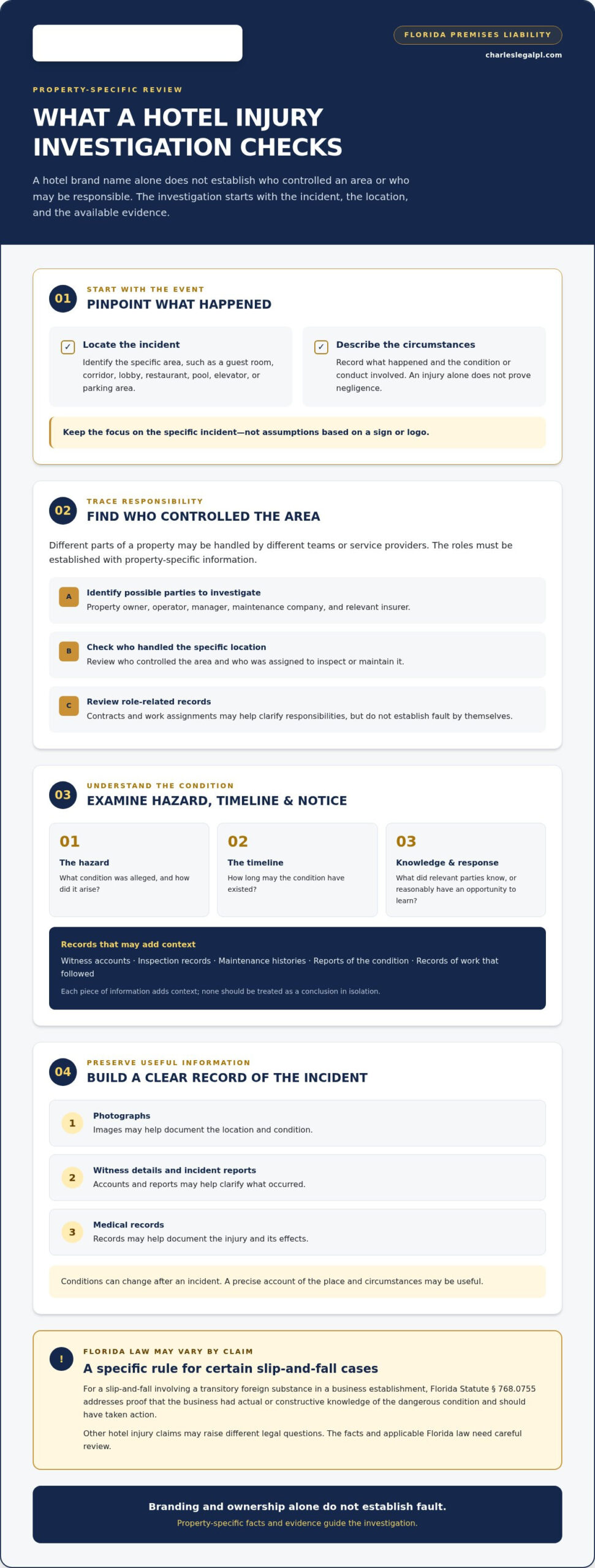
An IHG name alone doesn’t establish who is legally responsible for an injury. A hotel injury claim is a fact-specific personal injury matter that may involve an unsafe condition or someone’s conduct. The key questions are what happened, where it happened, and what evidence supports your account. An injury, by itself, doesn’t prove that a business or another party was negligent.
The location helps focus an investigation. Incidents may happen in guest rooms, corridors, lobbies, restaurants, pools, elevators, or parking areas. A loose floor tile in a corridor raises different factual questions than an injury in a pool area or elevator. Florida law and the details of the incident govern any claim. If you’re considering a lawyer for injury IHG matter, the investigation should begin with the specific event and property, not assumptions based on a sign or logo.
What kinds of incidents may lead to a hotel injury claim?
A guest might slip on a wet surface, trip over an obstacle, suffer an injury in a pool area, be harmed by a security issue, or be hurt in an elevator incident. These are examples, not automatic claims. The cause, location, injury, and available evidence all matter. A careful review can help distinguish an actionable unsafe condition or conduct from an accident for which no one may be legally responsible.
Details matter. An incident report, photographs, witness accounts, and medical records may help clarify what occurred and how the injury affected you. Conditions can change after an incident, so a precise account of the place and circumstances may be useful. Charles Injury Law handles hotel and premises liability matters, including premises liability claims in Florida.
Does an IHG brand name identify the responsible party?
No. A brand name doesn’t, by itself, establish who owned, operated, or controlled a particular hotel or area. IHG Hotels & Resorts includes properties with differing business arrangements; the IHG Hotels & Resorts Wikipedia page offers general background on the brand, but it can’t determine responsibility for a specific incident.
An investigation may examine the property owner, operator, manager, maintenance company, and relevant insurer. It can ask who controlled the location, who handled inspections or maintenance, and what information was available about the condition. These are leads to investigate, not conclusions. Property-specific records and other evidence must be reviewed under Florida law before responsibility can be assessed.
That distinction matters for injured guests in Miami and Fort Lauderdale, as well as visitors elsewhere in Florida. The hotel’s branding may identify where the incident occurred, but it doesn’t settle liability. A lawyer for injury IHG claims can investigate the property-specific facts and identify which parties, if any, may bear responsibility.
How Florida Law and Property Control Shape an IHG Hotel Injury Claim
After identifying the incident, the next question is who had responsibility for the area and condition involved. A premises liability investigation looks beyond the hotel’s branding. It examines who controlled, inspected, maintained, or received information about the specific location. The answer may depend on contracts, work assignments, maintenance practices, and records tied to the property.
That distinction can shape a claim. The company associated with a brand, property owner, hotel operator, manager, maintenance contractor, and insurer are separate possible leads. Their roles must be established with property-specific evidence. Neither a familiar brand name nor ownership alone proves that an entity caused an injury or is legally responsible.
Who may have controlled the place where the injury happened?
Control can vary across a property. A restaurant area, pool, guest-room corridor, and parking lot may be handled by different teams or service providers. An investigation can examine who was assigned to inspect or maintain the particular area and whether a contract or work record clarifies those responsibilities. These materials may help identify relevant parties, but they don’t establish fault by themselves.
What does a premises liability investigation examine?
The investigation considers the alleged hazard, how it arose, how long it may have existed, and what the relevant parties knew or reasonably could have learned. Witness accounts can describe what they observed. Inspection records and maintenance histories may show when an area was checked, whether a condition was reported, or what work followed. Each piece adds context; none should be treated as a conclusion in isolation.
Florida law treats some incidents differently depending on the condition involved. For a slip-and-fall involving a transitory foreign substance in a business establishment, Florida Statute § 768.0755 addresses proof that the business had actual or constructive knowledge of the dangerous condition and should have taken action. Other hotel injury claims may raise different legal questions. The facts and applicable Florida law need careful review.
Records may also concern employee safety. The Occupational Safety and Health Administration (OSHA) addresses workplace safety, but workplace standards do not, by themselves, decide whether a hotel is liable for a guest’s injury. Their relevance, if any, depends on the facts and legal issues in the claim.
The same approach applies to incidents in Miami, Orlando, and elsewhere in Florida. Location can help identify the property, but it doesn’t determine who controlled the area or what they knew. Charles Injury Law investigates those details as part of its Florida premises liability work. If you’re considering a lawyer for injury IHG matter, a property-specific review can help clarify what happened and who may be accountable.
What Evidence Can Strengthen a Florida Hotel Injury Investigation?
Useful evidence can help explain what happened, where it happened, and how the incident affected you. Start with what you can safely document. Save original photos and messages, write down details while they’re fresh, and keep copies of relevant records. Don’t put yourself at risk to collect evidence, and don’t assume that hotel records or video will remain available indefinitely.
Evidence created close to the time of an incident, with details about the location, can help clarify the condition, timing, and events surrounding an injury.
| Evidence | What it may help establish | Who may hold it |
|---|---|---|
| Photos or video of the area | The condition, surrounding layout, lighting, and visible warning signs at the time documented. | You, a witness, or the property. |
| Incident details | The date, approximate time, exact location, sequence of events, and what you observed before and after the injury. | You, hotel personnel, or someone who assisted. |
| Witness information | What another person saw or heard and how to follow up about their observations. | You or the witness. |
| Medical records | Reported symptoms, diagnosis, treatment, and the course of care after the incident. | Your medical providers and you. |
| Relevant communications | What was reported, when it was reported, and what responses followed. | You, hotel representatives, or an insurer. |
| Video, inspection, and maintenance records | Recorded activity, checks, reported conditions, or work performed in the area. | The property or a company responsible for relevant services. |
Be precise. Photograph the specific spot from more than one angle, along with nearby landmarks that identify its location. Include the broader area, lighting, and any warning signs. Note the date, approximate time, where you were, what happened in sequence, and names or contact details for witnesses. Separate what you directly observed from what you later learned, and don’t guess at the cause.
Medical records can document your diagnosis and treatment, while your own notes may capture symptoms and changes you experienced. Keep appointment paperwork and relevant communications together. If you report the incident or speak with an insurer, retain copies of what you send and receive. Avoid altering original photos or messages; use a separate note to explain what each item depicts.
Some evidence may be held by others. Surveillance footage can be time-sensitive, and the existence of a recording doesn’t guarantee it will be available. A lawyer for injury IHG claims may send requests to preserve potentially relevant footage, incident reports, inspection logs, and maintenance records. Charles Injury Law can also conduct witness interviews and consult appropriate experts to assess disputed conditions. The firm’s Florida premises liability representation includes investigating property-related injury claims. Collecting evidence doesn’t determine fault, but it can help clarify the facts a claim must address under Florida law.
What to Do After an Injury at an IHG Hotel in Florida
Take care of your immediate safety first. Then make a clear record of what happened while the details are fresh. You don’t have to determine who was at fault or identify the exact cause on the spot. Focus on your health, accurate observations, and preserving information that may help explain the incident later.
- Get to a safe place and seek medical attention. If you need urgent care, prioritize it. Describe your symptoms and how the injury occurred to your medical provider. Follow recommended care, and keep records of appointments, treatment, and instructions.
- Document what you observed. If it’s safe, photograph the exact location and condition, along with the surrounding area and any visible warning signs. Note the date, approximate time, and specific place, such as a corridor, pool area, or elevator. Write down what happened before and after the incident. Don’t guess about the cause.
- Report the incident factually. Tell hotel management what occurred and where. Stick to what you personally saw, felt, or experienced. If you receive an incident or reference number, save it. Ask for the names of people you speak with, and note the date and time of each conversation.
- Collect witness and communication details. If someone saw the incident or helped you, ask for their name and contact information. Keep copies of messages, letters, or other communications from the hotel or an insurer. Save original photos and messages, and avoid editing them.
- Keep an organized record of the impact. Store medical records, receipts, and related paperwork together. Make brief notes about symptoms, treatment, missed work, and expenses as they arise. An accurate, ongoing record can help explain how the injury affected your daily life without relying only on memory.
When should you speak with a Florida injury lawyer?
Consider seeking legal guidance early, especially if the injury is serious, the responsible parties are unclear, or important information may be held by the property or another company. A lawyer for injury IHG claims can assess what evidence may matter, identify potential parties for investigation, and help you understand communications about the incident. That review can take place while you focus on treatment.
Be deliberate with insurer communications. Listen carefully, keep copies of anything you provide, and ask for time to review requests you don’t understand. A recorded statement or release may affect your claim, so consider having its purpose and terms reviewed before agreeing or signing. The right approach depends on the document and circumstances; avoid guessing or making assumptions about its effect.
If you’re unsure what to preserve or how to respond to an insurer, contact Charles Injury Law about your next steps.
Call Now: (954) 390-2228 Available 24 Hours a Day, 7 Days a Week
How Charles Injury Law Helps With an IHG Hotel Injury Claim
A hotel injury claim can involve more than a single report or insurance call. Charles Injury Law investigates the incident, works to preserve relevant evidence, gathers medical records, and consults appropriate experts when needed. The goal is to build a clear, evidence-based picture of what happened, who may have controlled the area, and how the injury has affected you.
The firm represents injured people throughout Florida, including in Miami and Fort Lauderdale. Its Florida personal injury representation includes investigating premises claims and advocating for clients as they focus on treatment and recovery.
What can clients expect from the firm’s representation?
Your case begins with the facts. The investigation may involve reviewing incident details, seeking to preserve records, and gathering medical documentation. If questions remain about the condition or injury, Charles Injury Law may consult appropriate experts. The firm then evaluates the available evidence and communicates with insurers on your behalf.
That work includes assessing present losses and potential future effects supported by the evidence, such as continuing treatment needs or changes to daily activities. The firm negotiates with insurers, but it doesn’t treat a quick offer as the only measure of a claim. If a fair settlement isn’t reached, Charles Injury Law is prepared to litigate. No outcome can be promised; each claim turns on its facts and applicable Florida law.
Clients receive direct communication with the attorney and updates about meaningful developments. Support should be compassionate and clear, while advocacy with insurers should be firm. Charles Injury Law has recovered millions of dollars for injured clients, but past results don’t predict or guarantee the result in another case.
Representation is handled on a contingency-fee basis: you don’t owe attorney fees unless the firm recovers compensation for you. The terms of representation should be explained before you decide how to proceed.
How can an injured guest take the next step?
An initial conversation can help identify the basic facts, immediate concerns, and questions about evidence or insurance communications. You don’t need to have every record assembled before asking for guidance. If you’re comparing options such as a personal injury firm near me, attorneys for personal injuries, or attorneys personal injury, focus on whether the process and communication are clear. Searches for an injury lawyer near me or personal injury lawyer near me may lead to different kinds of claims; hotel injury cases call for a review of the property-specific facts. Lawyers for auto accidents and auto accident lawyers near me address another type of incident. A lawyer for injury IHG claims can help assess the premises liability issues without assuming that the brand name alone establishes responsibility.
Bring what you have, such as notes, photographs, medical information, or insurer correspondence. If you’re dealing with pain, treatment, and lost income, start with one step: explain what happened and ask what information may be useful next.
Call Now: (954) 390-2228 Available 24 Hours a Day, 7 Days a Week
Take the Next Step Toward Clarity
You don’t have to solve every question about an injury claim at once. A focused conversation can help you decide what needs attention next, especially if you’re balancing recovery with uncertainty about insurance communications or the path ahead. Speaking with a lawyer for injury IHG claims gives you a chance to discuss your situation and consider your options without assuming what the outcome will be.
Charles Injury Law approaches each matter on its own facts and keeps the focus on your needs. If you’re ready to talk, share what happened and what concerns you most. You can ask questions, explain where things stand, and learn what a next step may involve. You don’t need every detail figured out before reaching out.
Call Now: (954) 390-2228 Available 24 Hours a Day, 7 Days a Week
Take one step at a time. Clear guidance can help you move forward while keeping your attention on healing.
Frequently Asked Questions
Can I sue IHG if I was injured at one of its hotels in Florida?
Possibly, but the IHG name alone doesn’t determine whether the brand or another party may be legally responsible. The property’s ownership, operation, maintenance, and control may be relevant, along with evidence about the incident. A lawyer for injury IHG claims can investigate those relationships and assess potential claims under Florida law. Responsibility isn’t automatic; the specific property and circumstances need review.
Is a hotel responsible for every injury that happens on its property?
No. An injury alone doesn’t establish negligence. The analysis may depend on the condition involved, who controlled the area, what the relevant parties knew, and whether the condition contributed to the injury. A guest’s own actions may also be considered under Florida law. Whether an incident in Fort Lauderdale, Miami, West Palm Beach, Boca Raton, Delray Beach, Boynton Beach, Lake Worth, Orlando, or Tampa supports a claim depends on its evidence and circumstances.
Can I make a claim if I did not report my hotel injury immediately?
A delayed report doesn’t automatically determine whether you can bring a claim, but it can make available documentation especially important. Note why the report was delayed, if you know, and preserve records that may independently help establish your visit or timing, such as reservation or payment records. Don’t fill gaps with guesses. A Florida lawyer can assess the timing and information available in your particular situation.
What if the hotel asks me to sign a statement or release after an injury?
Review the document carefully before signing, especially if it addresses fault, payment, medical information, or releasing claims. If a provision is unclear or you feel pressured, consider pausing and asking a Florida injury lawyer to explain the language. Keep a copy of the document and related messages. The effect depends on the exact wording and circumstances, so don’t assume every form is routine or harmless.
Can I bring a Florida hotel injury claim if I was visiting rather than staying overnight?
Yes, being a visitor rather than an overnight guest doesn’t by itself rule out a claim. You might, for example, be at a hotel restaurant or attending an event without booking a room. The reason for your visit, the incident location, and who controlled that area may matter. A property-specific review can help assess whether the facts support a claim under Florida law.
How are attorney fees handled for a Florida hotel injury case?
Charles Injury Law handles injury cases on a contingency-fee basis, meaning clients don’t owe attorney fees unless the firm recovers compensation. The written fee agreement explains the arrangement. Review it for how case expenses and other terms are handled, since those may be addressed separately from attorney fees. Ask questions about any provision you don’t understand before signing the agreement.
What compensation may be available after an injury at an IHG hotel?
Depending on the claim and supporting evidence, compensation may include medical expenses, future care, lost wages, reduced earning capacity, pain and suffering, emotional distress, permanent disability, or property damage. None is automatic. Treatment records and wage documentation, for example, may help evaluate particular losses. The injury, available coverage, and legal issues can affect what may be pursued under Florida law, and no specific amount can be guaranteed.
Disclaimer
The information provided on this blog is for general informational purposes only and does not constitute legal advice. Viewing this content does not create an attorney-client relationship with the firm. You should not act or rely on any information contained herein without seeking legal advice from a qualified attorney regarding your individual situation.