


A Hyatt brand name alone doesn’t determine who may be responsible for an injury. The facts tied to the specific property and incident matter. If you need a lawyer for injury at Hyatt, questions about who controlled or maintained the area, what happened before the injury, and whether relevant records still exist can feel overwhelming.
Your health comes first. Get medical care, report the incident, and keep any photos, witness details, and related records you can safely gather. Video or incident documentation may not remain available indefinitely, so preserving relevant evidence early can matter. Medical needs, missed work, and insurer calls can add pressure while you’re trying to recover.
This article explains practical steps after an injury at a Hyatt property in Florida, the evidence that may clarify what happened, and how Florida premises-liability principles could apply. If you’re considering a personal injury firm near me, attorneys for personal injuries, or attorneys personal injury, look for a firm that can investigate the incident, preserve evidence, and communicate with insurers. Injury lawyer near me and personal injury lawyer near me may also come to mind, while lawyers for auto accidents and auto accident lawyers near me relate to other injury claims. Charles Injury Law investigates hotel injury claims and pursues accountability while you focus on recovery.
Key Takeaways
- Focus on the specific conditions and evidence surrounding the injury, not just the hotel’s brand name.
- Record when and where the incident happened, what occurred, and who witnessed it while details are fresh.
- Medical records, photographs, witness information, and incident documentation may help clarify how the injury occurred.
- A lawyer for injury at Hyatt can investigate property control, notice of a hazard, and how the incident caused harm.
- Charles Injury Law can preserve evidence, communicate with insurers, and prepare to pursue accountability. Call Now: (954) 390-2228 Available 24 Hours a Day, 7 Days a Week
Injured at a Hyatt in Florida? Start With the Facts, Not the Brand Name
An injury during a hotel stay can derail more than a vacation. Pain, medical appointments, missed income, and sudden changes to family plans can follow you home. It’s understandable to look at the Hyatt name and wonder who should answer for what happened. But a brand name alone doesn’t establish who controlled the area, knew about a hazard, or could have addressed it.
Premises liability is a fact-dependent legal concept involving injuries connected to conditions on property. A fall, pool incident, or other injury doesn’t automatically prove that a property owner or business was legally responsible. The relevant questions depend on the circumstances and evidence, including what created the hazard, who controlled the area, and what action was taken. Hotel injury responsibility depends on those property-specific facts.
The legal discussion here is governed by Florida law. A careful investigation may need to identify where the incident occurred, who managed or maintained that area, and what happened before and after the injury. Background information about Hyatt Hotels Corporation can explain the brand’s broader context, but it cannot establish who operated or controlled a particular property. A Florida premises-liability claim turns on the property-specific facts, not assumptions based on a hotel’s name.
What kinds of Hyatt hotel incidents may warrant investigation?
Falls on wet or uneven surfaces, pool incidents, elevator or escalator injuries, and other unsafe conditions may warrant a closer look. The event itself doesn’t prove negligence; the surrounding facts matter. If an injury involved an assault or another security concern, the circumstances may raise separate questions about security. A hotel guest’s injury is also different from an employee’s workplace injury, which may involve a different legal process.
Who could be involved in a Florida hotel injury claim?
Responsibility may depend on who controlled the specific area and who handled its maintenance or management. Investigators may examine the incident location, property arrangements, maintenance activity, and available records. Don’t assume that Hyatt Hotels Corporation directly operated the hotel simply because its name appeared there. If you’re an injured guest, personal injury representation in Miami and in Fort Lauderdale may help assess how the facts and Florida law apply to your situation.
A lawyer for injury at Hyatt can investigate those property-specific questions rather than treating the brand as the answer. Charles Injury Law represents people injured in hotel and other premises incidents, working to identify relevant parties and preserve evidence. If you’re unsure where to start, focus first on your health and the details of the incident. Call Now: (954) 390-2228 Available 24 Hours a Day, 7 Days a Week
Which Evidence Can Clarify How a Hyatt Hotel Injury Happened?
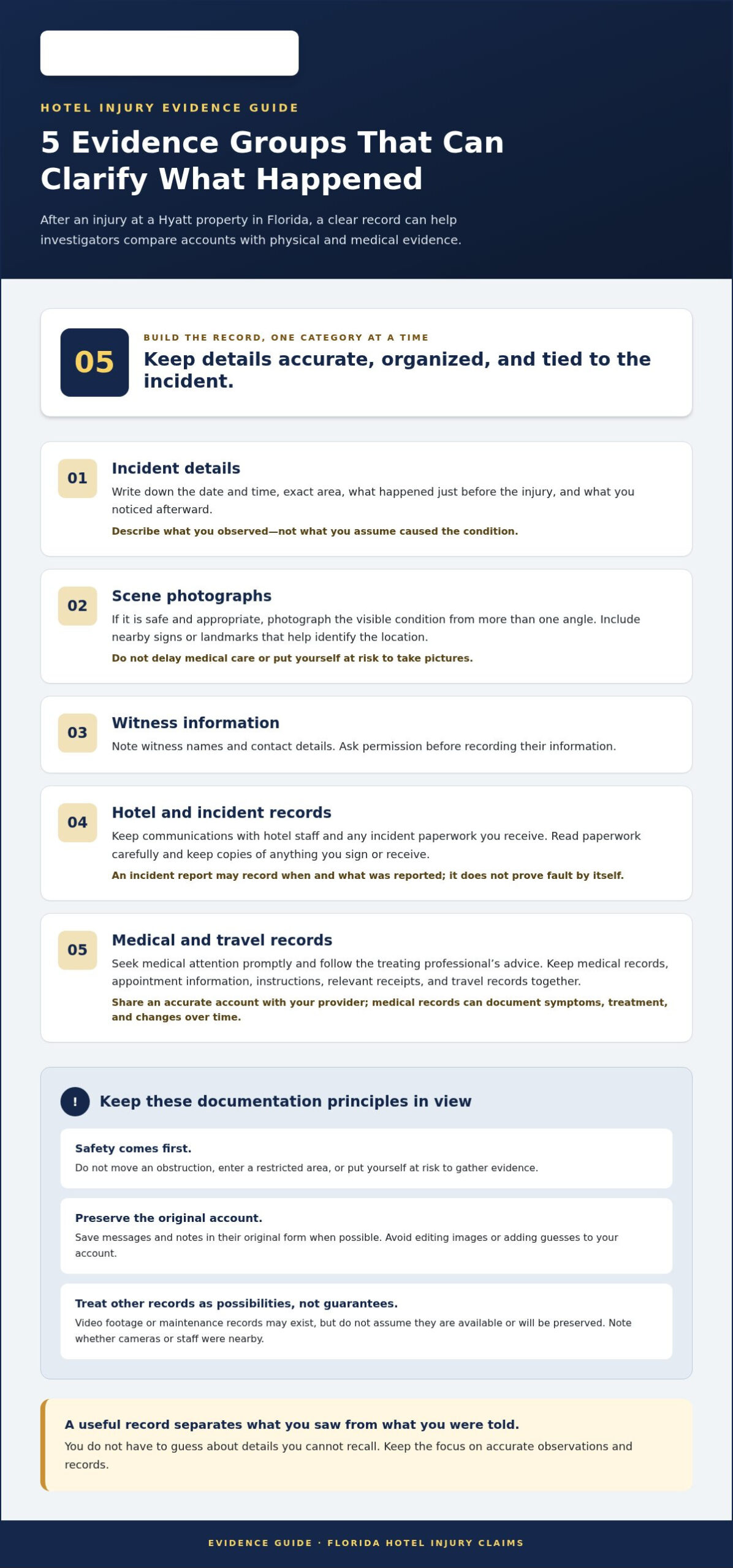
Details can blur quickly after an unexpected injury. A clear record helps preserve what you remember and gives investigators something concrete to compare with other accounts. Prompt, accurate documentation can help investigators compare witness accounts with physical and medical evidence.
Start with the basics as soon as you’re able: the date and time, the exact area, what happened just before the injury, and what you noticed afterward. Describe what you observed, not what you assume caused the condition. For example, note where a spill or obstruction was and whether you saw warning signs, without moving anything or entering a restricted area. Your safety comes first.
How should an injured guest document the scene?
If it’s safe and appropriate, take photos of the visible condition from more than one angle. Include nearby signs or landmarks that help identify the location. You may also photograph visible injuries, but don’t delay medical care or put yourself at risk to collect images.
Write down witness names and contact details, and ask permission before recording their information. Keep copies of communications with hotel staff, any incident paperwork you receive, and relevant receipts or travel records. Save messages and notes in their original form when possible, and avoid editing images or adding guesses to your account.
Why do medical records and incident reports matter?
Seek medical attention promptly and follow the treating professional’s advice. Medical records can document symptoms, treatment, and how your condition changes over time. Share an accurate account of what happened with your provider, and keep appointment information, instructions, and related records together. The Florida Bar’s overview of personal injury law in Florida offers general information about injury claims, but the facts of an individual case matter.
An incident report may help establish when the event was reported and what information was recorded. It isn’t proof of fault by itself. If you’re offered paperwork, read it carefully and keep a copy of anything you sign or receive. You don’t have to guess about details you can’t recall; distinguish what you saw from what someone else told you.
Video footage or maintenance records may exist, but don’t assume they’re available or will be preserved. Note whether cameras or staff were nearby, and share those observations with a lawyer for injury at Hyatt. Charles Injury Law investigates hotel incidents and works to preserve relevant evidence. If you want help organizing what you’ve collected, you can contact Charles Injury Law about your hotel injury.
Call Now: (954) 390-2228 Available 24 Hours a Day, 7 Days a Week
How Is a Hyatt Hotel Injury Claim Evaluated Under Florida Law?
A hotel injury claim isn’t decided by the brand name or by the fact that someone was hurt. In Florida, evaluating a claim means examining how the incident happened, what evidence supports each account, and whether the available facts connect the injury to a potentially responsible party. Charles Injury Law reviews those questions step by step, without assuming the outcome before assessing the evidence.
A claim’s value and viability depend on proven harm, evidence, and applicable law. That means separating what can be documented from what remains uncertain. A lawyer for injury at Hyatt can investigate the hazard, who controlled the area, what information was available about the condition, how the event caused injury, and what losses can be supported.
What facts may affect responsibility for a hotel injury?
Start with the location and condition involved. Was it a walkway, pool area, elevator, or another part of the property? What made the area hazardous, how visible was the condition, and how long might it have been present? These details can help investigators assess the circumstances, but no single fact automatically establishes responsibility.
The investigation may also examine who controlled or maintained the area and what relevant records show about inspections, maintenance, complaints, or a response to the hazard. Records may be incomplete, and accounts may differ. Comparing available documentation with witness information and the physical circumstances can help clarify what happened. The legal significance of those facts depends on applicable Florida law, so liability shouldn’t be presumed from an injury alone. Charles Injury Law handles premises-liability claims by investigating the conditions and parties connected to an incident.
What losses may be documented in an injury claim?
Damages are the losses associated with an injury. Their relevance and support depend on the individual case. Records and other evidence may help document:
- Medical expenses and future care: Bills, treatment records, and professional opinions may show care already received and anticipated needs.
- Lost wages or earning capacity: Employment and income records may help demonstrate missed work or an injury’s effect on the ability to earn.
- Pain and suffering: Evidence about the injury, treatment, and its effects on daily activities may help describe physical hardship.
- Emotional distress: Relevant records and other evidence may document emotional effects connected to the injury.
These categories aren’t automatic awards, and no amount can be estimated responsibly from a short description alone. Charles Injury Law reviews medical information, income documentation, and other relevant evidence to assess losses and prepare a claim. The goal is a fact-based evaluation, not a promise of a particular result. If a fall occurred, the specific condition, available evidence, and applicable Florida law remain central to assessing the claim.
What Should You Do After an Injury at a Hyatt in Florida?
An injury can leave you shaken and unsure what to handle first. Keep the order simple: protect your health, report what happened, preserve useful records, and get guidance before making decisions about a claim. You don’t need to solve the question of fault at the hotel. Focus on accurate facts and your recovery.
What should you do at the hotel or soon after leaving?
Move away from any continuing danger if you can do so safely. Seek appropriate medical care, especially if symptoms are urgent or worsening. Don’t delay treatment to take photos or speak with staff. Your health comes first.
Once you’re safe, notify hotel staff about the incident and ask that it be documented. Keep your description factual. An incident report can record that you raised the issue, but it doesn’t establish who was legally responsible. Before leaving, if circumstances permit, note the date, time, location, and sequence of events. Save any photographs, witness details, and messages already available to you. Don’t enter restricted areas or touch a condition that could put you at risk.
Afterward, write down what you remember while it’s fresh. Separate what you personally saw from what others told you. If you’re uncertain about a detail, say so rather than guessing. Avoid signing documents you don’t understand or agreeing with a description that doesn’t match your recollection. You can ask for a copy of paperwork you receive.
How can you protect records while your injury is treated?
Keep medical records, bills, appointment information, and instructions from treating professionals together. If your injury affects work, save relevant schedules, pay records, and communications about missed time or job duties. Preserve messages with the hotel and insurers, along with receipts connected to the incident or treatment. A simple dated folder, digital or paper, can help keep the details organized.
Be careful with public posts. Speculation about what caused the incident or how badly you’re hurt can be misunderstood outside its context. Don’t share sensitive medical or claim documents publicly. Keep private copies and provide relevant information through appropriate channels.
If an insurer contacts you, stay truthful and don’t guess. You can ask what the communication concerns and take time to understand a document before responding or signing. After you retain counsel, direct claim-related insurance communications to your lawyer and coordinate responses with them.
Charles Injury Law investigates property injury claims, works to preserve relevant evidence, and communicates with insurers. Its hotel and premises-liability practice focuses on examining the circumstances of an injury on property. For broader help with an injury claim, the firm’s personal injury representation can address the investigation and claim process. A lawyer for injury at Hyatt can help you understand what steps may fit your circumstances without asking you to speculate about fault.
When you’re ready to discuss what happened, contact Charles Injury Law about your hotel injury.
How Charles Injury Law Helps Hyatt Injury Victims Pursue Accountability
After a hotel injury, you shouldn’t have to manage every investigation and insurance conversation alone. Personal Injury Attorney in Fort Lauderdale represents injury victims throughout Florida and works to establish what happened, identify relevant evidence, and pursue accountability from potentially responsible parties. The firm’s approach is grounded in the details of your incident, not assumptions about a hotel brand.
What happens when Charles Injury Law reviews an injury case?
The process begins with learning about the incident and the harm you experienced. Personal Injury Attorney in Fort Lauderdale investigates the circumstances, identifies available records and witnesses, and works to preserve relevant evidence. The firm also gathers medical records and may consult appropriate professionals when their opinions can help explain an issue in the case.
That work can include examining who controlled or maintained the area, reviewing records related to the condition, and comparing the available evidence with the reported sequence of events. The facts determine which questions need further investigation. Evidence may be incomplete, so the firm assesses what can be established and what remains uncertain before taking a position on responsibility.
Personal Injury Attorney in Fort Lauderdale can communicate with insurers on your behalf after representation begins. Insurers may challenge the cause of an injury, the extent of its effects, or the losses claimed. The firm reviews relevant documentation, responds to those disputes, and evaluates potential damages, including medical care, lost income, pain and suffering, and emotional distress where supported by the case.
Present needs are only part of the picture. If records and professional opinions support future care or other continuing effects, those may also be considered in evaluating damages. Each case is different. The steps taken depend on the evidence, the legal issues, and the needs of the claim.
If negotiations don’t resolve the dispute, Personal Injury Attorney in Fort Lauderdale prepares cases for trial when needed. That means organizing evidence, developing the factual record, and building a case for presentation in court. The firm has recovered millions of dollars for injured clients, but past results don’t guarantee an outcome in any individual matter. Your claim must be evaluated on its own facts.
How can an injured guest reach Charles Injury Law?
Clients communicate directly with the attorney and receive responsive, personalized attention. Representation is provided on a contingency-fee basis, which means clients pay no attorney’s fees unless Personal Injury Attorney in Fort Lauderdale recovers compensation. The firm explains how that arrangement applies when discussing your situation.
You deserve clear answers and a team prepared to take the evidence seriously. If you need a trusted lawyer for injury at Hyatt in Florida, contact Personal Injury Attorney in Fort Lauderdale to discuss what happened and possible next steps. Call Now: (954) 390-2228 Available 24 Hours a Day, 7 Days a Week
Take the Next Step Toward Answers
An injury can leave you facing difficult choices while you’re still recovering. You don’t need to resolve every question before asking for legal guidance. A conversation with a lawyer for injury at Hyatt can help you understand what information may matter and what steps could make sense for your situation.
Every claim is personal. The property, the circumstances, and the available evidence shape the path forward. Charles Injury Law can listen to your concerns and discuss how to approach the questions that remain, without assuming the hotel’s brand alone determines responsibility. You deserve clear communication and a chance to make informed decisions about what comes next.
If you’re ready to talk, reach out to Charles Injury Law. Call Now: (954) 390-2228 Available 24 Hours a Day, 7 Days a Week. You can take this one step at a time, with support as you focus on your recovery.
Frequently Asked Questions
Can I sue a Hyatt hotel if I was injured on the property?
You may have a claim, but an injury on hotel property doesn’t automatically establish legal responsibility. A lawyer for injury at Hyatt can review who controlled the area, what the available evidence shows, and whether the incident caused documented harm. The facts may also identify a responsible party other than the hotel operator. Preserve relevant information and get advice based on your specific circumstances before deciding how to proceed.
What should I do immediately after an injury at a Hyatt in Florida?
Get to a safe place and seek medical care if needed. If you’re too hurt or shaken to handle details, ask someone you trust to help note what happened and keep relevant messages or travel records. Don’t delay treatment to gather evidence. Later, tell your medical provider about symptoms even if they seem minor, and keep track of changes or new concerns to discuss with them.
How do I report an injury at a Hyatt hotel?
Tell hotel staff what happened and identify the approximate time and location. Ask how to make an incident report and request a copy or confirmation if one is provided. Keep your account factual; don’t speculate about the cause or accept wording that doesn’t reflect what you remember. If you can’t report the incident in person, preserve any written communication you send and note whom you contacted.
What compensation may be available after a Hyatt hotel injury?
Depending on the facts and supporting evidence, a claim may include medical expenses, future medical care, lost wages, reduced earning capacity, pain and suffering, or emotional distress. Not every category applies to every injury, and compensation isn’t automatic. For example, records from a treating provider or employer may help document particular losses. An individual assessment can clarify which harms are connected to the incident and can be supported.
How long do I have to file a hotel injury claim in Florida?
For many negligence-based personal injury claims in Florida, the filing deadline is two years from the injury date if the injury occurred on or after March 24, 2023. Injuries before that date generally fall under the prior four-year period. Different circumstances may affect which deadline applies, so don’t rely on a general summary to calculate your final date. Seek legal guidance promptly to assess the timeline for your claim.
Can I make a claim if I did not report the injury before leaving the Hyatt?
Not reporting the injury before leaving doesn’t by itself answer whether you can bring a claim. It may make other documentation especially important. Write down what you remember, save messages or photographs, and identify anyone who saw the incident or its immediate aftermath. Medical records and other available evidence may help explain when and how the injury occurred. A lawyer can evaluate the effect of the missing report under the facts of your case.
Do I pay attorney’s fees upfront to Charles Injury Law?
No. Charles Injury Law handles injury cases on a contingency-fee basis, which means clients pay no attorney’s fees unless the firm recovers compensation. The fee arrangement should be explained in the representation agreement, so review its terms and ask questions before signing. Charles Injury Law represents injured clients throughout Florida, including in Fort Lauderdale, Miami, West Palm Beach, Boca Raton, Delray Beach, Boynton Beach, Lake Worth, Orlando, and Tampa.
Disclaimer
The information provided on this blog is for general informational purposes only and does not constitute legal advice. Viewing this content does not create an attorney-client relationship with the firm. You should not act or rely on any information contained herein without seeking legal advice from a qualified attorney regarding your individual situation.