

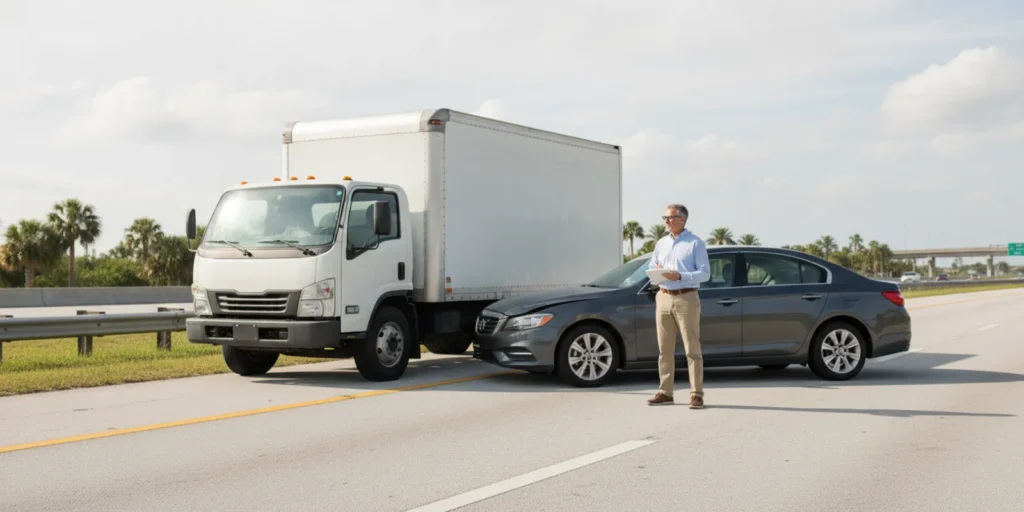
If you are asking when to consult a lawyer for a truck accident, consider speaking with one promptly after urgent safety and medical needs are addressed, especially if someone was injured, fault is disputed, or a commercial vehicle was involved. A truck crash can raise questions about the driver, trucking company, vehicle maintenance, records, and insurance that do not arise in the same way in every ordinary car collision. An early conversation can help you understand what information may matter and what questions to ask, without promising a result.
Why might a truck accident call for an earlier legal review?
Commercial vehicle crashes may involve more than two drivers and their personal auto policies. Depending on the circumstances, questions can involve a driver, a trucking or delivery company, a vehicle owner, a maintenance provider, a cargo-related business, or another party. Their roles cannot be assumed from the vehicle’s appearance or a brief account of the crash. Identifying who may have relevant information takes investigation.
There may also be records held by different people or organizations. Examples can include driver qualification or work records, dispatch and delivery information, inspection and repair documents, electronic vehicle data, photographs, and communications. Which records exist, who controls them, and how they relate to a particular collision depend on the facts. An attorney can explain what may be worth asking about in a case review and whether action to preserve information should be considered.
Insurance questions can also be more involved. A commercial vehicle may be connected to a business policy or other coverage, and the applicable policies and parties are not always clear from the initial exchange of insurance details. That does not mean multiple policies will apply or that any particular source will pay. It means coverage and responsibility should be evaluated from the actual records and circumstances.
Because the evidence and involved parties can differ, do not rely on a generic assumption that every truck accident follows the same path as a two-car crash. The firm’s truck accident practice page describes its stated approach to investigating truck collision matters. A consultation can help clarify whether the issues in your situation merit further review.
What signs suggest you should ask for a case review?
You do not need to know the legal answer before making an inquiry. Consider requesting a review if any of these circumstances apply:
- A person was injured or needs ongoing care. Health and immediate safety come first. If injuries are significant or their effects are still developing, it can be useful to get help understanding what information to preserve and how an injury-related claim may be evaluated.
- The crash involved a tractor-trailer, delivery vehicle, work truck, or other commercial vehicle. The vehicle type alone does not determine responsibility, but it can point to additional records, business relationships, or coverage questions.
- The driver or company disputes what happened. Conflicting accounts can make photographs, witness information, scene details, and available records important to understanding the event.
- You are contacted by an insurer or another representative. You may have questions about who is calling, what they are asking you to provide, and how to respond. A lawyer can discuss the situation with you. Avoid assuming that a call by itself establishes fault or coverage.
- There may be more than one responsible party. The relationship between a driver, employer, owner, shipper, or maintenance provider is fact-specific. A logo or vehicle registration alone does not answer every responsibility question.
- The collision involved a serious impact, multiple vehicles, or a complex scene. More vehicles or complicated movements can create differing accounts and require careful sorting of evidence.
- You are unsure what records to keep or who has them. A review may help identify practical questions about documents, vehicle information, photographs, and communications.
- You are concerned about a deadline. Deadlines can depend on facts and current law. Do not rely on a general web article to calculate one; ask a Florida attorney to review the circumstances promptly.
These are reasons to ask questions, not a checklist for deciding whether you have a valid claim. An initial conversation does not establish that a particular person or business is legally responsible. A lawyer would need to evaluate the available information and applicable law before offering case-specific guidance.
How can a commercial truck crash differ from an ordinary car collision?
A truck accident and a car accident can share basic evidence, such as roadway conditions, damage, witness accounts, and the sequence of events. A commercial vehicle can add other investigative questions. The differences are not automatic in every matter, but they can affect what information deserves attention.
There may be business relationships to understand
The person driving may work for a company, drive under a contract, operate a vehicle owned by someone else, or have another arrangement. The company whose name appears on a truck is not necessarily the only party to examine. A careful review may ask who employed or engaged the driver, who controlled the vehicle, what work was being performed, and whether other organizations had a relevant role. The answers require evidence; they should not be guessed from branding or assumptions about the industry.
Vehicle condition and maintenance records may be relevant
Depending on the collision, questions may arise about brakes, tires, lights, steering, prior inspections, repairs, or a component failure. These are lines of inquiry, not conclusions that a defect caused the crash. Records and, where appropriate, qualified technical review may help distinguish a vehicle problem from other possible explanations. A damaged part by itself does not establish when or why it failed.
Work and driving records may help explain the circumstances
When relevant and available, work schedules, dispatch communications, delivery instructions, and driver records may provide context about a trip. They do not, standing alone, prove that a driver was fatigued, distracted, or acting outside a rule. The reason to consider such information is to test what happened against reliable evidence, not to presume misconduct.
Electronic information may have limits
Some vehicles and related systems can record information about operation, location, braking, or other events. What a particular system captures varies. Access, retention, completeness, and interpretation are also fact-specific. Not every truck contains the same equipment, and no single data point necessarily explains a collision. If electronic information might matter, ask a lawyer how to raise the issue rather than trying to access or alter any device yourself.
Insurance may involve more than one question
A driver’s coverage, a company policy, vehicle ownership, work arrangements, and the purpose of a trip can each matter to an insurance review. The names on an insurance card do not always resolve which policy applies to a given event. Nor does a commercial vehicle guarantee a particular amount of available coverage. Policy terms and the facts must be examined before drawing conclusions.
What evidence questions can an attorney help you identify?
It can help to separate what is known from what is only suspected. For example, a truck may have moved into another lane, but a photograph taken afterward may not show the sequence that led to impact. A mechanical issue may be mentioned, but inspection records or a technical assessment may be needed before anyone can say whether a component contributed. A company name on a door can identify a lead for questions, but it does not by itself establish an employment relationship or legal responsibility. A careful review tests each possible explanation against the available evidence.
Different types of evidence can answer different questions. A scene photograph may show road markings or vehicle positions after the event, while a witness may describe what they saw before impact. Repair records may document prior work, but they may not establish that a prior repair caused a later crash. Driver or dispatch records may provide context for a trip, yet they cannot substitute for proof about the actual events. An attorney can help evaluate how pieces of information fit together and where there are gaps, rather than treating any one item as conclusive.
Preservation is also a practical concern. Original messages, photographs, and documents can be easier to assess when they remain in their original form and are kept with dates and source information. If a vehicle is being repaired or moved, do not interfere with it or attempt to hold it yourself. Ask a lawyer how to handle a potential evidence concern. Each situation is different, and lawful access and preservation steps depend on who controls the property and what records exist.
There may be privacy and scope questions, too. You do not need to search for private employment, medical, or business records that are not yours. A lawyer can discuss what information you already have, what could be requested through appropriate channels, and whether a formal process is needed. Do not post confidential documents or sensitive injury details publicly in an attempt to find answers. Keep information secure and share it only when you understand with whom you are communicating.
A legal review can help organize the questions, rather than leap to a theory. Depending on the circumstances, an attorney may want to understand:
- Where and when the collision occurred, and the direction each vehicle was traveling.
- How the crash unfolded, including lane changes, turns, stopping, road conditions, and the sequence of impacts.
- What photographs, video, witness names, or official records are available.
- Which commercial vehicle was involved, including identifying details visible in photographs or documents.
- Whether a business, vehicle owner, contractor, maintenance provider, or other organization may have information.
- Whether vehicle inspection, repair, or electronic records may exist and who may hold them.
- What statements or communications have already been exchanged with insurers, employers, or other parties.
- What injuries, treatment, expenses, or changes in daily activity you are documenting.
The aim is not to collect every possible document regardless of relevance. It is to preserve what you already have, keep a clear record of where it came from, and get advice about what may be appropriate to request. Do not trespass, access another party’s files or vehicle, or attempt to secure evidence in a way that puts you at risk. Your safety and medical care come first.
For general background on how a personal injury matter may progress, see the firm’s overview of a personal injury case timeline. It is general information, not a prediction of how long an individual truck accident matter will take. Investigative needs and case circumstances vary.
Why can the type of commercial vehicle matter?
“Truck accident” can describe a range of events: a tractor-trailer collision, a delivery van crash, a work truck turning across traffic, or a vehicle carrying equipment or cargo. The vehicle type does not decide liability, but it can shape the factual questions. A long combination vehicle may have different turning or stopping dynamics than a passenger car. A local delivery vehicle may be making frequent stops. A work truck may be owned by a company other than the one directing the job. These are possible context questions, not conclusions about what caused a particular collision.
The kind of load, route, and work being done may matter in some cases. Cargo information could be relevant if the load shifted or affected vehicle control, but the mere presence of cargo does not show that it contributed. A vehicle used for a job may raise questions about who assigned the trip or maintained the vehicle, but the business relationship needs to be established from facts. A consultation can help narrow the inquiry to the circumstances that actually apply rather than pursuing every theoretical possibility.
Road and scene conditions remain important regardless of vehicle type. Visibility, lighting, weather, lane layout, traffic flow, road work, and the location of any impact may help explain what each person could see or do. A truck’s size can make the scene look dramatic, but appearance alone does not prove how the event occurred. Any assessment needs to consider the full sequence and reliable supporting information.
In some collisions, the truck driver’s conduct is the central issue. In others, the questions may also include vehicle condition, company practices, work instructions, or another road user’s actions. Several explanations can be considered at once, and an investigation may rule some out. Avoid publicly accusing an individual or business before facts are established. A lawyer can help frame the issues carefully and distinguish an allegation from a proven fact.
What should you prepare before talking with a lawyer?
You do not need a complete file or a polished account to request an initial case review. If it is practical and safe, gather what you already have. A short, factual summary can help the conversation stay focused. Write down what you remember separately from what someone else told you, and note where dates or details are uncertain.
Basic crash information
Consider noting the date, approximate time, location, vehicles involved, direction of travel, and a brief description of what you recall. If you have an incident or crash report, keep a copy. If you do not have one, do not delay asking for a review solely because you are waiting for a document. An attorney can discuss whether additional records may be useful and how to seek them.
Photos, videos, and witness details
Keep original files when possible and avoid editing them in a way that removes context or metadata. If you have scene or vehicle photographs, record who took them and when, if known. Write down witness names and contact information you already received. Do not assume a witness will remember the event later or that a short video shows everything that happened.
Vehicle and company information
Keep any available identifying details, such as a license plate, company name, vehicle number, or information from an exchange of details. A photograph may help, but do not put yourself in danger to capture one. Avoid concluding from a company logo alone that a particular business employed the driver or controlled the trip.
Medical and expense records
Keep records you already receive about medical visits, recommendations, bills, prescriptions, missed work, or other practical effects. The purpose is to explain what happened after the collision and help a lawyer understand the questions involved. Do not change or delay medical care to build a legal file. Discuss health decisions with an appropriate medical professional.
Communications and insurance information
Save letters, emails, claim numbers, and notes about calls. Note the caller’s name, organization, date, and the general subject of a conversation. If you are asked to provide a statement, sign a release, or accept an offer, you can ask for time to understand what is being requested and seek legal advice. This article does not tell you what to say or whether to agree to a particular request; that depends on your circumstances.
You can also review the firm’s frequently asked questions for general information about consultations and personal injury matters. A web page cannot assess your specific facts, and an inquiry by itself does not create an attorney-client relationship. That relationship generally requires a written agreement.
What if an insurer or company contacts you first?
It can be difficult to know whether a caller represents your own insurer, the other driver’s insurer, a trucking company, or another organization. Before discussing details, it is reasonable to ask for the caller’s name, organization, role, and contact information, then verify that you have reached the intended person through a reliable channel. A caller’s title or knowledge of the crash does not tell you whether that person represents your interests. If the purpose is unclear, pause and seek clarification.
Keep a simple communication log. Record the date, who contacted you, the claim or reference number if one was provided, what was requested, and when you were asked to respond. Save the original email, letter, or message. If you receive a document, note what it is and avoid signing something you do not understand. This is an organizational step, not a rule that every request is improper or that every response should be delayed. Ask a lawyer how the specific request affects your situation.
Be aware that the person speaking with you may be gathering information for a particular organization. That does not automatically mean the person is acting improperly, nor does a friendly conversation mean the person is your legal adviser. You can ask what the information will be used for and whether the request can be sent in writing. If you feel pressured, do not guess or agree simply to end the call. You can ask for time to review the request and obtain advice.
It is common to have questions after a crash when an insurer, company representative, or another person asks for information. Start by clarifying who is contacting you, what organization they represent, and what they are asking you to do. You can keep the request and any response organized with your other records.
Be careful not to guess when you do not know an answer. A brief account given before you have had time to organize what you remember can leave out context. If you are uncertain, say so rather than filling in a gap with an assumption. Ask for a request in writing if that would help you understand it. Whether and how to respond to a particular request is case-specific, so consider speaking with a lawyer before making significant decisions about statements, documents, or releases.
Do not treat an insurer’s questions as proof that the company has accepted or denied responsibility. Do not assume that one conversation determines the value or outcome of a claim. Those issues depend on evidence, applicable policies, the nature of any injuries and losses, and law. A free initial review can help you identify the questions that need a closer look, but it cannot promise a particular result.
Does every truck accident require a lawyer?
Whether you benefit from legal help is a personal decision, and the answer may change as you learn more. Someone may initially believe that a crash caused no injury, then later have questions about symptoms or care. Another person may have clear documentation but no disagreement about the basic sequence. Neither example alone determines a legal claim. If new information comes in, you can ask for another review or clarify what the original discussion covered.
It may also help to distinguish the need for information from the decision to hire counsel. You can ask what a consultation includes, whether the attorney can review the records you have, and what the next step would be if the firm cannot take the matter. You can ask whether the person evaluating the matter is an attorney and how communications are handled. Do not assume a firm has agreed to represent you because you left a message, filled out a form, or had a brief conversation; confirm whether the firm has accepted the matter and review any written agreement.
If you are considering more than one firm, use the same core facts and questions to compare the explanations you receive. Ask how each firm approaches commercial-vehicle investigation, what is known versus uncertain, and how fees and expenses would be addressed in a proposed agreement. Be wary of anyone who claims to know the outcome without reviewing the facts. A clear explanation of uncertainty can be more useful than a confident prediction.
No single rule answers that question for every person. A minor collision with no known injury and no disagreement may raise different concerns from a crash involving serious injury, disputed facts, several vehicles, or a commercial fleet. Some people choose to handle routine communications themselves; others want help understanding the investigation or insurance process. A consultation is a way to ask about your specific situation, not a commitment to file a lawsuit.
The more uncertainty there is about injuries, vehicle operation, company involvement, records, or insurance, the more useful it may be to discuss the matter with a lawyer before making important decisions. But complexity alone does not prove that a claim exists or that litigation will follow. A lawyer needs to review the facts and applicable law. If a matter is not a fit for representation, the consultation may still help identify questions to clarify elsewhere.
When comparing whether to seek help, focus on practical needs: Are you unsure which parties or insurers are involved? Is there a disagreement about how the crash happened? Could important information be held by a company or vehicle owner? Are you being asked to make decisions before you understand the request? Are you concerned about deadlines? Those questions can help you decide whether to ask for a review, without trying to estimate a case outcome on your own.
What can you expect from an initial case review?
An initial conversation usually begins with the basic facts and your questions. You can explain what you know, identify what is uncertain, and share the records you have available. The attorney may ask about the collision, the commercial vehicle, injuries, communications, and any known insurance information. You may also ask how the firm approaches investigation, who would communicate with you, what further information might be needed, and what the engagement process involves.
A case review is not the same as a final legal opinion. At the first conversation, the available information may be incomplete. An attorney may need to review documents, obtain more facts, or assess current law before addressing specific legal questions. Do not expect a responsible lawyer to guarantee liability, compensation, or timing based on a brief description.
Charles Injury Law describes its injury practice as including investigation, insurer negotiation, and trial preparation when needed. Those statements describe the firm’s stated approach, not a guarantee that any particular step will occur or that a matter will reach a particular outcome. The scope of any representation and fee terms should be discussed for the specific matter and set out in the written agreement, if one is offered.
Charles Injury Law advertises a free initial consultation or case review for injury inquiries. Recovery-dependent fee descriptions should be confirmed for the individual matter; fee arrangements and responsibility for case expenses can vary. Ask questions about the proposed agreement before signing. No fee or case result should be assumed from a general article.
Why is timing important, even when fault is unclear?
People sometimes wait because they do not know who caused the collision, have not received all records, or hope the insurance process will quickly explain what happened. But uncertainty is often a reason to ask questions, not a reason to decide on your own that no review is needed. Some information may be easier to locate or preserve closer to the event, and people’s recollections can change with time. Whether any particular evidence is at risk depends on the situation.
At the same time, an early consultation does not mean that you must take legal action. It can be an opportunity to understand the issues, learn what facts remain unknown, and ask what next steps might be appropriate. A lawyer can discuss whether further investigation makes sense and whether time-sensitive concerns need attention.
Legal deadlines are especially important to handle carefully. They may depend on the kind of claim, parties, event details, and current Florida law. This article does not state a filing deadline or calculate one for you. If you think a deadline may apply, consult a Florida attorney promptly rather than relying on a general online summary. Any legal deadlines or case-specific liability statements should be reviewed by an attorney before publication or reliance.
How can you choose questions for the consultation?
A useful case review is a conversation. Bring the questions that matter most to you and ask for plain-language explanations. You might ask:
- What information would you need to evaluate the crash and the commercial vehicle’s role?
- Could more than one company, owner, or insurer be relevant, and what facts would help clarify that?
- Are there records that may be important to identify or preserve?
- What should I do if I receive another request from an insurer or company representative?
- What facts are still unknown, and how could they be investigated?
- What does the firm’s proposed representation cover, and what is outside its scope?
- How are fees and case expenses addressed in the agreement for this specific matter?
- Who will be my point of contact, and how will updates be communicated?
- What decisions, if any, need attention now, and why?
These questions help you understand process and fit. They do not require the lawyer to predict the outcome of your case. You should be able to understand what the lawyer is explaining and have a chance to ask follow-up questions before deciding whether to proceed.
When should you make the call?
If a commercial truck crash caused an injury, involved disputed facts, or raised questions about company records or insurance, it is reasonable to request a case review as soon as practical after addressing immediate safety and medical needs. You do not have to wait until every document is collected or every party is identified. If your situation appears straightforward, you can still ask a lawyer whether there are issues you may be overlooking. A consultation is a chance to learn, not a promise that a claim will succeed.
Contact Charles Injury Law for a free case review
This article provides general information, not legal advice. An inquiry or consultation does not by itself create an attorney-client relationship; that relationship generally requires a written agreement. Past results do not guarantee future outcomes, and an attorney must review the specific facts and current law before providing case-specific guidance.