

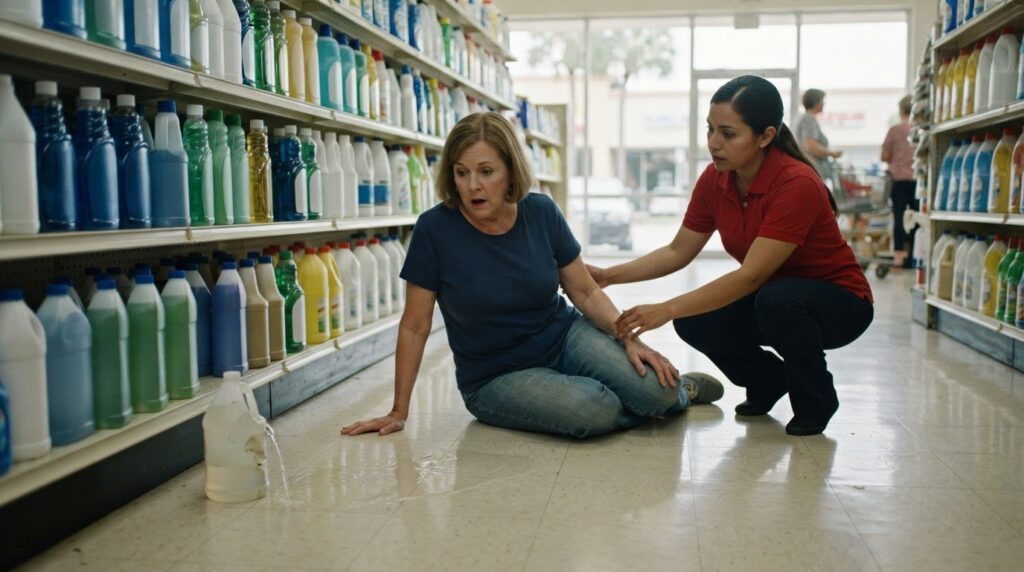

A Dollar Store slip and fall may support a premises-liability claim if a hazardous condition caused an injury and the store’s failure to address it or warn customers contributed to the fall. In Florida, an injured person generally has two years from the accident date to file a premises-liability lawsuit. A lawyer for injury at Dollar Store can investigate how the fall happened and whether the evidence supports a claim.
A fall can leave you facing pain, medical appointments, missed work, and questions about responsibility. It’s reasonable to want clear answers before discussing the incident with a store representative or insurer. If it happened in Miami or Fort Lauderdale, acting promptly can help preserve important details.
This guide explains what may qualify as a slip and fall, what evidence can help establish what happened, and how shared fault may affect compensation. You’ll also find practical steps to take after an injury and an overview of damages a claim may seek, including medical costs, lost income, and pain and suffering. The aim is to help you understand your options while you focus on recovery.
Key Takeaways
- A slip or fall may support a claim when a hazardous condition and the store’s response to it are central to how the injury occurred.
- Shared fault can reduce compensation, so details about the hazard and what happened before the fall matter.
- Photos, witness details, incident reports, and medical records can help preserve key evidence.
- A claim may include medical expenses, lost income, and other losses tied to the injury.
- Report the incident, seek medical care, and keep records and receipts to help document what happened and its impact.
Comparative negligence and shared fault
A fall inside a Dollar Store doesn’t automatically make the store liable. A Florida premises-liability claim must connect a hazardous condition to the injury and show negligence. The injured customer’s actions may also matter. If evidence shows that both the store and customer contributed to the fall, comparative negligence can reduce the compensation the customer may recover.
A claimant generally must establish four elements: the store owed a duty of care, breached that duty, caused the injury through that breach, and the injury resulted in damages. For example, a liquid spill near an aisle may create a hazard. Evidence that the store knew about the spill or should have discovered it may help establish a breach. Medical records can help connect the fall to an injury.
The store may argue that the customer contributed to the fall, for example, by failing to notice a visible spill, ignoring a warning sign, or walking while distracted. Those arguments don’t automatically defeat a claim. Relevant questions include what the customer could reasonably see, whether a warning was present, and whether the alleged conduct contributed to the fall.
Consider a customer who slips on liquid near a Dollar Tree entrance. If the evidence supports that the store’s negligence caused the fall, but also shows the customer was partly at fault, the customer’s share can reduce the award. In a comparative-fault example, a claimant found 20% at fault would have their award reduced by 20%. The reduction applies to the award, not as an automatic denial of the entire claim.
Assessing responsibility involves comparing physical evidence with each side’s account. The hazard’s location, nearby signs, lighting, footwear, and the customer’s route through the store may all matter. A witness who saw the spill before the fall may support one account, while a photograph of a warning sign may support another. Preserve details that show how the fall happened.
Florida personal injury claims can involve questions of negligence and responsibility, including claims arising from store falls. A personal injury claim in Florida depends on evidence tying the hazard, the store’s conduct, and the injury together. Keep your account specific: identify where you walked, what you saw, whether a warning appeared, and how the impact caused your symptoms. Those facts help assess both liability and any reduction for shared fault.
What Injuries Are Most Common in Dollar Store Accidents?
A spill, uneven floor, or falling product can cause more than a brief stumble. Falls at Dollar Tree may result in sprains, strains, fractures, head injuries, concussions, back or neck injuries, hip fractures, and soft tissue injuries. Symptoms may appear right away or become clearer later. Seek medical attention and describe the fall and your symptoms accurately to your treating provider.
Florida premises-liability claims focus on the hazard, the store’s knowledge of it, and the injury it caused. For example, a customer may slip on liquid near a Dollar Tree aisle. A claim may examine whether the store created the spill, knew about it, or should have discovered it through reasonable inspection. The evidence must also connect the unsafe condition to the customer’s injury.
Notice can be central to a claim. If an employee sees a spill and leaves it untreated, that may help show the store knew about the danger. If no employee saw it, evidence about how long it remained, nearby activity, or inspection practices may help assess whether the store should have discovered it. A wet-floor sign, warning, or prompt cleanup may also be relevant.
- Liquid on the floor: A customer slips near a freshly cleaned aisle.
- Damaged flooring: A raised tile or worn carpet catches a shopper’s foot.
- Falling merchandise: A product stored improperly drops as someone reaches for it.
- Shopping equipment: A runaway or defective trolley strikes a customer.
- Store entrance: Poor lighting or water near the doorway contributes to a fall.
Evidence of retail safety conditions can include photographs, witness accounts, incident reports, and records of employee inspections. Before leaving, write down where the hazard was and what you noticed. Those details can help distinguish a sudden spill from a condition that remained on the floor. They can also clarify whether a warning was visible and how the store responded.
A local premises-liability consultation can help organize these facts, medical records, and questions about notice. Bring your account of the incident and any photographs or paperwork. If a Dollar Store fall in Florida left you injured, you can contact the firm to discuss the incident and the evidence that may help establish responsibility.
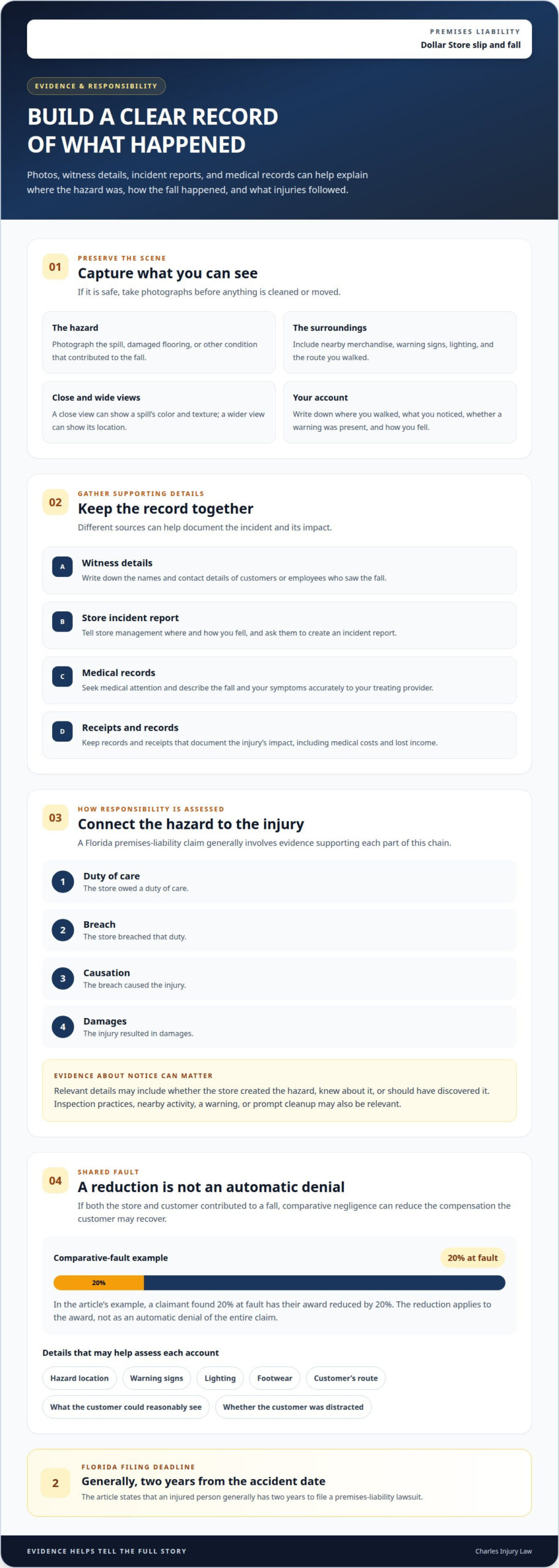
Evidence used to establish how a fall happened
Useful evidence may include photographs, witness accounts, an incident report, and medical records. For a Dollar Store slip-and-fall claim, these details can show where the hazard was, how the accident happened, and what injuries followed.
Collecting Evidence After an Accident
If it’s safe, photograph the hazard and its surroundings before anyone cleans or moves anything. Capture the floor, nearby merchandise, warning signs, lighting, and the route you walked. Tell store management where and how you fell, and ask them to create an incident report. Write down the names and contact details of customers or employees who witnessed the fall.
Include context in your photographs. A close image of a liquid spill may show its color and texture, while a wider view can show its position beside an aisle or entrance. If poor lighting made a hazard hard to see, photograph the surrounding area too. Note the time and location of each image, and keep the original files so their details remain available.
Medical evidence can help connect the fall to your injury. Seek care and describe how you landed, where you felt pain, and when symptoms began. Keep visit summaries, prescriptions, test results, and follow-up notes together. For example, if dizziness begins after a head impact, tell the medical provider when it started and how it changed.
Preserving Evidence
Keep evidence together, including photographs, any report number, medical paperwork, and witness contact details. Save messages or letters about the incident, and make a dated note describing what happened while the sequence is clear. If your clothing or shoes were damaged, photograph them and store them without cleaning or altering them. These records can help explain the fall and its effects.
Store records may also matter. An investigation may review the incident report, store photographs, and accounts from bystanders or employees. A lawyer investigating a Dollar Store claim may request relevant records and interview witnesses. Your photos can help identify the exact aisle, entrance, or merchandise display to examine.
Keep your account factual. Describe what you saw before the fall, where your feet were, and whether a warning sign was present. Don’t guess how long a spill had been there. Instead, note concrete observations, such as whether footprints crossed the liquid or an employee was cleaning nearby. Those details may help assess notice and responsibility.
Evidence can change quickly after a serious accident. Put medical care first. Then preserve what you can safely gather, record witness details, and keep documents connected to the incident. An organized record can provide a clearer account of what happened.
Lost wages and other potential damages
A Dollar Store injury claim may seek compensation for financial losses and personal harm caused by a fall. Potential damages depend on the losses connected to the injury and the records supporting them.
Economic and Non-Economic Damages
Economic damages cover measurable expenses and income losses. Keep medical bills, receipts, and records of missed work together. A claim may include past and future medical costs, past and future lost income, and property damage. For example, repair or replacement records can document a damaged phone or pair of glasses.
Non-economic damages address harm that doesn’t come with a simple bill or receipt. They may include pain and suffering, emotional distress, disability, or disfigurement. Someone recovering from a fracture, for example, may describe how pain limits daily activities. Medical notes and consistent treatment records can help show how the injury affected their life.
An insurer may assess whether claimed losses are supported and related to the incident. Organize medical records, expense documents, and information about missed work before reviewing a settlement offer. A personal injury lawsuit may seek damages when the parties dispute responsibility or compensation. Evidence should connect each claimed loss to the fall and resulting injury.
Lost Wages
Lost income may include wages missed during recovery and future income affected by lasting limitations. Keep pay stubs, employer records, and notes showing time away from work. If medical restrictions prevent you from returning to your regular duties, retain those restrictions and related employment documents. These records help explain how the injury affected your ability to work.
Compare your work timeline with treatment records. For instance, if a doctor’s note limits lifting and your job requires lifting merchandise, the records may help explain missed shifts or changed duties. Document reduced hours or income after returning to work. Clear records help distinguish injury-related losses from unrelated employment changes.
A fatal Dollar Store incident can raise separate wrongful-death issues. Potential compensation may include wrongful-death expenses, while the circumstances and available records shape the claim. A family member should keep funeral-related bills and correspondence connected to the incident. The responsible party’s insurance may dispute what losses were caused by the event, so organized documentation matters.
A law firm reviewing a claim can assess medical costs, wage records, property loss, and non-economic harm together. Keep a simple record of expenses and work impacts as they arise. For example, list each missed shift alongside the relevant pay record, and save each medical bill with its treatment date. This helps clarify the damages being claimed.
Steps to take after a Dollar Store slip and fall
Act promptly after a fall at Dollar Tree. Your next steps can help preserve details about the hazard, your injuries, and how the incident happened.
Post-Accident Steps
First, move somewhere safe and report the fall to store management. Ask them to create a formal incident report, and note whom you spoke with. Photograph the hazard and its surroundings if you can do so safely. Get names and contact details for customers or employees who saw the fall, and write down the store location and where the incident happened.
- Seek medical attention promptly, even if symptoms seem minor at first.
- Describe the fall and your symptoms clearly to the medical provider.
- Keep medical records, bills, prescriptions, and doctor notes together.
- Save pay stubs showing missed work and correspondence about the incident.
These records can help connect the hazard to your injury and related losses. Keep your account factual: note what you saw, where you walked, and whether a warning appeared. If liquid or merchandise caused the fall, describe its location and condition without guessing how long it had been there.
Risks From Recorded Statements and Delayed Treatment
An incomplete recorded statement can omit important details or inaccurately describe how the fall happened. Before speaking with an insurance adjuster or providing a recorded statement, consult a lawyer. Don’t guess about details you don’t remember. Delayed treatment may also make it harder to establish when symptoms began and how they relate to the fall. Prompt medical care supports your health and creates a clearer timeline.
If symptoms appear later, tell your provider when they started and how they changed. For example, note whether pain increased after the fall or affected daily activities. Keep appointment records and follow medical instructions. Gaps in documentation may give an insurer grounds to question the connection between the injury and accident.
Florida premises-liability and wrongful-death lawsuits generally must be filed within two years from the accident date. Missing a filing deadline may permanently forfeit a claim. Keep the accident date with your records, and don’t let discussions with the store or insurer distract from the deadline.
Preserving your rights means acting carefully, not rushing into an account you can’t support. A commercial slip-and-fall claim may turn on the hazard, the store’s notice, and the injury records. For guidance on your next steps, contact the firm about your Dollar Store fall.
Personal Injury Attorney in Fort Lauderdale: Injuries suffered from Car Accidents
Personal Injury Attorney in Fort Lauderdale can help when an injury involves a car, truck, semi, tractor-trailer, Uber or Lyft, or pedestrian accident. If a store injury claim raises questions about a separate crash, keep the incidents and evidence distinct. Different events may involve different responsible parties and records.
For a motor vehicle injury, preserve medical records, accident reports, photographs, and insurer communications. Personal Injury Attorney in Fort Lauderdale handles Car Accidents, Truck Accidents, Uber & Lyft Rideshare Accidents, and Pedestrian Accidents. Contact the firm to discuss next steps for your injury claim.
Choose Your Next Step With Confidence
The next step is to turn uncertainty into a clear plan. Before discussing your situation, consider what you need answered: who may be responsible, which records matter, or how the injury has affected your work and daily life. A lawyer for injury at Dollar Store can review those concerns alongside the circumstances of the fall.
Charles Injury Law also represents people injured in car, truck, semi, tractor-trailer, and Uber or Lyft accidents. If your matter involves a separate collision, keep its records distinct from store-related documents. That helps clarify which event and responsible parties each claim concerns.
You deserve a conversation focused on your circumstances, not pressure to make a rushed decision. Bring the questions you want answered and explain what you hope to understand about your options. Contact Charles Injury Law to discuss your situation and take an informed next step toward moving forward.
Frequently Asked Questions
What Is a Slip and Fall Accident?
A slip and fall describes a fall after someone loses footing or balance on another party’s premises. “Slip” often refers to losing traction, while “trip” describes catching a foot on an obstruction; either can cause a fall. The label alone doesn’t determine whether a claim can proceed. The surrounding facts and connection between the incident and injury remain central.
What Compensation Can You Recover?
The amount depends on how the injury affects your health, work, and daily routines, as well as the evidence supporting those effects. For example, ongoing treatment needs or limits on ordinary activities may shape how a claim is evaluated. Keep a personal record of changes over time, such as tasks you can no longer manage comfortably. This information is general and isn’t legal advice.
What type of lawyer handles injuries at a Dollar Store?
A premises-liability attorney handles claims involving injuries on commercial property. A lawyer for injury at Dollar Store can review whether the facts support a premises claim and help address questions about insurance communications. Charles Injury Law handles commercial Slip and Fall matters. If the injury happened in a different setting, note the location and events leading to it when discussing your case.
How do I find a premises liability lawyer near me?
In Fort Lauderdale, Miami, West Palm Beach, Boca Raton, Delray Beach, Boynton Beach, Lake Worth, Orlando, or Tampa, look for a personal injury lawyer who handles commercial premises claims. Directory labels such as “attorneys personal injury” reveal little, so focus on experience with these claims. Ask how the lawyer will communicate with you and assess the facts of your case.
What should I do immediately after an injury at a Dollar Store?
After reaching a safe place, note the exact store location and approximate time of the incident. If pain or another urgent symptom makes it difficult to handle details, ask a companion to record them for you. Keep a short timeline of what happened afterward, including when symptoms changed or affected your routine. A lawyer for injury at Dollar Store can review these details.
How do I report and document a Dollar Store injury?
When reporting the incident, write down the manager’s name, the date you spoke, and any report or reference number provided. Keep later messages together in a dated communication log. Preserve original digital photographs rather than relying only on edited or forwarded copies. These simple steps can help you locate records when questions arise about the report or follow-up.
Who is legally responsible for an injury inside or outside a Dollar Store?
The responsible party may depend on who controlled the specific area and the circumstances of the injury. An indoor aisle and an outdoor entrance may involve different conditions or responsible entities. For an injury outside, record whether the location was part of the store premises or another property. A premises-liability review can examine control of the area and the facts surrounding the incident.
How much compensation can I get for a Dollar Store injury?
No fixed amount applies to every claim. The assessment turns on the documented effects of the injury, the evidence, and the circumstances establishing responsibility. If you’re comparing a proposed settlement, consider whether it accounts for the full impact described in your records. Lawyers for auto accidents and auto accident lawyers near me handle a different type of claim. This FAQ is general information, not legal advice.
Disclaimer
The information provided on this blog is for general informational purposes only and does not constitute legal advice. Viewing this content does not create an attorney-client relationship with the firm. You should not act or rely on any information contained herein without seeking legal advice from a qualified attorney regarding your individual situation.