

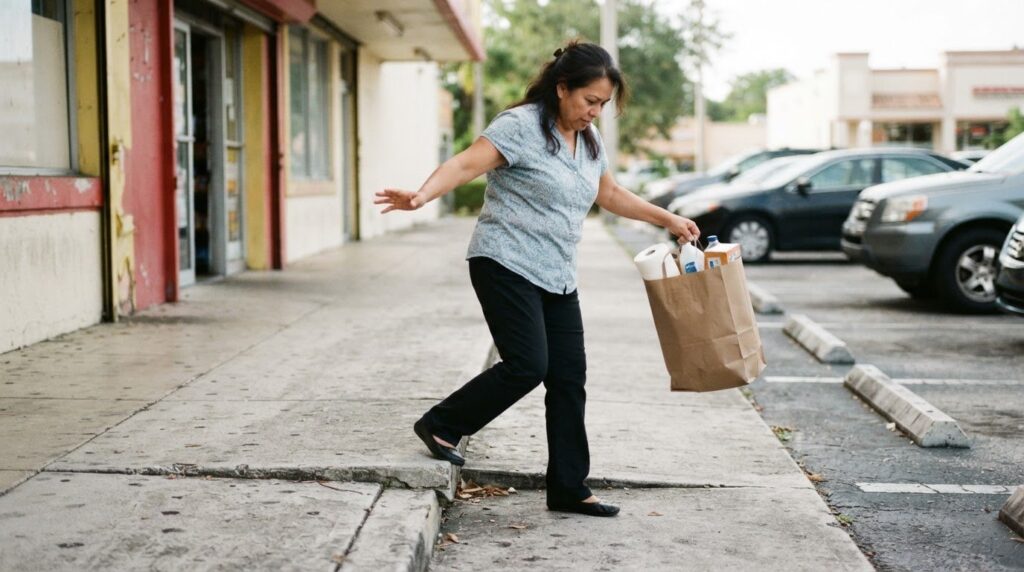

A fall at Family Dollar doesn’t automatically establish a claim, but evidence that a store hazard caused your injury may support one. Under Florida Statute § 768.0755, a person claiming a slip and fall caused by a transitory substance generally must prove the store had actual or constructive knowledge of the hazard. A lawyer for an injury at Family Dollar in Miami can assess how the hazard, notice, and your injuries fit together.
It’s understandable to wonder whether you have a case, especially when you’re dealing with pain, medical appointments, or missed work. This article explains what can strengthen a Florida store-injury claim, what compensation may cover, and what steps can help preserve evidence. You’ll also learn how legal representation can help you deal with the claim and insurance communications while you focus on your recovery.
Key Takeaways
- For a Florida slip-and-fall claim involving a transitory substance, Florida Statute § 768.0755 requires proof that the store had actual or constructive knowledge of the hazard.
- Record the hazard and scene, note witness and employee contact details, and keep medical records to help preserve important evidence.
- Responsibility may depend on who caused or controlled the dangerous condition, including whether a store or property owner was involved.
- Potential damages may include medical bills, lost income, and pain and suffering; the evidence helps determine what losses to claim.
- Call Now: (954) 390-2228 Available 24 Hours a Day, 7 Days a Week
Hurt at Family Dollar in Miami? Do You Have a Case?
A fall or falling item alone doesn’t prove negligence. In Florida, the hazard, the store’s knowledge of it, and the injury it caused all matter.
Proving Negligence in a Slip and Fall
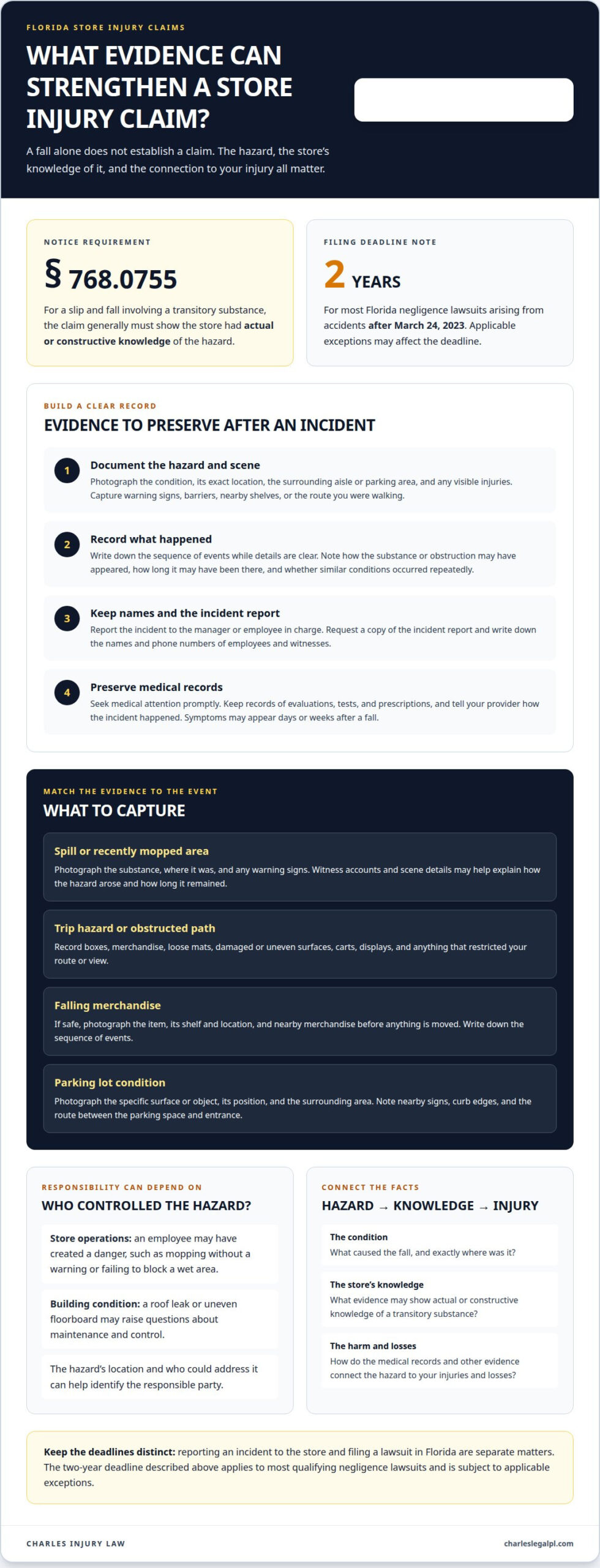
For a slip and fall involving a transitory substance, Florida Statute § 768.0755 generally requires proof that the store had actual or constructive knowledge of the hazard. Evidence may help show how the substance got there, how long it remained, or whether it happened repeatedly. For example, photos of a spill and witness accounts may help establish what happened. The injury claim also needs to connect the hazard to your injuries and losses.
Trip Hazards in Aisles and Parking Lots
Look closely at what caused the fall and where it happened. A box left in an aisle, merchandise on the floor, or an uneven surface may help explain a trip. In a parking lot, photograph the specific surface or object, its position, and the surrounding area. These details can help identify the precise hazard that caused your fall.
Slip-and-Fall and Falling Merchandise Injuries
Spilled liquid or a recently mopped area can create a slip hazard, and merchandise falling from a shelf can also injure a shopper. The evidence depends on what happened. For a slip and fall, document the substance, its location, and any warning signs. If an item fell, identify what it was, where it was stored, and whether you can safely photograph the item and shelf. Write down the sequence of events clearly.
Evidence from Trips and Falling Merchandise
Photograph the hazard, the surrounding aisle or parking area, and any visible injuries. Report the incident to the manager or employee in charge, and request a copy of the incident report. Write down the names and phone numbers of employees you spoke with and witnesses who saw the event. For falling merchandise, record the item’s location before anyone moves it, if safe to do so. A consultation with an attorney can help assess how this evidence supports a Florida personal injury claim.
Seek medical attention promptly, even if you initially feel well. Symptoms may appear days or weeks after a fall. Keep records of medical evaluations, tests, and prescriptions, and tell your provider how the incident happened. A lawyer for injury at Family Dollar can review the hazard, available evidence, and documented injuries to assess your claim. Clear, timely records can help connect the incident to the harm you experienced.
Common hazards in Family Dollar stores
A dollar store can present hazards ranging from spills to blocked walkways. At a Family Dollar location, identify the exact condition, where it appeared, and how it caused your injury. Those details help distinguish a dangerous property condition from an accident unrelated to the premises.
In an aisle, you might encounter liquid on the floor, a loose mat, damaged tile, or merchandise in the walking path. Each raises different questions: Was the condition visible? Did it obstruct your route? Could you reasonably avoid it? Describe the aisle, nearby shelves, and any warning sign or barrier. A precise account gives an injury attorney more useful information than a general statement that the floor was unsafe.
The store layout can also affect how an incident happens. A narrow aisle partly blocked by a cart, box, or display may leave little room to pass. Congestion or merchandise that blocks the view of the floor can make an obstacle harder to see. Note what restricted your path, where you were standing, and whether another route was available. These details help explain the conditions at the time of the fall.
Outside, a parking lot may have a broken or uneven surface, an object in a walkway, or poor visibility around parked vehicles. A trip may happen between a parking space and the entrance, rather than inside the store. Record the precise location, including nearby signs, curb edges, and the route you were walking. Location matters because different parties may own, control, or maintain different parts of the property.
Some incidents involve merchandise rather than a floor defect. A product may fall from a shelf, or a shopper may be struck while reaching for an item. If it is safe, photograph the shelf, the fallen product, and nearby merchandise. Report the incident to the manager and request an incident report. Write down employee and witness names, and preserve your photos before the area changes.
Premises liability involves more than labeling an event a “store accident.” The condition, its location, who controlled the area, and how it relates to your injury all matter. A roof leak, for example, may raise questions about building maintenance, while an aisle obstruction may involve store operations. If you fell at a commercial property, review the details of a Florida slip-and-fall claim and note which facts still need documenting.
What Can You Be Compensated For After a Store Injury?
Responsibility for a Family Dollar accident depends on who controlled the hazardous area and what caused it. Report the incident promptly to the store manager or employee in charge. For most Florida negligence lawsuits arising from accidents after March 24, 2023, the filing deadline is two years, subject to applicable exceptions. The store’s reporting process and Florida’s court-filing deadline are separate matters.
A store may be responsible when an employee creates a danger, such as mopping without warning shoppers or failing to block off a wet area. A landlord may be involved if a building condition, such as a roof leak or uneven floorboard, contributed to the accident. The lease, maintenance duties, and control of the specific area can matter. Identifying the responsible party requires examining how the hazard arose and who could address it.
A Family Dollar accident may involve a spill, wet floor, merchandise blocking a walkway, or a building defect. The cause helps focus the investigation. A liquid spill, for example, may raise questions about who created it and whether the store knew about it. A leak may point to a property-maintenance issue. To support a negligence claim, the injury must also be connected to the dangerous condition.
When reporting the accident, clearly tell the manager where and how it happened. Ask them to document it and request a copy of the report. Keep your own record of the date, location, hazard, and names of anyone you spoke with. If the manager does not provide a copy, note your request and preserve any messages or other records related to your report.
Potential compensation may include medical bills, lost income, and pain and suffering. Medical records can show treatment and expenses; work records can document missed income. Notes about how the injury affects ordinary activities can describe pain and disruption. Keep receipts, appointment details, and employment records together. These materials help explain the losses behind a claim, rather than relying on a general estimate.
Florida’s comparative fault rule may also affect recovery. Under Florida Statute § 768.81(6), recovery is generally barred in covered negligence actions when a claimant is found more than 50 percent responsible. The evidence may address whether the hazard was visible, where it was located, and how the accident happened. You deserve a careful assessment of both liability and losses before deciding how to pursue compensation.
Economic and non-economic damages
After a Family Dollar injury, damages generally refer to losses tied to the accident. Economic damages are financial losses, such as medical bills and lost income. Non-economic damages address pain and suffering. Separating these categories helps organize an injury claim and show how the incident affected your finances and daily life.
Start with documents showing what you paid or could not earn. Keep bills, receipts, appointment summaries, test results, and prescription records together. If an injury kept you from working, preserve pay statements and records of missed shifts. For example, a dated appointment record and a matching work schedule can help explain lost income. Note which expenses relate to treatment for the Family Dollar injury.
Medical records can also help explain how the injury developed. Keep a simple timeline of treatment, symptoms, and changes in your ability to do ordinary tasks. Note specific examples, such as needing help carrying groceries or missing a usual activity because movement caused pain. These details describe pain and suffering beyond a diagnosis alone. A personal injury claim depends on connecting those effects to the harm caused by the accident.
Organize your records by type and date. Create separate folders for medical expenses, work-related losses, and notes about pain or daily limitations. Save the store incident report with your accident records and keep copies of communications about the event. If a symptom changes after treatment, add the date and describe what changed. Clear records help keep important details from getting lost.
Economic losses and pain may be documented in different ways. A bill may show a treatment charge, while a personal note may explain how pain affected your sleep or household tasks. Keep each record factual and specific. Don’t guess at totals or describe symptoms you did not experience. Document what happened, when it happened, and how it changed your routine. This helps connect the evidence to your injury.
Recovering damages depends on establishing responsibility and supporting claimed losses with evidence. Preserve original documents, make copies, and update your records as treatment and work impacts continue. A report to the store can document that an incident occurred, while medical and employment records help show its consequences. Together, these materials provide a fuller account of the financial and personal effects for which you seek compensation.
Legal representation for Family Dollar injuries
After a Family Dollar fall, legal representation can help organize scattered records into a focused injury claim. An attorney reviews how the incident happened, what condition caused it, and which evidence may support responsibility. That work matters in retail cases because a spill, aisle obstruction, or building defect may involve different facts and potentially different responsible parties.
Evidence can change quickly. Surveillance footage may be overwritten, inspection logs updated, and hazards cleaned or moved. An attorney can identify relevant records, seek to preserve them, and compare them with photographs, witness accounts, and the incident report. For example, footage may show when a spill appeared, while an inspection record may help explain store activity around that time.
Take care with insurance communications. An adjuster may request a recorded statement or ask leading questions about where you were looking, what you saw, or how you walked. Your answers may later be used to argue that you contributed to the fall. Consult an attorney before giving a recorded statement or responding to an offer.
A lawyer can also organize your claim around documented losses. Medical records, bills, work records, and notes about limitations each serve a different purpose. An attorney can assess whether the records connect the injury to the store condition and identify important gaps. For instance, if a medical record describes a different cause, that inconsistency may need careful review before negotiations.
Responsibility may be disputed. Family Dollar or its insurer may argue that a hazard was obvious, that the store lacked notice, or that another party controlled the area. Legal representation can assess those arguments against available evidence, including maintenance records, employee accounts, and the property’s layout. This focused review helps identify which facts support the claim and which need further investigation.
Before settlement discussions, an attorney can assess an offer against the injury evidence and documented losses. A quick payment may not account for continuing treatment, missed work, or lasting pain. No single document establishes the full value of a claim; the cause, medical course, and supporting records all matter. If the insurer disputes responsibility, counsel can explain the evidence and pursue available legal options.
If you’re dealing with a Family Dollar injury claim, contact an attorney about your case before responding to an insurer’s questions or offer. Bring the incident report, photographs, medical records, and any written communications. Those materials give the attorney a concrete starting point for reviewing the store condition, the claim’s proof, and the next step.
Personal Injury Attorney in Fort Lauderdale: Injuries suffered from Car Accidents
Personal Injury Attorney in Fort Lauderdale represents people injured in car, truck, semi, and tractor-trailer accidents, Uber and Lyft crashes, and pedestrian incidents. If you were hurt in a Family Dollar store, this section’s guidance can help you understand the premises-liability issues involved; the firm’s listed injury cases also include commercial slip-and-fall and trip-and-fall accidents. For a vehicle or pedestrian injury, legal help can address evidence, responsibility, and documented losses.
Turn to legal representation when an insurer disputes responsibility, requests a recorded statement, or makes an offer before your losses are clear. Share incident records and medical documentation so the circumstances and injuries can be reviewed. For other qualifying injury matters, personal injury representation can help assess the next steps.
Contact Personal Injury Attorney in Fort Lauderdale to discuss your injury and the kind of legal help you need.
Choose Your Next Step With Confidence
A store injury can disrupt plans long after the immediate aftermath. It may help to understand the claims process and how to respond to an insurer. A lawyer for injury at Family Dollar can review the circumstances and explain the legal options available under Florida law. The strength of a claim depends on its specific facts and supporting evidence.
Charles Injury Law also represents people injured in car accidents, truck, semi, and tractor-trailer accidents, and Uber and Lyft rideshare accidents. If your injury happened in a different setting, identify the key questions you want addressed and bring the records that matter to your situation. A focused conversation can help you understand the path ahead without pressure to make a rushed decision.
Contact Charles Injury Law about your injury to discuss a possible next step. You can also call now: (954) 390-2228 Available 24 Hours a Day, 7 Days a Week. Take the next step when you’re ready, and move forward with clarity.
Frequently Asked Questions
How Can a Personal Injury Law Firm Help You?
A personal injury firm near me can investigate the incident, organize records, and handle claim communications. Attorneys for personal injuries can also assess whether evidence supports pursuing compensation. If comparing options, focus on experience with premises-liability claims and clear communication about the process. The phrase “attorneys personal injury” may describe this type of legal support, though the wording varies. This information is general and isn’t legal advice.
What should I do immediately after an injury at Family Dollar?
Seek medical care and report the incident to a store manager. Before leaving, if you’re able, write down the store location and time, and ask how to obtain the incident report. Note any symptoms that arise later and tell your medical provider about changes. Save receipts or other records of your visit, and keep copies of paperwork connected to the incident.
How can I find a personal injury lawyer for a Family Dollar accident near me?
Look for a Florida attorney who handles commercial premises-liability claims and can explain how they’ll assess your records. A lawyer for injury at Family Dollar should be able to discuss relevant experience and communication. Charles Injury Law represents clients in Fort Lauderdale, Miami, West Palm Beach, Boca Raton, Delray Beach, Boynton Beach, Lake Worth, Orlando, and Tampa. If your concern involves a vehicle crash instead, an attorney handling car accidents may be more relevant.
What evidence should I collect after an injury at a Family Dollar store?
Keep original photos, videos, receipts, and written communications together, and record when each item was created. Set aside the clothing and shoes you wore during the incident without altering them. If you receive paperwork from the store, keep the full document, including attachments or acknowledgment pages. A dated file helps distinguish what you observed at the scene from details remembered later.
Who may be liable for an injury at Family Dollar: the store, landlord, or another party?
The responsible party may depend on who controlled the location and what caused the hazard. A store-operated display, for example, may raise different questions from a leak related to building maintenance. A property owner or maintenance company may also be relevant if its role contributed to the hazard. Contracts, maintenance records, and information about who managed the affected area can help clarify each party’s involvement.
What compensation can I seek for a Family Dollar injury, including medical bills and lost wages?
A claim may include documented medical expenses, income lost because of the injury, and pain and suffering. Keep records showing how each loss relates to your injury, such as bills, work schedules, and treatment notes. If your ability to perform job duties changes, document the specific tasks affected. These details help present the impact without relying on an unsupported estimate.
What should I avoid saying or signing when dealing with Family Dollar or its insurance company?
Don’t guess about details, minimize symptoms, or sign a release before you understand its effect. An insurer may request a recorded statement, so consult an attorney before responding. Keep communications factual, save copies of documents, and ask for time to review anything presented for signature. If a document contains unfamiliar terms or releases claims, seek legal guidance before deciding whether to sign.
Disclaimer
The information provided on this blog is for general informational purposes only and does not constitute legal advice. Viewing this content does not create an attorney-client relationship with the firm. You should not act or rely on any information contained herein without seeking legal advice from a qualified attorney regarding your individual situation.