

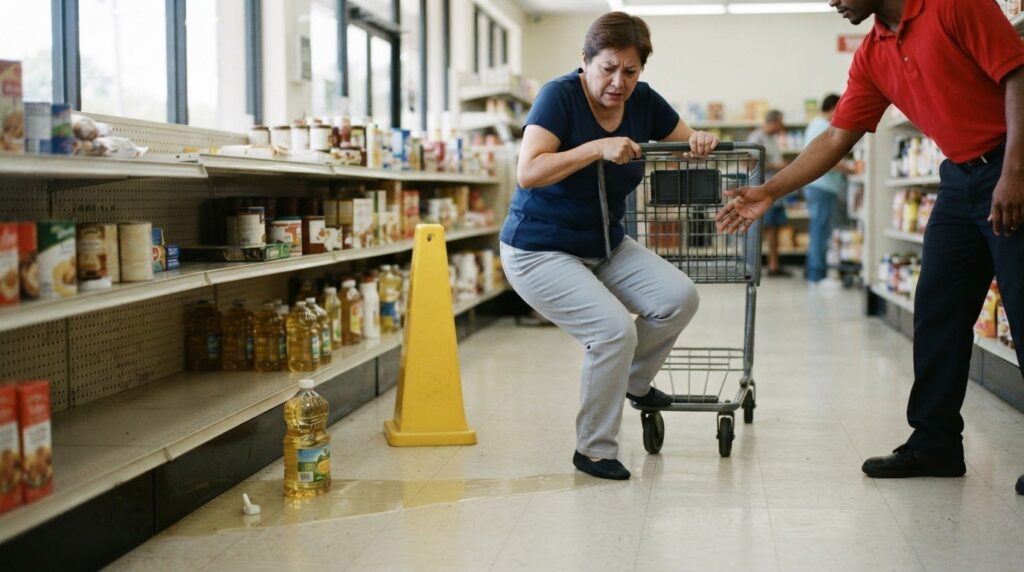

A fall at Dollar General doesn’t automatically make the store responsible. In Florida, a business may be liable when a transitory substance caused the fall and the business had actual or constructive knowledge of the hazard and should have remedied it, according to the Florida Legislature. A lawyer for an injury at Dollar General can assess whether the facts may support a claim.
It’s reasonable to want answers before dealing with store representatives or an insurer. The condition that caused the fall, how long it was there, the injuries it caused, and the available evidence can all matter. This guide explains when Dollar General may be responsible, what can affect a claim’s value, and what compensation may cover.
You’ll also learn what to do after a fall, how to preserve useful evidence, and when legal help may make sense. If you were hurt in Miami or Fort Lauderdale, understanding these points can help you consider your next step with greater confidence.
Key Takeaways
- A store may be responsible for a slip and fall when it knew, or should have known, about a dangerous condition and failed to address it.
- After a fall, seek medical care, report the incident to store management, and preserve photos, witness details, and related records.
- Claim value can depend on how the hazard caused the fall, the available evidence, the injuries, and their effects on daily life and work.
- Potential compensation may include medical expenses, lost income, and damages for physical or emotional harm.
- For help understanding your next step, Call Now: (954) 390-2228 Available 24 Hours a Day, 7 Days a Week.
When Is Dollar General Responsible for a Slip and Fall Accident?
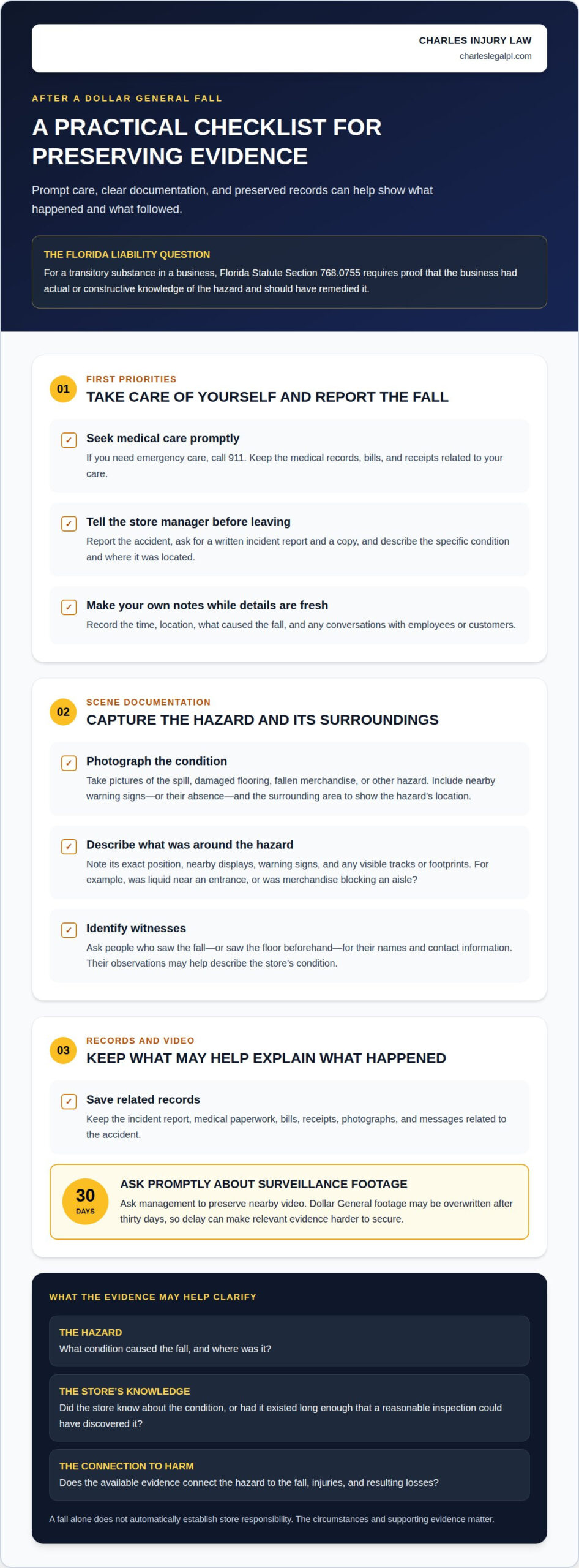
To prove a Florida slip-and-fall claim, show that a dangerous condition caused your fall and injuries. For a transitory substance in a business, Florida Statute Section 768.0755 requires proof that the business had actual or constructive knowledge and should have remedied the hazard, according to The Florida Legislature.
Constructive knowledge may involve showing that the condition existed long enough for a reasonable inspection to discover it. The circumstances matter: a spill’s location and evidence of how long it remained can help establish what the store knew or should have known. A claim also needs evidence connecting the hazard to the fall and resulting harm.
After getting injured at a Dollar General store, seek medical care promptly and report the accident to the manager before leaving. Ask for a written incident report and a copy, then keep medical records, bills, and receipts. If you need emergency care, call 911.
Act while details are fresh. These steps can help preserve evidence after a discount-store injury or another fall:
- Photograph the scene: Capture the spill, damaged flooring, nearby warning signs or their absence, and your visible injuries. Include the surrounding area to show where the hazard was located.
- Identify witnesses: Ask people who saw the fall or the floor beforehand for their names and contact information. Their observations may help describe the store’s condition.
- Preserve records: Save the incident report, medical paperwork, bills, receipts, and any photographs or messages related to the accident.
- Request footage promptly: Ask management to preserve nearby surveillance footage. Dollar General footage may be overwritten after thirty days, so delay can make relevant evidence harder to secure.
An accident inside a store doesn’t automatically prove liability. A wet entrance, an aisle spill, or an obstacle near a display may indicate a hazard, but the evidence must connect that condition to the fall. If an employee or customer created it, witness accounts, incident records, and video may help establish what happened and when.
Parking lots, sidewalks, and entrances can also be involved in a fall. The location and circumstances help determine which evidence matters. For a broader explanation of personal injury claims, review how injury evidence and responsibility fit together. If the store disputes what happened, a lawyer for an injury at Dollar General can help assess the available records and evidence.
Common hazards in Dollar General stores
Aisles, checkout areas, entrances, and exterior walkways present different fall risks. Under Florida law, the specific hazard and evidence of the store’s knowledge matter.
Common Causes of Store Falls
A fall may involve a liquid spill, loose merchandise, a fallen item, or an obstructed aisle. For example, a box left across a customer’s path can create a tripping hazard, while liquid near an entrance can make the floor slippery. These examples can guide what to photograph and describe in an incident report, rather than assuming every fall has the same cause.
Look at the hazard’s exact location and condition. Was a spill near a refrigerated display? Did merchandise block the aisle, or was a floor mat curled at the entrance? Note nearby displays, warning signs, and any visible tracks or footprints. These details can help show how the condition affected customers moving through that part of a Dollar General store.
Store Duty and Hazardous Conditions
Florida premises liability law considers the type of hazard involved. For a transitory foreign substance in a business establishment, the person bringing a claim must prove the business had actual or constructive knowledge of the dangerous condition and should have remedied it, according to the Florida Legislature. The condition’s duration and inspection evidence may help establish constructive knowledge.
Under this rule, the store’s awareness is central. An employee’s direct observation may support actual knowledge; evidence that a spill remained long enough for a reasonable inspection to find it may support constructive knowledge. A lawyer reviewing the fall will consider the hazard, its location, and evidence about how it developed. The question isn’t simply whether the store had floors or displays.
Report the incident to store management and describe the specific condition, such as liquid beside an entrance or merchandise across an aisle. Ask that the incident report accurately state where and how you fell. Keep your own notes about the time, location, and any employees or customers who discussed the hazard. These details may help compare your account with store records.
Distinguish a floor hazard from a blocked walkway or an exterior condition. A photograph showing a clear path around a fallen item may tell a different story from one showing the item across the aisle. Incident reports, witness accounts, and maintenance records may later help clarify whether the condition was addressed or remained in place.
If you need help assessing how a store hazard fits Florida premises-liability rules, you can discuss the circumstances of your fall.
Factors that affect a store slip and fall claim’s value
A retail claim’s value depends on evidence of responsibility, injury severity, and documented losses. The evidence must connect the store hazard to the fall and its consequences.
Injuries Affecting Claim Value
A fall can cause broken bones, head wounds, hip fractures, or traumatic brain injuries. The injury’s severity, treatment needs, and effects on everyday activities help show the harm involved. For example, records of ongoing treatment and limits on walking or working can provide a clearer picture than a brief description of pain alone.
Keep medical records and bills together, and note how symptoms affect routine tasks. A personal injury claim should reflect documented harm, not assumptions about what an injury might become. Consistent treatment records can help connect the fall to the diagnosed condition and explain why care continued.
Liability for a Slip and Fall
Dollar General may be liable when evidence supports that a hazardous condition caused the fall and the business had actual or constructive knowledge. Under Florida Statute Section 768.0755, constructive knowledge may be shown if a condition existed long enough that a reasonable inspection would have discovered it, according to The Florida Legislature.
Evidence may include the incident report, witness accounts, surveillance, and maintenance records. For example, video showing a spill before the fall may help establish how long the hazard remained. A lawyer for an injury at Dollar General can assess how the evidence supports liability and damages.
Comparative fault can also affect recovery. Under Florida’s modified comparative fault system described in the research, a person’s recovery is reduced according to their percentage of fault if that percentage does not exceed 50%. The evidence may therefore need to address claims that the shopper failed to notice a hazard or contributed to the fall.
Settlement value also depends on the strength of the evidence and losses supported by records. Useful documents include treatment notes, medical bills, proof of missed work, and records of lasting limitations. A serious diagnosis alone doesn’t establish a claim’s value; the connection between the fall, the injury, and its impact must be supported.
- Injury evidence: Diagnoses, treatment, and functional limits show the harm attributed to the fall.
- Liability evidence: Reports, footage, witnesses, and maintenance records help explain the hazard and store knowledge.
- Loss documentation: Bills and income records help establish the financial effects of the injury.
For a Dollar General fall in Florida, the analysis turns on Florida law and evidence from the specific incident. A careful review considers the store’s conduct and the injured person’s share of fault.
Compensation for medical expenses, lost income, and pain and suffering
After a Dollar General slip and fall, potential compensation depends on proven responsibility and the harm caused. Damages may address medical expenses, lost income, and physical or emotional pain. Supporting records should connect each claimed loss to the accident.
Medical expenses may include treatment already received and care needed later. Keep bills, treatment records, prescriptions, and provider recommendations together. For example, records showing an injury diagnosis and follow-up care help explain why expenses followed the fall. Evidence, not guesswork, should support future medical needs.
Lost income may matter if an injury kept you from working or reduced your ability to earn. Preserve pay records and documentation of missed work. If you had to change duties because standing or lifting caused pain, note those restrictions and how they affected your job. These details help describe the financial impact beyond a single missed shift.
Pain and suffering address effects that bills alone cannot capture. A person with a fracture may experience pain, limited mobility, and difficulty with daily activities. Note specific changes, such as needing help with routine tasks or being unable to enjoy usual activities. Consistent descriptions, medical records, and testimony may help explain those effects.
- Medical harm: Treatment records, bills, and evidence of future care.
- Income effects: Pay records, missed work, and documented job restrictions.
- Personal impact: Evidence of physical pain, emotional distress, or reduced daily activity.
A Dollar General insurer doesn’t automatically pay a shopper’s medical bills. A settlement resolves a claim when the injured person accepts an amount and gives up the right to seek further compensation from the responsible party. Read proposed terms carefully. The injured person makes the final decision about whether to accept an offer.
Workers’ compensation concerns a different situation: an employee injured while working, rather than a shopper hurt during a store visit. If an employee has a denied workplace claim, an attorney can review the denial and relevant employment and medical records. A shopper’s premises-liability claim instead focuses on the store hazard, evidence of responsibility, and resulting losses.
Organize records by category before discussing a claim: medical care, income, and daily effects. This helps an attorney assess what the evidence supports and spot gaps, such as missing bills or unclear work restrictions. A claim’s value rests on the documented injury, the strength of liability evidence, and losses caused by the fall, not a general settlement range.
When to hire a lawyer after a Dollar General injury
Consider legal help when serious injuries, disputed liability, or lasting symptoms make a claim harder to assess. Acting promptly can also help preserve evidence from the store premises.
Deciding When to Seek Legal Help
A fracture, head injury, or continuing pain can involve treatment and losses that remain unclear at first. Legal help may be useful if Dollar General disputes how the fall happened, whether the hazard existed, or the connection between the fall and your injury. A lawyer can review incident records and identify evidence to preserve.
Consider legal help when store aisles, surveillance, or witness accounts may clarify the hazard but could become harder to obtain. Document your symptoms, treatment, missed work, and conversations with store representatives. If an insurer requests a statement while you’re receiving care, consult counsel before responding.
Settlement and Insurance Discussions
Don’t accept a settlement until you understand its terms and the losses it covers. A settlement ends the claim for further compensation against the liable party, and the injured person makes the final decision about accepting an offer.
You can communicate with Dollar General’s insurance company, but keep discussions factual and avoid guessing about injuries or fault. An attorney can review proposed terms and compare them with medical records, income losses, and the evidence supporting liability. For example, an early offer may not account for care that is still underway.
Timing matters beyond settlement discussions. Florida personal injury claims must be filed within the applicable deadline, so delay can put a case at risk. Begin gathering records and identifying witnesses promptly. Store footage and other evidence may not remain available indefinitely.
- Get advice promptly if serious injuries require ongoing treatment or affect your ability to work.
- Preserve documentation when the store disputes the hazard, your account, or responsibility for the fall.
- Review settlement terms before accepting an offer that could end your right to pursue further compensation.
A lawyer for an injury at Dollar General can help evaluate liability, evidence, and damages before you make a decision. If you’re weighing an offer or facing disputed facts, request a case discussion before agreeing to settle.
Personal Injury Attorney in Fort Lauderdale: Injuries suffered from Car Accidents
Charles Injury Law provides legal representation for Car Accidents, Truck Accidents, Uber & Lyft Rideshare Accidents, and Pedestrian Accidents. The firm also handles Premise Liability, including Slip and Fall and Trip and Fall Accident claims, as well as Wrongful Death and Denied Insurance Claim matters.
If a separate traffic accident has left you facing injuries and questions about responsibility, legal support can help you understand the evidence and potential claim. The right path depends on how the incident happened, who may be responsible, and what harm resulted.
For help with an injury matter, contact Charles Injury Law to discuss your situation. Call Now: (954) 390-2228 Available 24 Hours a Day, 7 Days a Week.
Take the Next Step With a Clear Plan
Before deciding what to do, organize your records and identify the questions you want answered. A lawyer for injury at Dollar General can review the incident details and explain options available under Florida law.
A focused discussion can clarify what evidence may still be needed and how to approach the next stage. Speaking with a lawyer for injury at Dollar General may also help you weigh a settlement offer against the losses and evidence in your case.
Contact Charles Injury Law to discuss your situation and take a practical next step toward protecting your interests. You deserve clear information as you decide what comes next.
Frequently Asked Questions
Injured After Falling at a Dollar General Store?
Arrange medical care and keep a personal record of what happened. Note the store location, visit time, and aisle or entrance involved. Save the clothing and shoes you wore if they show damage or residue. If symptoms develop later, tell your medical provider when they began and explain the fall. These details can help keep your account consistent with treatment records and any later questions about the incident.
How Much Money Can You Get for a Slip and Fall in a Store?
There’s no fixed payout for a store fall. The claim’s value depends on documented expenses, income losses, physical and emotional effects, and evidence connecting the injury to the incident. For example, records showing an injury affected your ability to perform regular job duties can help explain its impact. Settlement discussions should account for supported losses and available evidence, not an assumed standard amount.
What If I Can’t Afford to Pay a Slip-and-Fall Lawyer?
Charles Injury Law handles personal injury cases on a contingency-fee basis, with no fees unless the firm recovers compensation. There are no upfront attorney’s fees. Review the written agreement to understand its terms, including how costs are handled. A consultation can help you discuss your circumstances and understand the fee agreement before deciding whether to hire counsel.
What Type of Lawyer Handles an Injury at Dollar General?
A premises liability or personal injury lawyer handles injuries involving dangerous conditions on commercial property. Look for counsel experienced with retail injury claims and able to assess store records, witness accounts, and medical documentation. People comparing legal help for different accidents may also encounter the phrase “lawyers for auto accidents” or search for “auto accident lawyers near me,” but those terms refer to motor vehicle claims, not a store fall.
How Do I Find a Premises Liability Lawyer Near Me for a Dollar General Injury?
Look for a Florida lawyer whose practice includes commercial slip-and-fall claims. A “personal injury firm near me” should be able to explain how it investigates retail incidents and prepares cases for trial. Related searches may include “injury lawyer near me,” “personal injury lawyer near me,” or “attorneys personal injury.” Charles Injury Law represents clients in Fort Lauderdale, Miami, West Palm Beach, Boca Raton, Delray Beach, Boynton Beach, Lake Worth, Orlando, and Tampa.
How Do I Report an Injury and Preserve Evidence at Dollar General?
Tell the store manager what happened and ask for the incident to be documented. Record the manager’s name, the time of your report, and any reference information provided. Keep original photographs and messages without editing or deleting them. Save receipts from your visit and written communication from the store. These materials may help establish when you were there and preserve a record of what happened afterward.
Who Is Legally Responsible for a Dollar General Store Injury: The Company, Franchisee, or Property Owner?
The store’s name alone doesn’t establish which party may be responsible. Relevant facts may include who operated the location, who owned the property, and who controlled or maintained the area where the injury occurred. For example, records about an indoor aisle may differ from those concerning a shared exterior walkway. Store documents, property records, and maintenance information may help identify the parties connected to the location.
How Much Does a Personal Injury Lawyer Cost, and Do They Work on Contingency?
Charles Injury Law uses contingency-fee representation for personal injury matters, with no fees unless the firm recovers compensation and no upfront attorney’s fees. The written agreement explains the arrangement, so review its terms and ask about anything unclear before signing. If you’re comparing counsel for a store injury, consider whether the lawyer handles premises liability claims and prepares cases for trial. This information is general and does not constitute legal advice.
Disclaimer
The information provided on this blog is for general informational purposes only and does not constitute legal advice. Viewing this content does not create an attorney-client relationship with the firm. You should not act or rely on any information contained herein without seeking legal advice from a qualified attorney regarding your individual situation.