

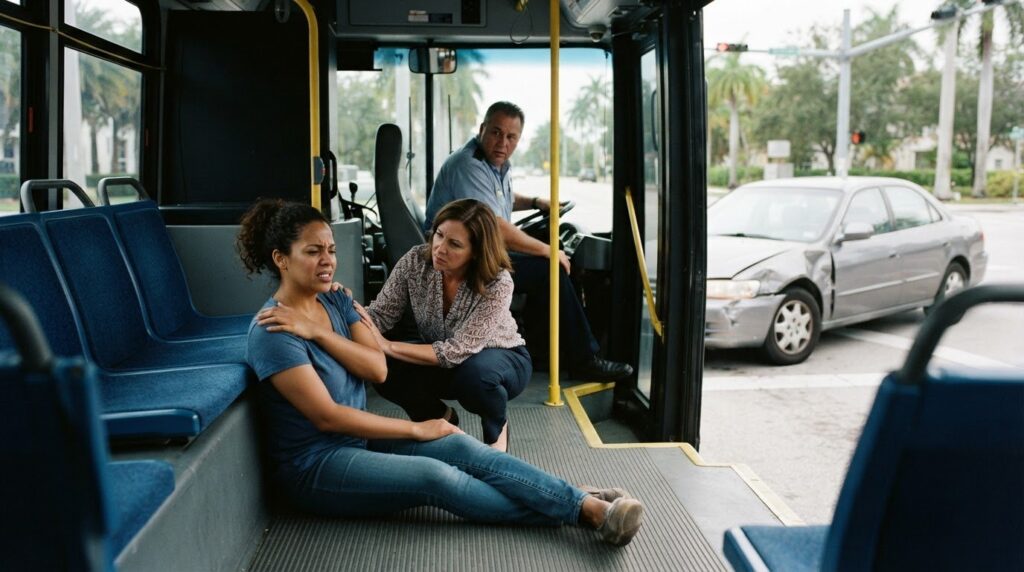

A bus injury can give you grounds to file a claim, but the deadline may arrive sooner than you expect. An initial administrative claim for injuries on a city bus in Fort Lauderdale must be filed within six months. If you’re considering suing for injuries sustained on a city bus in Fort Lauderdale, Florida law also requires notice within three years for a claim against a government entity and a 180-day wait after notice before filing suit.
A careless driver or unsafe bus can cause serious injuries, but pursuing a claim means identifying who may be responsible and following the right process when a public agency is involved. This article explains when you may have a claim, who could be liable, and how Florida’s notice and filing deadlines apply. It also covers evidence that can help establish responsibility and how legal representation may support your claim while you focus on recovery.
Key Takeaways
- You may have a claim if negligence caused your injury on a public bus. The driver, bus owner, employer, or another responsible party may be involved.
- Bus maintenance records, inspection logs, surveillance footage, and witness accounts may help show how a crash happened and who was responsible.
- Potential compensation may relate to medical care, rehabilitation, lost wages, pain, emotional distress, or lasting disability.
- Claims involving government-operated buses have special notice and lawsuit procedures, so identifying who operated the bus matters.
- Florida’s filing deadlines depend on the type of bus operator and claim. Learn which rules may apply before pursuing a case.
Can I File a Claim if I Was Injured on Public Transportation in Fort Lauderdale?
Yes. You may pursue a claim if another party’s negligence caused your injury on public transportation in Fort Lauderdale. The cause of the accident, who operates the bus, and the applicable insurance process help determine what the claim involves.
Common Causes of Bus Accidents
A bus accident may result from speeding, reckless driving, or driver distraction. Fatigue may also affect a driver’s ability to operate a bus safely. Mechanical problems, such as worn brakes, tires, or steering components, can make a bus unsafe. Poor weather, unsafe roads, or defective safety equipment may contribute to a collision or worsen its effects.
Investigators can compare the driver’s conduct with maintenance records, inspection logs, surveillance footage, onboard data, witness accounts, and evidence from the crash scene. For example, evidence of brake trouble alongside a missed inspection may point to a maintenance issue, rather than driver conduct alone.
Common Bus Accident Injuries
Passengers can be thrown or jolted when a bus stops suddenly or collides with another vehicle. Possible injuries include traumatic brain injuries, spinal cord injuries, broken bones, burns, lacerations, and head or neck injuries. Severe collisions can also cause paralysis, disfigurement, amputation, or death.
Medical records can connect an accident to an injury and document its severity. A passenger may initially feel able to move, then develop symptoms that affect daily activities. The nature of the injury, treatment, and lasting limitations all matter when evaluating a claim.
Identifying Responsible Parties
A bus driver may be responsible if careless driving caused the accident, but the driver may not own or operate the bus independently. Potentially responsible parties may include the bus owner, the driver’s employer, a municipality or local government operating the route, or the maker or designer of a defective component.
Identifying who operates and owns the bus can help establish who controlled it and was responsible for its maintenance. A bus accident lawyer may review those records alongside driver, inspection, and crash evidence. Another driver or unsafe road conditions may also have contributed, so an investigation should consider each possible cause.
No-Fault Insurance and Bus Claims
Florida is a no-fault insurance state, and bus accident victims must first submit an injury claim through their insurance carrier. That step does not, by itself, establish whether a driver, operator, or another party caused the accident. A Florida personal injury claim also requires connecting evidence of negligence to the injury and losses.
Fault can affect recovery. According to the Florida Legislature, an injured person may recover damages if they are 50% or less at fault, with damages reduced by their share of fault. Evidence of a driver’s distraction, for example, may be weighed alongside evidence about the injured person’s actions. Serious injuries and disputed responsibility make careful review of the evidence important.
Notice requirements and shorter public-bus claim deadlines
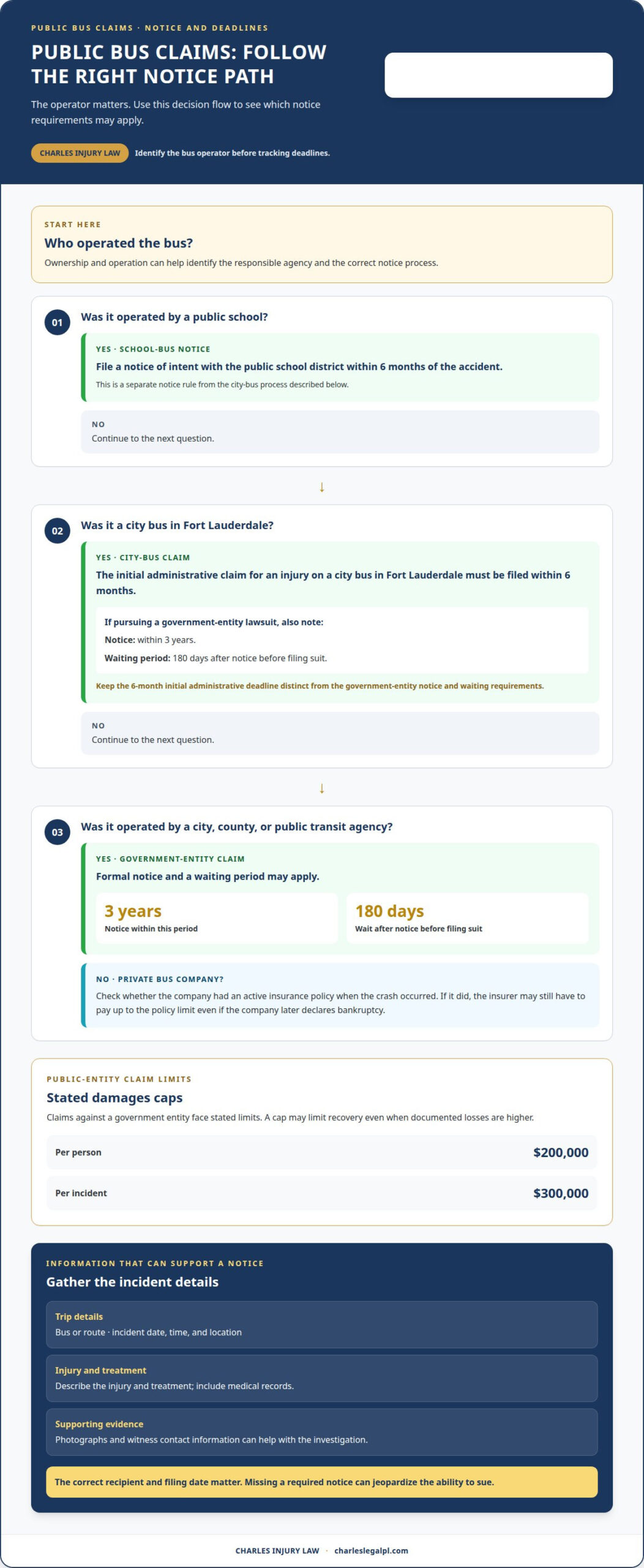
Claims involving a public bus may require administrative notice before a lawsuit. For injuries on a city bus in Fort Lauderdale, the initial administrative claim must be filed within six months.
Give an attorney the bus route, incident date and location, injury details, medical records, photographs, and witness contact information. These details can help investigate the accident and prepare a notice describing what happened, the injuries, and the damages sought. An attorney can also identify the appropriate transit agency or government office.
Claims Against City and Public Transit Buses
A claim involving a city, county, or public transit bus may require formal notice and a waiting period before filing suit. A Florida government-entity claim requires notice within 3 years, followed by a 180-day wait before a lawsuit may be filed. These requirements are distinct from the six-month initial administrative deadline for an injury on a city bus in Fort Lauderdale.
An attorney can identify the responsible public entity and track each applicable deadline. Missing a required notice can jeopardize your ability to sue, so the right recipient and filing date matter.
Reporting an Injury to Transit Officials
A useful report identifies the bus or route, incident date, time and location, injury, and treatment. A Notice of Claim should describe the accident, injuries, and damages sought. Medical records, photographs, and witness details can help an attorney investigate and prepare the report for the relevant transit officials.
A school-bus claim has a separate notice rule. For a bus operated by a public school, a notice of intent must be filed with the public school district within six months of the accident. This requirement differs from the process for a city-bus claim in Fort Lauderdale. An attorney can prepare the appropriate notice for the agency involved.
Damage Caps and Bus Company Bankruptcy
Florida government-entity claims face damages caps. The stated limits are $200,000 per person or $300,000 per incident. A cap may limit recovery even when documented losses exceed those amounts. Determining whether a public entity operated the bus helps identify which limits may affect a claim.
A private bus company’s bankruptcy does not necessarily end an insurance claim. If the company had an active policy when the crash occurred, its insurer may still have to pay the claim up to the policy limit, even if the company later declares bankruptcy. The policy and operator are important parts of the investigation.
Because notice deadlines can overlap, discuss your claim with an attorney promptly, especially if a public agency operated the bus.
Injured in a Bus Accident Caused by Negligence?
A bus crash claim requires evidence that negligence caused the injury. The responsible parties and documented losses help shape the compensation sought.
Potential Compensation for Injuries and Losses
A claim may seek compensation for medical treatment, rehabilitation, lost wages, pain, emotional distress, disability, or wrongful death. The losses must be connected to the bus accident, and the injury’s effect on daily life matters. Medical records, prognosis statements, and documentation of future costs can help show both current harm and continuing needs.
For example, treatment records can document care already received, while a long-term prognosis can describe lasting limitations. An attorney can organize these records to present a clear account of the injury and its consequences.
Potentially Liable Parties
Responsibility may rest with a negligent bus driver, the driver’s employer, the bus owner, or the maker or designer of a defective component. Another driver’s negligence may also contribute. A claim must connect each potentially responsible party’s conduct or defect to the crash and resulting injury.
Evidence may include witness interviews, crash-scene findings, maintenance records, inspection logs, surveillance footage, onboard data, and crash reconstruction. An attorney can investigate how these pieces fit together instead of assuming the driver was the only party at fault.
Bus Company Responsibility
Florida law treats bus operators as common carriers, and bus drivers and companies are legally required to keep buses safe for passengers. A company may be responsible when its driver causes a crash while working for it. The driver’s employment relationship and the company’s role in operating the bus help clarify where liability may fall.
Company practices may also matter. Bus accident claims can involve inadequate safety training, improper driver certification, or a driver working overtime while fatigued. An attorney can investigate these issues and compare company records with the circumstances of the crash.
Lost Wages and Future Earning Potential
Lost wages may be part of a claim if injuries prevent someone from working. Evidence should connect the missed work or reduced ability to work with the bus crash. Medical records and prognosis statements can help explain how an injury affects job duties, expected recovery, and future costs.
A permanent injury can affect future earning potential and the ability to maintain a career. In a permanently injured child’s school-bus case, potential losses may include future earning capacity or loss of enjoyment of life. An attorney can present documented impacts without treating projected losses as automatic.
Can I sue the city or government if a public bus caused the accident?
Yes. A claim may proceed if negligence by a government-operated bus or another responsible party caused the accident. Florida requires special procedures for claims against government entities.
An attorney can identify the bus operator, prepare the required notice, and track the waiting period and lawsuit deadline. The attorney can also organize medical records and evidence linking the bus accident to your injuries.
Deadlines for Private and Government Buses
In Florida, a claim involving a privately owned bus must be filed within four years of the accident. A claim involving a government entity must be filed within three years. The operator’s identity changes the filing deadline, so it is important to establish who owned or operated the bus before time passes.
For government claims, notice and lawsuit timing are separate requirements. A claimant generally must give notice and wait 180 days before filing suit. An attorney can map each deadline from the accident date and notice date, rather than treating the lawsuit period as the only date that matters.
Suing Private or Government Bus Operators
A lawsuit involving a privately owned bus follows the procedures that generally apply to negligence and personal injury cases. The claim must connect the operator’s or another party’s conduct to the crash and resulting harm. Evidence may show whether a driver, employer, owner, or component maker contributed to the accident.
Claims involving a government-operated bus require additional steps because Florida recognizes sovereign immunity but allows certain tort claims to proceed under specific procedures. The correct defendant depends on the operator and the facts. A lawyer can investigate the bus’s ownership and operating arrangements before identifying the party to sue.
Government Claim Notices and Damage Caps
A person seeking to sue a Florida government entity generally must first file a Notice of Claim. The notice should describe the accident, injuries, and damages sought. Florida government claims also have described caps of $200,000 per person or $300,000 per incident, which can limit recovery even when documented losses exceed those amounts.
Settlement discussions do not remove the need to meet notice and filing rules. Medical records, treatment information, and evidence of financial losses can help explain the claim. An attorney can prepare the notice and address the government’s response while preserving the right to pursue the case.
Sovereign Immunity for Government Employees
Government employees may have sovereign-immunity protection that prevents them from being sued personally as defendants. That protection does not automatically end a claim arising from a government bus accident, because Florida permits tort claims against government entities through required procedures.
The distinction between an employee’s conduct and a government entity’s potential responsibility matters. For example, a claim may focus on the public agency operating the bus rather than naming the driver personally. An attorney can assess the alleged negligence, identify the proper parties, and pursue the applicable process.
Florida personal injury filing deadlines
In Florida, the filing deadline depends on the claim and who operated the bus. A personal injury claim generally must be filed within 2 years of the accident under the legislative changes described in 2023. But claims involving buses may follow different periods. Suing for injuries sustained on a city bus in Fort Lauderdale can involve an administrative deadline and government-claim procedures, not just a lawsuit filing date.
For a private-carrier bus accident claim, the filing period is four years. For a claim involving a government entity, the period is three years. Because these deadlines differ, identifying the bus owner and operator is an important early step. If the responsible entity is unclear, the applicable deadline may be unclear too.
An initial administrative claim for injuries on a city bus in Fort Lauderdale must be filed within six months. A Florida government-entity claim requires notice within 3 years, followed by a 180-day wait before a lawsuit may be filed. These requirements concern separate steps. Meeting one deadline does not automatically meet the others.
The six-month administrative deadline is not a replacement for the government notice requirement or the lawsuit filing period. Submitting notice also does not itself file a lawsuit. Suing for injuries sustained on a city bus in Fort Lauderdale therefore requires attention to the accident date, notice date, and action required at each stage.
School-bus claims have a separate notice requirement. A claim involving a school bus operated by a public school must be preceded by a notice of intent filed with the public school district within six months of the accident. Identifying the operator and school district helps determine whether this rule applies.
Reporting an injury to an insurer or transit agency is not the same as filing a court action. Settlement discussions also do not replace a required notice or lawsuit filing. A passenger may report an injury promptly and still need to complete separate steps for the bus operator involved.
At a consultation, an attorney can review the accident date, operator, claim type, and any notices already submitted. These details help establish a timeline and identify the next filing step. Acting promptly can help preserve the opportunity to pursue a claim through the applicable process.
Personal Injury Attorney in Fort Lauderdale
Charles Injury Law helps injured people assess their options and pursue accountability. If you’re seeking a personal injury firm near me or an injury lawyer near me, consider how counsel can address your specific injury claim. People looking for attorneys for personal injuries, attorneys personal injury, or a personal injury lawyer near me may also need clear guidance on evidence and next steps.
Charles Injury Law also represents people injured in car, truck, and Uber or Lyft accidents. Those seeking lawyers for auto accidents or auto accident lawyers near me can discuss these related injury claims with the firm.
Contact Charles Injury Law. Call Now: (954) 390-2228 Available 24 Hours a Day, 7 Days a Week.
Take the Next Step Toward Accountability
If you’re considering suing for injuries sustained on a city bus in Fort Lauderdale, focus on the facts and your priorities as a next step. A clear review can help you understand how the incident affected your health, work, and daily life, and which questions need answers before you move forward.
Charles Injury Law also represents people injured in car, truck, and Uber or Lyft accidents. The firm’s injury claim experience can help focus an investigation and the pursuit of accountability. You deserve to understand your options and decide how to proceed.
Contact Charles Injury Law to discuss your situation. Taking that first step can help you move forward with greater clarity.
Frequently Asked Questions
Why Should You Hire a Bus Accident Lawyer?
A bus accident lawyer can investigate how the crash happened and manage communications about your injury claim. For example, an attorney can organize medical records, assess how injuries affect your work, and prepare evidence for negotiations or litigation. This may matter when the bus operator disputes responsibility or several parties may have contributed. This information is general and is not a substitute for legal advice about your circumstances.
Can You Get Compensation Without Suing?
Yes. A bus injury claim may resolve through a negotiated settlement without going to trial. The insurer or responsible party may evaluate liability, medical documentation, lost income, and other claimed losses before deciding whether to offer settlement terms. Review any proposed settlement carefully, because signing a release can prevent you from pursuing future claims for the same incident. A lawyer can explain the document’s effect before you decide.
Can You Sue a Bus Driver?
Whether a bus driver can be sued personally depends on the driver’s role and the circumstances of the crash. If the driver was working for a company, that employer may be responsible for damages. A government employee may have sovereign-immunity protections that affect personal liability. The bus’s ownership and operating arrangements, together with evidence about the driver’s conduct, help determine which parties may face a claim.
Is It Possible to Sue Someone on a Bus?
Yes. If another passenger injures you on public transportation, you may bring a civil claim against that person. The key issue is evidence connecting the passenger’s actions to your injury. Witness accounts, available surveillance footage, and medical records may help establish what happened and document its effects. A claim involving a public transit bus may also raise separate questions about the operator’s responsibility.
What Steps Do Attorneys Take to Pursue a Claim Against a Bus Company?
Attorneys investigate the crash, preserve relevant evidence, gather medical records, and assess present and future damages. They may review available maintenance and inspection documents, footage, onboard data, and witness information to develop the liability case. An attorney can then communicate with insurers, negotiate for a fair settlement, and litigate when necessary. The investigation depends on the bus operator, available evidence, and injuries involved.
What Kind of Accidents Can Happen on Public Transportation?
Public transportation injuries may result from a collision, a sudden stop, or unsafe bus equipment. A passenger may also be hurt by another rider. Poor weather, unsafe roads, distracted driving, or a mechanical problem can contribute to a crash. The circumstances matter: a bus collision may involve different evidence and responsible parties than an injury caused by an event inside the bus.
What If I Were a Passenger on the Bus During the Accident?
You may pursue a claim if another party’s negligence caused your injury as a bus passenger. Florida’s no-fault system means an injured person must first submit an injury claim through their insurance carrier. Keep records showing when symptoms began and how treatment affects daily activities. The operator, ownership arrangement, and cause of the crash can help identify other potential claims and responsible parties.
What Is Florida’s Deadline to Sue a City for Injuries on a Public Bus?
A Florida claim involving a government entity generally must be filed within three years, but other deadlines apply. An initial administrative claim for injuries on a city bus in Fort Lauderdale must be filed within six months. Government claims also require notice and a 180-day wait before filing suit. These are separate procedural steps, so the accident date and claim type both matter when evaluating a deadline.
Disclaimer
The information provided on this blog is for general informational purposes only and does not constitute legal advice. Viewing this content does not create an attorney-client relationship with the firm. You should not act or rely on any information contained herein without seeking legal advice from a qualified attorney regarding your individual situation.