



Sharing too much can weaken confidentiality; keeping every detail back can weaken your claim. Understanding attorney-client privilege in an injury case starts with the rule: Florida law treats lawyer-client communications as confidential when they aren’t intended for disclosure to others, according to the Florida Legislature. That protection generally applies when you communicate privately to seek legal advice, but it doesn’t automatically make every document or conversation about your injury privileged.
It’s reasonable to want sensitive details kept out of an insurer’s hands. You can discuss what happened, your injuries, and their effects on your life in a confidential legal conversation. This guide explains which communications may be protected, how medical and financial information fits in, and what can put confidentiality at risk. Candid preparation matters: your attorney needs an accurate account to assess your claim and address potential challenges, including gaps or inconsistencies in what you’ve shared.
Key Takeaways
- Private emails, calls, texts, and conversations with your attorney may be protected when they’re made to get legal advice.
- Adding friends or family to a confidential discussion, or forwarding an attorney’s message, can put privilege at risk.
- Medical and financial details aren’t automatically privileged just because they relate to an injury claim; how the information is shared and used matters.
- Privilege protects certain legal communications from compelled disclosure, while a lawyer’s broader confidentiality duties are a separate concept.
- Be candid with your attorney about accident details, including facts that may complicate your claim, and avoid sharing case discussions publicly.
What Types of Communication Are Covered by Attorney-client Privilege?
Understanding attorney-client privilege in an injury case starts with the communication’s purpose and confidentiality. In Florida, privilege may cover private exchanges made to obtain legal advice, including discussions about investigating an accident. It doesn’t automatically cover every document or conversation connected to an injury claim.
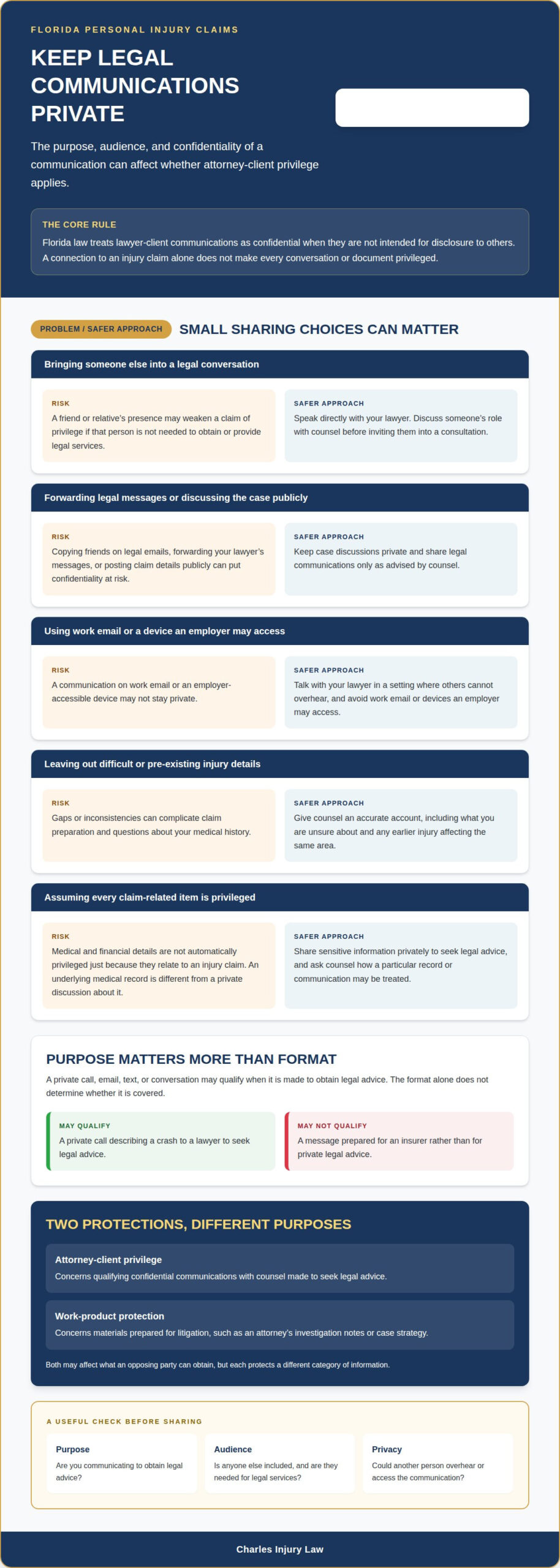
According to The Florida Legislature, lawyer-client communications are confidential when they aren’t intended for disclosure to third parties. Florida law also recognizes disclosures that further legal services or are reasonably necessary to transmit a communication. A private call describing a crash to a lawyer may qualify; a message prepared for an insurer may not.
Attorney-client privilege differs from attorney work-product protection. Privilege concerns qualifying confidential communications with counsel. Work-product protection concerns materials prepared for litigation, such as an attorney’s investigation notes or case strategy. Both may affect what an opposing party can obtain, but each protects a different category of information.
Confidential Conversations and Written Messages
Confidential communications can include private conversations and written messages exchanged with a lawyer for legal advice. A client might describe a collision during a call, then email photographs and questions about the investigation. A legal aide acting for the lawyer may also receive information while providing legal services. The format alone doesn’t determine whether a communication is covered.
Accident-investigation discussions can cover what you saw, where vehicles moved, and what happened afterward. Insurers may look for gaps or inconsistencies in an account. Give counsel an accurate timeline, including what you’re unsure about, rather than reshaping events to sound favorable. Don’t copy friends on legal emails or forward your lawyer’s messages, since sharing can risk confidentiality.
This article addresses Florida law, where the communication’s purpose, audience, and confidentiality matter. Communications shared among parties with a common legal interest aren’t automatically privileged just because those parties are allied. Their legal purpose and the circumstances of sharing remain important.
Sharing Pre-Existing Injury Information
Tell your attorney about injuries or medical conditions that existed before the accident. For example, explain whether an earlier back injury affected the same area and how your symptoms changed afterward. That candid account helps counsel investigate your claim and prepare for questions about your medical history. Understanding attorney-client privilege in an injury case also means recognizing that a private discussion and an underlying medical record are different things.
Protect communications by speaking directly with your lawyer in a setting where others can’t overhear. Avoid case discussions on work email or devices an employer may access. Don’t post legal advice or claim details publicly. Whether someone considers a “personal injury firm near me,” “attorneys for personal injuries,” “attorneys personal injury,” an “injury lawyer near me,” a “personal injury lawyer near me,” “lawyers for auto accidents,” or “auto accident lawyers near me,” those labels don’t determine privilege. A confidential explanation to counsel may receive protection, while a public post can undermine privacy. A personal injury claim can involve sensitive accident and medical details. Call Now: (954) 390-2228 Available 24 Hours a Day, 7 Days a Week
What Is Attorney-client Privilege in a Personal Injury Claim?
Privilege protects qualifying confidential exchanges made to seek legal advice in a personal injury case. An attorney generally can’t disclose privileged information to an insurer or opposing counsel without the client’s consent, subject to exceptions under Florida law.
Confidentiality During Initial Consultations
An initial consultation may be privileged before an attorney agrees to represent someone. The person must seek legal advice, speak with the attorney in a professional capacity, and reasonably expect the discussion to remain confidential. For example, someone describing a recent crash and asking about legal options may share sensitive facts before signing an agreement. That early conversation can help the attorney assess the matter and explain possible next steps.
Keep the meeting focused on getting legal advice. A conversation intended for an insurer, employer, or another outside party isn’t the same as a private consultation with counsel. If you’re unsure whether a planned discussion is confidential, ask the attorney before sharing sensitive details. A clear understanding from the start helps prevent accidental disclosure during a vulnerable first meeting.
Third Parties and Confidentiality
A third party’s presence can affect whether a conversation remains confidential. Bringing a friend or relative to a meeting may weaken a claim of privilege if that person isn’t needed to obtain or provide legal services. For instance, a family member attending to take notes could hear details about an injury, but their presence doesn’t automatically make every part of the meeting privileged.
Florida law recognizes disclosures that further legal services or are reasonably necessary to transmit a communication, according to The Florida Legislature. A legal aide acting for the attorney may therefore have a different role from a friend attending for personal support. Before inviting someone else into a consultation, discuss their role with counsel. A private conversation is easier to protect when its purpose and participants are clear.
Sharing Information With Others
Attorney-client privilege belongs to the client, who decides whether to waive it. If you authorize counsel to disclose a privileged detail during negotiations, that authorization can change how the information is treated. A lawyer may share information as reasonably necessary to provide legal services, but your private medical history shouldn’t be casually passed to an insurer or opposing counsel.
Negotiations may involve selected facts about treatment, symptoms, or how an accident affected daily life. That doesn’t make every attorney-client discussion available to the other side. Before authorizing a disclosure, clarify what information will be shared and why. If you have questions about protecting communications during an injury claim, discuss your confidentiality concerns.
Personal and medical information requires careful handling. Tell counsel about a pre-existing condition or a change in symptoms, but distinguish private legal discussions from statements prepared for outside review. A consultation can address what information supports your claim and what may need to be disclosed as evidence. Privilege doesn’t automatically shield every medical record or fact just because an attorney receives it.
In a personal injury case, confidentiality helps clients speak candidly while counsel evaluates negotiations and prepares responses to opposing arguments. Understand the purpose of each disclosure, especially when settlement discussions involve an insurer. Deliberate communication protects the relationship with counsel and helps prevent private case discussions from reaching unintended recipients.
Disclosure of medical and financial information
Medical and financial details can matter to an injury claim, but sharing them with an attorney doesn’t automatically make every record privileged. The key distinction is between confidential communications made to obtain legal advice and underlying information that may become relevant evidence. For example, privately explaining how a prior condition affects current symptoms is different from assuming every medical record is protected from disclosure.
Tell your attorney about treatment, symptoms, missed work, and financial effects so counsel can assess your claim accurately. A private message explaining why a medical bill relates to the accident may qualify as a confidential communication. The bill itself, however, remains a separate document. In a lawsuit, private information generally need not be disclosed unless it is needed as evidence at trial. The relevance of the information and the purpose of a request therefore matter.
Financial information also needs context. If an injury affects your ability to work, explain the change and the records that support it. Don’t alter a document or leave out a relevant fact when speaking with counsel. Withholding details can limit an attorney’s ability to evaluate your claim and prepare for questions from the opposing side. A truthful explanation helps counsel identify which facts require careful handling.
Public statements create a different risk. Posting an injury update, photograph, or account of an accident on social media can make that information public, rather than a confidential communication between you and your lawyer. For example, a post describing your activities after an accident could be considered alongside statements about your limitations. Avoid posting case details or legal advice online, and don’t assume a private account makes a post confidential.
There are also circumstances involving a dispute about an attorney’s conduct. An attorney may have to disclose certain communications to address that dispute. This limited situation differs from sharing information with an insurer to advance negotiations. If a disagreement arises, relevant communications may become part of resolving the issue, so keep records accurate and avoid public accusations that reveal private legal discussions.
Before sending medical or financial material, identify what it is and why counsel needs it. A treatment note, wage record, or benefits statement can contain details beyond your injury claim. Ask which specific information supports the legal advice and whether a document may be needed as evidence. This focused approach helps separate confidential communications from records that could matter in litigation, without treating every sensitive item as automatically protected.
Meaning of attorney-client privilege
Attorney-client privilege is an evidentiary protection for qualifying communications made to obtain legal advice. In a personal injury claim, it can protect a private conversation between you and an injury lawyer from compelled disclosure in court or discovery. For example, describing how a fall happened while seeking legal guidance may be a protected communication. The purpose is to let clients discuss facts candidly so counsel can assess legal options.
Florida law treats lawyer-client communications as confidential when they aren’t intended for disclosure to third parties, according to The Florida Legislature. The law also recognizes disclosures that further legal services or are reasonably necessary to transmit a communication. For example, a message shared with a legal aide helping counsel provide advice may serve that purpose. The communication’s context and intended audience matter.
Privilege is different from a general promise that every fact or document stays secret. It concerns communications made for legal advice, not necessarily the underlying accident facts themselves. If a witness saw a vehicle enter an intersection, that observation doesn’t become privileged simply because someone later mentions it to a personal injury attorney. The private exchange with counsel and the fact being discussed are distinct.
Privilege also differs from a lawyer’s broader duty to maintain client confidentiality. Confidentiality governs more information learned through legal representation, while privilege concerns whether certain communications can be compelled as evidence. For instance, a lawyer may keep a client’s private detail confidential even when that detail doesn’t meet privilege requirements. These protections serve related but separate purposes during a claim.
The client controls the privilege and can choose to waive it. If you authorize a lawyer to disclose a particular communication, that choice may affect whether the opposing side can seek related information. The scope of the disclosure matters. Agreeing to share one fact doesn’t necessarily mean every conversation with counsel should be treated as open to insurers or opposing counsel.
That distinction matters when preparing a claim. You can tell counsel about uncertainty, partial responsibility, or an earlier injury without tailoring your account for an insurer. The lawyer can then evaluate the facts, identify questions, and plan a response. A candid conversation helps counsel spot issues before they become disputes during negotiations or litigation.
Privilege has limits. A conversation intended for others, or information shared beyond the confidential legal relationship, may not receive the same protection. If you discuss legal advice with a friend or post case details publicly, you risk undermining confidentiality. Keep communications about your claim directed to counsel, and ask before sharing a legal message or inviting someone into a discussion.
Privilege in personal injury case preparation
Privilege matters during preparation because your lawyer needs the facts, including details that could complicate your claim. If you partly caused a collision, explain what happened instead of shaping your account to sound favorable. Your personal injury lawyer can assess the issue, prepare for questions, and plan how to address it. Insurers look for gaps or inconsistencies, so candid communication gives counsel a clearer starting point.
Separate what you know from what you assume. For example, describe what you saw before impact, then identify anything you learned later from someone else. If you’re uncertain about a detail, say so. An accurate account helps counsel investigate without mistaking a guess for a fact. It also gives your lawyer a chance to address conflicting accounts before negotiations or litigation put them under scrutiny.
Use private channels for case discussions. Messages sent through a workplace email account or device may be harder to treat as confidential if an employer can access them. Instead, communicate directly with your lawyer through a private account and avoid unnecessary intermediaries. Keep messages focused on legal advice, and don’t forward counsel’s emails to friends or post their contents publicly. Sharing can waive privilege and potentially make communications discoverable.
Privilege protects confidential legal communications, not every fact or record connected to an injury. A photograph of a hazard, for example, doesn’t become privileged simply because you send it to counsel. Your private explanation of why it matters may be protected, while the image itself remains a separate item. Counsel can distinguish communications made for legal advice from evidence that may become relevant to your claim.
There are limits. A person who tells a lawyer they plan to commit a crime while seeking guidance may not receive privilege for that communication. In some circumstances, a lawyer may have limited ability or an obligation to disclose information to prevent serious harm. Don’t use a legal consultation to plan wrongdoing. When preparing a claim, give counsel a truthful account of the injury, accident, and any facts that affect responsibility.
Privilege belongs to the client, and a client can voluntarily waive it by authorizing disclosure. Before agreeing to share a communication, clarify what information will be released and for what purpose. Once waived, the communication may become discoverable, and the opposing party could use it. If you need help discussing sensitive facts about an injury claim, contact an attorney about your case.
Personal Injury Attorney in Fort Lauderdale
Personal Injury Attorney in Fort Lauderdale represents people injured in car, truck, rideshare, and pedestrian accidents. If you’re unsure what to share privately, counsel can explain how confidentiality applies to your case and help you discuss sensitive facts with care. That includes accident details, medical history, and questions about information an insurer may request. Clear guidance can help you communicate candidly without assuming every record or fact is automatically protected.
Turn to a personal injury attorney when an insurer is asking questions, your account includes complicated details, or you need advice about a potential claim. Personal Injury Attorney in Fort Lauderdale handles injury claims involving car accidents, truck accidents, Uber and Lyft rideshare accidents, and pedestrian injuries. To discuss your concerns, contact Personal Injury Attorney in Fort Lauderdale.
Take the Next Step With Confidence
Understanding attorney-client privilege in an injury case can help you approach legal advice with greater confidence. Decide what questions you need answered and discuss them directly with counsel. You don’t need to resolve every concern before asking for guidance. A focused conversation can help you understand how legal representation fits your situation and what decisions may come next.
Charles Injury Law handles injury claims involving car accidents, truck, semi-truck, and tractor-trailer accidents, and Uber and Lyft rideshare accidents. If one of these incidents injured you, you can raise questions about your claim and the information it involves.
Contact Charles Injury Law to discuss your situation and take an informed next step. You deserve clear guidance as you move forward.
Frequently Asked Questions
These answers provide general information about privilege in Florida injury claims. They aren’t a substitute for advice about your specific circumstances.
Are Free Consultations Considered Privileged?
A free consultation may be privileged if you seek legal advice, speak with the attorney professionally, and expect the discussion to remain private. For example, asking about legal options after a collision may meet those conditions, even before representation begins. The fact that a meeting is free doesn’t establish privilege by itself. Its purpose, participants, and confidentiality matter. Avoid discussing sensitive details where others can overhear.
How Does Knowing Attorney-Client Privilege Is in Place Help?
Understanding the protection can help you decide how to communicate with counsel and prepare for an insurer’s questions. For example, tell your attorney when you’re unsure about a detail instead of guessing. That gives counsel a chance to investigate the uncertainty and identify useful evidence, such as a witness account or photograph. Clear communication supports preparation without turning assumptions into facts.
What Is Not Covered?
Privilege generally doesn’t make an underlying fact, existing record, or public statement secret. A medical chart created during treatment doesn’t become privileged simply because you later give it to your attorney. Likewise, a witness’s observation remains a fact the witness may discuss. The confidential communication about why a record matters is a separate issue. Whether information must be produced depends on its role and the legal dispute.
What Isn’t Protected?
Information shared beyond a confidential legal exchange may lose protection. For example, posting details about your injury on social media doesn’t become private because you also discussed them with your lawyer. A communication intended for disclosure to an insurer is also different from a private request for legal advice. A client may waive privilege by authorizing disclosure, so clarify the scope before counsel shares a communication.
Who Can Invoke Privilege?
The privilege belongs to the client, who controls whether to waive it. An attorney may assert the protection on the client’s behalf when someone seeks a privileged communication. For example, if an opposing party asks about a private legal discussion, counsel can object to disclosure. The client’s authorization matters if counsel is asked to share that information. Privilege protects the client’s communication, not the attorney’s personal interest.
What Is Attorney-Client Privilege in a Personal Injury Case?
It is a legal protection that can prevent compelled disclosure of confidential communications made to obtain legal advice. In an injury claim, that could include a private discussion about how an accident affects your ability to work or manage daily activities. The protection concerns the communication, not automatically every related document. The reason for sharing information and the intended audience help determine whether privilege applies.
What Communications Between an Injury Client and Attorney Are Privileged?
Private exchanges made for legal advice may qualify, including a client’s account of events or questions about possible claims. A message asking an attorney how to respond to a legal issue differs from a statement prepared for an insurer. Communications with legal staff acting for counsel may also be covered. The format alone doesn’t decide the issue; purpose, confidentiality, and the people involved all matter.
Does Attorney-Client Privilege Apply to Emails, Texts, and Phone Calls?
It can apply to emails, text messages, and phone calls when they’re confidential communications made to seek or provide legal advice. A private text asking counsel about a claim may qualify, while a message copied to friends may not. Consider who can access the account or device, too. An employer-accessible work email may complicate confidentiality. Keep case discussions on private channels and direct them to your attorney.
Disclaimer
The information provided on this blog is for general informational purposes only and does not constitute legal advice. Viewing this content does not create an attorney-client relationship with the firm. You should not act or rely on any information contained herein without seeking legal advice from a qualified attorney regarding your individual situation.