

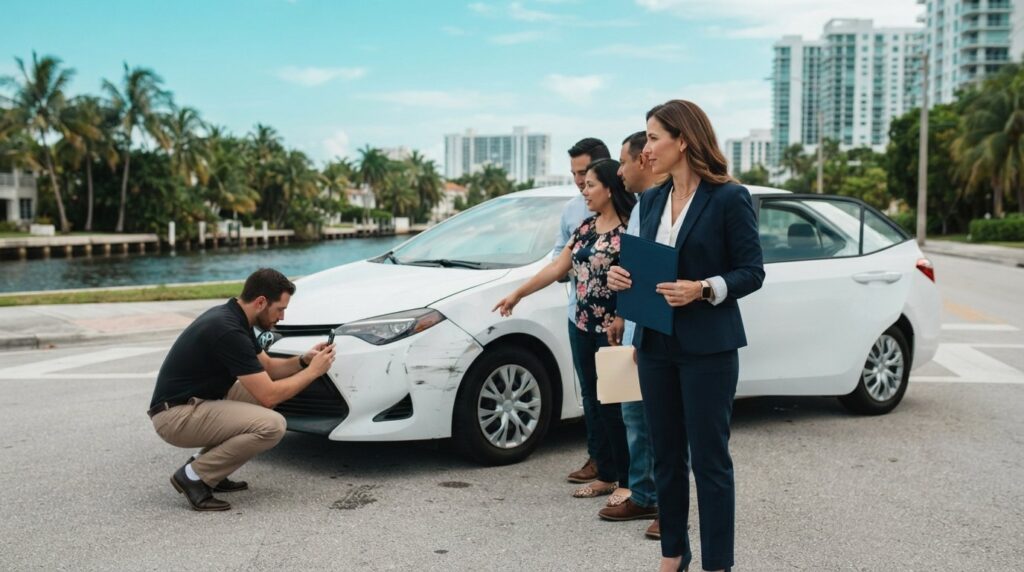

The rental car’s name alone doesn’t determine who pays after a crash. Depending on fault and the coverage that applies, payment may come from an at-fault driver’s insurance, your own policy, or coverage connected to the rental. Florida Statute 627.736 sets minimum personal injury protection coverage at $10,000, and a rental company may be accountable when its negligence caused the crash. A lawyer for a car accident with Alamo Rent A Car can help identify which parties and policies may matter.
It’s understandable to expect a rental company’s insurance to cover damage after a crash, but the answer depends on how it happened, who was responsible, and what coverage applies. This guide explains potential insurance sources, who may be responsible for payment, and what to consider before accepting a settlement. It also outlines steps to protect your rights after a rental-car crash in Miami or Fort Lauderdale, so you can make informed decisions while focusing on recovery.
Key Takeaways
- Compare the available insurance policies and rental coverage to understand which sources may apply to the crash.
- Consider how each driver’s actions and any vehicle maintenance issues may affect responsibility for the accident.
- Preserve photos, witness details, and relevant records to support your account of what happened.
- Review a settlement’s terms and the losses it covers before deciding whether to accept it.
- In Florida, an accident report must be filed within ten days if someone was injured or damage required either car to be towed.
Insurance coverage for rental car accidents
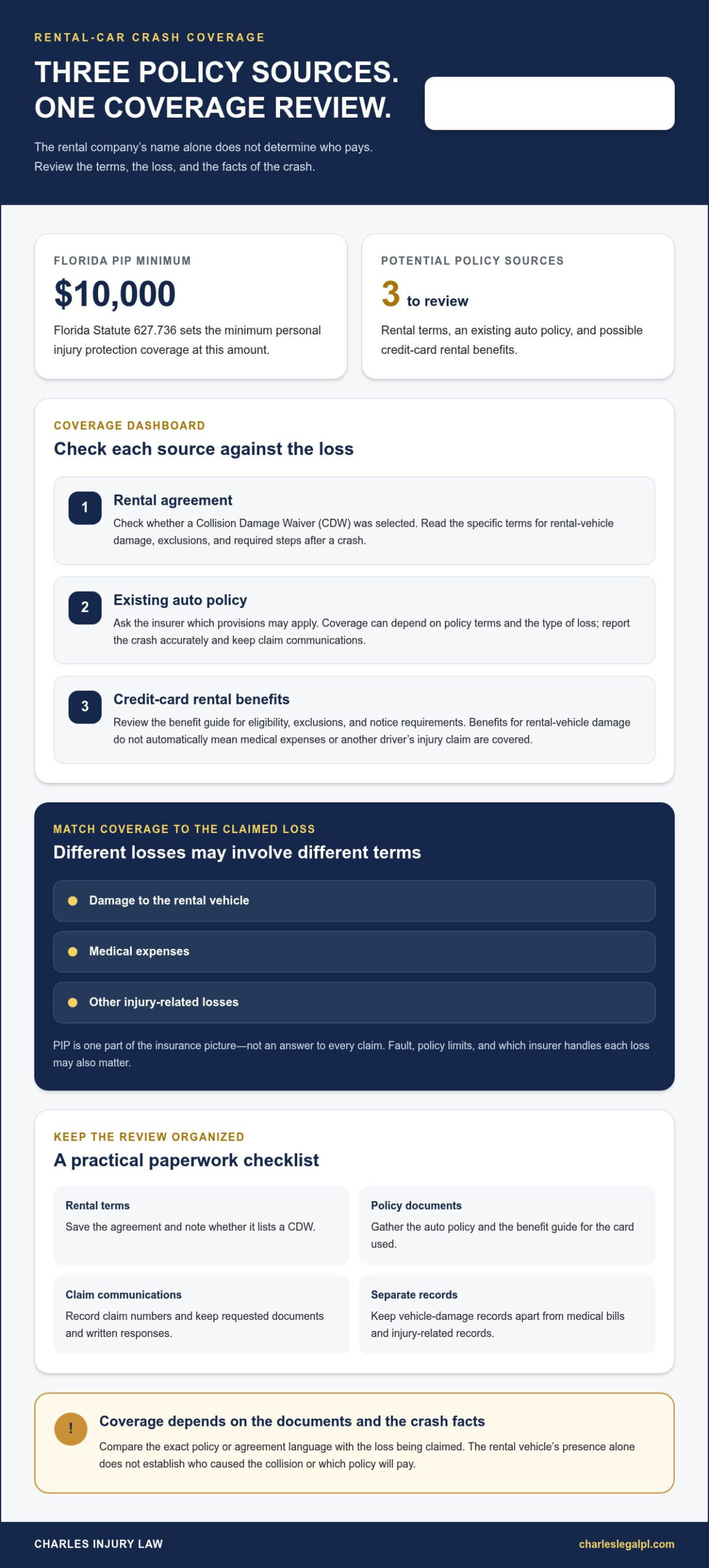
After a crash in an Alamo rental, more than one policy may need review. Coverage may depend on the rental terms and the driver’s existing insurance. Credit-card rental benefits may also apply, depending on the card’s terms. Match each policy to the loss being claimed, such as vehicle damage, medical expenses, or other injury-related losses.
Start with the rental agreement and identify any coverage selected at pickup. A Collision Damage Waiver (CDW) is governed by the rental agreement, so read the specific document rather than assuming what it covers. Look for terms about damage to the rental vehicle, exclusions, and required steps after a crash. A CDW does not replace a review of insurance that may cover injuries or claims involving another driver.
Next, review the driver’s auto policy. In the United States, existing auto insurance may provide coverage after a rental-car crash, but the policy terms and type of loss matter. For example, a policy may treat a claim differently from the rental agreement’s terms for vehicle damage. Contact the insurer, report the crash accurately, and ask which policy provisions apply. Keep the claim number and written communications together.
A credit card may include rental coverage, but the card’s benefit guide defines its scope. Find the guide for the card used to pay for the rental, then review eligibility rules, exclusions, and notice requirements. Compare those terms with the rental agreement and auto policy. If the card benefit covers rental-vehicle damage, for example, don’t assume it also pays medical expenses or another driver’s injury claim.
Florida’s personal injury protection law also matters after an injury. Florida Statute 627.736 sets minimum personal injury protection coverage at $10,000. That coverage is one part of the insurance picture, not an answer to every claim. A car accident claim may involve separate questions about fault, policy limits, and which insurer handles each loss.
Organize the paperwork before discussing payment or signing a release. Use this checklist:
- Save the rental agreement and note whether a CDW appears in it.
- Get the auto policy and the card benefit guide for the card used.
- Record each insurer’s claim number and requested documents.
- Separate vehicle-damage records from medical bills and injury-related records.
This comparison gives each insurer a clear basis for assessing its role. If an insurer disputes coverage, identify the exact policy or agreement language at issue. A lawyer for a car accident with Alamo Rent A Car can review the documents and explain how coverage and injury claims may intersect.
Who Pays Out After an Accident in an Alamo Rental Vehicle?
Payment depends on who caused the crash, what failed, and which policies apply. More than one driver, business, or insurer may be involved.
When comparing lawyers for rental-car crashes, look for Florida motor vehicle injury experience and familiarity with rental agreements, insurance disputes, and vehicle-maintenance evidence. Ask how they assess fault, identify potentially responsible parties, and explain next steps.
To find a lawyer for a car accident involving Alamo Rent A Car, focus on counsel who can review the crash details, rental paperwork, and insurance communications. Share the records you have and ask how they inform the liability analysis.
Alamo may offer coverage through the rental agreement, but that does not mean every accident or injury is covered. Review the selected terms and consider whether another driver’s policy or another applicable policy may respond.
Potentially Liable Drivers and Rental Companies
The driver who caused the collision may be responsible, and another driver may share fault. The rental company or its automotive shop may also be relevant if a maintenance failure contributed to the crash. Compare the police report, photographs, vehicle condition, and repair records to see how each account fits the evidence. The presence of an Alamo vehicle alone does not establish who caused the collision.
Rental Company Liability for Damage
In Florida, a rental car company is not liable for accident damages unless the accident resulted from the company’s negligence. A maintenance-related claim therefore depends on evidence connecting a vehicle problem to the crash. Preserve repair or inspection records and note any warning, defect, or unusual vehicle behavior. If a shop handled the relevant repair, its work may also need examination.
Notify your own auto insurer promptly and give a factual account of the collision. Provide the date, location, vehicles involved, and claim information. If you have a credit-card rental benefit, notify the card company or benefits administrator according to the card’s instructions. Keep copies of each notice and record the date, recipient, and response.
Keep the Alamo rental agreement, claim correspondence, and maintenance paperwork together. If an insurer or rental representative suggests a different cause, compare that explanation with the crash report and physical evidence. Don’t assume the first response resolves every potential claim. A clear timeline can help show whether driver conduct, vehicle condition, or repair work needs closer review.
Before discussing responsibility, write down what each party says caused the crash. Preserve names, claim references, and relevant documents. These details can help distinguish a driver-fault dispute from a potential vehicle-maintenance issue.
Reviewing and negotiating insurance settlements
An insurer’s offer is a proposal, not a complete account of your losses. Before responding, compare it with the claim documents, medical bills, vehicle records, and communications about fault. A lawyer can review a settlement before you accept it. That review can clarify what the offer covers and whether its terms resolve other claims.
Start by checking the settlement’s scope. Does it address injury losses, vehicle damage, or both? Read any release carefully. It may specify which parties and claims are being resolved. If it covers more than the claim you intended to settle, pause and get advice before signing. Keep a copy of the offer and every version of the release.
Build a clear record of the losses you’re asking the insurer to consider. Gather treatment bills, payment explanations, receipts, and records of missed work. Match each item to the date and event it concerns. For example, organize a clinic bill alongside the treatment record for that visit. If the insurer disputes an item, ask what document or detail it needs to evaluate that part of the claim.
- Compare the offer with the records supporting each claimed loss.
- Identify deductions, disputed items, and any conditions in the release.
- Save insurer letters, emails, and notes from claim calls.
Your personal auto policy can also affect a rental-car claim. Review its declarations and coverage terms, then ask your insurer which provisions it applied. Separate damage to the rental vehicle from your injury claim. A payment or dispute involving vehicle repairs, for example, does not by itself explain how an injury claim was evaluated. Keep correspondence for each claim organized.
When responding to an offer, be specific. Identify the amount or item you dispute, explain why, and attach supporting records. If the insurer relies on a different account of the crash, compare its reasoning with the available evidence. A focused response makes the disagreement clear and gives the adjuster concrete information to review.
Don’t sign under pressure or rely on a phone summary of settlement terms. Ask for the complete proposal and release in writing. Confirm that the documents reflect the agreed terms, identify the claims being resolved, and address outstanding items. Keep the signed version and proof of related communications with your claim file.
Careful review helps you understand what you’re accepting. If a term is unclear, get legal advice before signing. Once a release is signed, its language can affect which claims remain open.
Rights and options after a rental car accident
After a rental-car crash, keep decisions about your injury claim separate from decisions about the rental agreement. A written record of each issue can make it easier to see what remains unresolved.
Steps After a Rental Car Accident
Contact the rental company according to the instructions in your agreement, and record the date, method, and person you reached. Ask for the relevant claim or incident reference, then file later communications under that reference. If an insurer requests information, note which policy or claim it concerns. This helps keep vehicle-damage details separate from discussions about an injury claim.
Review each written request before responding. If a question is unclear, ask for clarification and keep the response with your records. Use a simple timeline to track calls, letters, claim decisions, and follow-up tasks. Note, for example, whether an insurer is still evaluating a particular expense or has issued a position. This makes it easier to see what needs attention next.
Responsibility for Rental Vehicle Costs
Check the rental agreement to understand how it addresses charges related to vehicle damage or repairs. If a charge appears, ask for a written explanation of what it covers and how it was calculated. Keep the explanation with the related invoice. This helps distinguish rental-related charges from injury expenses without assuming they follow the same process.
If the rental company or an insurer requests payment, compare the request with the agreement and any coverage decision you received. Ask which specific term or decision supports the amount, and keep the answer in writing. Don’t treat an estimate as a final invoice or a disputed charge as accepted responsibility. A clear paper trail helps you respond to the specific issue rather than a general demand.
Keep communications professional and factual. Don’t agree to a charge or settlement term you don’t understand. Ask for the complete document and time to review it. If you receive separate notices about vehicle damage and an injury claim, organize them separately and note any response date. This helps you identify what each notice requires without mixing distinct matters.
Florida law allows an injured person to seek compensation for expenses and pain and suffering through a personal injury lawsuit. The practical next step is to understand what a proposed resolution covers and which claims it would settle. Read the full document, including any release language, before signing. If its terms are unclear, seek legal guidance about their effect on your rights.
Collecting evidence and witness details
Evidence can clarify what happened, who may have contributed, and how the crash affected you. Start with details that could change or disappear, such as witness contact information, vehicle positions, and visible damage. Record the date, location, and sequence of events while your memory is fresh. If injuries need immediate care, prioritize safety and medical attention before gathering evidence.
Photograph the scene from several angles when it’s safe. Include each vehicle, damage, road conditions, traffic signs, and anything that may have obstructed visibility. For example, photograph a damaged bumper and the nearby intersection separately. Keep original files when possible, and note when and where each image was taken. Don’t alter images or add details that aren’t visible.
Ask witnesses for their names and reliable contact information. Write down where each person stood and what they could see. A witness near the intersection may have seen the signal, while a passenger may describe the impact. Keep each person’s account separate. Record their words accurately, and don’t coach anyone or ask them to adopt your interpretation.
- Save the crash report information and any claim reference.
- Record the Alamo rental vehicle’s condition and visible damage.
- Keep the rental agreement, repair documents, and insurer communications.
- Note the names of responding officers and witnesses.
- Save relevant photos, messages, and receipts in one organized folder.
Build a timeline from the records you have. Note when the crash occurred, when you reported it, and when you received calls or letters. If a witness describes a different sequence, preserve that account without changing your own. A dated timeline can help compare statements with photographs, the crash report, and vehicle records.
Keep evidence in its original form. Save complete messages rather than copying selected lines, and retain insurer letters with their dates. If a repair document refers to a vehicle condition, keep the full document and note who provided it. These details can help show whether a dispute concerns driver actions, vehicle condition, or an eyewitness’s account.
Store a backup copy of digital records in a secure location. Use clear file names, such as “intersection photo” or “witness contact,” and include the date when known. Share copies rather than your only originals. If you need help evaluating how evidence supports an injury claim, contact the legal team to discuss your accident records.
Personal Injury Attorney in Fort Lauderdale: Injuries suffered from Car Accidents
Personal Injury Attorney in Fort Lauderdale can help people injured in rental-car crashes assess a claim. Charles Injury Law handles injuries from car accidents and can review crash evidence, insurance communications, and potential liability. Consider legal support when insurers dispute responsibility, losses extend beyond vehicle damage, or settlement terms are unclear. An attorney can help organize the claim and explain options for seeking compensation, without assuming that a particular insurer or party must pay.
If you were injured in a rental-car crash in Miami or Fort Lauderdale, contact Charles Injury Law to discuss your situation. Call Now: (954) 390-2228 Available 24 Hours a Day, 7 Days a Week
Take the Next Step Toward Protecting Your Claim
The decisions you make after a rental-car crash can shape what happens next. Before agreeing to resolve a claim, consider whether you understand the documents, the parties involved, and the effect of any release. Speaking with a lawyer for a car accident involving Alamo Rent A Car can help you assess your options and decide how to proceed.
Personal Injury Attorney in Fort Lauderdale handles injuries from car accidents, truck, semi, and tractor-trailer accidents, and Uber and Lyft rideshare accidents. If your injury claim raises questions about fault, coverage, or settlement terms, legal guidance can help you approach the next step with a clearer plan. You don’t need to have every answer before seeking help. Bring the records and questions you have.
Contact Personal Injury Attorney in Fort Lauderdale to discuss your accident and possible next steps. A thoughtful conversation can help you move forward with greater confidence.
Frequently Asked Questions
Who may be liable in a crash involving an Alamo rental car?
Liability depends on evidence linking a party’s conduct to the crash. If an insurer’s explanation differs from another involved party’s, ask what facts support each position and keep the responses distinct. Comparing them can help identify the precise disagreement, such as the sequence of events or the cause of a vehicle problem, rather than treating every issue as one general denial.
What should I do after an accident in an Alamo rental car?
Call for emergency help if anyone needs immediate assistance, and don’t speculate about fault while details remain unclear. Give accurate information when reporting the crash, and keep notes on what you communicated and to whom. If you receive a request for a recorded statement, understand who is asking and which claim it concerns before responding. A consistent, factual account helps prevent confusion later.
What evidence and documents should I collect for a rental car accident claim?
Along with preserving records, note any inconsistency between an insurer’s account and what you remember. Record the specific statement, who made it, and when, then compare it with your timeline. Keep digital files in their original formats and avoid editing photographs or messages. If someone else manages a document for you, note where it came from so you can locate the original if questions arise.
What compensation can I recover after a rental car accident?
Potential recovery depends on the losses supported by the claim and the evidence connecting them to the crash. For future care or reduced earning capacity, records should explain how the injury affects expected treatment or ability to work, not merely list a total. Keep records updated as your condition or work situation changes. These details can distinguish ongoing effects from expenses already incurred.
What federal and state laws limit rental car company liability?
For a Florida crash, a rental car company is not liable for accident damages unless the accident resulted from the company’s negligence. When comparing personal injury firms or attorneys, ask how they analyze that connection. Searches such as “attorneys personal injury,” “injury lawyer near me,” “personal injury lawyer near me,” “lawyers for auto accidents,” and “auto accident lawyers near me” all reflect the same practical need: clear guidance on the claim’s facts and Florida law.
Disclaimer
The information provided on this blog is for general informational purposes only and does not constitute legal advice. Viewing this content does not create an attorney-client relationship with the firm. You should not act or rely on any information contained herein without seeking legal advice from a qualified attorney regarding your individual situation.