



There’s no fixed payout for a car accident bodily injury settlement in Florida.
It’s understandable to want a clear number when medical bills and missed work add pressure. But the crash, your injuries, and the available insurance can all affect compensation, so a broad estimate is only a starting point.
This article explains what a settlement may cover and how treatment, pain and suffering, insurance limits, and legal deadlines can affect a claim. It also covers rideshare, motorcycle, truck, and fatal crashes, which can involve different insurance and evidence questions.
Key Takeaways
- Florida PIP may cover eligible medical expenses and lost income, but policy limits can leave other losses to pursue through applicable coverage.
- Consistent medical care and clear records can help show how the crash affected your health, work, and daily life.
- Pain-and-suffering compensation depends in part on whether the injury meets Florida’s serious-injury threshold.
- Most Florida car crash injury lawsuits have a two-year filing deadline, so delay can put a claim at risk.
- Rideshare, motorcycle, truck, and fatal crashes can involve different insurance and claim considerations.
Uninsured and Underinsured Motorist Coverage: What If the At-Fault Driver Has No Insurance?
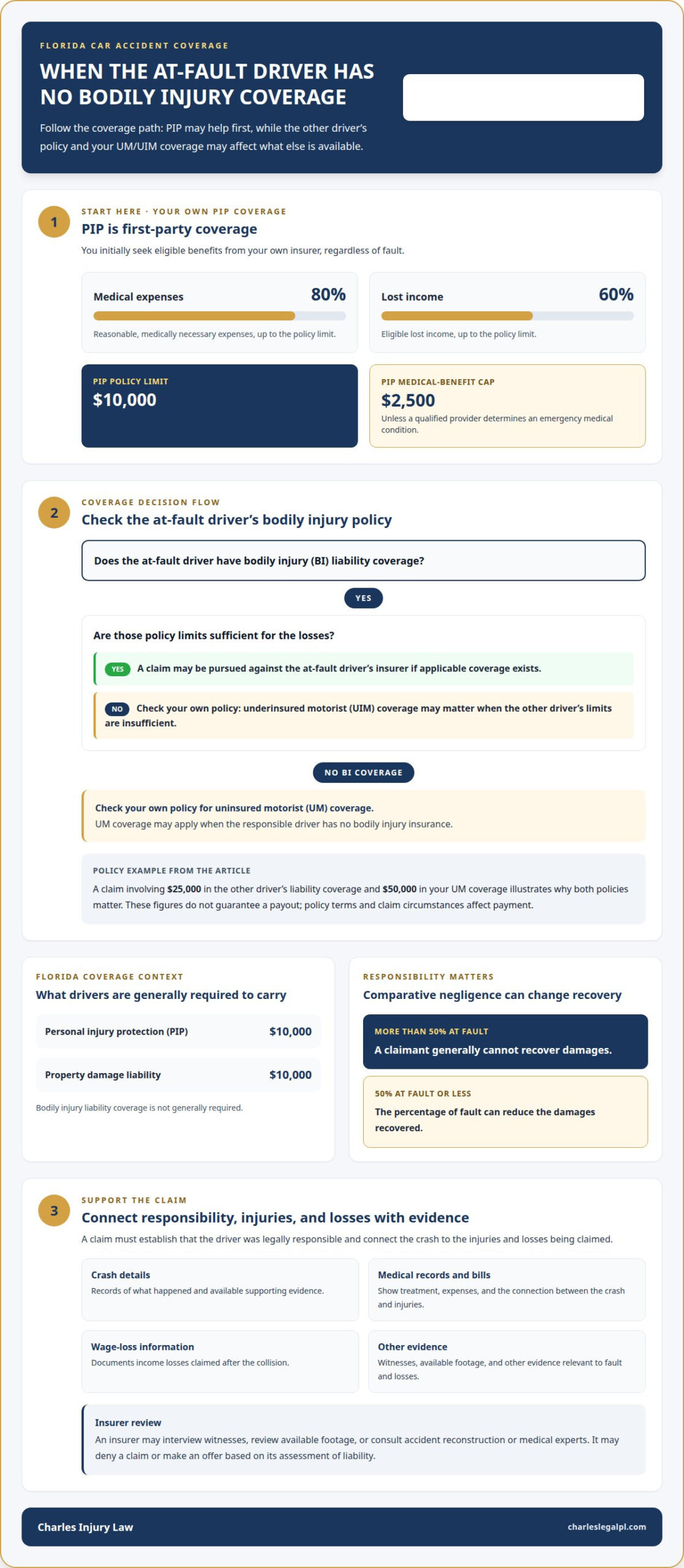
PIP is first-party coverage, meaning you initially seek eligible benefits from your own insurer, regardless of fault. It pays 80 percent of reasonable, medically necessary medical expenses and 60 percent of lost income, up to the policy’s $10,000 limit. PIP medical benefits are capped at $2,500 unless a qualified provider determines that you had an emergency medical condition. If medical bills and other losses exceed PIP benefits, you may pursue a claim against the at-fault driver’s insurer if applicable coverage exists.
Uninsured or underinsured motorist (UM/UIM) coverage may help address a bodily injury coverage gap through your own policy. UM coverage may apply when the responsible driver has no bodily injury insurance; UIM coverage may matter when that driver’s limits are insufficient for the losses. For example, a claim involving $25,000 in the other driver’s liability coverage and $50,000 in your UM coverage illustrates why examining both policies matters. Whether and how much a policy pays depends on its terms and the claim circumstances.
To pursue the at-fault driver’s insurance, the claim must establish that the driver was legally responsible and connect the crash to the injuries and losses. The insurer may ask for crash details, medical records, bills, wage-loss information, and other evidence. Keep claim communications and records organized. A Florida personal injury claim can involve more than proving that a collision happened; the evidence must support the losses being claimed.
Comparative negligence can reduce or bar recovery. According to the Florida Legislature, a claimant who is more than 50% at fault generally cannot recover damages. If the claimant is 50% at fault or less, the percentage of fault can reduce the damages recovered.
When coverage is disputed, fault is challenged, or medical bills exceed available benefits, identifying every applicable policy is important. PIP, the at-fault driver’s bodily injury coverage, and your UM/UIM policy serve different roles. Their limits and the evidence of responsibility help determine what compensation may be available.
Do Medical Injections or Treatments Increase Your Settlement?
Injections and other treatment can affect how an injury claim is evaluated, but treatment alone does not determine its value. Medical records need to connect the care, symptoms, and expenses to the crash.
Medical Records and Settlement Valuation
Medical records document the diagnosis, treatment plan, progress, and continuing effects of crash-related injuries. An insurance adjuster reviews these records when assessing the injuries and evaluating the claim.
For example, records can explain why a provider recommended injections, whether treatment eased symptoms, and what limitations remained. Bills document medical expenses, while follow-up notes can show whether pain affected work or daily activities. Keep treatment records complete and consistent. Gaps or unclear explanations may give an insurer grounds to question whether care was necessary or related to the collision.
Treatment Timing and Maximum Medical Improvement
Maximum medical improvement (MMI) is the point when an injury has stabilized and further treatment is not expected to produce substantial improvement. Settling before MMI can leave future treatment needs and lasting limitations unclear.
Florida’s PIP system requires treatment within 14 days after a crash to preserve the described coverage eligibility. That deadline concerns initial treatment, not a requirement to undergo injections. Follow the prescribed care plan and document changes in symptoms. A claim involving surgery or disputed issues commonly takes 12 to 24 months to resolve, while timing depends on recovery, evidence, and negotiation.
Injections do not automatically increase compensation. Their significance depends on the medical reason for treatment, the condition treated, the response to care, and whether the records connect it to the crash. An insurer may scrutinize treatment it considers unnecessary or unrelated. A well-documented claim presents the full medical picture, including earlier symptoms, ongoing complaints, and lasting impairment.
Settlement timing also affects what can be valued. If negotiations begin before the treatment course is understood, projected expenses and permanent effects may remain uncertain. Once a demand package is prepared, negotiations commonly take 30 to 90 days. That period is separate from the time needed to reach MMI or resolve disputes about liability and medical causation.
The gross settlement is not the same as the amount ultimately received. Attorney fees, case costs, and medical liens can affect the net recovery. Liens may cover outstanding medical expenses that must be addressed from settlement funds. Before accepting an offer, understand which expenses and claims will be paid from it, and request a clear accounting of deductions.
If treatment is ongoing or an insurer disputes its connection to the crash, discuss the medical records and settlement issues with the legal team before resolving the claim.
How Is Pain and Suffering Calculated in Florida Car Accident Cases?
A Florida car accident bodily injury settlement may include economic damages, such as medical bills and lost wages, and non-economic damages, such as pain and suffering. Recovery for pain and suffering beyond PIP depends on whether the injury meets Florida’s statutory serious-injury threshold.
Under Fla. Stat. § 627.737, the threshold includes significant and permanent loss of an important bodily function, permanent injury, significant permanent scarring or disfigurement, or death. A claimant must meet at least one criterion to seek pain-and-suffering damages against an at-fault driver. An injury’s label alone does not establish eligibility; medical evidence must support the required condition.
There is no single calculation that determines every claim’s amount. One method sometimes used applies a multiplier of 1.5 to 5 times economic damages. For illustration, $30,000 in medical bills multiplied by three suggests $90,000 in pain-and-suffering damages, in addition to economic losses. That example is a valuation method, not a guaranteed settlement or an automatic award.
Evidence helps connect the injury to the crash and document its effects over time. Medical records can show diagnosis, treatment, symptoms, and lasting limitations. Other records may document missed work or changes to daily activities. A contemporaneous account of pain and limitations can add detail. Consistent information across records also helps address disputes about causation, severity, and liability.
- Organize medical records, treatment notes, and bills by date.
- Keep wage-loss records that show time missed from work.
- Record concrete changes to sleep, mobility, or ordinary activities.
Negligence and comparative fault can affect damages. If the evidence assigns some responsibility to the injured person, the recoverable amount may be reduced under Florida’s comparative negligence rules. A claim should address both the injury’s impact and the evidence showing how the collision happened.
Average settlement figures cannot establish the value of an individual claim. Two people with similar diagnoses may have different medical needs, recovery periods, lasting effects, and evidence of fault. Available insurance matters, too. A claim’s value depends on the evidence and applicable coverage, not a multiplier alone.
Before accepting an offer, consider whether it accounts for documented losses and continuing effects of the injury. Signing a settlement release generally prevents future claims against the at-fault party for the same crash. If future care or lasting limitations remain unclear, accepting payment may close the claim before those consequences are fully understood.
Florida personal injury statute of limitations
In Florida, the deadline to sue for most car crash injuries is two years, as of 2026. For accidents occurring after March 24, 2023, the limitations period for general personal injury claims changed from four years to two years. The accident date matters, so identify it early when assessing which deadline may apply.
A statute of limitations sets the deadline for filing a lawsuit, not the time an insurance company has to negotiate. If settlement talks fail, an injured person may pursue the claim in court. An open insurance claim or ongoing discussions do not resolve whether a lawsuit has been filed on time.
Record the crash date and preserve documents related to the injury, including medical records, bills, and insurer correspondence. These records can help a lawyer assess the claim and prepare a filing. The court deadline is separate from the time needed for recovery or negotiations. An ongoing medical condition does not replace the need to meet the filing deadline.
The two-year period makes timing important even when fault or damages remain disputed. An insurer may still be investigating while the filing period continues to run. Track the applicable deadline during negotiations rather than assuming a settlement offer will arrive in time. If negotiations do not produce an agreement, filing may be necessary to preserve the claim.
Accident dates can change which limitations period applies. A crash before March 24, 2023, may fall under a different rule from a crash after that date, because Florida’s general personal injury period changed from four years to two years for accidents occurring after March 24, 2023. Confirming the crash date is therefore a practical first step, especially when the collision happened near that change.
Tax treatment is another part of assessing a settlement’s financial outcome. Most personal injury settlements are not taxable, but compensation allocated to lost wages may be an exception. The settlement’s components matter because medical expenses, lost income, and other damages may receive different tax treatment. Keep the settlement agreement and payment records so the amounts and categories are clear when reviewing tax consequences.
For a claim involving multiple types of damages, the settlement documents should clearly state what the payment covers. A lawyer can review the proposed allocation, outstanding expenses, and release language before acceptance. This matters because signing a release can affect future claims related to the same crash, while the filing deadline remains a separate concern.
Do not wait until negotiations are nearly over to consider the court deadline. Record the accident date, monitor the two-year period applicable to most Florida car crash claims, and promptly address questions about the filing deadline. If an insurer denies liability or negotiations stall, the deadline can determine whether a court can hear the claim.
Special rules for rideshare, motorcycle, truck, and fatal crashes
The type of crash can affect which insurance policies and claim rules matter. A rideshare trip, motorcycle collision, truck crash, or fatal accident may require different coverage and evidence analysis.
Rideshare crashes
Uber and Lyft claims can turn on whether the driver was completing an active rideshare trip. During active trips, Uber and Lyft may provide policies with $1 million in coverage. That figure does not establish the available compensation in every case. The claim still requires evidence connecting the crash, injuries, and losses to the responsible party.
Preserve trip and crash records, including rideshare information associated with the incident. An Uber or Lyft crash review should account for the driver’s role and applicable insurance. Coverage can differ from an ordinary trip in a personal vehicle, so identifying the relevant policy is central to evaluating recovery.
Motorcycle collisions
Florida motorcycle riders are not covered by PIP, so motorcycle claims do not follow the serious-injury threshold described for pain-and-suffering claims. This changes the starting point for evaluating medical expenses and non-economic damages. Medical records, injury evidence, and liability still matter when assessing compensation. A motorcycle crash should not be evaluated as though the injured rider had the same PIP coverage as a car occupant.
Truck crashes
A truck collision can involve records beyond those in a typical two-car crash. An investigation may need to consider the truck driver, the vehicle, and available commercial insurance information. Preserve crash, medical, and vehicle records that help establish how the collision happened and what injuries followed. Coverage limits and evidence of fault shape available recovery, while the seriousness of the injury influences documented losses.
Fatal crashes
A fatal crash raises wrongful-death issues alongside insurance and liability questions. Florida wrongful-death claims generally have a two-year filing deadline. The family’s claim may require evidence about the crash, the deceased person’s losses, and applicable insurance. The date of death and supporting records matter when assessing the deadline and potential compensation.
These crash types do not follow one standard coverage path. An active rideshare trip may involve a different policy than a motorcycle collision, while a truck crash may require review of commercial records. Fatal cases involve separate wrongful-death considerations and a filing deadline. Matching the investigation to the crash type helps identify relevant coverage and evidence.
If a rideshare, motorcycle, truck, or fatal crash has raised questions about coverage or compensation, discuss the claim and available records with the legal team.
Personal Injury Attorney in Fort Lauderdale
Personal Injury Attorney in Fort Lauderdale helps injured people assess accident claims, insurance coverage, evidence, and settlement issues. If an insurer disputes fault, questions your medical treatment, or makes an offer before your losses are clear, legal representation can help you evaluate the claim and protect your interests.
The firm represents people injured in car, truck, and rideshare crashes, as well as pedestrians hurt while walking, jogging, or bicycling. Its team can review the circumstances of the crash, available records, and factors that may shape compensation under Florida law.
For help understanding your options after a crash in Fort Lauderdale, contact Personal Injury Attorney in Fort Lauderdale.
Call Now: (954) 390-2228 Available 24 Hours a Day, 7 Days a Week
Take the Next Step With a Clear Claim Strategy
Your next decision can shape how your claim moves forward. Before responding to an insurer or signing a release, consider what the evidence establishes, what losses remain, and whether the proposed terms address your situation. Assess a car accident bodily injury settlement in Florida against the facts of your crash, not just an early offer.
Charles Injury Law represents people injured in car, truck, semi, tractor-trailer, and Uber and Lyft crashes. If you need help evaluating your claim or dealing with an insurer, the firm can review the circumstances and explain your options under Florida law.
Contact Charles Injury Law to discuss your claim and decide on a practical next step. You deserve space to focus on recovery while your legal concerns receive careful attention.
Frequently Asked Questions
What Is a Car Accident Injury Settlement?
A car accident injury settlement is an agreement resolving an injured person’s claim for compensation after a crash. It usually provides payment in exchange for releasing claims against the party being settled with. For example, the parties may resolve a dispute about responsibility without a trial. Read the release carefully before signing because its terms can affect claims arising from the same collision. This is general information, not legal advice.
How Do Insurance Companies Calculate Settlement Offers?
Insurance companies evaluate evidence of responsibility, injury, and financial loss before making offers. An adjuster may compare medical records with reported symptoms, review bills and wage documentation, and assess how the collision happened. Policy limits can also restrict payment. For example, incomplete records of missed work may make that loss harder to evaluate. An initial offer reflects the insurer’s assessment, not necessarily the full value of the claim.
How Much Is My Florida Car Accident Case Worth?
Your case’s value depends on evidence of fault, injuries, expenses, missed income, lasting effects, and available insurance. No average amount can determine an individual claim. Two people with similar diagnoses, for example, may have different recovery needs or proof of lost income. A personal injury firm near me may help assess how case-specific records affect a claim, rather than relying on an online figure or a single multiplier. An injury lawyer near me or personal injury lawyer near me may also review the records.
What Qualifications Are Needed to File a Personal Injury Claim in Florida?
A Florida personal injury claim generally requires evidence that another party’s negligence caused an injury and resulting damages. Medical records, crash evidence, and documentation of losses can support those elements. A pain-and-suffering claim also faces Florida’s serious-injury threshold. The shorthand “attorneys personal injury” points to legal help with injury claims; “attorneys for personal injuries” expresses that need more clearly. Fault matters under Florida’s comparative negligence rules, too.
What Happens After You File a Claim With the At-Fault Party’s Insurance Company?
After a claim is filed, the insurance company reviews the allegations and supporting evidence, then may investigate responsibility and losses. It might contact witnesses, examine available footage, or review medical records. The insurer can deny the claim or make an offer. Before discussing fault or giving a recorded statement, consider getting legal guidance. Keep copies of claim correspondence and note the date and substance of each communication.
What Happens to Your Settlement After You Receive It?
Settlement funds are distributed according to the agreement and outstanding obligations. Before receiving the balance, the payment may need to account for attorney fees, case costs, or medical liens. Review a written breakdown to understand the gross payment and deductions. Keep the final agreement and payment records, including any allocation to lost wages, since settlement components can receive different tax treatment.
How Does Florida’s No-Fault PIP Insurance Work After a Car Accident?
Florida PIP pays eligible benefits through the injured person’s own policy, regardless of who caused the crash. It covers 80% of reasonable, medically necessary medical expenses and 60% of lost income, up to the policy’s $10,000 limit. Initial treatment within 14 days is required to preserve the described PIP eligibility. PIP does not resolve every injury claim; other coverage may matter when losses exceed its benefits.
When Can an Injured Person Sue for Bodily Injury Damages in Florida?
An injured person may pursue bodily injury damages when evidence supports that another party’s negligence caused the injury. People searching for lawyers for auto accidents or auto accident lawyers near me should know that pain-and-suffering claims also require an injury meeting Florida’s statutory threshold. Evidence must connect the crash to the injury and losses. Whether to sue depends on the facts, available coverage, and applicable filing deadline.
Disclaimer
The information provided on this blog is for general informational purposes only and does not constitute legal advice. Viewing this content does not create an attorney-client relationship with the firm. You should not act or rely on any information contained herein without seeking legal advice from a qualified attorney regarding your individual situation.