



What if the person claiming your foreclosure sale surplus cannot prove the lien is valid? Don’t Let a suspicious lien holder take your foreclosure sale surplus funds. Before signing an assignment or sharing personal information, verify who filed the claim and what records support it. A lien’s existence alone does not establish that the claimant has a right to the funds or priority over you.
After a Florida foreclosure sale, surplus funds may remain when the sale proceeds exceed the amounts owed. Florida law generally presumes the owner of record when the lis pendens was filed is entitled to the surplus, subject to valid subordinate lien claims. Understanding that distinction can help you respond carefully rather than panic. This article explains what surplus funds are, warning signs to watch for, records to gather, and questions to address promptly. It also explains why the foreclosure court’s procedures, required documents, and deadlines matter, including the one-year period to claim funds before they may be reported as unclaimed. A careful review can help protect your rights as you decide what to do next.
Key Takeaways
- Don’t Let a suspicious lien holder take your foreclosure sale surplus funds: verify the claimant’s identity and supporting lien records before making commitments.
- An unfamiliar claim is a reason to investigate, not proof of fraud. Confident wording alone does not establish a right to the funds.
- Preserve the foreclosure sale notice, case number, claimant communications, and related lien documents so you can compare the claim with the records.
- Review the foreclosure case filings, notices, and applicable Florida procedures promptly. Required steps and response periods may affect your rights.
- Pause before paying, assigning your rights, or signing a release. Entitlement depends on the documents, competing claims, and Florida law.
What Is Florida Foreclosure Sale Surplus, and Why Might a Lienholder Claim It?
An unfamiliar lienholder claiming money connected to a foreclosure sale can be unsettling. A demand letter may sound certain, but its tone does not prove a right to the proceeds. Compare the claim with the case records, supporting documents, and applicable Florida law.
Foreclosure sale surplus is money that may remain from a property sale after sale-related obligations are addressed, subject to the facts of the case and applicable Florida law. This does not mean every sale produces a surplus or establish who receives it. Foreclosure is a legal process that can involve a court-supervised sale and competing creditor interests. The linked overview offers general background, not a substitute for Florida law or the specific court record.
How Can Surplus Funds Remain After a Florida Foreclosure Sale?
After a foreclosure judgment, a property may be sold and the sale proceeds reviewed against amounts and obligations connected to the case. If funds remain after those matters are accounted for, the court process may address whether a surplus exists and who has a valid claim. The calculation and distribution depend on verified records and applicable legal priorities. The sale price alone does not show whether a surplus exists or whether the former owner is entitled to it.
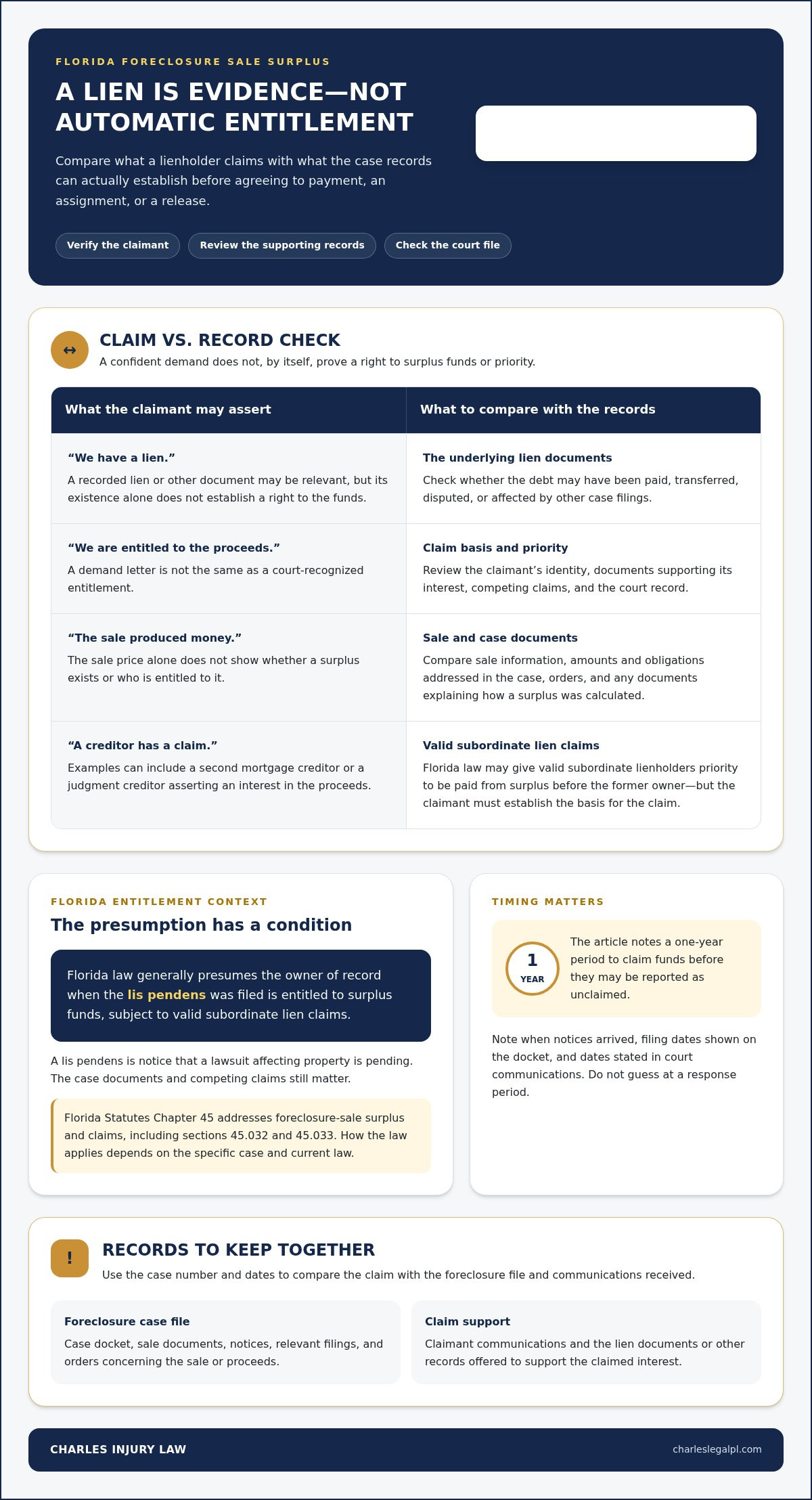
In Florida, Chapter 45 of the statutes addresses foreclosure-sale surplus and claims. The law generally presumes that the owner of record when the lis pendens was filed is entitled to surplus, subject to valid subordinate lien claims. A lis pendens is a notice that a lawsuit affecting property is pending. The case documents and competing claims still matter.
Why Might a Lienholder Seek the Proceeds?
A lienholder is a creditor asserting a legal interest in property or proceeds connected to a debt. For example, a second mortgage creditor or a judgment creditor may claim that the records support an interest in the sale proceeds. Florida law may give valid subordinate lienholders priority to be paid from surplus before the former owner, but a claimant must establish the basis for its claim.
A recorded lien or other document is relevant evidence, not automatic proof that the person or company demanding payment currently owns the claim or has priority. The debt may have been paid, transferred, disputed, or affected by other case filings. Review the claimant’s identity, the underlying documents, and the court record before agreeing to a payment, assignment, or release. Don’t Let a suspicious lien holder take your foreclosure sale surplus funds: require verification before you act.
How Florida’s Foreclosure Surplus Claim Process Can Affect Your Rights
A surplus claim is not resolved just because a lienholder sends a letter. The court file, sale information, claim documents, and notices can help show what has happened and what response may be required. In Florida, surplus claims are addressed under Chapter 45, including Florida Statute 45.032. How the statute applies depends on the specific case and current law.
A claimant’s assertion is not the same as a court-recognized entitlement to foreclosure surplus. A demand may identify an issue to review, but it does not prove the claimant’s identity, the basis of the claimed interest, or its priority. Florida law generally presumes that the owner of record when the lis pendens was filed is entitled to surplus funds, subject to valid subordinate lien claims. The court record and supporting evidence matter.
Which Florida Records May Help Explain a Surplus Claim?
Start with the foreclosure case docket and sale documents. Look for filings that identify claimed interests, orders concerning the sale or proceeds, and documents that may explain how a surplus was calculated. Compare those records with any notice or communication you received. Keep the case number and dates together to make it easier to review the documents as a timeline.
Clerk records and communications may also clarify what has been filed and what steps apply in the specific case. The county clerk’s role, available records, and procedures can vary with the case. Review the relevant clerk’s information, and do not assume that one notice or docket entry resolves competing claims. A complete review may require comparing multiple filings and documents.
Why Timing and Procedure Matter
Florida’s surplus process generally involves reviewing the sale record and claims, then following the procedure required by the court handling the foreclosure. A claimant or former owner may need to submit filings for the court’s consideration. Required documents and the way a matter proceeds depend on the case and applicable procedure. Chapter 45, including sections 45.032 and 45.033, is relevant; review the current statutory text alongside the case record.
Act promptly. Note when you received each notice, the filing dates shown on the docket, and any dates stated in court communications. Do not guess at a response period or assume a deadline does not apply because the paperwork is unclear. If a notice is missing, incomplete, or difficult to understand, seek timely legal review. Don’t Let a suspicious lien holder take your foreclosure sale surplus funds by treating a demand as a final ruling. Verify the claim, preserve the documents, and clarify the procedure before responding.
How to Spot Suspicious Lienholder Claims
An unfamiliar lienholder is not automatically fraudulent. A legitimate creditor may contact you about a documented interest. But a confident demand, official-looking letterhead, or knowledge of the foreclosure does not prove that the claimant has a valid right to the surplus. Treat warning signs as prompts to verify, not as proof of misconduct.
Compare the demand with the foreclosure case and the documents it relies on. A case-connected claim should identify the claimant, the property or debt involved, and the basis for seeking proceeds. An unsupported demand may leave those details vague or inconsistent. Do not let urgency replace a careful review.
What Warning Signs Should Make You Pause?
Pause if a claimant pressures you to act immediately, requests unexplained fees, uses names that do not match the case records, or provides no clear case reference. These issues call for further review, but none alone establishes fraud. Do not transfer funds, disclose account details, sign an assignment, or release a claim before the demand has been independently reviewed.
Save the full message, envelope, attachments, and any follow-up communications. Keep copies in their original form where possible. Avoid an impulsive reply or accusation. A clear record of what was said and when can help you compare the demand with official filings and identify what remains unclear.
How to Verify a Claim Against the Foreclosure Case
Check whether the claimant’s name and stated basis match the foreclosure docket, sale documents, and any lien or debt records provided. Confirm that the property description, case number, and amount claimed are consistent across the materials. If the claimant says an interest was transferred, look for documents explaining that connection. A name appearing in a record is a starting point, not a complete answer about current entitlement or priority.
For example, a letter may identify a creditor but omit the case number or describe a different property. That mismatch may be an error, or it may signal that more verification is needed. Compare the actual documents rather than relying on a caller’s summary. If authenticity, priority, or competing claims remain uncertain, seek prompt legal review before taking a step that could affect your rights.
Keep this principle in view: Don’t Let a suspicious lien holder take your foreclosure sale surplus funds through pressure alone. Verify the claim, preserve the evidence, and make decisions only after reviewing the case-specific documents and applicable Florida procedure.
Handling Claims on Your Florida Foreclosure Surplus
If a lienholder contacts you about foreclosure sale proceeds, slow down before making a decision. Do not pay, assign your rights, or sign a release until you understand the claim and its effect. Start by preserving the evidence and checking the case-specific procedure, rather than relying on the claimant’s assurances.
Which Documents and Details Should You Preserve?
Keep records together so the claim can be compared with the foreclosure case. Preserve the sale notice, case number, docket information, relevant sale documents, lien paperwork, and every communication from the claimant. Do not alter originals. For each contact, note the date, the person or business involved, any amount stated, and the action requested. Store documents containing sensitive financial information securely, and do not send account details through an unverified channel.
Steps to Take Before Responding
- Pause payment, assignment, or release decisions. Do not let pressure force a commitment before you understand what the document does.
- Organize your records. Gather the sale notice, case number, claimant communications, lien documents, and related filings. Keep originals intact and make working copies for review.
- Compare the claim with the case file. Check whether the claimant’s identity, stated basis, property information, and claimed amount align with available court records and supporting documents.
- Check current procedure. Review the relevant Florida court docket and clerk communications for the specific case. Confirm what filing or response steps apply rather than assuming one county’s process or a claimant’s instructions apply everywhere.
- Get legal review if questions remain. If the claim conflicts with the records or competing interests make priority unclear, prompt legal review can help clarify your options before you respond.
When Should You Seek Legal Review?
Act promptly if a court notice identifies a response period or hearing date. The applicable timing depends on the specific proceeding and documents, so do not rely on a general deadline or guess based on a letter. A Florida attorney can review the filings, evaluate competing claims under Florida law, and explain possible response options. No review can guarantee a particular result, but it can help you make an informed decision rather than surrendering rights without understanding the consequences.
Protect Your Florida Foreclosure Surplus: Verify the Claim Before Taking the Next Step
Before responding to a lienholder, organize the records and compare the claim with the foreclosure case. Avoid rushed payments, assignments, or releases. Whether someone is entitled to surplus depends on the specific documents, competing claims, and applicable Florida law. A demand alone does not decide the issue.
Don’t Let a suspicious lien holder take your foreclosure sale surplus funds through pressure or unsupported assurances. Pause before paying, assigning your rights, or signing a release. If a notice or filing leaves you uncertain, organize your records and seek timely guidance about the proper next step.
Personal Injury Attorney in Fort Lauderdale represents people injured in motor vehicle accidents and other personal injury matters throughout Florida. For injury-related legal concerns in Fort Lauderdale, Miami, West Palm Beach, Boca Raton, Delray Beach, Boynton Beach, Lake Worth, Orlando, or Tampa, contact the firm.
Call Now: (954) 390-2228 Available 24 Hours a Day, 7 Days a Week.
Verify the Claim Before You Commit
Protect your position with careful review, not a rushed decision. Preserve the sale notice, case number, claimant messages, and lien documents. Compare the demand with the foreclosure records, and check the procedure that applies to your case. A lienholder’s assertion alone does not establish entitlement. The documents, competing claims, and Florida law determine what rights may apply.
Don’t Let a suspicious lien holder take your foreclosure sale surplus funds through pressure or unsupported assurances. Pause before paying, assigning your rights, or signing a release. If a notice or filing leaves you uncertain, organize your records and seek timely guidance about the proper next step.
Charles Injury Law represents clients in personal injury matters, including motor vehicle accidents. The firm provides direct communication and responsive client service.
Call Now: (954) 390-2228 Available 24 Hours a Day, 7 Days a Week.
Frequently Asked Questions
What are foreclosure sale surplus funds in Florida?
Foreclosure sale surplus funds may remain if sale proceeds exceed amounts accounted for through the applicable process. Whether funds exist, who may claim them, and how competing interests are addressed depend on the case records and current Florida law. The former homeowner does not automatically receive the money. Review the official foreclosure documents and notices, and seek legal guidance if a lienholder or another claimant asserts a right to the proceeds.
Can a lienholder take my Florida foreclosure surplus funds?
A lienholder may assert a claim, but a demand alone does not establish entitlement to payment. The supporting documents, the claimant’s priority, and the court process all matter. Review the foreclosure docket and notices before signing an assignment or release. If competing claims or procedural questions make the next step unclear, seek prompt legal advice before agreeing to a distribution or sharing sensitive financial information.
How do I verify whether a foreclosure surplus lien claim is legitimate?
Compare the claimant’s identity and stated basis with the foreclosure case, property information, lien documents, and available court records. Check that names, dates, amounts, and case references are consistent. Preserve messages and attachments, and do not share sensitive information through an unverified channel. One inconsistency does not prove fraud, but it is a reason to investigate. If documents or priorities remain disputed, seek legal review before responding.
What should I do if someone contacts me about foreclosure surplus funds?
Do not rush to sign paperwork, pay a fee, or assign a potential claim. Save the message and contact details, gather the foreclosure and lien records, and compare the claim with official case information. Record any dates, filing references, or hearing details provided. If the claimant’s authority or the required process is unclear, seek timely legal advice and verify any stated deadline against current Florida law and the specific case documents.
How much foreclosure surplus money can a former homeowner receive in Florida?
There is no single amount that applies to every foreclosure. Any potential surplus depends on the sale proceeds, amounts accounted for, valid claims, and the case’s distribution process. A claimant’s estimate does not prove that funds are available or establish who is entitled to them. Review the official sale and case records. If amounts are disputed or other claimants assert an interest, seek legal review of the documents under current Florida law.
Is there a deadline to claim Florida foreclosure surplus funds?
The applicable timing may depend on Florida law, the notices issued, and the procedural posture of the case. Do not rely on a general online timeframe or wait because the paperwork seems unclear. Check dates on official court and clerk documents, then verify any stated deadline for the specific proceeding. If a notice identifies a response period or hearing, seek prompt advice about what action may be required.
What documents should I keep if a lienholder claims foreclosure surplus?
Preserve the foreclosure case number, sale documents, notices, docket information, lien records, and every communication from the claimant. Keep original documents unchanged. Record contact dates, names, amounts mentioned, and requested actions. Store sensitive financial information securely, and avoid sending it through an unverified channel. An organized file can help legal counsel compare the claim with the court record and identify questions about authenticity, priority, or the applicable Florida process.
Don’t Let a suspicious lien holder take your foreclosure sale surplus funds through pressure alone. For personal injury matters, people seeking a personal injury firm near me, attorneys for personal injuries, attorneys personal injury, an injury lawyer near me, a personal injury lawyer near me, lawyers for auto accidents, or auto accident lawyers near me can learn about Charles Injury Law’s practice. The firm represents clients in Fort Lauderdale, Miami, West Palm Beach, Boca Raton, Delray Beach, Boynton Beach, Lake Worth, Orlando, and Tampa. Call Now: (954) 390-2228 Available 24 Hours a Day, 7 Days a Week.
Disclaimer
The information provided on this blog is for general informational purposes only and does not constitute legal advice. Viewing this content does not create an attorney-client relationship with the firm. You should not act or rely on any information contained herein without seeking legal advice from a qualified attorney regarding your individual situation.