

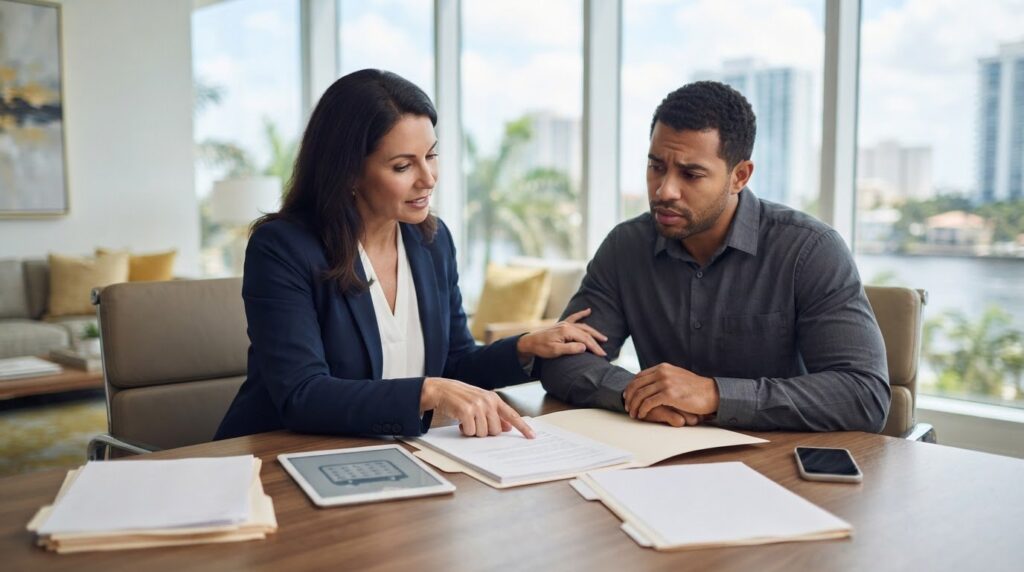

If you need a lawyer to stop a foreclosure sale, the first step is to identify where the case stands. The sale date, court docket, and orders already entered can affect which options remain under Florida law. A scheduled sale calls for prompt attention and a review of the actual record, not guesswork.
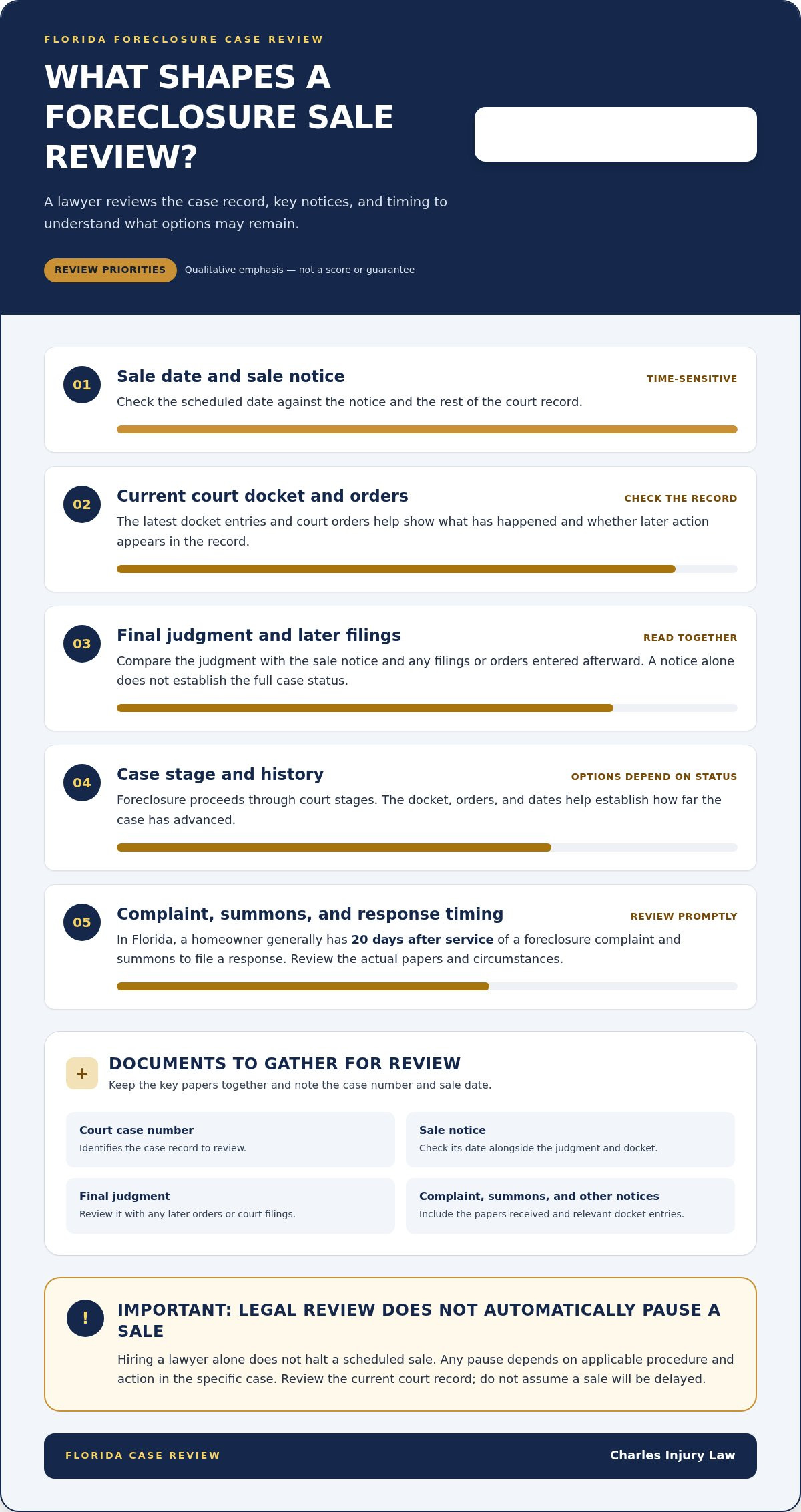
It’s understandable to feel overwhelmed by legal papers and worry that the lender may move ahead before you can understand your options. In Florida, a homeowner generally has 20 days after service of a foreclosure complaint and summons to file a response. For homeowners in Fort Lauderdale, Miami, West Palm Beach, Boca Raton, Delray Beach, Boynton Beach, Lake Worth, Orlando, and Tampa, the deadline and sale date still need to be considered alongside the judgment and case docket.
This article explains which documents and dates to gather, what a Florida foreclosure lawyer may assess, and which possible steps depend on the case. Searches for a personal injury firm near me, attorneys for personal injuries, attorneys personal injury, personal injury, injury lawyer near me, personal injury lawyer near me, lawyers for auto accidents, or auto accident lawyers near me concern separate injury matters. Here, the focus is timely, informed action grounded in Florida law, without assuming that any step will stop a sale.
Key Takeaways
- A scheduled foreclosure sale is time-sensitive. Contacting a lawyer does not automatically pause it, so confirm any change against the court record.
- A lawyer to stop a foreclosure sale may review the case stage, docket, notices, and options that could apply under Florida law.
- Gather the sale notice, lender correspondence, payment records, and prior court filings so the key information is ready for review.
- Possible paths depend on your circumstances and the status of the case. A focused review can help clarify which steps may still be available.
- Call Now: (954) 390-2228 Available 24 Hours a Day, 7 Days a Week
A Florida Foreclosure Sale Is Scheduled: What a Lawyer Can Assess First
A scheduled foreclosure sale can make every decision feel urgent. It’s understandable to worry that the home could be sold before you have time to understand the court papers or speak with the lender. But contacting a lawyer, by itself, does not automatically pause a sale. The case record and any action taken under applicable Florida procedure matter.
A scheduled sale is a time-sensitive stage in a court case, not proof that the sale will happen on that date or that it will be postponed. Review the date, the court’s latest orders, and the case history together. For a general overview of the process, see Foreclosure. General information can explain possible paths, but it cannot determine what applies to an individual case.
A lawyer’s initial assessment focuses on the court record, key notices, and sale date to identify what options may remain under the circumstances. Reviewing these materials can clarify which questions need answers and which dates may matter. It cannot guarantee that a sale will be delayed.
What does a foreclosure lawyer review when a sale date is set?
Gather the court case number, sale notice, any final judgment, and other notices you’ve received. A lawyer can compare those documents with the court docket and case history. That comparison helps establish what has already happened, whether later orders appear in the record, and which dates may affect possible next steps.
For example, read a sale notice alongside the judgment and any subsequent court filings rather than treating it as a stand-alone document. The review depends on the facts in the specific case. This article cannot determine whether you qualify for an option or predict whether a sale will be delayed.
Does hiring a lawyer automatically stop a Florida foreclosure sale?
No. Hiring counsel alone does not halt a scheduled sale. Any pause depends on applicable procedure and action taken in the specific case. A lawyer may assess the record and explain potential avenues, but no single step should be assumed to postpone a sale in every situation.
If the date is approaching, gather your papers and seek case-specific legal guidance promptly. A general discussion can help identify the issues that may matter, but applying them to your situation requires reviewing your documents and the current court record. This information is educational and is not legal advice about your individual case.
Call Now: (954) 390-2228 Available 24 Hours a Day, 7 Days a Week
How a Florida Foreclosure Case Reaches a Sale, and Why Timing Matters
A missed mortgage payment does not, by itself, show whether a foreclosure sale is near. In Florida, foreclosure generally proceeds through a court case. The docket, orders, and dates show how far the case has advanced. The Consumer Financial Protection Bureau offers a plain-language overview of the foreclosure process, but the court record is what matters for your situation.
Think of the case as a series of stages, not one automatic countdown:
- Complaint: The lender starts a court case, and the homeowner receives legal papers.
- Response and court proceedings: The case continues through filings and court action. Florida’s general response period after service of a foreclosure complaint and summons is 20 days, but the papers and circumstances should be reviewed promptly.
- Final judgment: If the court enters judgment, it may set terms for the next stage.
- Scheduled sale: A sale date appears in the record or notice. The precise date and any later court action can affect what options remain.
This is a simplified guide, not a substitute for checking current Florida law, court rules, and the actual docket. A lawyer to stop a foreclosure sale would need to assess the case stage and timing before discussing possible steps. A deadline or timeline from another state cannot answer a Florida homeowner’s question. Likewise, do not assume that missed payments mean a sale is imminent without checking the case record.
Which documents reveal the status of a Florida foreclosure case?
Gather the complaint, court orders, any final judgment, sale notice, and relevant docket entries. Keep the documents together and note the case number and sale date. A document’s title alone does not establish its legal effect or prove that a sale can proceed or must stop. Consider the full record, including later filings and orders.
Why can’t an out-of-state foreclosure deadline answer a Florida question?
Foreclosure procedures and timelines differ by jurisdiction. Guidance focused on another state may describe a different court process, so do not treat its deadlines as Florida rules. Any Florida statute, court rule, or case reference should be checked against current Florida authority before you rely on it. If your sale date is approaching, organizing the record and seeking case-specific guidance can help clarify what the documents show.
Call Now: (954) 390-2228 Available 24 Hours a Day, 7 Days a Week
Which Options Might a Florida Lawyer Evaluate Before a Foreclosure Sale?
A scheduled sale does not mean every possible path is available, and no option guarantees the outcome a homeowner wants. The case stage, sale date, loan records, lender communications, and ability to meet proposed terms can all matter. A lawyer evaluating possibilities connects those facts to choices that may remain, rather than promising a pause or resolution.
These options have different goals and consequences. An agreement with the lender may seek more time or changed payment terms. A payoff or redemption may aim to resolve the debt before the sale, if available under the case’s timing and requirements. A court challenge concerns issues in the legal record. A short sale, deed in lieu, or bankruptcy involves distinct considerations and is not a universal answer.
Possible path: Lender communication or loss-mitigation review
Goal: Explore whether the lender will consider a workout, modification, or other arrangement.
Key question: What information is required, and has the lender agreed in writing to any change or postponement? A request or negotiation alone does not guarantee that the sale will be delayed.
Possible path: Payoff or redemption
Goal: Resolve the debt before the sale, if the applicable requirements and timing make that possible.
Key question: What amount and deadline apply to this case? Review the judgment and court record before relying on this option.
Possible path: Court challenge or another legal process
Goal: Address a potentially relevant issue in the case or consider a separate legal route.
Key question: Does the record support a step under current Florida procedure, and what consequences could follow? Eligibility and effects depend on individual circumstances.
Can a lender workout or mortgage modification stop a scheduled sale?
It may be worth assessing, but a request, application, or negotiation does not itself guarantee postponement. A lawyer may review the mortgage and payment records, lender notices, prior applications, written communications, and court orders. Together, these materials can clarify what has been requested and whether the lender has agreed to terms. Do not assume lender approval or a sale delay.
When might a sale, payoff, or court challenge be considered?
These options serve different purposes and are not interchangeable. A sale may involve decisions about the property and resulting financial or legal consequences. A payoff or redemption depends on the case’s requirements and timing. A court challenge must be grounded in the record and applicable Florida procedure. Bankruptcy is a separate legal path with potential consequences that call for individualized advice. Do not pursue an option based on a general article alone.
A lawyer to stop a foreclosure sale should first evaluate the documents, current case stage, and sale date before discussing which possibilities may fit. Call Now: (954) 390-2228 Available 24 Hours a Day, 7 Days a Week
What to Do if Your Florida Foreclosure Sale Is Approaching
A sale date can create intense pressure. Set a clear next step: organize the facts, preserve the records, and get guidance based on the actual case. A phone call to a lender or lawyer does not, by itself, change a scheduled sale. Any action needs to be assessed against the court record and applicable Florida procedure.
Use this sequence to prepare:
- Write down the sale date. Copy it exactly from the latest notice or court record. Note the court case number and where you found the date.
- Collect the core documents. Gather your mortgage paperwork, payment history, complaint, court orders, final judgment if entered, and all sale notices.
- Preserve communications. Keep letters, emails, and notes of lender calls, including loss-mitigation requests and responses. Save prior court filings and related notices.
- Review the docket. Compare the case history with your papers. If entries or dates are unclear, flag them for case-specific review rather than guessing what they mean.
- Seek prompt legal guidance. Share the sale date and complete records so counsel can assess the current stage, possible next steps, and any deadlines that may apply.
What should I bring to a foreclosure case review?
Bring complete, accurate records: mortgage documents, payment history, court papers, notices, lender correspondence, and information about the scheduled sale. Include any prior loss-mitigation request and the lender’s response. Keep originals intact and provide copies when possible. Do not discard, alter, or selectively omit documents, even if a paper seems outdated or confusing. A detail that appears minor may help explain the case history.
How can a lawyer assess urgency without promising an outcome?
A lawyer can compare the sale date with the docket, court orders, and documents you provide, then explain what the record appears to show. That review may identify questions about applicable procedures or deadlines. It cannot guarantee a postponement or predict the result. Ask for a clear explanation of what is known, what remains uncertain, and which steps may require prompt attention under current Florida law.
Do not ignore court papers, assume a lender conversation has paused the sale, or rely on an online timeline from a different case. Organized records can help focus a legal review. Contacting a lawyer does not itself stop a sale, but case-specific guidance may help you understand what the record requires. Call Now: (954) 390-2228 Available 24 Hours a Day, 7 Days a Week
Getting Florida Foreclosure Guidance Without Assuming the Sale Is Stopped
Generic online timelines cannot show what has happened in your case. The court documents, current case stage, and scheduled sale date are the facts to focus on. Gather them before relying on broad guidance, especially if a notice or court order has changed since you last checked the docket.
A focused legal discussion can help identify what the documents say, which questions remain unanswered, and what possible next steps may warrant attention under current Florida procedure. It cannot promise that a homeowner is eligible for a particular option, that a specific strategy is available, or that a sale will be delayed. The phrase lawyer to stop a foreclosure sale describes an urgent concern, not a guaranteed result.
What should a homeowner expect from an initial legal discussion?
Be ready to share the sale date, court case number, and available documents, including notices, court filings, and lender communications. A useful discussion separates known facts from assumptions, identifies unclear points in the record, and explains what may need further review. Ask which dates or documents could affect the analysis. Clear answers should distinguish possible next steps from outcomes that cannot be predicted.
If you do not have every document, provide an accurate account of what you do have and identify what is missing. Do not treat a general conversation as a court filing or an order changing the sale date. A lawyer can discuss the information presented, but eligibility, strategy, and results depend on the individual case.
What if the foreclosure sale has already taken place?
After a sale, the questions differ from those involved in trying to stop a future sale. The court record and sale-related documents need separate review. A possible surplus-funds issue, for example, raises questions that should not be confused with whether an upcoming auction can be postponed. Read more about a Florida foreclosure surplus claim for general information, then have the circumstances and court record reviewed before drawing conclusions. This article cannot establish whether surplus funds exist or who may be entitled to them.
Whether a sale is approaching or has already occurred, rely on the actual record rather than assumptions. A call to Personal Injury Attorney in Fort Lauderdale is not itself a court order, a filing, or a postponement of a foreclosure sale.
Call Now: (954) 390-2228 Available 24 Hours a Day, 7 Days a Week
Take the Next Step With the Facts in Hand
A scheduled foreclosure sale calls for prompt, fact-specific attention. Keep the sale date, case number, court papers, lender communications, and payment records together. The docket and current case stage can shape which options may still be available under Florida law. A general online timeline cannot replace a review of the actual record.
A lawyer to stop a foreclosure sale cannot promise a particular result, and simply contacting a lawyer does not automatically pause a sale. A focused discussion can help identify what the documents show, what remains uncertain, and which questions need attention. If the sale has already occurred, the issues may be different and require separate review.
For contact information, reach Charles Injury Law through the link below. Be clear about your situation, but do not assume that a call is a court filing or an order postponing the sale. Have your documents ready and focus on getting accurate information about your circumstances.
Call Now: (954) 390-2228 Available 24 Hours a Day, 7 Days a Week
Acting with clear information can help you face the next decision with greater confidence.
Frequently Asked Questions
Can a lawyer stop a foreclosure sale in Florida?
A Florida foreclosure lawyer may assess whether a case-specific option could affect a scheduled sale, but no lawyer can promise that result. The court docket, sale date, final judgment, notices, and facts of the case all matter. Hiring counsel alone does not pause a sale. If you’re facing a scheduled sale in Miami or Fort Lauderdale, gather your court papers and seek prompt guidance based on Florida law.
Does filing a lawsuit automatically stop a foreclosure sale in Florida?
No. Filing a lawsuit does not automatically stop a foreclosure sale. Whether a case-related action could affect the sale depends on the legal basis, applicable Florida procedure, and any court action in the specific matter. Do not assume that filing a new case, sending a letter, or disputing the debt changes the sale date. Check the docket and any orders, and get case-specific guidance before relying on a filing to delay a sale.
How quickly should I contact a lawyer if my Florida foreclosure sale is scheduled?
Seek case-specific legal guidance as soon as you learn that a sale is scheduled. Timing can affect which options remain, and the documents may show important dates or recent court action. Record the sale date and case number, then gather the notices, judgment, and related filings. Do not wait for a lender response or rely on an online timeline to determine what applies to your case.
What documents should I bring to a Florida foreclosure lawyer?
Bring the foreclosure complaint, summons, court orders, final judgment if entered, sale notice, and case number. Include mortgage documents, payment records, lender letters and emails, and any loss-mitigation requests and responses. Prior court filings can also help show the case history. Keep the records complete and unchanged, and note any dates that seem unclear so they can be compared with the docket.
Can a mortgage modification stop a scheduled foreclosure sale?
A mortgage modification might be one possibility to discuss, but applying or negotiating does not automatically postpone a scheduled sale. Whether a lender will consider or approve a modification depends on the circumstances and its review. Keep copies of submitted applications, supporting documents, and written lender responses. Before relying on a proposed modification to affect a sale, confirm what has actually been agreed to and whether the court record or sale date has changed.
What happens if my Florida foreclosure sale is only days away?
Treat the situation as urgent. Confirm the date using the latest notice and court docket, gather your case papers and lender communications, and promptly seek advice based on the record. Do not assume a phone call, pending application, or request to the lender has postponed the sale. A lawyer can assess what the case shows and explain possible next steps, but contacting counsel does not guarantee a delay or change the scheduled date.
Can I challenge a foreclosure sale after it has happened in Florida?
Possibly, but post-sale issues differ from trying to stop a future sale, and the facts and court record matter. Florida procedure provides a strict 10-day window following the certificate of sale to file a formal objection. The applicable deadline and any available basis should be checked against current Florida law and the docket promptly. Do not assume that an objection is available or that it will undo a completed sale.
Which Options Might a Florida Lawyer Evaluate Before a Foreclosure Sale?
When you consult a qualified lawyer to stop a foreclosure sale, they will thoroughly review your financial situation, mortgage paperwork, and court filings to identify potential legal remedies. Depending on the specifics of your case, an attorney may evaluate options such as filing for Chapter 13 or Chapter 7 bankruptcy to trigger the automatic stay, negotiating a loan modification or repayment plan with your lender, pursuing short sale alternatives, or identifying procedural defects in the lender’s foreclosure complaint that could warrant a motion to cancel or postpone the sale. Each strategy carries distinct requirements, timelines, and legal implications, making professional guidance essential for homeowners in Miami and Fort Lauderdale who want to protect their rights and property.
If you need immediate assistance from a qualified Personal Injury Attorney in Fort Lauderdale regarding your urgent property or legal needs, reach out to our team today. Call Now: (954) 390-2228 Available 24 Hours a Day, 7 Days a Week.
Disclaimer
The information provided on this blog is for general informational purposes only and does not constitute legal advice. Viewing this content does not create an attorney-client relationship with the firm. You should not act or rely on any information contained herein without seeking legal advice from a qualified attorney regarding your individual situation.