



A rental-car badge does not determine who caused a crash. A lawyer for a car accident with Dollar Rent A Car in Miami can investigate whether the rental driver, another motorist, or a maintenance issue contributed. The key question is what the evidence shows about negligence and responsibility.
Injuries, insurance calls, and uncertainty about what comes next can feel overwhelming. This article explains what to do after a crash and how injury severity, negligence, and shared fault may affect a claim. It also covers why identifying potentially responsible parties matters in a rental-car collision and when legal help can clarify your next steps.
Key Takeaways
- After a rental-car crash, report the collision, notify Dollar, document the scene, and keep the rental and insurance details together.
- Medical records and evidence of how injuries affect daily life can help show the impact of the collision when a claim is assessed.
- Responsibility may involve more than one party. Evidence about driver conduct, vehicle maintenance, and the crash itself can help clarify negligence.
- Shared fault can affect a claim, so preserve evidence that explains what each person did before and during the collision.
- When choosing legal help, look for a lawyer who can assess the injuries, investigate potential liability, and address the insurance issues tied to a rental-car crash.
Steps to take after an accident involving a Dollar rental car
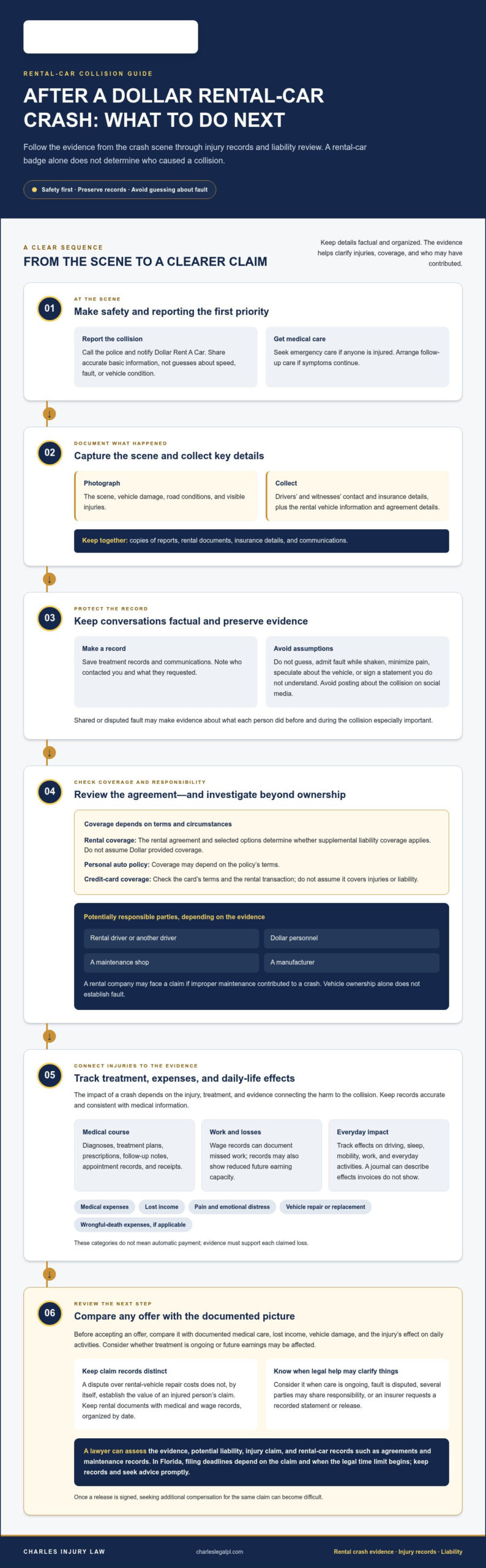
After a crash, prioritize safety, medical care, and preserving evidence before discussing fault. Florida filing deadlines depend on the claim and when the legal time limit begins, so keep records and seek advice promptly.
Immediate Post-Crash Actions
Call the police, report the collision, and notify Dollar Rent A Car. If anyone is injured, seek emergency care, and arrange follow-up if symptoms continue. Photograph the scene, vehicle damage, road conditions, and visible injuries. Collect drivers’ and witnesses’ contact and insurance details, and record the rental vehicle’s information and agreement details. Keep copies of reports, treatment records, and communications.
Rights After a Rental Crash
An injured person may pursue a claim against parties whose conduct caused harm. Evidence may support compensation for medical expenses, lost income, and other accident-related losses. Do not guess about your injuries or accept responsibility while shaken. Provide accurate basic information, keep a record of calls, and avoid posting about the collision on social media.
The rental agreement and selected options determine whether supplemental liability coverage applies. Do not assume Dollar provided coverage: review the agreement and keep any coverage documents. Your personal auto policy may also provide coverage, depending on its terms. Credit-card coverage depends on the card’s terms and the rental transaction. Keep relevant records, and do not assume it covers injuries or liability.
Rental Crash Differences and Liability
A rental-car crash may involve records beyond those in an ordinary collision, such as the rental agreement, vehicle condition, and communications with the rental company. Potentially responsible parties may include the rental driver, another driver, Dollar personnel, a maintenance shop, or a manufacturer. A rental company may face a claim if improper maintenance contributed to the crash, but vehicle ownership alone does not establish fault.
Tell insurers and other drivers only what you know. Avoid guessing about speed, admitting fault, minimizing pain, or signing a statement you do not understand. Do not speculate about the rental vehicle’s condition before the collision. Keep discussions factual, and document who contacted you and what they requested.
Choosing a Rental Accident Lawyer
Consider legal help if your injuries require ongoing care, fault is disputed, several parties may share responsibility, or an insurer requests a recorded statement or release. A lawyer can assess evidence, identify potential liability, and explain your options. When choosing a lawyer for a car accident involving a rental vehicle, look for experience with injury claims and rental-car evidence, including agreements and maintenance records.
For information about car accident injury claims, review how legal support may address the crash and resulting injuries. Call Now: (954) 390-2228 Available 24 Hours a Day, 7 Days a Week
Injury severity and potential settlements
The impact of a crash depends on the injury, treatment, and evidence connecting the harm to the collision. Assessing a settlement involves more than vehicle damage. It includes medical expenses, lost wages, future earning capacity, pain and suffering, emotional distress, and changes to daily life. The circumstances of the crash, including evidence of negligence, also shape the claim.
Injury severity matters because different conditions can create different needs. Someone with a fracture and continuing treatment faces different medical demands from someone whose soreness resolves quickly. Records can document what happened: diagnoses, treatment plans, prescriptions, and follow-up notes can connect symptoms to the crash. Keep appointment records and receipts, and track how pain affects driving, work, sleep, and everyday tasks.
Potential compensation can include:
- Medical expenses and costs tied to continuing care.
- Lost wages or reduced future earnings when injuries interfere with work.
- Pain and suffering, emotional distress, and reduced enjoyment of life.
- Vehicle repair or replacement costs, when supported by the claim.
- Wrongful-death expenses when a collision causes a fatal injury.
These categories do not result in automatic payments. Evidence must support each claimed loss. Wage records, for example, can document missed work, while treatment records can show the course and severity of an injury. A journal noting mobility limits or missed activities can describe effects that invoices alone may not capture. Keep your records accurate and consistent with medical information.
An insurer’s first offer may not account for every expense or long-term effect. Before accepting, compare the proposed settlement with documented medical care, lost income, vehicle damage, and the injury’s effect on daily activities. Consider whether treatment is ongoing and future earnings may be affected. Once you sign a release, seeking additional compensation for the same claim can become difficult.
In a rental-car collision, distinguish the injury claim from any dispute about damage to the rental vehicle. A disagreement over repair costs does not, by itself, establish the value of an injured person’s claim. Keep Dollar rental documents with medical and wage records, organized by date. This makes it easier to spot gaps, connect expenses to the crash, and assess how negligence and injury severity affect the claim.
If you’re weighing an offer, discuss the injury claim and settlement documents before deciding whether they reflect the losses shown by your records.
Comparative negligence
Comparative negligence considers whether an injured person’s actions contributed to a collision. In a Dollar rental-car crash, drivers may give conflicting accounts about speed, lane changes, braking, or visibility. Insurers assess those accounts alongside photographs, witness statements, vehicle damage, and available reports. Disputed accounts can affect liability and settlement discussions, so preserve evidence showing what happened before impact.
For example, one driver might say you changed lanes suddenly, while a witness describes the rental vehicle crossing the lane line. Photos showing vehicle positions and damage may help assess those accounts. Write down your recollection while details are clear, including traffic signals, road conditions, and each vehicle’s direction of travel. Distinguish what you saw yourself from what someone else told you.
An insurer’s review of fault may take weeks or longer. During that time, an adjuster may request a recorded statement or suggest your conduct contributed to the crash. Do not guess about speed or distance or agree with an account you cannot verify. Keep your answers factual, and record callers’ names, dates, and any documents they send.
Comparative fault can complicate settlement discussions when the parties disagree about which actions caused the collision. A serious injury does not resolve that dispute on its own. Evidence must connect the crash to each person’s conduct. For example, damage to a rental vehicle may show the point of impact, while a witness may describe a driver’s movement. Each detail can support or weaken a claim about liability.
Insurance coverage is separate from fault. A policy may identify available coverage, while evidence about the collision addresses liability. Keep policy and rental documents organized, but do not treat the existence of coverage as proof that an insurer accepts responsibility. An attorney can review disputed evidence, identify gaps in the accounts, and explain how those disputes may affect negotiations.
Take practical steps before settlement discussions progress. Preserve original photos, save messages, and record any changes in your recollection without altering earlier notes. If an insurer blames you, ask what evidence supports its position and keep the response. A clear record helps you evaluate the claim and discuss your options with an attorney before deciding whether to accept a proposed settlement.
Liability and negligence
A rental-car accident can raise separate questions about who caused the crash and who is responsible for resulting expenses. The driver’s conduct matters, but a rental company’s involvement does not automatically establish liability. Under Florida law, examine each party’s actions and the evidence connecting them to the collision. This distinction helps clarify whom an accident claim may name and what insurance coverage may apply.
Potential responsibility depends on evidence of negligence, not simply vehicle ownership. If improper maintenance contributed to a crash, records of the vehicle’s condition and repair history may matter. Ownership and negligence are separate questions. Evidence must support a claim against the rental company, its workers, or anyone responsible for maintenance. The driver’s actions also require examination to determine whether they contributed to the collision.
Potentially responsible parties can include:
- The Dollar rental driver, if their driving caused or contributed to the collision.
- Another driver whose actions played a role in the crash.
- The rental company or its workers, if their own conduct contributed to the harm.
- An automotive shop, if its maintenance work contributed to a vehicle problem.
- A vehicle manufacturer, if a defect contributed to the accident.
These are possible avenues of investigation, not automatic findings of fault. A tire failure, for example, may raise questions about maintenance, repair work, and vehicle condition. Photos, witness accounts, inspection records, and repair documents can help distinguish a mechanical issue from driver error. A lawsuit may involve multiple parties if evidence supports separate acts of negligence.
Keep vehicle damage claims separate from injury liability. A Dollar rental driver may be responsible for damage to the rental vehicle even if another driver caused the crash. That financial dispute does not, by itself, establish who is liable for an injured person’s losses. Review the rental agreement and insurance documents, and preserve communications about repairs, towing, or coverage.
Insurance coverage also depends on the policies and agreements involved. The rental driver’s auto policy may address damage to rental vehicles or other people’s property, while other policies may cover injury losses. Coverage does not prove fault, and a denial does not resolve the underlying negligence question. Organize policy documents and claim correspondence by date.
If a company, repair shop, or manufacturer may have contributed, preserve evidence before the vehicle is repaired or returned. Record identifying details, save photographs, and note who handled the vehicle after the crash. An attorney can assess whether the facts support claims against multiple parties and explain what evidence may matter before settlement discussions or a lawsuit proceed.
How do I find a lawyer for a car accident involving a Dollar rental car near me?
Start by comparing lawyers who handle Florida car accident injury claims and rental-vehicle disputes. A personal injury firm near you may be convenient, but location alone does not show whether its approach fits your case. Look for attorneys who handle personal injury claims and can explain how they assess disputed fault, review rental records, and communicate with insurers. Ask for clear, case-specific answers rather than broad claims about experience.
Directories sometimes use the label “attorneys personal injury.” Treat it as a starting point, then consider the actual work a lawyer handles. Ask whether the lawyer has addressed claims involving rental agreements, vehicle condition, or multiple potentially responsible parties. A lawyer should explain what information may help assess your circumstances without promising a particular settlement or result.
Prepare a brief case summary before speaking with a lawyer. Include when and where the collision happened in Miami, how injuries affected your daily routine, and which questions remain unresolved. Note whether an insurer has requested a statement or sent documents for signature. This preparation helps a nearby injury lawyer focus on your concerns instead of reconstructing basic details.
- Ask who will answer questions and provide case updates.
- Discuss how the lawyer approaches rental-car records and disputed liability.
- Find out how the lawyer explains important decisions and next steps.
- Read the written representation agreement before signing.
A nearby personal injury lawyer should explain the proposed process and how it relates to your situation. When comparing auto accident lawyers, consider whether they listen carefully and identify practical questions, such as which records could clarify the rental vehicle’s condition. This approach can help you evaluate nearby auto accident lawyers without relying only on advertisements or broad promises.
Choose someone who communicates directly, explains what evidence may matter, and respects your priorities while you recover. If you’re ready to discuss the collision and your available options, contact the legal team about your accident.
Personal Injury Attorney in Fort Lauderdale: Injuries suffered from Car Accidents
Charles Injury Law represents people injured in car accidents, including collisions involving rental vehicles. The firm can review how the crash happened, assess evidence of negligence, and address questions about injury-related losses. If a truck, rideshare vehicle, or pedestrian was involved, the firm also handles injuries from those accidents.
Consider reaching out when injuries need medical care, fault is disputed, or insurance communications make the next steps difficult. Information about car accident injury representation explains how legal support can address an accident claim and its evidence.
Contact Charles Injury Law to discuss your car accident and possible next steps. Call Now: (954) 390-2228 Available 24 Hours a Day, 7 Days a Week
Take the Next Step Toward a Clearer Claim
The next step is to turn scattered records and questions into a focused plan. Before a conversation, write down what remains unresolved: a disputed account of the crash, a document you still need, or an insurer’s position you do not understand. A lawyer for a car accident with Dollar Rent A Car can discuss how those issues fit together and what information may clarify your options.
You do not need to predict the outcome before seeking guidance. Bring your most important questions, including how the claim may affect your recovery and which decisions require careful review. A direct discussion can help you decide what to do next while keeping your health and everyday needs in focus.
Charles Injury Law represents people injured in car, truck, and rideshare accidents. If you’re ready to discuss your situation, contact Charles Injury Law about your accident claim. Take the next step when you’re ready, and move forward with a clearer understanding of your options.
Frequently Asked Questions
Why Would You Need a Lawyer?
A lawyer can investigate disputed responsibility, organize evidence, and respond to insurers handling a rental-car injury claim. A lawyer for a car accident with Dollar Rent A Car can also examine whether the driver’s conduct, vehicle maintenance, or another party’s actions contributed. If an insurer relies on an incomplete account, organized records and witness details may help challenge its position. Legal guidance can be particularly useful when injuries, liability, or insurance coverage are disputed.
What Damages Can You Recover in the Claims Process?
Recoverable damages may include medical expenses, lost wages, future earning capacity, pain and suffering, emotional distress, property damage, and permanent disability or disfigurement. Evidence should connect each claimed loss to the collision. Keep itemized treatment statements and records of missed work, for example. If an injury limits future job duties, documentation of those restrictions can help explain the effect on earning capacity.
What if I Was Not at Fault?
If another driver caused the crash, you may pursue a claim based on evidence of that driver’s negligence. Florida follows comparative-fault principles, so someone who shares some responsibility may still recover damages. Preserve evidence supporting your account, such as a witness’s description of the other vehicle’s movement. An insurer’s initial position does not replace a careful review of the facts and applicable coverage.
What should I do after a car accident involving a Dollar Rent A Car vehicle?
Address immediate safety and medical needs first, then ensure the collision is reported and Dollar is notified. Keep the rental agreement and any incident reference information with your records. If the vehicle is later inspected or repaired, note who handled it and preserve related communications. Avoid guessing about fault or posting publicly about the crash. Stick to facts when speaking with others.
Who may be liable for a Dollar Rent A Car accident, the driver, rental company, or insurer?
Liability depends on conduct and evidence, not simply whose name appears on the rental paperwork or insurance policy. The driver or another motorist may be responsible; a rental company or repair shop may face a claim if its negligence contributed. The Graves Amendment generally protects rental companies from liability based solely on vehicle ownership. An insurer may handle a claim under applicable coverage, but coverage alone does not establish fault.
What evidence and documents should I collect after a rental car accident?
Keep the rental agreement, claim communications, and any Dollar incident reference details together. Preserve original photographs and videos, including their dates and context, rather than relying only on edited copies. Save repair estimates, towing or storage paperwork, and messages about the vehicle’s condition. If a witness later provides contact details or clarifies what they saw, record when and how you received that information.
How are injuries, medical bills, lost wages, and vehicle damage compensated in a rental car accident claim?
Compensation depends on liability, available insurance coverage, and evidence supporting each loss. Medical invoices and treatment records document care; employer records can support claims for missed wages. Repair estimates and vehicle inspections address property damage, which is separate from injury losses. Insurers may evaluate these categories under different policies or claim processes, so organize supporting documents by type and date before reviewing a proposed settlement.
Disclaimer
The information provided on this blog is for general informational purposes only and does not constitute legal advice. Viewing this content does not create an attorney-client relationship with the firm. You should not act or rely on any information contained herein without seeking legal advice from a qualified attorney regarding your individual situation.