

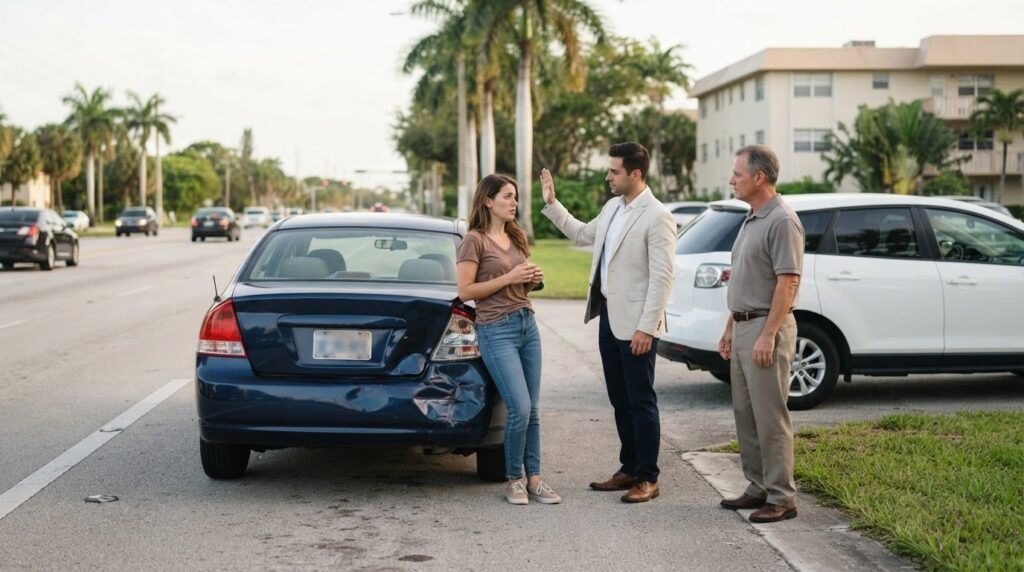

A quick call can help move an insurance claim forward, but your words may also be used to challenge your account. If you’re asking, “Should I talk to the insurance company after an accident?” promptly report the crash to your own insurer. Before speaking with the other driver’s insurer, be careful: you generally don’t have to give it a recorded statement. This is general information, not legal advice.
It’s understandable to want to cooperate and get the claim resolved. Still, an early conversation can create problems if you admit fault, guess about what happened, or say your injuries are minor before you know how you’re feeling. Stick to basic crash details, and be cautious about discussing your injuries or agreeing to a settlement. This article explains when speaking with the other driver’s insurer may make sense, how your statements could be used, and what to avoid saying while your claim is being assessed.
Key Takeaways
- Report the crash to your own insurer, but approach conversations with the other driver’s insurer carefully.
- Keep early discussions to basic facts. Avoid admitting fault, guessing, or minimizing injuries.
- You generally don’t have to give the other driver’s insurer a recorded statement.
- Pause before signing medical authorizations or accepting a settlement, since those decisions can affect your claim.
- Get help with insurer communications if fault is disputed or you’re unsure how to respond.
1. Should I Speak With The Other Driver’s Insurance Company After A Car Accident?
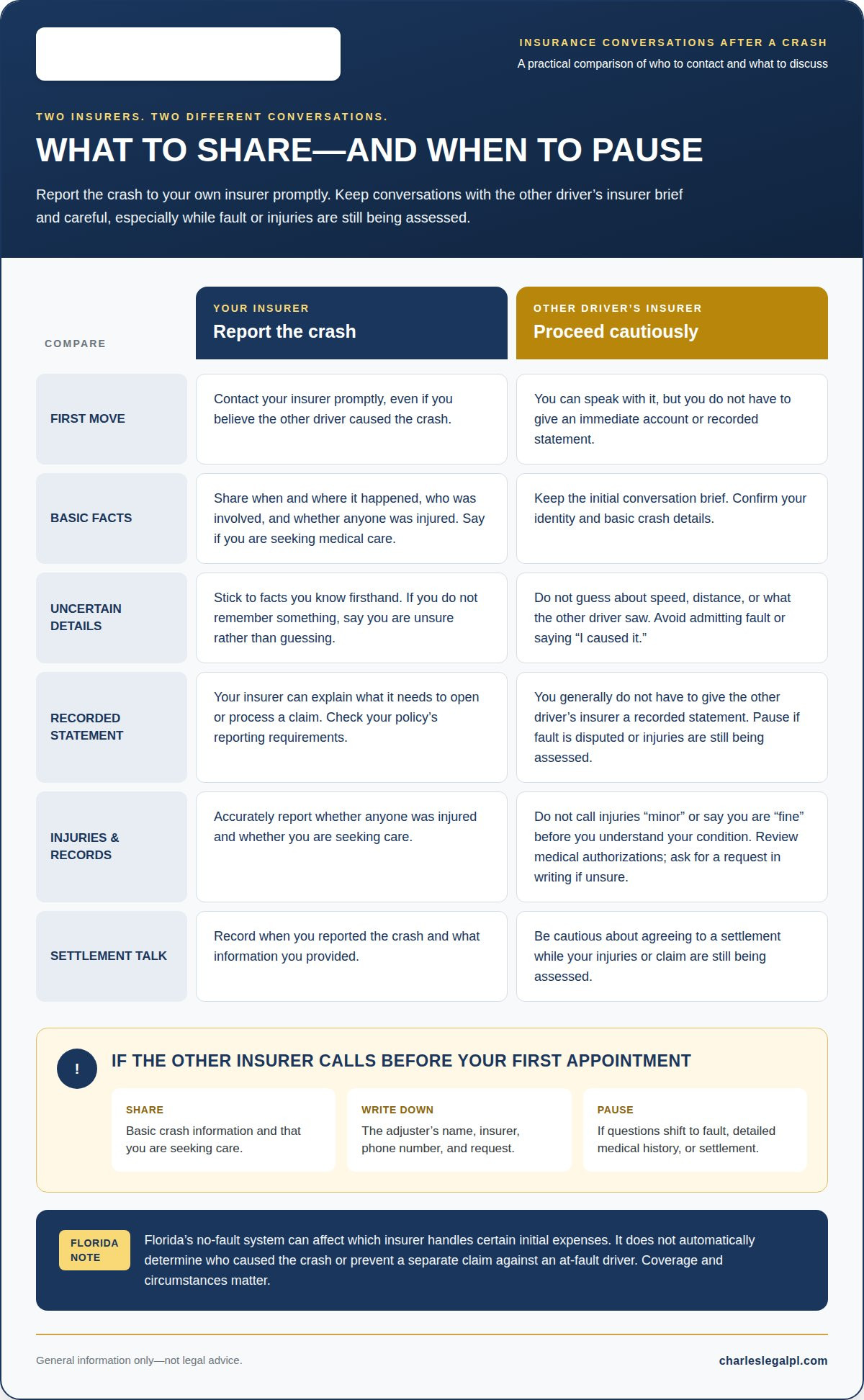
You can speak with the other driver’s insurer, but you don’t have to give an immediate account or recorded statement. If fault is disputed, or your injuries are still being assessed, pause before discussing details with an insurance adjuster. A short conversation may help after a minor crash when the other driver clearly caused it but isn’t communicating with their insurer.
Florida’s no-fault system can affect which insurer handles certain initial expenses. It doesn’t automatically determine who caused the crash or prevent a separate claim against an at-fault driver. The coverage involved and the accident circumstances matter when deciding which insurer to contact about each part of your claim.
Promptly contact your own insurance company after a car accident, even if you believe the other driver caused it. Provide basic facts, such as when and where the crash happened, who was involved, and whether anyone was injured. If you’re seeking medical care, say so. Your insurer can explain what it needs to open or process a claim.
If you don’t report the accident to your insurer, handling your claim may become more difficult. Your policy’s reporting requirements and the circumstances of the crash can affect what happens next. For organizations managing commercial vehicles, consulting an independent advisor like Paterson Insurance Brokers can help clarify policy duties and risk management considerations. Don’t assume the other driver’s insurer will notify your insurer or protect your coverage. Report the crash yourself and record when you did so.
With the at-fault driver’s insurer, keep any initial conversation brief and focused. Confirm your identity and basic crash details, but don’t guess about speed, distance, or what the other driver saw. Don’t describe your injuries as minor before you understand them. An adjuster may ask questions that affect how the insurer evaluates fault, injuries, and a possible settlement.
Take particular care with medical records. An insurer may ask about your treatment or request that you sign an authorization. Read it before agreeing, because it may cover more records than you intend to disclose. If you’re unsure what it allows, don’t sign it during a call. Ask for the request in writing so you can review it.
A lawyer can communicate with the other driver’s insurer, review requests, and help organize evidence supporting a personal injury claim. Legal representation may be especially useful when fault is disputed, your injuries need further evaluation, or an adjuster requests a recorded statement. A lawyer can also handle settlement discussions while you focus on recovery.
For example, if an adjuster calls before your first medical appointment, you can provide basic crash information and explain that you’re seeking care. Then record the adjuster’s name, insurer, phone number, and request. If the questions shift to fault, detailed medical history, or settlement, pause and get legal guidance before answering. For car accident injuries, that support can help keep insurer communications focused on the evidence and your claim.
2. Risks of admitting fault or minimizing injuries
Something said in the confusion after a crash can follow you through the claim. Avoid saying “I caused it,” even if you’re apologizing or haven’t heard the other driver’s account. Fault depends on evidence, including vehicle damage, witness accounts, and the sequence of events. Don’t guess about speed, distance, or a signal you didn’t clearly see.
Stick to facts you know firsthand. You can identify the road, direction of travel, vehicles involved, and whether witnesses were present. If you don’t remember a detail, say you’re unsure rather than filling in the gap. A recorded statement that conflicts with later evidence may give an insurer grounds to challenge your account or dispute the other driver’s responsibility.
Don’t tell an adjuster you’re “fine” before you understand your condition. Pain or other symptoms may become clearer after the initial shock, and a medical evaluation can help document what you experienced. Describe what you know accurately. For example, say you have neck pain and are seeking care, rather than declaring you weren’t injured or naming a diagnosis you haven’t received.
Minimizing damage can also complicate a claim. Saying the impact was minor or your vehicle has little damage doesn’t establish that you weren’t injured. Separate observations from conclusions. Photograph visible damage and keep medical records as they become available. If an adjuster asks whether you were hurt, answer truthfully without predicting your recovery or dismissing symptoms.
Report the crash promptly to your insurer. Handle any required report to Florida authorities separately, because notifying an insurer doesn’t itself make that report. The applicable reporting steps depend on the circumstances, so don’t assume one notification meets every requirement. Record the date, recipient, and information you provided.
The deadline to file a Florida personal injury claim is separate from the requirement to report a crash. A lawyer can identify the applicable deadline by reviewing the crash date, claim type, and parties involved. Don’t rely on a deadline from another state or assume settlement discussions pause a filing deadline.
Consider consulting a personal injury attorney if the other driver disputes fault, an adjuster requests a recorded statement, or your symptoms affect daily activities. Bring the crash report, photographs, witness details, and treatment records to a consultation. An attorney can review how your account, available evidence, and coverage questions fit together before you respond to a disputed liability position or settlement proposal.
If you’re unsure how to answer an adjuster without speculating, discuss your accident claim with an attorney before giving a detailed account.
3. Can the insurance company use my recorded statement against me?
Yes. An insurer may use a recorded statement to assess your account, compare it with other evidence, and identify inconsistencies. A rushed answer can create problems later, especially if you guessed about the crash or described an injury before receiving medical care.
Speaking with an insurer doesn’t automatically harm a personal injury or property damage claim. But inaccurate, incomplete, or conflicting details may lead the insurer to question your account. For example, saying you saw the other driver’s signal when you’re unsure could undermine a later, more accurate description.
Keep your answers to what you remember firsthand. State the road, direction of travel, vehicles involved, and events you observed. If you don’t know how fast anyone was driving, say so. Don’t estimate just because an adjuster asks you to fill a gap in your memory.
Avoid conclusions about fault. “I’m sorry” may express concern, but an insurer could consider your exact words and the surrounding circumstances when assessing responsibility. Describe what happened instead: “My car was moving through the intersection when the other vehicle struck the passenger side.” Don’t say you caused the collision unless you know that’s true.
Be just as precise about injuries. Don’t tell an adjuster you’re fine if you haven’t assessed your condition. You can describe your current symptoms and say whether you’re seeking medical care. Don’t predict how quickly you’ll recover, claim a diagnosis you haven’t received, or dismiss pain that affects your everyday activities.
Before a recorded conversation, ask who’s calling, which insurer they represent, what the statement concerns, and whether the call is being recorded. You generally don’t have to provide a recorded statement to the other driver’s insurer. If you feel pressured, end the conversation and seek legal guidance before responding further.
If you’ve already given a statement, write down what you remember saying and when the call took place. Save the insurer’s messages and letters. If you spot a genuine mistake, don’t quietly change your account or guess at a correction. Clearly explain the specific error and keep any document or photograph that helps clarify it.
A Florida claim review may involve more than one account. An adjuster may compare your statement with photographs, witness information, medical records, and vehicle damage. Keep your account consistent with what you know, not what you think the insurer wants to hear. Avoid discussing crash details casually online, where a post may lack the context of a full account.
For example, saying “I’m still gathering information” is better than guessing about when the impact occurred. Careful, truthful answers help keep your account accurate while the claim is evaluated.
4. Whether you must speak with the other driver’s insurer
You generally don’t have to speak with the other driver’s insurance company after a crash or give it a recorded statement. An adjuster may still call, send questions, or request documents. Before discussing the claim, ask which insurer they represent, what they need, and whether they’re recording.
Exchanging information at the scene is different from discussing fault or injuries with an insurer later. Exchange practical details with the other driver, including names, vehicle year, make and model, license plate, insurance carrier, and policy number. These details help identify the vehicles and policies involved. They don’t require you to explain how the crash happened or accept responsibility.
If an adjuster contacts you, keep the exchange brief. Ask for the request in writing and note the caller’s name, company, phone number, and reason for calling. You can say you’re gathering information and will respond after reviewing the request. Don’t let an urgent call push you into answering questions you don’t understand.
Be especially cautious about giving a recorded statement. The other driver’s insurer may ask for one to document your account, but you can decline. Declining a recorded statement to that insurer doesn’t itself damage your claim. If you choose to discuss basic facts, avoid estimating speed, distance, or timing when you’re unsure. Don’t speculate to fill a pause or satisfy repeated questions.
Keep your account focused on what you observed. For example, identify the intersection and the direction your vehicle was traveling. Avoid conclusions such as “the other driver had plenty of time to stop” unless you can describe the facts behind that observation. A simple, accurate account is more helpful than a confident guess that later conflicts with photographs or witness accounts.
An insurer may gather information by phone or send an agent to the scene. You can ask to see the agent’s identification and confirm the insurer before deciding whether to discuss the claim. If fault is disputed, your injuries are still being evaluated, or the questions turn to medical records or settlement, pause and seek legal guidance. This gives you time to understand the request before responding.
After the call, record the date, time, caller, questions asked, and documents requested. Save the insurer’s emails, letters, and voicemails. If you shared information, write down what you remember while the conversation is fresh. These steps help you track what was said without relying on memory during later claim discussions.
5. Recorded statements and adjuster questions
A recorded statement creates a lasting account of what you said about the crash. An adjuster may compare it with photographs, witness accounts, the accident report, and later claim information. Unclear wording or a guess about a detail could become a point of dispute.
Before answering an adjuster’s questions, find out who’s calling and which insurer they represent. Ask whether the conversation is being recorded, which claim it concerns, and what information the adjuster needs. This helps distinguish a basic claim inquiry from a request for a detailed account of fault, injuries, or damages.
When reporting the accident to your own insurer, give accurate basic information, including when and where it happened, who was involved, and whether anyone was injured. Don’t confuse an initial report with agreeing to speculate about liability. If you don’t know whether a vehicle’s turn signal was on, say you don’t know. For policyholders looking to better navigate their coverage terms and risk management responsibilities, consulting dedicated insurance advisors such as mygenib.com.au can provide valuable clarity on policyholder duties.
During a recorded interview, answer only the question asked. If an adjuster asks where the impact occurred, describe the location you remember instead of adding assumptions about speed or distance. If you can’t recall an exact detail, say so. Taking a moment to think is better than giving a confident estimate that conflicts with physical evidence.
Be alert to broad questions. “Tell me everything that happened” may invite guesses or unrelated details. You can ask the adjuster to clarify, then answer with the facts you observed. For example, explain which direction you were traveling and what you saw immediately before impact. Don’t adopt the adjuster’s wording if it doesn’t match your memory.
Keep a record after each insurance conversation. Note the adjuster’s name, insurer, date, questions, requested documents, and any response deadline. Save emails and letters. If you later find a genuine error in your account, identify the specific statement and correction instead of changing details informally or adding facts you can’t verify.
Be cautious if an adjuster links a quick statement to a settlement offer or asks you to accept payment during the same call. Ask for the offer and its terms in writing. Before agreeing, understand which claim the payment resolves and whether you must sign a release. A recorded answer or signed document can affect how the insurer evaluates your claims.
If an adjuster’s questions concern disputed fault, ongoing medical care, or a settlement, get legal guidance before providing a detailed recorded account. Speak with a lawyer about your insurance claim before deciding how to respond.
Personal Injury Attorney in Fort Lauderdale: Failure to Return Security Deposit by landlord after moving out apartment or commercial building
Charles Injury Law represents people injured in car, truck, and Uber or Lyft accidents. If an insurance adjuster disputes fault, requests a recorded statement, or presents a settlement, legal support can help you understand the request and consider your next step. The heading refers to a landlord security-deposit issue, but this article addresses accident claims; the relevant help here concerns injuries from motor vehicle accidents. Share the insurer’s letters, your accident report, and relevant medical records when discussing your claim. That context can help clarify what the insurer is asking and what response may be appropriate. If you’d like to discuss an accident injury claim, contact Charles Injury Law.
Choose your next step with confidence
If you’re deciding whether to answer an insurer, first consider what the adjuster is asking and whether you can respond accurately. You don’t have to resolve every claim question on one call. Taking a clear next step can help you move forward without rushing a decision.
Charles Injury Law represents people injured in car, truck, and Uber and Lyft accidents. If you’re looking for a personal injury firm near me, attorneys for personal injuries, attorneys for personal injury, an injury lawyer near me, a personal injury lawyer near me, lawyers for auto accidents, or auto accident lawyers near me, consider whether the firm handles the type of accident involved. Charles Injury Law handles these motor vehicle injury matters.
Contact Charles Injury Law to discuss an accident injury claim. Call Now: (954) 390-2228 Available 24 Hours a Day, 7 Days a Week. Take the next step when you’re ready.
Frequently Asked Questions
Should I Speak With The Other Driver’s Insurance Company After A Car Accident?
You can generally decline a detailed conversation with the other driver’s insurer. If you choose to respond, first ask for the adjuster’s name, insurer, and claim number. For a crash in Fort Lauderdale, keep those details with your accident documents so you can identify future calls and match written requests to the right claim. You can also ask the adjuster to send questions in writing.
What if the insurance company already called me?
You can return the call after noting the caller’s name, company, phone number, and claim number. If you’re unsure the caller represents the stated insurer, find the company’s contact information independently and ask to be connected to the adjuster. Keep a brief record of the call’s date and purpose. Ask for time to review a request before deciding how to respond.
Can the insurance company use my recorded statement against me?
Yes, an insurer may compare your recorded words with other claim evidence and use inconsistencies to question your account. If you’ve already given a statement, write down what you recall while the conversation is fresh. Note which details you knew firsthand and which were uncertain. Don’t guess to fill memory gaps or change an earlier account without clearly explaining the correction.
Should I hire an attorney before speaking to insurance?
Consider speaking with an attorney before a detailed discussion if the adjuster asks about disputed fault, ongoing treatment, or settlement. An attorney can review the questions and help you understand how they relate to your claim. For example, bring the adjuster’s letter and any proposed release to a consultation. You can then understand the issue before answering or agreeing to claim terms.
Should I sign the medical authorization the insurer sends me?
Don’t sign a medical authorization until you understand its purpose and scope. Check which providers, records, and time periods it covers, and ask the insurer to explain any wording you don’t understand. A broad release could reach information unrelated to the crash. Keep a copy of the form and related correspondence so you can review its wording before deciding whether to authorize disclosure.
Should You Talk to the Insurance Company After a Crash in Florida?
For a Florida crash, distinguish reporting the accident to your own insurer from speaking with the other driver’s insurer. Your insurer may need basic claim information, while you generally don’t have to give the other insurer a recorded statement. Identify which company contacted you and what claim it handles before deciding how to respond.
What Else Can Hurt a Car Accident Claim?
Missing documentation can make it harder to show how a crash affected you. Keep repair estimates, receipts for accident-related expenses, and records of missed work. Save photographs before repairs change the vehicle’s condition, and preserve damaged property when practical. Consider carefully before posting crash commentary or images online, because a post may lack context about your injuries or recovery.
Should I talk to the other driver’s insurance company after an accident?
You can speak with the other driver’s insurer, but you generally don’t have to give it a recorded statement. First find out whether the caller handles property damage, injuries, or both. If the other driver was working for a rideshare service, clarify which policy and claim the adjuster means. That distinction can help you direct documents and questions to the right claim file.
Disclaimer
The information provided on this blog is for general informational purposes only and does not constitute legal advice. Viewing this content does not create an attorney-client relationship with the firm. You should not act or rely on any information contained herein without seeking legal advice from a qualified attorney regarding your individual situation.