

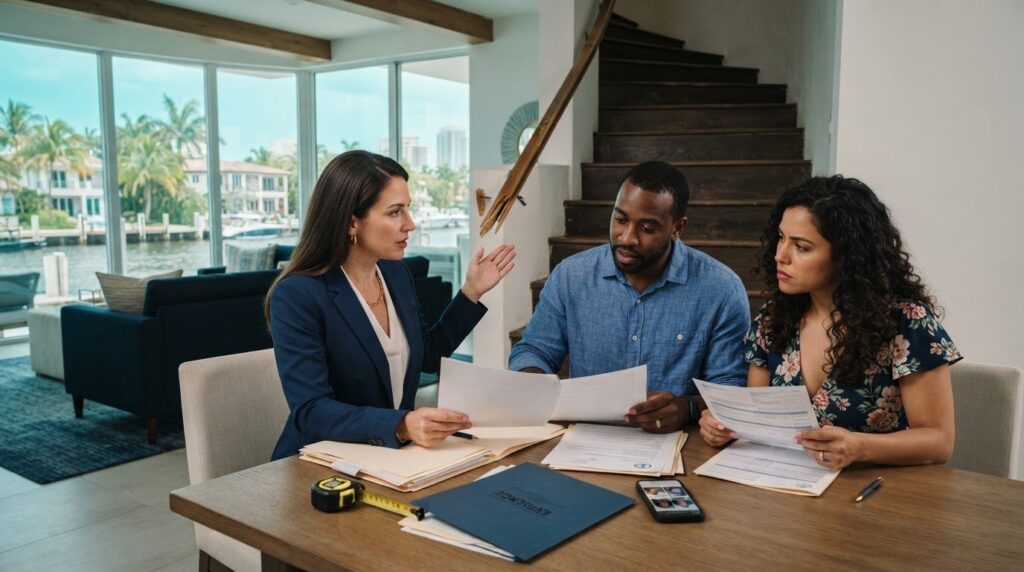

A host or property owner may be liable for an Airbnb or VRBO injury if a dangerous condition they failed to address caused harm. A lawyer for an injury at an Airbnb or VRBO can investigate whether a host, owner, property manager, maintenance contractor, or rental platform may share responsibility.
A rental stay should feel like a break, not leave you coping with an injury and unanswered questions. If a fall, unsafe stairway, or hazardous appliance hurt you, it’s reasonable to want clear answers about who was responsible and what insurance may apply.
This article explains common vacation-rental injury scenarios, how liability and insurance may be assessed under Florida law, and what evidence can help protect a claim. You’ll also learn how an injury lawyer can investigate the incident and pursue accountability in Miami and Fort Lauderdale.
Key Takeaways
- After an injury, seek medical attention and notify the host and booking platform so the incident is documented.
- Photograph the hazard and surrounding area, and preserve booking messages, witness details, bills, and receipts.
- Insurance coverage can depend on policy terms; platform and homeowners policies may exclude some guest injuries.
- Maintenance records and prior complaints can help show whether a host, manager, or contractor knew about a hazard.
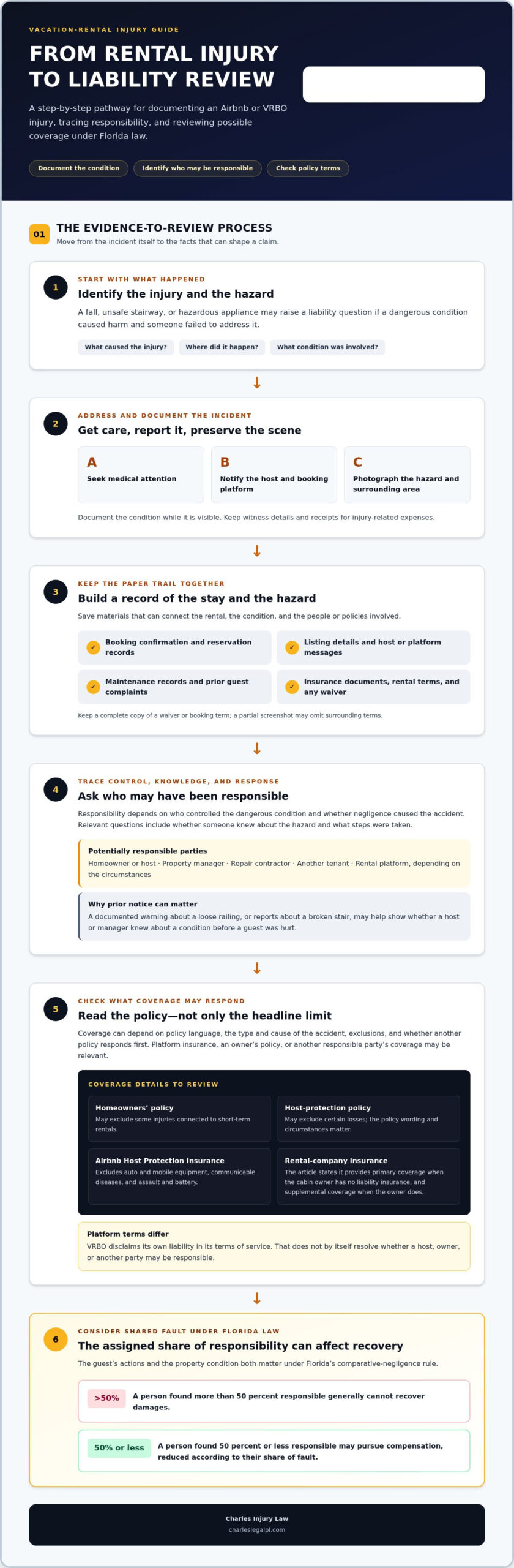
- Under Florida’s comparative-negligence rule, a person found more than 50 percent responsible generally cannot recover damages; at 50 percent or less, damages may be reduced by their share of fault.
What Insurance Is Available for Accidents in Airbnb or VRBO Rental Cabins?
Coverage after a rental injury may involve platform insurance, an owner’s policy, or another responsible party’s coverage. The policy language, type of accident, and any liability waiver can affect how a claim proceeds.
Those figures describe coverage, not an automatic payment to an injured guest. A claim still requires examining the circumstances, applicable policy terms, and who may be liable. Rental-company insurance provides primary coverage when the cabin owner has no liability insurance, and supplemental coverage when the owner does.
Coverage Limitations and Exclusions
Look beyond a policy’s headline limit. Coverage can depend on whether the injury involves a covered activity, whether an exclusion applies, and whether another policy responds first. Homeowners’ policies may exclude some injuries connected to short-term rentals, while platform host-protection policies may also exclude certain losses. Keep the booking confirmation, listing details, and any insurance or waiver documents together for review.
A homeowner’s policy written for personal residential use may not cover every injury connected to renting the property to guests. For example, a guest hurt by a hazard inside a rental cabin could face a coverage dispute if the policy excludes injuries arising from rental activity. The policy wording and circumstances of the injury matter. An attorney reviewing a personal injury claim can identify which insurers and documents warrant investigation.
Host Protection Insurance Exclusions
Airbnb Host Protection Insurance excludes auto and mobile equipment, communicable diseases, and assault and battery. The cause of the injury matters: a fall caused by a property hazard differs from an injury involving a vehicle or assault. Identify what happened, where it happened, and what equipment or conduct was involved before assuming the policy applies.
A liability waiver is separate from insurance. Read the rental agreement and booking terms, and preserve any waiver shown during reservation or check-in. A waiver may describe risks or claim procedures, but its presence alone does not establish which policy covers an injury or determine liability. Keep a complete copy rather than relying on a screenshot that may omit surrounding terms.
After an incident, save messages with the host and booking platform, plus the listing and reservation records. These materials can help connect the rental, the hazard, and the insurance terms. An injury tied to an unsafe property condition may also involve personal injury claims, where documenting the scene and preserving relevant records can support the coverage investigation.
Potential liability of hosts, property owners, managers, and rental platforms
Responsibility depends on who controlled the dangerous condition and whether negligence caused the accident. Airbnb and VRBO claims may involve different platform terms, and VRBO disclaims its own liability in its terms of service.
Guest Rights After a Rental Injury
In Florida, an injured guest may pursue a negligence claim when someone’s failure to address a hazard caused harm. Under Florida’s comparative-negligence rule, a person found more than 50 percent responsible generally cannot recover damages. A person found 50 percent or less responsible may pursue compensation, reduced according to their assigned share of fault. The guest’s actions and the property condition both matter.
Potentially responsible parties include a homeowner, host, property manager, repair contractor, or another tenant. A manager who ignored reports about a broken stair may face scrutiny if that condition caused a fall. A contractor may be implicated if substandard repair work contributed to the hazard. Short-term rentals may not receive regular safety inspections or meet commercial building standards, making maintenance evidence especially relevant.
Lawyer Support for Injury Claims
A lawyer can investigate who controlled the hazard, whether someone knew about it, and what steps were taken. Useful evidence may include booking records, host messages, listing details, maintenance records, and prior guest complaints. For example, a documented warning about a loose railing can help show whether a host or manager knew about the condition before a guest fell.
After an accident, seek medical attention, notify the host and booking platform, and photograph the hazard and surrounding area. Keep witness details and receipts for injury-related expenses. These steps preserve evidence while the property’s condition is still visible. A Florida attorney experienced with premises-liability claims can assess the records, identify potentially liable parties, and address insurers’ responses.
Differences in Platform Claim Processes
Airbnb and VRBO claim processes can differ because their platform terms and insurance arrangements differ. VRBO’s terms disclaim its own liability, while potential responsibility for either platform depends on negligence, such as failing to take reasonable safety measures or leaving a listing active after learning about a hazard.
That distinction doesn’t automatically resolve a claim against a host or property owner. A lawyer can compare the booking terms, platform communications, and available insurance documents, then determine which parties and policies warrant investigation. Save the reservation confirmation and messages rather than relying on memory of the platform’s process.
To find a local lawyer familiar with vacation-rental injury cases, focus on Florida personal injury and premises-liability experience. Ask how the attorney would investigate property maintenance, platform records, and possible insurance coverage. Prompt attention matters because rental conditions may be repaired or altered after an accident, changing what evidence remains available.
How a lawyer can investigate and pursue an injury claim
A focused investigation connects the dangerous condition to the injury and identifies responsible parties. It also organizes evidence for insurance claims, arbitration, or a civil lawsuit.
For a vacation-rental injury, an attorney can preserve booking records, host-guest messages, listing details, and review histories. These records may show who controlled the property or whether a hazard had been reported. The attorney can also seek maintenance records and examine whether repairs changed the scene after the accident.
Potential Claims Against Rental Platforms
A claim against Airbnb or VRBO may depend on the platform’s own conduct, not simply its role in processing a reservation. Relevant questions include whether it took reasonable safety measures, screened hosts or properties, or continued listing a rental after learning about a hazard. Platform complaints and prior guest reports may help establish what the company knew.
Responsibility may also involve the host, property owner, manager, contractor, or manufacturer. An attorney can compare each party’s role with the evidence. For example, maintenance records may connect a repair company’s substandard work to a broken railing. Platform communications may show whether complaints about that condition were submitted before the guest’s injury.
Potential damages may include medical expenses, lost income, property damage, pain and suffering, and emotional distress. Bills, income records, repair estimates, and treatment documentation help explain how the injury affected daily life. Evidence should link each claimed loss to the accident, rather than merely list expenses without context.
Steps to Strengthen a Claim
Notify the host and booking company, save reservation messages, and retain the rental listing. Photograph the dangerous condition and surrounding area, and record witness names. Keep medical bills, invoices, and receipts for injury-related expenses. These steps create a usable timeline and preserve evidence before the vacation rental is repaired or altered.
Short-term rental claims may involve insurance negotiations, arbitration, or a civil lawsuit. A lawyer can review booking terms, preserve relevant communications, and prepare a supported account of liability and damages. A consultation can help organize questions about the condition, prior warnings, and which records still need to be secured.
Act promptly because rental conditions can change, and waiting too long can leave an injury claim barred by a statute of limitations. An organized file of photos, messages, witness details, and expense records gives the investigation a stronger starting point.
Who Is Liable When You’re Injured at an Airbnb or VRBO in Florida?
A host may be liable when failing to address a dangerous condition causes a guest’s injury. Responsibility can also involve a property owner, manager, contractor, or platform, depending on each party’s conduct.
Host and Property Owner Liability
In Florida, a homeowner or host may face a claim when a breach of the duty of care causes an injury. An investigation can examine who controlled the property, who knew about the hazard, and who could address it. A guest’s fall on a damaged walkway, for example, calls for evidence about the walkway’s condition and maintenance.
Owners and hosts should be distinguished from property managers and repair contractors. A manager may be responsible for inadequate maintenance or ignoring a reported hazard. A contractor’s work may be relevant if a faulty repair contributed to the injury. Maintenance records, work orders, and communications can help establish what each party did.
Guest Duties Under Florida Premises Liability
Florida premises-liability analysis considers the property condition and the circumstances of the guest’s injury. Evidence can also show what the guest saw and did. For example, photographs of a dark walkway may help explain visibility, while witness accounts can describe how the guest approached the area.
A guest’s conduct can affect a negligence claim under Florida’s comparative-negligence rule. The rule generally bars recovery when a person is found more than 50 percent responsible for their own harm. At 50 percent or less, the person may pursue compensation, reduced according to their assigned share of fault.
Potential Platform Liability
Airbnb or VRBO may face scrutiny if the platform failed to take reasonable safety measures, such as screening hosts or properties, or kept a listing active after learning about a hazard. The relevant question is whether the platform’s own conduct contributed to the injury, not merely whether it processed the reservation.
VRBO disclaims its own liability in its terms of service. That provision does not resolve whether a host, owner, or another party may be responsible. Preserve the booking terms and platform messages so they can be evaluated alongside evidence about the property and the parties’ actions.
To assess responsibility, establish who controlled the area, who received reports, and what action followed. A lawyer can compare those facts with rental records, maintenance history, and witness accounts. That evidence helps distinguish a property-related claim from one involving a manager, contractor, or platform.
Common Airbnb and VRBO accident injuries
A vacation rental can expose guests to hazards they wouldn’t encounter in a familiar home. A loose rug, dim stairway, or wet bathroom floor can cause a slip or trip, leading to a sprain, fracture, or head impact. Note the exact location and condition as soon as possible, then photograph the scene. A clear record helps connect the dangerous condition to the accident instead of relying on memory alone.
Stairways, balconies, and decks create distinct risks. If you fall near a broken handrail, document the rail, steps, lighting, and surrounding area. A witness may be able to describe whether the rail moved or the step shifted. Save messages about earlier repairs or complaints. Those details can help investigators assess how the property was maintained and whether someone responsible knew about the condition before you were hurt.
Kitchens and laundry areas can also cause injuries. A hot stovetop or unstable appliance may lead to a burn, while a defective chair or bed frame may collapse and cause a fall. Preserve photographs of the appliance or furniture, along with the rental listing and host communications. If an item is repaired or removed after the incident, records from before the change can help show what guests encountered.
Pools and outdoor spaces call for careful attention after an injury. If you’re hurt near a pool, document the surrounding surface, access area, lighting, and any visible warning signs. A fall on a slick patio differs from an incident involving a pool feature or equipment. Record the sequence of events and identify witnesses. Prompt medical care also creates a record of the injury and when it occurred.
Not every vacation injury points to the same responsible party. A fall from a neglected step may raise questions about property maintenance, while an appliance injury may call for examining the item and its repair history. Security-related harm may require investigating reported risks and measures taken at the rental. A law firm assessing a claim can organize these details, identify responsible parties, and evaluate whether the evidence supports seeking compensation for documented losses.
After any rental injury, preserve the scene details, booking records, photographs, witness names, and medical documents. Don’t discard damaged personal property before documenting it. If a dangerous condition caused your injury, contact a lawyer to discuss your Airbnb or VRBO injury and the evidence that can support your claim.
Personal Injury Attorney in Fort Lauderdale: Injuries suffered from Car Accidents
Charles Injury Law represents people injured in car accidents, truck, semi, and tractor-trailer accidents, and Uber and Lyft rideshare accidents. The firm can help assess crash evidence and explain potential next steps. For pedestrian injuries involving walking, jogging, or bicycling, the circumstances of the collision also matter.
People seeking personal injury attorneys may also search for a personal injury firm near me, an injury lawyer near me, or a personal injury lawyer near me. Charles Injury Law handles motor vehicle injury claims, including matters described as personal injury cases. Lawyers for auto accidents and auto accident lawyers near me are also common searches for legal help after a crash.
If your injury involves a vehicle, contact Charles Injury Law to discuss possible next steps.
Choose Your Next Step With Confidence
The next move is to turn uncertainty into a clear plan. If you’re considering a lawyer for an injury at an Airbnb or VRBO, bring forward the facts that distinguish your claim: how the incident happened, who controlled the condition, and what records remain available. That conversation can help clarify which issues need attention and what steps may follow.
Charles Injury Law also represents people injured in car accidents, truck, semi, and tractor-trailer accidents, and Uber and Lyft rideshare accidents. If your injury involved one of these crashes, the firm can discuss the matter with you. A rental-property injury raises different questions, so explain the location and circumstances plainly when you reach out.
Contact Charles Injury Law to discuss your injury and possible next steps. You deserve a clear path forward, and taking that first step can help you move toward it.
Frequently Asked Questions
How a Lawyer Can Help with Your Claim?
A lawyer can assess whether the evidence supports a claim and identify who may be responsible. They can organize records into a clear timeline, compare statements with the rental agreement, and address insurer questions. For example, a message reporting a faulty appliance before your stay may help establish when a hazard became known. Legal guidance can also help you avoid signing a release before understanding which claims it covers.
Should you notify the host?
Yes. Notify the host promptly in writing, clearly describing what happened, where it happened, and when. Stick to the facts rather than guessing about fault or the cause. Keep a copy of your message and any reply. If the booking platform provides an incident-reporting process, preserve the submission confirmation and related communications for your records.
What Compensation Is Available?
Compensation may include medical expenses, lost income, property damage, pain and suffering, and emotional distress. Keep treatment records and receipts that show how the injury affected your finances or belongings. The claim should connect each requested loss to the incident. A treatment record documenting when symptoms began can help distinguish injury-related costs from unrelated expenses.
What Rights Does an Injured Airbnb Guest Have in Florida?
An injured guest in Florida may pursue a negligence claim if another party’s failure to address a dangerous condition caused harm. Responsibility and the guest’s own conduct can affect recovery. Florida’s comparative-negligence rule generally prevents recovery when a person is found more than 50 percent responsible; at 50 percent or less, damages may be reduced by their assigned share of fault.
What Should I Do If I’m Hurt While Staying at an Airbnb?
Prioritize medical care, then write down the incident details while they’re fresh. Record the room or outdoor area, what you were doing, and what changed immediately before the injury. Keep the reservation confirmation and any receipt for damaged belongings. If another guest saw what happened, save their contact information. These details can fill gaps that photographs alone may not show.
What type of lawyer handles Airbnb or VRBO injury claims?
A personal injury attorney familiar with Florida premises liability and insurance claims can handle an Airbnb or VRBO injury matter. A lawyer for an injury at Airbnb or VRBO may examine whether the host, property owner, manager, or another party contributed to the harm. Ask how the attorney will evaluate the rental records, property condition, and communications relevant to your situation.
Does Airbnb or VRBO insurance cover guest injuries, and what are the limits?
That limit does not mean every injury qualifies for payment. For example, an exclusion may affect a claim involving a vehicle or assault. Review the applicable coverage documents alongside the incident details and any other potentially responsive policy.
How do premises liability laws apply to short-term rental injuries?
Florida premises-liability principles may apply when an unsafe property condition causes a guest’s injury. An investigation can consider who controlled the area, whether the condition was known, and whether reasonable steps were taken to address it. A loose deck board, for example, calls for evidence about inspections, repairs, and reports. The specific facts help determine whether negligence contributed to the harm.
Disclaimer
The information provided on this blog is for general informational purposes only and does not constitute legal advice. Viewing this content does not create an attorney-client relationship with the firm. You should not act or rely on any information contained herein without seeking legal advice from a qualified attorney regarding your individual situation.