



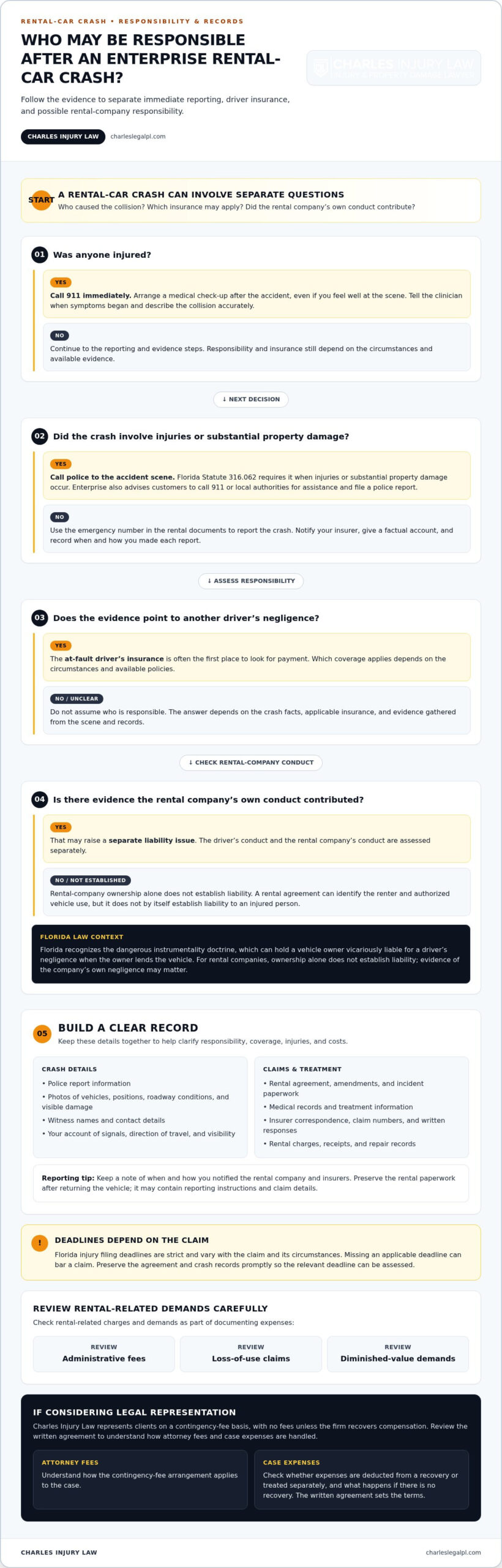
After a rental-car crash, the at-fault driver’s insurance is often the first place to look for payment. A lawyer for a car accident with Enterprise Rent-A-Car can also assess whether the rental company’s own conduct contributed to the injuries. Responsibility depends on the circumstances of the crash and the available evidence.
It’s understandable to wonder who will cover medical care, vehicle damage, and rental-related costs while you’re recovering from an injury. The answer depends on who caused the crash, which insurance applies, and whether the rental company’s conduct played a role. This guide explains how responsibility and insurance claims may work, how contingency-fee representation works, and which records can help document injuries and related expenses. Rental charges, repair records, medical documentation, and a clear account of the crash can all matter when insurers assess a claim.
Key Takeaways
- The at-fault driver’s insurance may be responsible for a rental-car crash, while a rental company’s own negligence can raise a separate liability issue.
- Understand how a contingency-fee agreement handles attorney fees and case expenses before you decide how to proceed.
- Keep medical records, crash details, photos, and receipts to help document injuries and rental-related costs.
- Review rental-related charges carefully, including administrative fees, loss-of-use claims, and diminished-value demands.
- For help with an injury claim, call now: (954) 390-2228 Available 24 Hours a Day, 7 Days a Week.
How rental-car accidents differ from other auto accidents
A rental-car crash may involve the driver, insurance policies, and rental-agreement terms. Florida injury filing deadlines are strict, and missing an applicable deadline can bar a claim.
Reporting to the Rental Company and Insurer
Reporting means notifying the rental company and insurers about the collision. Prompt notice documents the event and lets the companies begin reviewing their separate claims. Enterprise advises customers involved in an accident to call 911 or local authorities for assistance and file a police report. Florida Statute 316.062 requires calling police to an accident scene when injuries or substantial property damage occur.
Once urgent safety needs are addressed, use the emergency number in the rental documents to report the crash. Then notify your insurer and give a factual account, including the location, vehicles involved, and known injuries. Record when and how you made each report. Save claim numbers and written responses so you can distinguish the rental company’s vehicle-damage file from an injury claim.
Steps After an Enterprise Rental-Car Accident
First, check yourself and passengers for injuries. Call 911 immediately if anyone is injured. Arrange a medical check-up after the accident even if you feel well at the scene. Tell the clinician when symptoms began and describe the collision accurately. A prompt, consistent account can help connect later treatment to the crash.
Exchange contact and insurance information with the other driver. If it’s safe, photograph the vehicles, their positions, roadway conditions, and visible damage. Ask witnesses for their names and contact details. Avoid guessing about fault or signing documents you don’t understand. Write down what you remember about the collision, including traffic signals, direction of travel, and anything that affected visibility.
Keep the rental agreement, police report information, photographs, medical records, and insurer correspondence together. These records can help clarify who was driving, which policies may apply, and what damage occurred. Don’t discard the rental paperwork after returning the vehicle; it may contain reporting instructions and details relevant to the claim.
Rental Agreements and Accident Claims
A rental agreement sets terms between the renter and rental company, including how to report damage. It can help identify the renter and the vehicle’s authorized use, but it doesn’t by itself establish liability to an injured person. Review the signed contract and preserve any amendments or incident paperwork. These documents can help distinguish contract disputes from questions about who caused the crash.
Florida law recognizes the dangerous instrumentality doctrine, which can hold a vehicle owner vicariously liable for a driver’s negligence when the owner lends the vehicle. For rental companies, ownership alone does not establish liability; evidence of the company’s own negligence may matter. The driver’s conduct and the rental company’s conduct are separate issues.
Florida filing deadlines depend on the claim and its circumstances. Preserve the agreement and crash records promptly so the applicable deadline can be assessed without delay.
Legal representation and contingency fees
Legal representation can help organize an injury claim, assess liability, and handle insurer communications. In a rental-car crash, the driver, insurance coverage, and rental agreement may all affect the claim.
Finding a Lawyer for an Enterprise Rental Accident
A lawyer for a car accident with Enterprise Rent-A-Car can evaluate the facts, identify potentially responsible parties, and explain how representation works. Choose counsel who handles motor vehicle injury claims and can explain how rental-company issues are assessed. The driver’s conduct, available insurance, and any evidence of rental-company negligence may require separate analysis.
For an initial discussion, gather the crash report, rental agreement, insurer letters, medical records, and a short timeline. Ask who will handle communications, what information is needed, and how updates will be shared. These questions can help you understand the process before signing an agreement. They also give the attorney concrete details to assess instead of relying only on a brief description of the collision.
Contingency Fees for Legal Representation
Charles Injury Law represents clients on a contingency-fee basis, with no fees unless the firm recovers compensation. Review the written agreement to understand how the arrangement applies to your case, especially if multiple insurance policies or a liability dispute are involved.
Ask separately how case expenses are handled. The agreement should explain whether expenses are deducted from a recovery or treated separately, and what happens if there is no recovery. Request clear answers about costs such as obtaining records or filing court documents. The terms, not assumptions about a standard arrangement, determine your obligations.
Questions to Ask Before Signing
Bring specific questions to the meeting. Ask whether the attorney will investigate the at-fault driver’s conduct, review relevant insurance, and assess evidence involving Enterprise. Find out who will communicate with the insurance company and whether you’ll receive copies of important claim documents.
Also ask how settlement decisions are discussed and what information you must provide. For example, a treatment record or missed-work documentation may help explain the claimed losses. Clear answers let you compare the proposed representation with your needs without confusing legal strategy, case expenses, and attorney fees.
Understanding the Written Agreement
Before signing, review every section of the representation agreement, including the fee calculation, expense handling, and termination terms. Ask for an explanation of any language you don’t understand. Keep a signed copy with your rental agreement, crash records, and insurance correspondence.
If you want to discuss an injury claim, call Call Now: (954) 390-2228 Available 24 Hours a Day, 7 Days a Week. A focused conversation can help clarify the next steps and what records may be useful.
Why to hire a personal injury attorney
A rental-car injury claim can involve medical records, insurance decisions, and questions about who caused the crash. An attorney can organize those issues, preserve evidence, and challenge an insurance decision that overlooks important facts. A passenger’s injury claim, for example, may require different records from a dispute over damage to the rental vehicle.
Florida’s no-fault system adds another layer. Florida Statute 627.7407 is cited in connection with Florida’s no-fault status, while Florida Statute 627.736 provides for a minimum Personal Injury Protection coverage amount of $10,000. An attorney can review how PIP applies to medical expenses and lost income, then assess whether other available coverage may matter. Coverage and liability are related, but they are not the same question.
That distinction matters when several parties are involved. The other driver may dispute fault, an insurance company may question whether treatment relates to the collision, and Enterprise may have separate vehicle-damage concerns. An attorney can keep each issue distinct, compare statements with the crash report, and identify evidence supporting the injury claim. This can help prevent a vehicle-damage discussion from obscuring medical losses.
Legal representation can also help make the injury record clear. Keep appointment summaries, treatment recommendations, and bills in one file. Tell medical providers when symptoms began and how they affect ordinary activities, such as driving or lifting. An attorney can organize those records alongside photographs and witness information, then identify gaps that may need attention before insurers evaluate the claim.
- Liability: Compare the drivers’ accounts, available photographs, and crash documentation.
- Coverage: Review applicable PIP and other insurance information.
- Damages: Connect treatment records and documented expenses to the collision.
- Communications: Track insurer requests and keep copies of submitted information.
These tasks can be difficult when an injury limits work, travel, or daily routines. An attorney can handle claim communications and explain what each request means before you respond. If an insurer disputes treatment, for example, the response may need supporting medical records rather than a general disagreement. Organized evidence gives the claim a clearer factual foundation.
Representation does not replace medical care or guarantee a particular result. It gives the injured person an advocate focused on the evidence, coverage, and liability issues. If you’re comparing options, look for an attorney who handles Florida motor vehicle injury claims and can explain the approach to rental-car cases in plain language.
Administrative fees, loss of use, and diminished value
After an Enterprise rental-car accident, what compensation can you claim? An injury claim may seek payment for documented medical expenses, lost income, and other injury-related losses. Vehicle damage, loss of use, diminished value, and rental-company administrative charges are separate issues that require supporting records.
Administrative Fees and Rental Charges
An administrative fee is a charge a rental company may add while processing vehicle damage. It is separate from repair costs and your personal injury claim. Review any demand carefully, then request an itemized explanation identifying the charge, what work it covers, and how it relates to the crash.
Keep the rental agreement, damage assessment, repair estimate, invoices, and related communications together. Compare the vehicle’s condition recorded before the rental with the post-crash report. For example, photographs showing pre-existing damage may help distinguish it from collision-related damage. A fee listed in a demand does not, by itself, prove that the amount is owed.
Loss of Use
Loss of use refers to a rental company’s claimed loss while a damaged vehicle is unavailable for rental. The claim may include the time the vehicle was being repaired or otherwise out of circulation. Ask for records that connect the claimed period to repair or inspection documents, rather than relying only on a total demand.
Check the dates on the repair estimate, work records, and return-to-service information. A clear timeline helps show whether the requested period matches the vehicle’s actual downtime. Keep receipts for any replacement transportation you paid for. These document your own rental-related expenses, which are separate from a rental company’s loss-of-use demand.
Diminished Value and Insurance Coverage
Diminished value is the claimed reduction in a vehicle’s market value after collision damage and repairs. A repair invoice alone doesn’t establish that reduction. Preserve repair records and any valuation documents explaining the vehicle’s condition before the crash, the repairs completed, and the basis for the claimed change in value.
Insurance coverage affects which policy may address vehicle damage or other covered losses. Review policy documents and claim letters to understand what the insurer has accepted, questioned, or excluded. A collision damage waiver generally addresses damage to the rental vehicle, not medical expenses. Keep that distinction clear when discussing injury compensation and rental-car charges.
Organizing the Claim
Separate your records into injury, vehicle-damage, and rental-cost files. Put medical bills and treatment records with injury documents; keep estimates, photographs, and repair invoices with vehicle records. At a legal consultation, this organization helps explain each amount and show which party made each demand.
Call Now: (954) 390-2228 Available 24 Hours a Day, 7 Days a Week
Building a case by sharing your story
Your account helps connect the collision, the driver’s conduct, and your injury. Describe what happened in order, from where you were traveling to the moment of impact. Include concrete details such as the lane, traffic signal, weather, and direction each vehicle moved. A clear timeline lets insurers compare your account with the crash report and other evidence.
Write down what you remember while the details are clear. Separate what you saw from what someone else told you. For example, say you heard a horn before impact if that’s what you remember, but don’t guess which driver sounded it. If you’re unsure about a detail, say so. Accuracy strengthens your account more than speculation.
- Describe where each vehicle was before the collision and how it moved.
- Record what you noticed immediately afterward, including pain or visible damage.
- Identify witnesses by name and contact details when available.
- Save messages, photographs, and documents related to the rental car accident.
Next, explain how the injury affected you over time. Note when symptoms began, which activities became difficult, and when you sought medical attention. If neck pain began later that day, include that timing rather than suggesting it started at the scene. Match your account with appointment records and follow-up instructions from your medical providers.
Keep a dated record of changes. An entry might describe difficulty sleeping after the crash or needing help with a routine task. Be specific and truthful. If your symptoms improve or change, record that too. A balanced account helps show the course of recovery, not only the worst day.
Rental-car details matter too. Identify the vehicle, renter, and any other involved drivers in your notes. Preserve the rental agreement, company correspondence, and insurance information. If you don’t know who rented the vehicle, don’t assume. Record what you observed and let the investigation establish the relevant facts.
Negligence claims depend on evidence, not forceful wording. Avoid posting opinions or speculation about the crash on social media, and keep communications with insurers factual. If a representative asks for a recorded statement, understand what’s being requested before responding. A careful account helps distinguish firsthand knowledge from assumptions and keeps the focus on the collision and injury.
Gather your timeline, photographs, medical records, and rental documents before discussing the claim. If you want help organizing the evidence and explaining what happened, contact the legal team about your accident claim.
Personal Injury Attorney in Fort Lauderdale: Injuries suffered from Car Accidents
Charles Injury Law represents people injured in car accidents, including crashes involving rental vehicles. If questions about fault, insurance coverage, or injury documentation are complicating your claim, legal guidance can help you understand the issues and organize the evidence.
The firm also handles injuries from truck, semi, and tractor-trailer accidents, Uber and Lyft crashes, and incidents involving pedestrians who are bicycling, jogging, or walking. These cases require careful attention to how the collision happened and how the injuries affect daily life.
If you’re ready to discuss a car accident injury, contact Charles Injury Law to talk about your situation. Call Now: (954) 390-2228 Available 24 Hours a Day, 7 Days a Week
Take the Next Step Toward Protecting Your Claim
The steps you take now can help keep your claim organized and your focus on recovery. Before responding to another insurance request, gather the documents you have and write down questions about what comes next. A lawyer for a car accident with Enterprise Rent-A-Car can review the circumstances, explain the issues affecting your claim, and help you understand your options.
Charles Injury Law represents people injured in car accidents, as well as those hurt in truck, semi, and tractor-trailer crashes or Uber and Lyft accidents. The firm can help assess the injury claim and address questions about liability and insurance. The issues that matter most depend on the evidence and losses connected to the crash.
If you’re ready to discuss what happened, contact Charles Injury Law about your accident claim. A clear conversation can help you decide on a practical path forward. You don’t have to sort through every claim issue alone.
Frequently Asked Questions
Who Pays Out After a Rental Car Accident?
Payment usually depends on which driver caused the crash and which insurance policies apply. The at-fault driver’s insurer may address covered losses, while your own policy may provide other benefits. An attorney can help distinguish an injury claim from a dispute over the rental vehicle. A lawyer for a car accident can also examine whether multiple parties or policies are involved before you consider a settlement.
What if You are Not Covered by Insurance?
You may still have a claim against an at-fault driver even if you don’t have your own auto insurance. Available options depend on the other driver’s coverage and the facts of the collision. If you’re looking for legal help, gather the crash details and any insurer letters first. Those records can help clarify which claims may apply.
Who is liable for a crash involving an Enterprise Rent-A-Car vehicle?
The driver may be responsible if their negligence caused the collision. A rental company’s separate responsibility depends on evidence of its own conduct. For example, Florida law may support a claim if a rental company negligently rents a vehicle to an obviously intoxicated customer who has no license. An attorney can examine the rental circumstances and available evidence, not just ownership.
What should I do immediately after an accident in an Enterprise rental car?
Prioritize safety, get medical help for anyone injured, and contact authorities when needed. Once safe, exchange driver and insurance details, note witness contact information, and preserve photographs of the scene. Notify the rental company using the contact instructions in your agreement, then inform your insurer. Auto accident lawyers near me may later review these records, so keep your notes factual and avoid guessing about fault.
How much does a car accident lawyer cost, and do they offer free consultations?
Charles Injury Law offers a free consultation and represents injury clients on a contingency-fee basis, with no fees unless the firm recovers compensation. During the consultation, an attorney reviews the facts, answers questions, and explains possible options. Ask how the written agreement handles case expenses, and make sure the terms are clear before signing.
Disclaimer
The information provided on this blog is for general informational purposes only and does not constitute legal advice. Viewing this content does not create an attorney-client relationship with the firm. You should not act or rely on any information contained herein without seeking legal advice from a qualified attorney regarding your individual situation.