



Funeral and burial costs may be recoverable in a wrongful death claim as documented financial losses. Who may seek reimbursement depends on Florida law and on who paid or remains legally responsible for the bills.
That distinction matters when a family is already facing urgent expenses and an insurer is pushing for a quick resolution. Seeking funeral expense compensation in a wrongful death claim involves more than submitting a total: invoices, receipts, and proof of payment can help show what was spent and by whom.
This guide explains which funeral and burial costs may be included, how to identify who incurred them, and what records can support a claim. It also covers other wrongful death damages and how an attorney can assess losses, investigate responsibility, and pursue accountability. Understanding the potential categories before considering a settlement can help families make informed decisions.
Key Takeaways
- Funeral and burial expenses may be included as financial losses, especially when itemized invoices and proof of payment document the costs.
- Who may seek reimbursement can depend on who paid the expenses or remains responsible for an unpaid bill.
- Keep records of funeral services, transportation, burial or cremation, and related memorial costs to support the claimed expenses.
- A wrongful death claim may involve losses beyond funeral costs, including certain financial and personal losses suffered by surviving family members.
- Understand the potential claims and losses before accepting a settlement, since signing a release can end the right to seek additional compensation.
Can You Recover Funeral Expenses in a Wrongful Death Claim?
Funeral and burial expenses may be claimed as financial losses after a death caused by negligence. In Florida, the expenses, supporting records, and identity of the person seeking reimbursement all matter.
Funeral and Memorial Cost Categories
These are charges directly connected to arranging a funeral, cremation, burial, or memorial. Itemized records help show what the family or estate paid after the death.
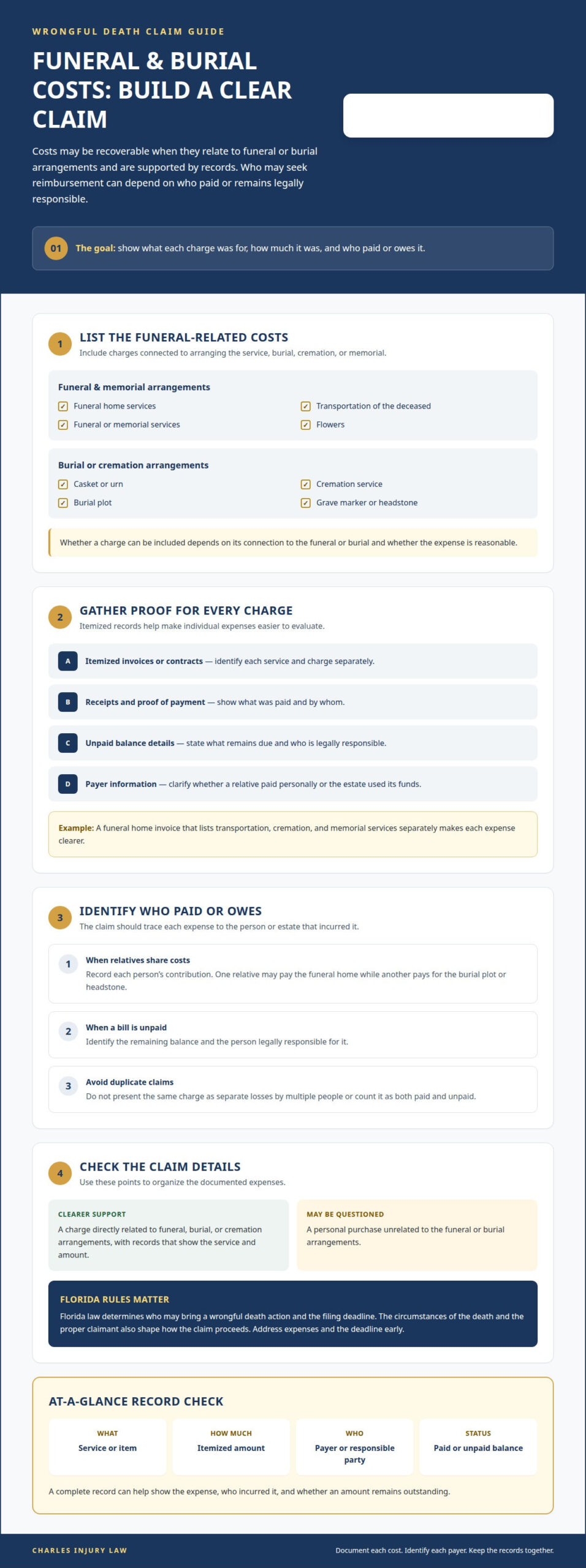
Examples include funeral home services, a casket or urn, cremation, a burial plot, a headstone, transportation of the deceased, flowers, and memorial services. Whether a charge can be included depends on its connection to the funeral or burial and its reasonableness. Funeral expense compensation in a wrongful death claim may also involve unpaid costs, not just amounts already paid.
One relative may pay the funeral home while other family members contribute toward the burial plot or memorial. The claim should identify each person’s contribution and any outstanding balance. Otherwise, it may be unclear who incurred each expense.
Reasonable Expenses and Cost Documentation
Reasonable expenses are charges that relate to the funeral or burial and are supported by records. This distinction matters because a total without details can make it harder to evaluate individual costs.
Itemized invoices, contracts, receipts, and proof of payment can identify the service, amount, payer, and any unpaid balance. For example, a funeral home invoice may list transportation, cremation, and memorial services separately. Records should also clarify whether a family member paid personally or the estate used its funds.
When several surviving relatives share costs, records can trace each contribution and help prevent duplicate claims for the same charge. A person legally responsible for an unpaid invoice may also have a financial interest in how it is addressed. An attorney can organize the records, identify the expenses, and present them to the insurer as part of the wrongful death claim.
State Rules and Recovery Deadlines
Florida law determines who may bring a wrongful death action and the deadline for filing. The claim must follow Florida’s rules, not the approach used in another state.
Florida law governs a wrongful death claim arising in Florida, including its filing requirements. The applicable deadline can affect whether a claim for funeral expenses may proceed, so delay can put recovery at risk. The circumstances of the death and the proper claimant also shape how the claim moves forward.
Funeral costs are usually paid before a wrongful death claim is resolved. An attorney can account for those bills while investigating liability, gathering records, and presenting the family’s losses. Families considering a Florida wrongful death claim should address the expenses and filing deadline early.
There is no single 2026 average that describes every funeral in the United States. The total varies with choices such as cremation or burial, funeral services, transportation, and memorial arrangements. Those differences also affect which documented charges are presented in a claim.
Funeral and burial expenses recoverable in wrongful death claims
A wrongful death claim may seek compensation for funeral and burial expenses connected to a fatal injury. These are financial losses, distinct from the emotional harm surviving family members experience.
Potential expenses include funeral home services, cremation, burial, transportation of the deceased, and memorial costs. The connection to the death matters: a charge should relate to arranging the funeral or laying the person to rest. For example, an invoice that separately identifies transportation, a service, and cemetery charges makes each expense easier to assess.
Specific burial choices can create separate expenses. A casket, urn, burial plot, grave marker, or headstone may be included when the charge is supported and connected to the arrangements. Cremation-related costs may include the cremation service and urn. A memorial service or flowers may also be claimed when records document the expense and its purpose.
Reasonableness matters as well as the type of cost. A charge directly related to burial or cremation has a clearer connection than a personal purchase unrelated to the service. The circumstances and records can help distinguish core funeral costs from expenses that may be questioned. Itemized statements, contracts, receipts, and proof of payment help establish what was charged, who paid, and whether a balance remains.
Who may recover depends on the claim and financial records. The estate or a family member who paid funeral costs may have a basis to seek reimbursement. If parents, siblings, or other relatives divided the expenses, each person’s contribution should be identified. For example, one person might pay the funeral home while another covers the headstone. The same charge should not be presented as separate losses by multiple people.
An unpaid invoice presents a different issue from a bill that has already been paid. Identify the person legally responsible for the balance and the amount still due. This can help prevent a settlement from overlooking a real obligation or counting the same expense as both paid and unpaid.
Funeral costs are usually incurred before a claim resolves, so their handling may matter early. An attorney can organize the expense records, identify who paid or owes each charge, and present the documented losses while pursuing the wrongful death claim. For help assessing how funeral expenses fit into a Florida claim, contact Charles Injury Law.
Who may seek reimbursement for funeral expenses in Florida
In a Florida wrongful death claim, reimbursement depends on the claim, who incurred the funeral expense, and how payment is documented. A surviving family member who paid a bill, an estate that used its funds, or a person responsible for an unpaid invoice may have a financial loss to identify. The person who arranged the service is not necessarily the only one who contributed.
For example, one family member might pay the funeral home while another covers transportation or a burial-related charge. Connect each contribution to a specific invoice or receipt. If a cost remains unpaid, records should show the balance and identify the person legally responsible for it. These details help distinguish separate losses and avoid treating one bill as several claims.
Life insurance proceeds may provide initial funds for funeral costs while a wrongful death claim is pending. An insurance payment does not, by itself, establish who incurred each expense or who may seek reimbursement. The claim should identify the source of each payment, the amount applied to funeral costs, and any remaining balance. Public benefits may also help cover expenses; their effect depends on the benefit and applicable rules. Keep those payments separate in the accounting rather than assuming they automatically increase or reduce the claim.
A settlement or judgment may include compensation for documented funeral expenses pursued as part of a wrongful death claim. Records should clarify whether the estate paid, a family member paid, or an invoice remains outstanding. A relative’s payment receipt and a separate statement showing an unpaid balance describe different financial losses. Presenting both as amounts already paid could obscure the actual loss and prompt a dispute.
Useful records include itemized funeral home invoices, service contracts, receipts, proof of payment, and statements showing any unpaid balance. If several relatives contributed, a simple accounting can connect each person to the charge they covered. A bank record can support a receipt, while an invoice can show which services were provided. Together, these records help establish who paid, what the payment covered, and whether anyone remains responsible.
Florida wrongful death claims require attention to both the losses claimed and the person entitled to pursue them. The family’s relationship to the deceased, the estate’s role, payment records, and outstanding obligations can affect how funeral expenses are presented. An attorney can review those details, distinguish insurance or benefit payments from out-of-pocket losses, and address funeral expenses within the broader claim without seeking duplicate reimbursement for a charge.
Other wrongful death damages
Funeral expenses are one part of the financial picture after a fatal accident. A Florida wrongful death case may also involve the surviving family’s economic losses and personal harm. For example, if the deceased regularly contributed to household expenses, that lost support is different from a funeral invoice. Each category needs its own factual basis rather than being combined into an unsupported total.
Financial records can help explain the support the deceased provided. Pay records, household expense records, and evidence of recurring contributions may show how the family’s finances changed after the death. If the deceased also handled caregiving or household tasks, details about those responsibilities can help describe the practical loss. Records should connect each claimed loss to the deceased’s role in the family.
The deceased may have received medical treatment between the accident and death. Hospital bills, ambulance charges, and records of attempted treatment can document expenses arising before death. These charges are separate from funeral costs. Their timing, connection to the fatal injury, and payment status matter when organizing the claim’s losses for an insurer or settlement discussion.
Personal harm should be considered separately from financial records. Surviving family members may describe changes in companionship, guidance, or everyday family life. A specific example, such as a parent’s regular involvement in a child’s routine, provides context a bank statement cannot. These personal losses are not measured by funeral receipts, so present them separately and accurately.
Match documentation to each category. Funeral invoices support funeral expenses, medical statements support treatment charges, and household records can help explain financial contributions. A clear schedule can identify each loss, its supporting record, and whether another payment covered the same expense. This organization helps prevent a settlement demand from overlooking a category or counting a bill twice.
Deaths involving medical malpractice can raise additional questions about limits on damages. The applicable Florida rule and the facts of the medical care must be assessed before relying on a cap. Do not assume a limit applies without evaluating Florida law and the circumstances of the claim.
Before discussing settlement, organize documented expenses, lost contributions, medical charges, and family impacts as distinct categories. For example, an insurer’s offer addressing an ambulance bill and funeral invoice may not address the family’s other claimed losses. A complete damages presentation connects each requested amount or harm to evidence, the fatal event, and the person affected.
Attorney assistance with wrongful death claims
A wrongful death attorney can connect evidence of negligence to the losses the family and estate seek. This includes identifying the proper claimant, documenting funeral expenses, and evaluating other damages. The spouse, children, and estate may have different roles in the claim. Clarifying those roles early helps avoid confusion about who is presenting each loss.
Evidence can disappear while a family arranges services. Video footage may be erased, vehicles may be repaired or destroyed, and witnesses can become difficult to locate. An attorney can act to preserve available evidence, investigate the accident, and seek records relevant to how the death occurred. For example, footage from nearby businesses may help establish the events leading to a fatal collision.
Insurers may request a recorded statement or offer payment before the family understands the full claim. Before responding to an adjuster, families can seek advice about potential claimants, available coverage, and responsible parties. An attorney can handle communications and assess whether an early offer addresses only immediate bills or accounts for broader losses. This review matters because accepting a settlement and signing a release can end the right to seek additional compensation later.
Funeral costs need careful accounting. Counsel can distinguish expenses paid by a family member from charges paid by the estate or left unpaid. If a spouse paid the funeral home and an adult child covered transportation, record those contributions separately. An attorney can organize invoices and payment records, then present the expenses without duplicating a charge.
The estate’s records may also help establish the deceased’s financial contributions and medical expenses before death. An attorney can review available employment, household, and treatment records and connect each item to the losses being claimed. Personal losses suffered by surviving relatives require different evidence. Specific information about the deceased’s relationship with a spouse or children can provide context beyond financial documents.
Representation also involves examining liability rather than accepting an insurer’s account of negligence. An attorney can compare witness statements, available footage, and incident records to identify inconsistencies. If a business or other organization may be responsible, evidence about the circumstances and parties involved can shape the investigation. Each claim depends on its facts and applicable Florida law.
If an insurer has requested a statement or proposed a release, contact an attorney about your wrongful death claim before making a decision. Prompt review can help preserve evidence, identify the proper claimants, and present funeral costs alongside the family’s other documented losses.
Charles Injury Law: Wrongful Death due to the negligence of others, organizations, businesses or government actors
Personal Injury Attorney in Fort Lauderdale represents families pursuing wrongful death claims when negligence causes a death. The firm investigates responsibility, assesses documented losses, and pursues accountability against responsible parties. If a fatal car, truck, or rideshare accident caused the loss, those circumstances can shape the investigation and claim.
Early legal help can matter when evidence needs to be preserved or an insurer requests a statement before the family understands its options. An attorney can evaluate available records, identify potential claimants, and address funeral expenses alongside other wrongful death damages. Families can turn to Personal Injury Attorney in Fort Lauderdale for representation focused on the facts and losses in their case.
Contact Personal Injury Attorney in Fort Lauderdale to discuss a wrongful death claim.
Take the Next Step Toward Accountability
The next decision is how your family wants to move forward. Pursuing funeral expense compensation in a wrongful death claim can involve financial records, family interests, and difficult choices about a potential resolution. A clear plan can help keep those decisions focused on the losses your family is addressing.
You don’t have to face an insurer’s position without legal guidance. Charles Injury Law represents families in wrongful death matters involving negligence. A conversation can clarify how the claim may proceed and what information matters to your family’s circumstances. Every family has different losses and priorities, so make room for the questions that matter most to yours.
Contact Charles Injury Law to discuss your family’s next steps. Your family deserves the space to make informed choices and pursue accountability with resolve.
Personal Injury Attorney in Fort Lauderdale and Funeral Expense Compensation
Personal Injury Attorney in Fort Lauderdale handles wrongful death claims involving negligence by individuals, organizations, businesses, or government actors. If you are seeking compensation for funeral expenses after a death, the attorney can help you pursue a wrongful death claim.
Consider reaching out when you need guidance about a claim or help addressing a loss. The firm also handles injury claims involving car, truck, rideshare, pedestrian, slip and fall, trip and fall, negligent security, and police misconduct matters.
Frequently Asked Questions
These answers provide general information, not legal advice. The facts and applicable Florida law determine how a particular claim is handled.
Funeral and Burial Expenses: Who Pays?
Family members or the estate often pay funeral bills before a claim is resolved. For example, the estate may pay the funeral home while a relative covers transportation. Who pays, the source of the funds, and any unpaid balance can affect how the expense is presented for reimbursement. Keep payment records separate so the claim identifies who incurred each cost and avoids treating one bill as multiple losses.
How do survival actions affect funeral expense claims?
A survival action generally addresses losses the deceased experienced between injury and death, such as medical bills or conscious pain and suffering. Funeral expenses arise after death, so identify them separately rather than automatically treating them as the deceased’s pre-death losses. For example, an ambulance bill from the fatal incident differs from a funeral home charge. How claims are organized depends on Florida law and the facts of the case.
Can You Recover the Full Cost of a Funeral?
Full reimbursement isn’t automatic. Claimed expenses need to relate to the funeral or burial, and records should support the amounts and identify who paid or owes them. An insurer may question charges it considers unrelated or unreasonable. For instance, an itemized statement connecting a service to the funeral gives a clearer basis for review than an unexplained total. The evidence and circumstances of the claim affect what may be recovered.
How are funeral and burial costs handled in wrongful death cases?
Funeral and burial costs may be presented as financial losses in a wrongful death claim. Distinguish paid bills from unpaid obligations and identify the person or estate responsible for each. A settlement or judgment may address documented expenses, but multiple claimants should not present the same charge as separate losses. The claim must also establish responsibility for the death and account for applicable insurance coverage.
What Could Complicate My Claim?
Disputed responsibility, missing records, shared payments, and an early release can complicate a claim. Relatives may disagree about who paid a bill, or an invoice may not specify which services it covers. Evidence can also become harder to obtain if footage is erased or witnesses are difficult to locate. Before accepting a settlement, understand which losses it addresses because signing a release can end further claims.
What Other Types of Damages Are Available in a Wrongful Death Suit?
Depending on the claim and applicable Florida law, damages may involve financial support, household contributions, or the surviving family’s loss of care, guidance, and companionship. Medical expenses from treatment before death may also require separate consideration. For example, records of regular financial contributions can help explain a family’s economic loss. These categories require evidence tied to the deceased, surviving relatives, and circumstances of the death.
What Steps Can an Attorney Take to Help Protect My Right to Recover Expenses?
An attorney can assess who may bring the claim, organize supporting records, investigate responsibility, and address insurer requests. Counsel can also review a proposed release to clarify which claims and losses it covers before the family decides how to proceed. If a fatal car, truck, or rideshare accident is involved, relevant evidence may need prompt attention. Call Now: (954) 390-2228 Available 24 Hours a Day, 7 Days a Week.
Who can recover these costs under Florida law?
Eligibility depends on Florida law, and who may pursue a wrongful death claim and how funeral expenses are presented depend on the case facts and applicable law. This article focuses exclusively on Florida law and does not determine who may recover funeral costs in any other jurisdiction.
Disclaimer
The information provided on this blog is for general informational purposes only and does not constitute legal advice. Viewing this content does not create an attorney-client relationship with the firm. You should not act or rely on any information contained herein without seeking legal advice from a qualified attorney regarding your individual situation.