

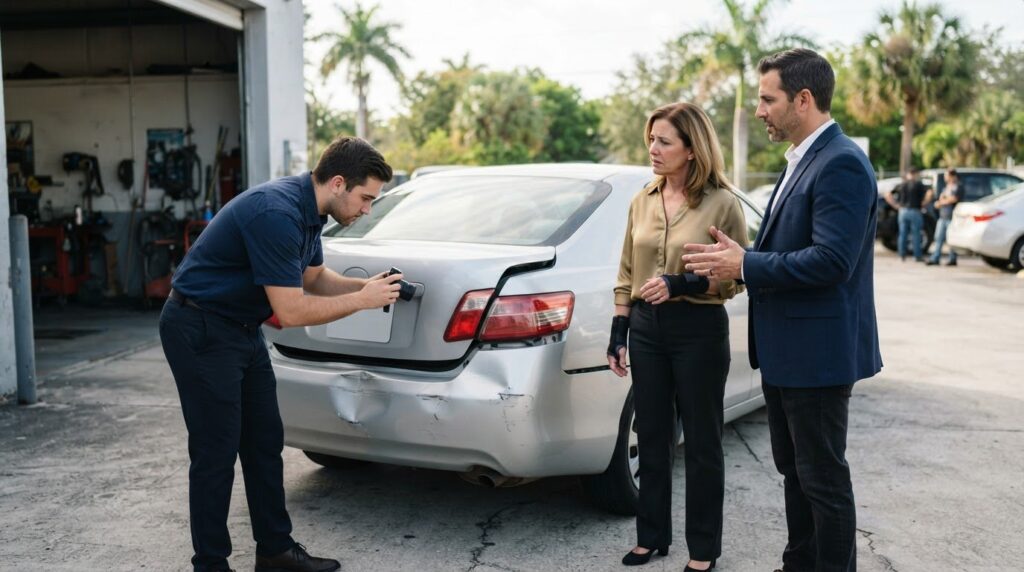

A quick response to a GEICO adjuster can shape how your accident and injuries are documented. Knowing how to handle a GEICO claim adjuster means sticking to what you know, avoiding guesses, and allowing time to understand the full effect of your injuries before considering a settlement.
It’s reasonable to want clear answers about fault, medical expenses, and payment timing. Knowing how to handle a GEICO claim adjuster also means understanding when an attorney can help organize information and respond to questions. Whether you’re considering a personal injury attorney or searching for a personal injury firm near me or attorneys for personal injuries, choose guidance that addresses your specific accident claim.
People may also look for an injury lawyer near me, a personal injury lawyer near me, lawyers for auto accidents, or auto accident lawyers near me. The phrase “attorneys personal injury” points to the same need for legal support. This article explains how an attorney can help with adjuster questions, fault investigations, settlement offers, expenses, and claim payment timing.
Key Takeaways
- Learn how an attorney can address questions about vehicle repairs, replacement costs, and rental expenses as part of an accident claim.
- Understand what can affect claim payment options and timing, and how the review process shapes the next steps.
- See how a total-loss offer may be calculated using the vehicle’s actual cash value at the time of the accident, minus the deductible.
- Find out what information may factor into a fault investigation, including statements, photos, and police reports.
- Consider the full scope of injury-related expenses and potential future care before evaluating a settlement offer.
How Will an Attorney Help Me With the GEICO Adjuster?
An attorney can organize evidence of vehicle damage, help you prepare for adjuster questions, and challenge an estimate that overlooks documented damage. For a GEICO claim, this can clarify repair options, total-loss calculations, and transportation expenses.
Repair, Replacement, and Rental Costs
Repair, replacement, and rental costs are separate parts of assessing vehicle damage after a crash. A repair estimate may not capture every damaged component, while a total-loss decision uses a different calculation. GEICO says a covered total-loss settlement is based on the vehicle’s actual cash value at the time of the accident, minus the deductible. An attorney can review the estimate, photographs, and repair findings for gaps.
Repair-shop choice also matters. An attorney can help assess whether an estimate reflects the visible damage and whether later findings support a revised estimate. If the vehicle cannot be repaired economically, the focus shifts to its pre-accident value and the total-loss calculation. Rental expenses may depend on the applicable coverage and claim decision, so keep those costs distinct from repair expenses.
Preparing to Speak With an Adjuster
Before discussing the claim with GEICO, organize the accident details and supporting records. An adjuster may ask about the collision, vehicle damage, injuries, and expenses. Incomplete or speculative answers can cloud the record. An attorney can review the timeline, photographs, repair documents, and expense records with you, then help you prepare accurate responses.
Stick to facts you can recall; separate what you personally saw from what someone else told you. If a question concerns an estimate, identify which document or repair finding supports your answer. The guidance for claimants is not to agree to recorded calls with another party’s insurer. Florida law does not require a person to provide that insurer a recorded statement unless a lawsuit has been filed.
Florida Law, Deadlines, and Disputes
Florida law sets legal deadlines for bringing accident lawsuits, while claim negotiations and lawsuit deadlines are separate matters. Florida law provides a statute of limitations setting a legal time limit for filing a lawsuit after an accident. That deadline matters even if GEICO is still reviewing vehicle damage or discussing settlement.
In Florida, an attorney can assess the applicable lawsuit deadline and explain how a disputed estimate or settlement affects the claim strategy. A disagreement may concern the extent of vehicle damage, the total-loss value, or supporting records. An attorney can organize evidence and communicate why you dispute GEICO’s position, while keeping negotiations distinct from the deadline for filing suit.
For a car repair estimate, GEICO reviews reported damage and the information available for the claim. An attorney can compare the estimate with photographs and repair findings, then identify omissions or disagreements that need a response. If additional damage appears during repairs, updated findings can help show why the original estimate may not reflect the full repair work.
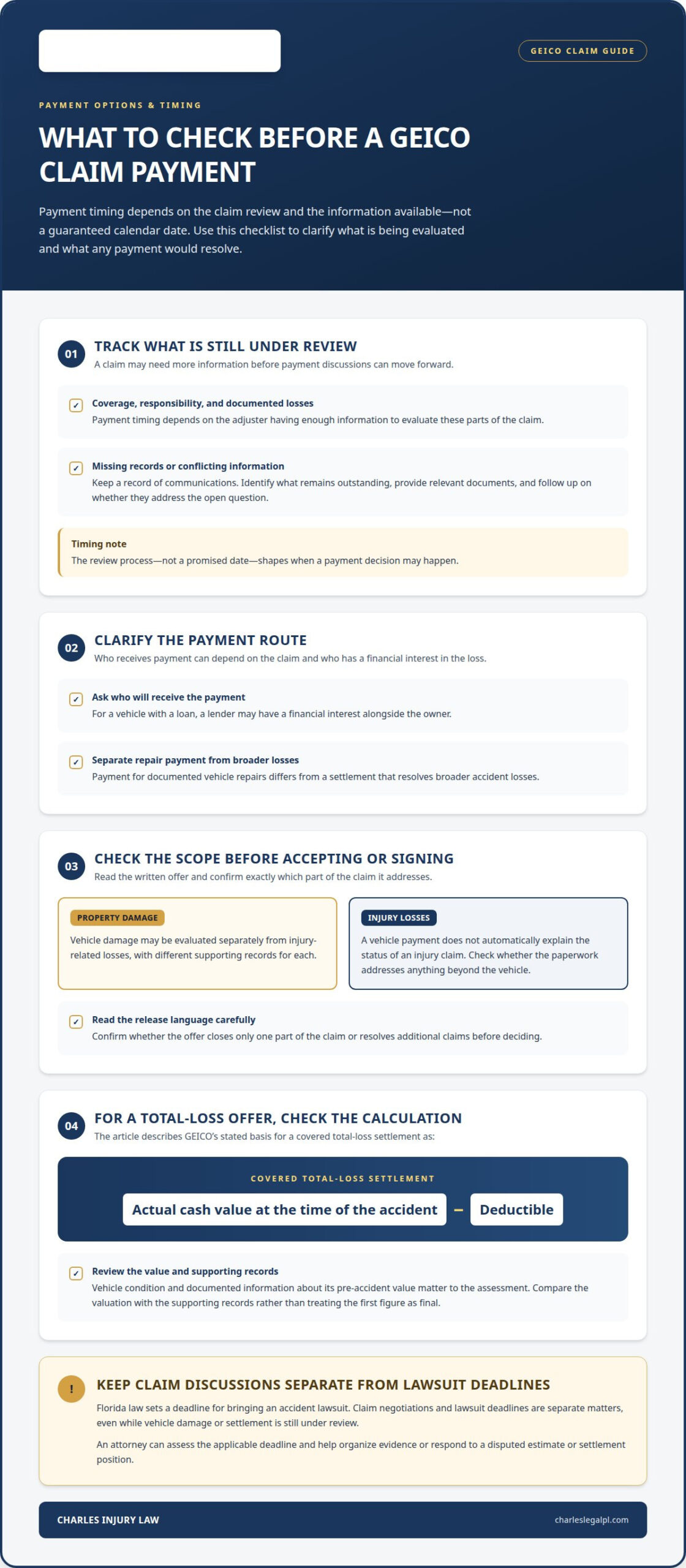
A total-loss calculation is different. GEICO says its stated basis for a covered settlement is the vehicle’s actual cash value at the time of the accident, minus the deductible. The vehicle’s condition and documented information about its pre-crash value matter to that assessment. An attorney can examine the valuation and supporting records, then identify errors rather than treating the first figure as final.
Vehicle damage is only one part of a broader car accident injury claim. An attorney can keep property-damage questions organized alongside the injury claim, so a vehicle estimate does not distract from the documentation needed to address accident-related losses.
Claim payment options and timing
GEICO claim payment timing depends on the review, not a guaranteed calendar date. The adjuster needs enough information to evaluate coverage, responsibility, and documented losses. Payment discussions therefore depend on what the claim concerns and which records remain under review. An attorney can track those issues and address delays related to missing or disputed information.
Payment routing also depends on the claim and who has a financial interest in the loss. For example, a vehicle with a loan may involve a lender as well as the owner. Payment for documented repairs differs from a settlement resolving broader accident losses. Ask what the proposed payment covers, who will receive it, and whether it closes only one part of the claim.
Before accepting or signing anything, have an attorney examine the written offer and its scope. Separate payment for vehicle damage from payment for injury-related losses. If GEICO’s offer addresses only the vehicle, that distinction should be clear in the paperwork. If the document resolves additional claims, review the release language carefully before deciding.
Timing can depend on practical steps. GEICO may need records supporting the claimed loss, clarification about the parties involved, or a response to conflicting information. An attorney can identify what remains outstanding, send relevant documentation, and keep a record of communications. For example, if the adjuster requests a repair invoice, the attorney can submit it and follow up on whether it addresses the open question.
A claim can involve more than one payment decision. Property damage may be evaluated separately from injury losses, and each may require different supporting records. A vehicle payment does not automatically explain the status of an injury claim. An attorney can track each part, clarify what GEICO has evaluated, and keep unresolved issues from getting lost in general claim updates.
Ask for the payment terms in writing. The explanation should identify the covered loss, the calculation, any deductions, the payee, and any release tied to acceptance. If the amount or scope appears inconsistent with the records, an attorney can raise the specific discrepancy with GEICO. Clear documentation gives both sides a concrete basis for discussing next steps.
For example, an adjuster’s payment proposal might address vehicle repairs while medical expenses remain under review. Treating these as separate issues helps avoid confusion about what the payment resolves. An attorney can compare the offer with the claim documents, identify remaining questions, and respond clearly without letting one payment discussion blur separate losses.
If GEICO has issued an offer but the payment terms remain unclear, discuss the claim with an attorney before deciding what the paperwork resolves.
Evaluating and negotiating settlement offers
A settlement offer should be measured against the losses it covers, not just its dollar amount. Review the offer alongside medical records, bills, missed work documentation, and evidence of ongoing symptoms. A typical car accident settlement is over $37,000, although individual cases vary. That figure is context, not a target or a reliable estimate for a specific claim.
Start by identifying what GEICO’s offer resolves. A written release may cover injury claims, vehicle damage, or both. An attorney can examine the proposed terms and compare them with the claim documents. If the release closes injury claims while treatment continues, accepting it could leave later expenses outside the settlement.
Future care matters. For example, an initial settlement might account for six physical therapy appointments, but the therapist may later determine that six more are needed. That change can affect the value of unresolved expenses. An attorney can assess whether the available records show ongoing treatment needs before advising you on a response to GEICO.
Negotiations are stronger when each disputed amount is supported by evidence. Medical invoices document billed care, while treatment records explain the services provided. Records of missed work can support claimed income loss. An attorney can organize these materials, identify gaps, and present a focused counteroffer that connects each requested amount to the available documentation.
For a total-loss vehicle, GEICO says a covered settlement is based on the vehicle’s actual cash value at the time of the accident, minus the deductible. The valuation and deductible affect the proposed amount. An attorney can review the calculation and supporting information, then identify a specific disagreement for GEICO to address.
Timing matters before settlement, too. If the full extent of your injuries and potential future expenses remains unclear, an early offer may not account for them. An attorney can review treatment status, outstanding bills, and continuing symptoms before evaluating whether the offer addresses documented losses. The aim is a clear, evidence-based assessment, not a rushed decision.
A counteroffer should explain what the offer misses and why. If GEICO’s calculation excludes a documented expense, for example, the response can identify the record and explain its relevance. An attorney can also review whether the proposed release matches the amount and claim being discussed. Clear terms reduce confusion about what acceptance would resolve.
Before deciding, compare the offer with the full claim picture: current expenses, supported future care, records of lost income, and release language. An attorney can weigh those factors and communicate with GEICO on your behalf. That review helps you understand what the settlement addresses and which documented losses may remain unresolved.
Investigating fault and third-party claims
GEICO investigates responsibility by reviewing statements, photographs, police reports, and other available information. Each item can support or challenge an account of how the collision happened. An attorney can organize the evidence, compare accounts, and identify details that need clarification. If a report describes one impact but photographs show a different damage pattern, that difference may warrant closer review.
Statements matter because timing, location, traffic movement, and vehicle positions help explain what happened. An attorney can compare each person’s account with available records rather than treating one description as conclusive. For example, a driver’s statement about stopping can be assessed alongside intersection photographs and the police report. Specific inconsistencies can then be presented to GEICO for consideration.
Photographs can document vehicle damage, road conditions, and the surrounding scene. Their value depends on what they show and how they fit with other evidence. An attorney can sort images by subject and connect them to relevant claim questions. A photograph of damage to the side of a vehicle, for instance, may help clarify the point of impact when accounts differ.
A police report provides another account of the collision, but GEICO may consider other available information as well. An attorney can review the report for recorded observations, involved parties, and details that may need follow-up. If the report omits a witness’s account, other evidence may help fill the gap. The goal is a consistent, evidence-supported presentation, not an unsupported accusation.
A third-party claim involves responsibility attributed to someone other than the claimant, such as another driver whose conduct is disputed. An attorney can identify the parties and insurers involved, organize evidence relating to each account, and communicate the basis for the claim. If another party disputes involvement, available statements, photographs, and reports become especially important.
Conflicting accounts can affect how GEICO evaluates responsibility and the claim. An attorney can separate confirmed details from disputed ones, then address each disagreement with relevant evidence. For example, if two drivers describe different lane positions, photographs and the police report may help assess those accounts. A focused response gives the adjuster concrete information to review.
Evidence should form a coherent sequence: where the vehicles were, what happened, and what supports that account. An attorney can check whether statements, photographs, police reports, and other available records align. If one item conflicts with another, the attorney can identify the conflict and explain its significance. This keeps the fault investigation grounded in documented facts and makes the third-party claim clearer.
Handling questions about injuries, the accident, and expenses
GEICO’s questions can shape how the adjuster records your injuries, the collision, and your losses. An attorney can organize the supporting details and help keep your answers accurate.
Providing Information and Documents to Your Attorney
Give your attorney the claim number, accident details, and records connected to your injuries and expenses. Those materials help build a clear account and identify what GEICO may still need. Include photographs, the police report, repair estimates, medical records, bills, and receipts. A GEICO claim number is 16 digits long, which can help identify the relevant file.
Share adjuster messages and any statements you’ve already made. If you don’t know an answer, say so rather than guessing. Your attorney can separate confirmed facts from estimates and organize documents by topic, such as vehicle damage, treatment, and out-of-pocket expenses.
Questions an Attorney Can Ask the Adjuster
An attorney can ask GEICO’s adjuster what information supports the current position on the claim and which records remain under review. These questions identify the basis for a decision and any gaps that may delay progress. The attorney can clarify how GEICO assessed fault, which documents it considered, and whether the adjuster needs specific additional information.
Questions can also clarify how GEICO evaluated reported injuries, expenses, and the scope of a proposed payment. If an adjuster says a document is missing, the attorney can ask which record is needed and why it matters. That focused exchange creates a clearer record than broad questions about the claim’s status.
Documenting Damage and Injuries With an Attorney’s Help
An attorney can organize vehicle and injury records so each claimed loss connects to supporting evidence. For vehicle damage, that may include scene photographs, repair estimates, and invoices. For injuries, relevant materials may include medical records, bills, and treatment documentation. Organized evidence helps explain how the collision relates to the losses presented to GEICO.
If a repair estimate changes after additional damage is found, the updated estimate can be matched with related photographs and repair records. An attorney can likewise organize medical bills alongside treatment records, making it easier to identify which expenses relate to documented care.
Recorded Statements and Attorney Guidance
An attorney can advise you about a request to record your answers before you respond to GEICO. The guidance for claimants is not to agree to a recorded call with another party’s insurer without considering the request carefully. Florida law does not require a person to provide a recorded statement to another party’s insurer unless a lawsuit has been filed.
If an adjuster requests a recording, tell your attorney and share the request’s wording. The attorney can explain what the adjuster seeks and help you understand the implications of responding. For help organizing injury records and adjuster communications, contact an attorney about your claim.
Personal Injury Attorney in Fort Lauderdale
Personal Injury Attorney in Fort Lauderdale can help you address GEICO’s questions, organize claim records, and respond to disputes over fault or settlement terms. If you were injured, an attorney can connect the available evidence with the losses you’re claiming and communicate with the adjuster on your behalf. The firm represents people injured in car, truck, semi-truck, tractor-trailer, rideshare, and pedestrian accidents.
Consider legal help if GEICO disputes responsibility, requests a recorded statement, or presents terms you don’t understand. You can discuss the accident, your injuries, and the claim documents with an attorney, then decide how to proceed. Contact Personal Injury Attorney in Fort Lauderdale to discuss your GEICO claim.
Move Forward With a Clear Plan
Knowing how to handle a GEICO claim adjuster is only one part of protecting your interests. Consider whether you want legal support before making further statements or responding to settlement paperwork. A focused review can help you understand your options and approach the claim with greater clarity.
If you’re considering legal support, bring your questions and claim documents to Charles Injury Law. You can discuss what the adjuster has requested, what remains unresolved, and how representation may fit your situation.
Contact Charles Injury Law to discuss your next step. Call Now: (954) 390-2228 Available 24 Hours a Day, 7 Days a Week
You deserve a clear path forward. Take the next step when you’re ready.
Frequently Asked Questions
How do you decide who’s at fault?
GEICO assesses fault using statements, photographs, police reports, and other available information. It considers the evidence together rather than relying only on one person’s account. For example, a statement about vehicle position can be compared with scene photographs and damage locations. An attorney can identify conflicts between records and accounts, then explain how the details support your position. Keep separate what you observed from what others reported.
How long until I get paid?
Payment timing depends on what GEICO still needs to evaluate, including coverage, responsibility, and supporting records. A property-damage payment and an injury settlement may follow different review paths. For example, the vehicle portion may be evaluated while injury records remain outstanding. Ask what decision is pending, which information it depends on, and whether the proposed payment resolves one part of the claim or more.
Should I Wait to Get a Car Accident Lawyer?
Consulting an attorney before responding to an adjuster can help you understand the request and prepare accurate information. This is especially important if GEICO asks for a recorded statement, raises a fault dispute, or presents paperwork you don’t understand. Bring the claim correspondence and records you have so the attorney can assess the request. Getting guidance early also helps keep claim discussions separate from decisions about settlement terms.
What if my car is totaled?
If GEICO treats a covered vehicle loss as a total loss, it says the settlement is based on the car’s actual cash value at the time of the accident, minus the deductible. Review the valuation details for accuracy, including the vehicle information used in the calculation. Keep the total-loss evaluation separate from any injury claim. Ask for clarification about anything you don’t understand before deciding whether the offer addresses the vehicle loss.
How can an attorney help if I disagree with GEICO’s settlement offer?
An attorney can identify the part of GEICO’s offer that conflicts with your records and present a focused response. If a bill appears to be omitted, for example, the attorney can compare the offer with the itemized charge and related records. A clear explanation gives GEICO a concrete issue to review. The attorney can also examine whether the proposed paperwork matches the settlement amount and the claims being resolved.
What are the risks of accepting a GEICO settlement or signing a release?
A release may resolve the claims described in its terms, so signing without understanding its scope can affect what remains open. Paperwork addressing injury claims may have different consequences from a payment limited to vehicle damage. Read the entire document, including which claims it covers and whether acceptance ends further discussions about them. An attorney can explain the language before you decide whether to sign.
When should I hire an attorney or file a complaint about a GEICO claim?
Consult an attorney if GEICO disputes fault, rejects supporting information, requests a recorded statement, or offers paperwork you don’t understand. If you believe claim handling remains unresolved, an attorney can assess whether a complaint is appropriate and distinguish that process from pursuing an injury claim. Lawsuit deadlines apply after accidents, so a complaint is not a substitute for addressing your legal options. This FAQ provides general information, not legal advice.
What information and documents should I give a GEICO adjuster?
Provide accurate accident details and supporting records, such as photographs, police reports, repair documents, medical records, bills, and expense records. Stick to what you personally know and avoid guesses or opinions.
Disclaimer
The information provided on this blog is for general informational purposes only and does not constitute legal advice. Viewing this content does not create an attorney-client relationship with the firm. You should not act or rely on any information contained herein without seeking legal advice from a qualified attorney regarding your individual situation.