

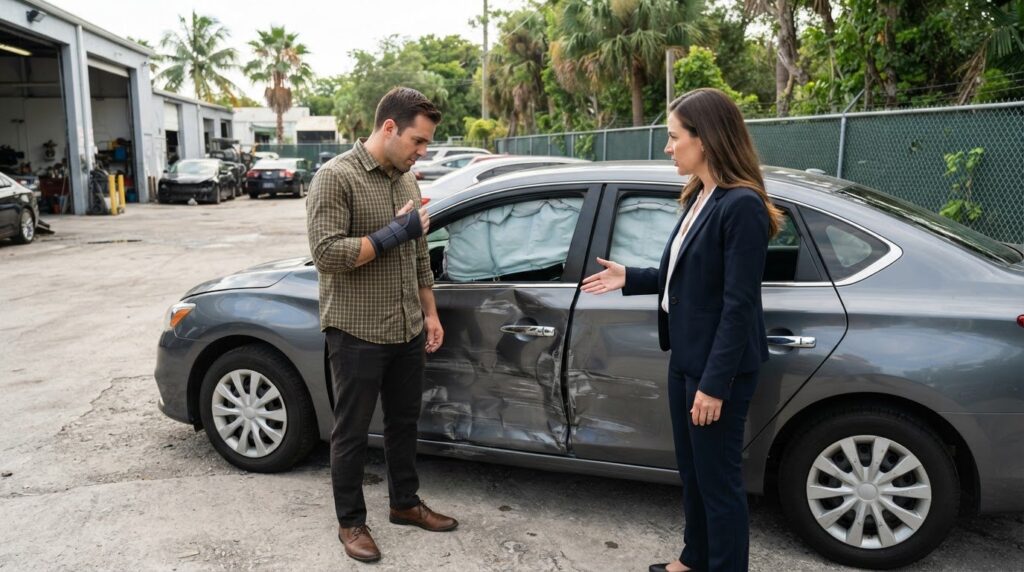

A countywide average may sound like a clear answer, but it may not reflect a minor car accident claim in Florida. Settlement value depends on the injuries, treatment, missed income, fault, and available insurance. A broad figure is not a prediction of what any one person will recover.
It’s understandable to want a number before deciding whether to accept an insurer’s first offer. But an early offer may not account for the full impact of an injury or the coverage that applies. Florida’s no-fault rules and serious-injury threshold can also affect which damages may be available.
This article explains what a minor car accident settlement may cover, which details can affect its value, and why averages don’t determine an individual outcome. You’ll also learn what to consider before accepting an insurer’s first offer and how Florida’s coverage and injury rules apply to a claim.
Key Takeaways
- Use countywide settlement figures as context, not a prediction. Injury severity, treatment, lost income, fault, and available coverage all affect a claim’s value.
- Florida Legislature states that Florida PIP policies must provide up to $10,000 in medical and disability benefits and $5,000 in death benefits.
- Before deciding on an insurer’s first offer, consider whether it accounts for your injuries, treatment, missed income, and the evidence about fault.
- Florida Legislature states that a party found more than 50 percent at fault for their own harm is barred from recovering damages in a covered negligence action.
- Reviewing the available policies, including any uninsured motorist coverage, can help clarify which insurance may apply to the crash.
How much is a minor car accident settlement worth in Florida?
There’s no fixed settlement amount for a minor car accident in Florida. The value depends on documented injuries, treatment, lost income, available coverage, and whether Florida law allows pain-and-suffering damages.
Settlement Amounts by Injury Severity
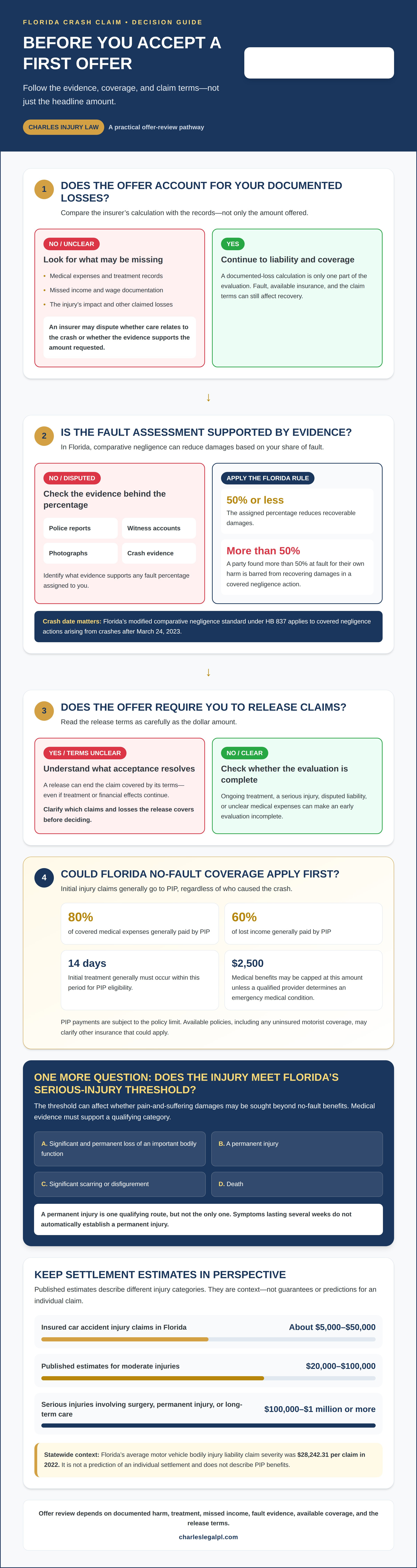
Settlement amounts reflect documented harm and available coverage, not just vehicle damage. Published estimates for insured car accident injury claims in Florida range from about $5,000 to $50,000. Minor, moderate, and serious injuries can involve different treatment needs, missed income, and lasting effects. That distinction matters when evaluating what a claim may cover.
Published estimates for moderate injuries in Florida range from $20,000 to $100,000. Serious-injury cases involving surgery, permanent injury, or long-term care commonly range from $100,000 to $1 million or more. These estimates describe different injury categories. They aren’t guarantees or a prediction for a particular claim.
Thresholds for Pain-and-Suffering Claims
Florida’s serious-injury threshold affects when an injured person may seek pain-and-suffering damages beyond no-fault benefits. Florida Statute § 627.737 sets the threshold. Qualifying categories include significant and permanent loss of an important bodily function, a permanent injury, significant scarring or disfigurement, or death.
A permanent injury is one way to meet the threshold, but it isn’t the only one. Medical evidence must support the qualifying injury category. Symptoms lasting several weeks don’t automatically establish a permanent injury. This distinction can affect whether a claim includes pain-and-suffering damages in addition to benefits available through no-fault coverage.
Bodily Injury Liability Claim Averages
Florida’s average motor vehicle bodily injury liability claim severity was $28,242.31 per claim in 2022. That statewide average provides context, but it doesn’t predict an individual settlement or describe PIP benefits. Florida doesn’t require private vehicle owners to carry bodily injury liability coverage to register a car, which can affect potential sources of recovery.
Florida’s no-fault system generally directs initial injury claims to PIP, regardless of who caused the crash. PIP generally pays 80% of covered medical expenses and 60% of lost income, subject to the policy limit. Initial treatment generally must occur within 14 days for PIP eligibility. Medical benefits may be capped at $2,500 unless a qualified provider determines an emergency medical condition.
For a driver in Florida, these figures are starting points, not a case valuation. If an injury meets Florida’s serious-injury threshold, additional car accident claims may seek other damages. Comparative negligence and available insurance can also affect recovery.
Should I accept the insurance company’s first settlement offer?
Don’t accept an offer solely because it arrives quickly. In Florida, comparative negligence can reduce compensation based on your share of fault, and fault above the legal threshold can bar recovery.
Comparative Negligence and Fault Allocation
Comparative negligence assigns each party a percentage of responsibility for causing the crash. Florida Legislature states that a party found more than 50 percent at fault for their own harm cannot recover damages in a covered negligence action. For a claimant below that threshold, the assigned percentage reduces recoverable damages, making evidence about fault financially significant.
For example, under Florida’s comparative negligence example, a claimant with $200,000 in damages and 20% responsibility could recover $160,000. That calculation illustrates how a fault finding changes potential compensation; it doesn’t establish the value of another person’s claim. Police reports, witness accounts, photographs, and crash evidence can shape how insurers and courts assess responsibility.
Florida’s rule changed under HB 837 for crashes occurring after March 24, 2023. The modified comparative negligence standard applies to covered negligence actions arising from those crashes. Because the crash date can determine which rule governs, an attorney evaluating an offer should consider when the collision occurred and how the evidence supports each party’s fault.
Insurance Settlement Calculations
An insurer evaluates a settlement by reviewing documented losses, evidence of liability, and applicable coverage. Medical expenses, treatment records, lost income, and the injury’s impact can support the claimed damages. The insurer may also dispute whether particular care relates to the crash or whether the evidence supports the amount requested.
Ask what the offer covers before accepting it. Determine whether it addresses medical expenses, lost wages, and other claimed losses, and whether it requires you to release claims. A release can end the claim covered by its terms, even if treatment or financial effects continue. The wording matters as much as the headline amount.
Compare the insurer’s calculation with the available records. A treatment bill, wage documentation, or evidence of disputed fault may reveal what the offer leaves out. If the insurer assigns you responsibility, identify the evidence behind that percentage. A serious injury or ongoing treatment can also make an early evaluation incomplete.
Florida law does not make an insurer’s first offer a fair measure of damages. If liability, medical expenses, or the release terms remain unclear, discuss the settlement offer before deciding. A careful review can identify disputed assumptions and clarify what accepting the payment would resolve.
Insurance coverage limits and uninsured motorist coverage
Available insurance can shape how much of a car accident loss is recoverable. A policy limit caps what that insurer may pay under its coverage, so a serious injury and a low limit can leave a gap. Review the policies that may apply, not just the at-fault driver’s insurance.
Florida’s minimum property damage liability coverage is $10,000. That coverage addresses damage to another person’s property, such as a vehicle; it is not bodily injury coverage. Policy declarations identify the types of coverage and limits, while the specific policy terms govern how coverage applies.
Uninsured motorist coverage, often called UM coverage, may help when the at-fault driver has no bodily injury coverage. Underinsured motorist coverage may apply when available liability coverage is insufficient for the losses. The exact terms and limits depend on the policy, so the presence of UM coverage alone doesn’t establish how much is available.
The coverage gap matters in Florida, where 20% of drivers are uninsured. If an uninsured driver causes a crash, the injured person may have to look beyond that driver’s policy. A lawyer can review the injured person’s policy and identify which coverage may respond, including any applicable UM provisions.
Medical damages also require careful accounting. Insurers may examine treatment records, medical bills, and amounts paid or still owed. Keep each bill and payment record organized by provider and service date. This helps distinguish documented expenses from estimates and gives adjusters a clearer basis for evaluating the medical portion of a claim.
Amounts paid by insurers can affect how medical expenses are presented during negotiations. The amount billed, the amount paid, and any remaining balance may differ. A settlement review should account for those figures alongside treatment records and injury severity. Otherwise, an offer may not reflect the documented financial impact of the crash.
During negotiations, match each claimed loss to supporting evidence and applicable policy language. For example, connect a vehicle repair estimate to property damage coverage and medical records to injury-related expenses. Then compare the proposed payment with each relevant limit. Adjusters may dispute responsibility, the connection between treatment and the collision, or the value of a loss.
A settlement timeline depends on disputed facts, treatment, and whether the claim requires a lawsuit. Claims may resolve in a few months, while a lawsuit can take a year or more. Unresolved coverage questions or disagreements about medical damages can extend negotiations.
Can I recover pain and suffering in Florida without a permanent injury?
Settlement factors include injury severity, treatment, lost wages, vehicle damage, fault, and insurance coverage. Florida’s pain-and-suffering threshold also affects whether non-economic damages may be pursued.
Medical Expenses and Future Treatment
Medical damages include crash-related treatment expenses, while future care may matter when an injury requires ongoing treatment. A medical evaluation can document symptoms, diagnoses, and how the collision caused them. Keep records of appointments, bills, prescriptions, and work absences together. Those details help show the financial and personal effects of an injury.
Florida PIP generally covers 80% of reasonable medical expenses and 60% of lost income, subject to the policy limit. Initial treatment generally must occur within 14 days after the crash for PIP eligibility. A delay can affect benefits, so prompt medical evaluation helps document symptoms and connect treatment to the collision.
Florida Legislature states that PIP policies must provide up to $10,000 in medical and disability benefits and $5,000 in death benefits. PIP medical benefits may be capped at $2,500 unless a qualified provider determines the patient had an emergency medical condition. That distinction can affect which medical expenses receive coverage.
Medical records also help distinguish current bills from future treatment needs. For example, a physician’s documented recommendation for continuing care gives an insurer information to evaluate projected expenses. Property damage is assessed separately from medical compensation, while lost wages require evidence connecting missed work to the injury.
Factors Influencing Settlements
Settlement factors are the evidence and rules that shape which damages may be recovered. They matter because identical crashes can produce different claims when injuries, coverage, or fault differ. Florida’s comparative negligence rules can reduce recovery based on a claimant’s share of responsibility, while insurance limits may restrict payment.
Florida Statute § 627.737 sets the threshold for pain-and-suffering damages. A qualifying injury may involve significant and permanent loss of an important bodily function, a permanent injury, significant scarring or disfigurement, or death. A permanent injury is one qualifying route, but it is not the only one.
A person may pursue pain and suffering without proving a permanent injury if another statutory category applies, such as significant scarring or disfigurement. Medical evidence must support the relevant injury category. Without a qualifying threshold injury, PIP benefits may still cover eligible medical expenses and lost income, but pain-and-suffering damages may not be available.
Florida PIP pays benefits regardless of who caused the crash, but it doesn’t resolve every loss. A claim’s value also depends on treatment records, recovery progress, documented wage loss, vehicle damage, evidence of fault, and available insurance. Together, these factors help explain why a minor injury claim differs from one involving lasting harm or extensive care.
Florida Settlement and Crash Figures
For a Florida driver, a settlement average is context, not a forecast. Claim outcomes reflect different injuries, medical treatment, lost income, fault, and insurance. A minor crash with limited treatment differs from a claim involving lasting harm. The individual evidence matters more than a broad average.
Separate injury claims from property damage claims. A vehicle repair estimate describes property damage, not medical needs or missed work. Injury records and wage documents address different losses. Keeping these categories distinct helps show what each part of a claim represents and prevents a repair estimate from being mistaken for an injury valuation.
Crash totals measure something different from settlements. Collision counts record crashes, while settlement figures describe claim outcomes. Neither number alone shows injury severity, how many people pursued claims, or the insurance available for a particular Florida collision.
When reviewing a settlement figure, identify what it measures and which claims it includes. Consider whether it concerns property damage, bodily injury, or a specific injury pattern. Then compare the claim’s records and evidence with that category. A broad average cannot account for the facts of an individual case.
Florida’s modified comparative negligence rule may reduce damages based on a claimant’s share of fault, and policy limits can restrict available payment. Those factors can lead to different evaluations of similar crashes. Supporting records and applicable coverage matter more than a headline figure.
Use averages as context, not as a demand or expected result. For a Florida claim, organize collision records, medical documentation, wage information, and insurance details. A focused review can help identify which evidence supports the claim and where an insurer’s evaluation may differ from documented losses.
Discuss your settlement evidence and coverage before relying on a broad figure to assess your claim.
Personal Injury Attorney in Fort Lauderdale
A personal injury attorney in Fort Lauderdale can help evaluate a car accident claim when the insurer disputes fault, coverage, or the extent of an injury. A review can connect medical records, lost income, crash evidence, and applicable policy terms to the losses being claimed. That matters when a county average doesn’t fit the facts of your crash.
Consider legal help if an offer leaves out documented losses, the insurer challenges how the collision caused your injury, or coverage limits complicate recovery. Charles Injury Law represents people injured in car accidents, as well as those hurt in truck, rideshare, and pedestrian accidents.
Contact Personal Injury Attorney in Fort Lauderdale to discuss your car accident claim.
Make Your Next Decision With the Full Record
Before signing a release, build a timeline of the crash, symptoms, medical visits, missed work, and insurer communications. Note what remains unresolved. Settlement averages in Miami offer context, but your next decision should reflect the evidence and release terms in front of you.
Gather relevant records and identify disputed issues, such as responsibility, medical documentation, or policy application. If an offer requires a final release, understand which claims it closes before agreeing. A careful review can help you decide deliberately instead of reacting to pressure or a deadline.
For help evaluating how the evidence and release terms fit together, contact Personal Injury Attorney in Miami. Move forward with a clear record and a better understanding of your options.
Frequently Asked Questions
What About Rear-End Accident Settlements in Florida?
Rear-end claims don’t have a fixed settlement value just because one vehicle struck another from behind. The evidence must connect the collision to the injury and support the losses claimed. For example, records showing continuing symptoms and treatment can present a different claim from vehicle damage alone. Disputed responsibility, injury documentation, and applicable insurance coverage also shape negotiations.
Can I still recover money if I was partly at fault for the accident?
Possibly. Florida Legislature states that a party found more than 50 percent at fault for their own harm is barred from recovering damages in a covered negligence action. Below that threshold, comparative negligence can reduce damages according to the claimant’s share of fault. For instance, evidence that each driver contributed to a collision can affect how responsibility is allocated. This is general information, not legal advice.
How Can You Maximize Your Case Value?
Build a clear record of the crash’s effects. Keep medical records, wage documents, repair estimates, and insurer communications together, and note how symptoms or work limitations change over time. Avoid giving an insurer incomplete information about unresolved treatment or losses. Case-specific questions deserve an individual review. For help discussing a car accident claim, Call Now: (954) 390-2228 Available 24 Hours a Day, 7 Days a Week.
How Does Florida Insurance Law Apply to My Crash?
Florida insurance rules determine which policies may respond to different losses. PIP may address eligible initial medical expenses and lost income, while property damage coverage concerns damage to a vehicle or other property. Other available coverage can depend on the policies involved and the facts of the crash. Review policy documents alongside the claim, because coverage type, exclusions, and limits can affect what an insurer considers.
What is the average car accident settlement in Florida?
A single average car accident settlement in Florida is difficult to determine and may not represent an individual claim. Outcomes differ based on injury evidence, medical care, missed income, responsibility, and available insurance. A statewide figure can combine minor claims with cases involving lasting harm. To estimate a specific claim, the relevant records and policy terms matter more than a broad average.
How do medical bills and lost wages affect a Florida car accident settlement?
Medical bills and lost wages document financial losses tied to the crash. Bills show treatment charges, while wage records can demonstrate missed work or reduced earnings. For example, pay statements paired with employer records may clarify time away from work. Keep documents organized by date and source. Insurers may assess whether the records connect each claimed expense or income loss to the collision.
What is Florida’s no-fault PIP insurance coverage and how does it affect settlements?
Florida’s no-fault system generally directs eligible initial injury expenses to personal injury protection, regardless of who caused the collision. PIP can provide benefits under the policy’s terms, but it doesn’t automatically resolve every loss from a crash. A separate claim may involve different coverage and legal requirements. The treatment timeline, medical documentation, and available policies can influence how the claims proceed.
How do property damage claims and vehicle repair costs affect settlement amounts?
Property damage claims address the vehicle or other property, while injury claims concern bodily harm and related losses. Repair estimates, photographs, and invoices can document damage and support discussions with an insurer. If repair costs are disputed, the estimate and inspection details become important evidence. Vehicle damage alone doesn’t establish the extent of an injury, so keep property records separate from medical and wage documentation.
Disclaimer
The information provided on this blog is for general informational purposes only and does not constitute legal advice. Viewing this content does not create an attorney-client relationship with the firm. You should not act or rely on any information contained herein without seeking legal advice from a qualified attorney regarding your individual situation.