

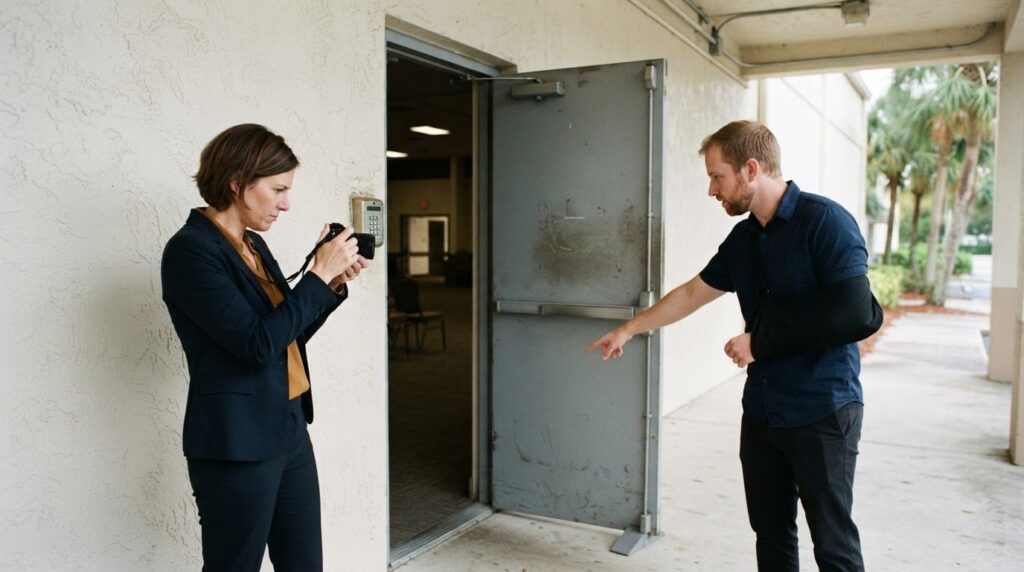
The person who fired the gun may not be the only party responsible. A shooting victim lawyer can investigate whether a property owner, business, or event organizer may also be liable if inadequate security or ignored warning signs contributed to the shooting.
It’s understandable to want clear answers while you and your family face injuries, loss, and uncertainty. This article explains who may be held accountable, what compensation could cover, how attorney fees work, and why preserving evidence and meeting filing deadlines matter.
Liability depends on the facts, including where the shooting happened and whether another party’s conduct contributed to the harm. You’ll learn how a civil claim differs from a criminal case, what evidence may help establish responsibility, and how a lawyer can investigate potential claims. These details can clarify possible next steps while you focus on recovery.
Key Takeaways
- Responsibility may extend beyond the person who fired the gun if a property owner, business, or event organizer contributed to the danger.
- A civil claim may seek compensation for losses such as medical care, therapy, lost income, and pain and suffering.
- Prompt investigation can help preserve security footage, identify witnesses, and document what happened before evidence becomes harder to obtain.
- Filing deadlines depend on the claim, so understanding which time limit applies is an important early step.
- Before deciding how to proceed, learn how the fee agreement works and remember that a consultation doesn’t commit you to filing a lawsuit.
Compensation for injuries and losses
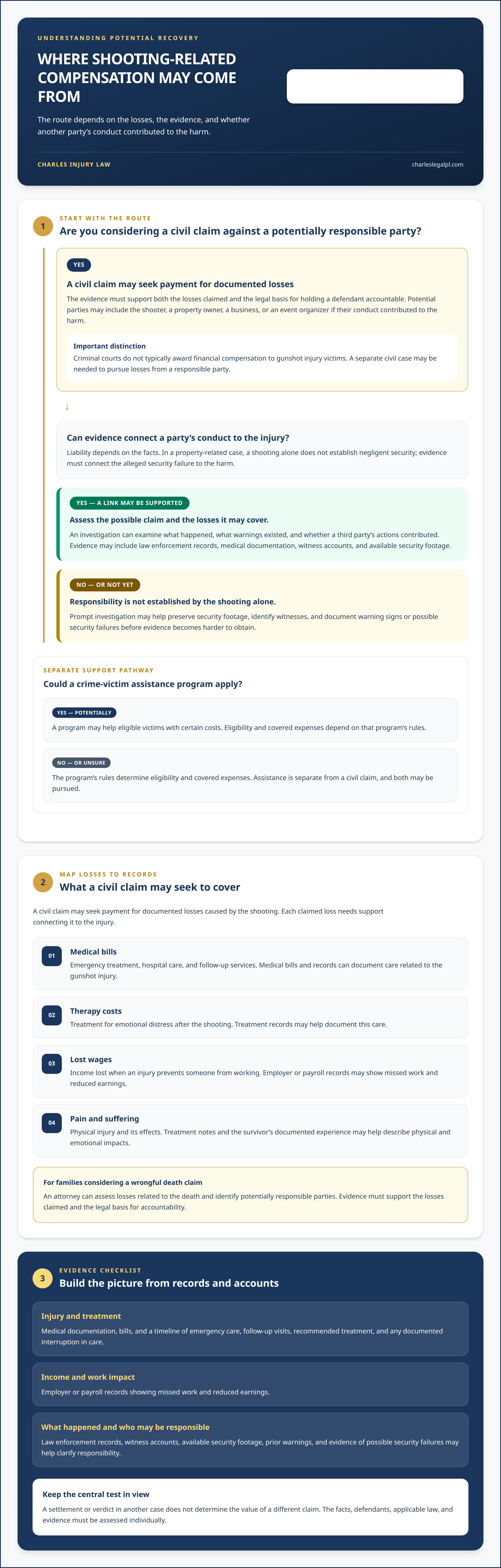
After a shooting, compensation may come through a civil claim, a crime-victim assistance program, or both. Criminal courts do not typically award financial compensation to gunshot injury victims, so a separate civil case may be needed to pursue losses from a responsible party. Potential defendants and compensation depend on evidence linking their conduct to the injury.
Can shooting victims get compensation through crime victim assistance programs? Potentially. These programs may help eligible victims with certain costs, but assistance is separate from a civil claim. Eligibility and covered expenses depend on each program’s rules.
A civil claim may seek payment for documented losses caused by the shooting. An investigation connects each claimed loss to the injury and the responsible party. Potential compensation may include:
- Medical bills for emergency treatment, hospital care, and follow-up services.
- Therapy costs, including treatment for emotional distress after the shooting.
- Lost wages when the injury prevents someone from working.
- Pain and suffering associated with physical injury and its effects.
For a family pursuing a wrongful death claim, an attorney can assess losses related to the death and identify potentially responsible parties. Evidence must support both the claimed losses and the legal basis for holding a defendant accountable. A settlement or verdict in another case does not determine the value of a different claim.
An investigation helps establish what happened and who may be responsible. An attorney may gather law enforcement records, medical documentation, witness accounts, and available security footage. These materials can show where the shooting occurred, what warnings existed, and whether a third party’s actions contributed. In a property-related case, the injured person must prove the shooting was foreseeable to pursue a claim against the property owner.
That foreseeability question can turn on specific evidence, such as prior warnings or security failures. A claim involving negligent security requires more than proof that a shooting happened on the property. The investigation must connect the alleged security failure to the harm.
Gunshot injuries involving ghost guns can raise additional questions about sales and responsibility. That verdict illustrates a possible claim involving a firearm seller, but it does not establish liability or predict compensation in another case. The facts, defendants, and applicable law must be assessed individually.
Focus on the evidence: treatment records document injuries, wage records support lost income, and witness accounts or security footage may clarify responsibility. A shooting victim lawyer can assess how these pieces fit together and which losses a civil claim may seek to recover.
Who will I sue if I file a mass shooting claim?
Responsibility depends on who caused or contributed to the shooting and resulting injury. The shooter may be one defendant. A property owner, business, or event organizer may also face scrutiny if security failures or ignored warnings contributed. A police shooting may require separate analysis of the responsible government actor. The investigation must connect each proposed defendant’s conduct to the harm.
Medical care comes first. Gunshot injuries need prompt attention, followed by the treating professionals’ recommendations after discharge. Recovery may involve additional appointments, rehabilitation, or emotional-health treatment. Records linking treatment to the shooting can support a claim for these needs. Keep a clear timeline of emergency care, follow-up visits, recommended treatment, and any documented interruption in care.
Medical bills are only part of the financial picture. An attorney can organize bills and treatment records, then compare them with work records and evidence of continuing symptoms. For example, a survivor who misses shifts during recovery may have wage losses to document. Therapy records may support a claim for emotional harm. Damages should reflect the injury’s actual effects, not an unsupported estimate.
- Medical expenses: Bills and records showing care related to the gunshot injury.
- Lost income: Employer or payroll records showing missed work and reduced earnings.
- Pain and suffering: Treatment notes and the survivor’s documented experience of physical and emotional effects.
Insurance adds another layer. A health insurer may process treatment bills, while a property or business insurer may address a liability claim. These are separate processes. An insurer’s payment decision does not, by itself, establish who is accountable for the shooting. An investigation should identify each policy potentially connected to a defendant and track insurer communications alongside medical records.
Medical negligence is separate from the shooting itself. If a particular treatment decision allegedly caused additional harm, the attorney must distinguish that injury from the original gunshot wound. For example, records may show when the wound occurred, what treatment followed, and when a new complication appeared. That timeline can help assess whether a separate claim merits investigation.
A firearm seller or another third party may also warrant investigation when evidence points to their role. But the use of a firearm does not establish that every seller or business is liable. The investigation must identify the conduct at issue and connect it to the injury under applicable law. A shooting victim lawyer can assess those links and determine which parties and insurers warrant further review.
If medical records, insurance correspondence, or questions about responsibility are piling up, discuss the facts of your injury claim with a legal professional.
Preserving evidence and filing within statutes of limitations
After a shooting, evidence can disappear while survivors focus on medical care and recovery. In Florida, the filing deadline depends on the type of claim, so early legal review can help protect evidence and preserve rights.
Preserving Evidence
A lawyer can help preserve security footage, review police reports, identify witnesses, and organize records before evidence becomes harder to obtain. Useful materials to gather before a consultation may include existing messages, photographs, medical documents, and witness contact details.
A lawyer can help protect a legal claim by locating evidence promptly, documenting its source, and investigating who may be responsible. If someone was killed, the investigation may also need records and witness accounts relevant to the family’s wrongful death claim.
Cooperation with law enforcement can help establish an incident record, but survivors should organize evidence for a civil claim separately. A lawyer can compare witness accounts with available footage and police reports, then identify gaps requiring follow-up. Preserve original files and messages when possible, since altered copies can complicate later review.
Useful evidence may include:
- Security or event footage showing the location and sequence of events.
- Witness names and contact information, alongside what each person observed.
- Medical records documenting the injury and treatment timeline.
- Messages or reports recording warnings made before the shooting.
Filing Deadlines
Florida claims are subject to statutes of limitations, and the applicable period depends on the claim and circumstances. Personal injury, wrongful death, and civil rights claims may require different deadline analyses. A lawyer can identify the relevant legal theory, determine the controlling filing date, and account for procedural requirements before preparing a complaint.
Don’t assume an ongoing criminal investigation pauses a civil deadline. The proceedings have different purposes, and waiting for law enforcement to finish could put a separate claim at risk. Early review can help identify the appropriate defendant, legal basis, and filing requirements before time runs out.
Procedural errors can affect evidence in a criminal case. Illegal searches or other procedural violations may lead to dismissed charges or suppressed evidence. Those outcomes do not automatically resolve a survivor’s civil claim. A lawyer can assess how evidence was obtained and whether a procedural issue affects the particular case.
Preserving evidence also means tracking changes: footage may be overwritten, witnesses may become harder to locate, and memories may fade. A lawyer can document preservation efforts and follow up with businesses or agencies holding relevant records. If you need help assessing evidence or a deadline, discuss the claim with a legal professional.
Potentially liable parties, including venue owners and event organizers
A shooting lawsuit can examine more than the person who fired the weapon. In Florida, a law firm can investigate each party’s conduct and whether it contributed to the harm. Liability depends on the circumstances, including the location, warnings, and security measures involved.
The shooter may face criminal proceedings, but a civil claim asks a different question: whether another party’s negligence contributed to someone’s injury or death. A criminal case alone does not establish that a venue or business caused the harm. Each defendant’s actions require separate evidence and legal analysis.
Florida property owners have a non-delegable duty to keep their property reasonably safe. That duty does not make an owner automatically responsible for every shooting on the premises. A claim must address whether the shooting was foreseeable and whether a failure to provide reasonable safety contributed to the injury.
For example, investigators can examine whether a venue received warnings about a serious threat, what security measures were in place, and how staff responded. Security footage, incident reports, and witness accounts can help establish what decision-makers knew before the shooting. If warning signs were ignored, those facts may support scrutiny of the owner’s conduct.
Businesses and event organizers may also face negligence claims if they failed to provide adequate security or ignored warning signs. An investigation should identify who controlled the location, who made security decisions, and what each party knew. A venue owner and an event organizer may have different responsibilities, so a lawsuit should connect each party’s specific conduct to the harm.
Potential parties to investigate can include:
- The person who fired the weapon, based on the circumstances and available evidence.
- A property owner, if evidence supports a claim involving foreseeable danger or unsafe conditions.
- A business operating at the location, if its security decisions or response contributed to the injury.
- An event organizer, if evidence shows ignored warnings or inadequate security planning.
Families pursuing a wrongful death claim can also investigate whether a business, organization, or government actor contributed through negligence. The claim focuses on the party’s conduct and its connection to the death, not simply the fact that the shooting happened at a particular place.
A careful investigation avoids naming defendants based on speculation. It compares warnings, security practices, control over the property, and the event timeline. If someone was injured at a business or event, a lawyer can assess which parties warrant investigation and what evidence supports accountability. The goal is a focused claim against parties whose conduct can be tied to the serious harm.
Contingency fees and consultations
A contingency fee agreement explains how an attorney’s fee relates to a case’s outcome. Before signing, review how the fee is calculated, which case expenses are separate, and what happens if the claim does not recover compensation. The written terms should answer these points directly. Ask about unclear language before agreeing.
A consultation gives you a chance to describe the shooting, your injury, and your questions about pursuing justice. It does not commit you to filing a lawsuit. Use the conversation to understand possible next steps, how the attorney will assess responsibility, and what information is needed to evaluate your claim.
Personal Injury Attorney in Fort Lauderdale represents personal injury clients on a contingency fee basis, with no attorney fees unless a recovery is obtained and no upfront fees. Review the written agreement to understand how the fee is calculated, how case expenses are handled, and how any recovery is distributed.
How do I evaluate lawyers who handle shooting injury cases? Ask how they would investigate the incident, assess potential defendants, preserve evidence, and explain the fee agreement. A useful answer connects those steps to your circumstances rather than promising a result.
How can a shooting victim choose a personal injury or civil rights lawyer near me? Look for a clear explanation of the claim’s legal basis, relevant experience with injury or civil rights matters, and direct answers about communication and costs. Choose someone who takes the shooting’s physical and mental toll seriously.
During a consultation, an attorney can ask about the location, law enforcement involvement, medical treatment, and known witnesses. You can describe what happened in your own words. If trauma makes details difficult to recall, existing records or a trusted family member’s account may help frame the discussion.
Consider these practical points as you assess the proposed representation:
- Case approach: Does the attorney explain how evidence and circumstances affect potential claims?
- Communication: Do you understand who will answer questions and how case updates will be shared?
- Written terms: Does the agreement clearly address attorney fees, expenses, and payment?
- Realistic guidance: Does the attorney explain risks and possible next steps without promising a particular outcome?
A consultation can also clarify whether the potential claim involves negligent security, police conduct, or another legal theory. Those distinctions shape the investigation and the evidence needed. If you’re ready to discuss your circumstances and fee questions, request a consultation about your claim.
Personal Injury Attorney in Fort Lauderdale
Charles Injury Law can help injured people assess whether their circumstances support a personal injury claim. If a shooting involved a separate accident-related injury, the firm handles claims involving car, truck, and rideshare accidents, as well as injuries to pedestrians.
The next step is to explain what happened, where the injury occurred, and what records or witness information are available. This information can help clarify whether the claim fits the firm’s work and which legal questions need review. Every incident is different, so a careful assessment focuses on the evidence and the parties’ conduct.
If you’d like to discuss your circumstances, contact Charles Injury Law.
Take the Next Step Toward Clarity
You don’t have to resolve every legal question before speaking with an attorney. A focused conversation can clarify whether a civil claim may fit your circumstances and what information matters next. A shooting victim lawyer can help assess your options while keeping your recovery and your family’s needs in view.
Charles Injury Law handles injury claims involving negligent security, as well as injuries from car, truck, semi, and tractor-trailer accidents and Uber and Lyft rideshare accidents. If your situation involves more than one event or type of injury, explain how the circumstances connect. That context can help frame the legal questions for review.
Reaching out doesn’t commit you to filing a lawsuit. It gives you a chance to discuss what happened, ask about representation, and understand possible next steps. Contact Charles Injury Law to discuss your circumstances. You deserve a clear path forward, one informed step at a time.
Frequently Asked Questions
Can I make a claim against a property owner if I was shot in their parking lot?
Possibly, but the first practical question is who owned, leased, or managed the parking lot. Those records can identify parties connected to the site and clarify who controlled it. A personal injury firm near me can review available property and incident records alongside your account. This general information is not a legal determination about a specific shooting.
What makes a police shooting unlawful?
A police shooting may be unlawful if the officer’s use of force violated applicable legal standards under the circumstances. The analysis may involve the sequence of events, available video, witness accounts, and official reports. Someone considering attorneys for personal injuries or searching for “attorneys personal injury” should distinguish a civil rights review from criminal proceedings. Each process addresses different issues, and one does not automatically resolve the other.
What type of lawyer should a shooting victim contact?
The right attorney depends on how the shooting happened and which legal issue needs review. A personal injury lawyer may assess a claim involving a private business or property, while police conduct may call for civil rights analysis. Someone looking for an injury lawyer near me or a personal injury lawyer near me can ask whether the attorney handles that type of incident and can explain the proposed legal approach.
Who can be held liable for a shooting injury besides the shooter?
Other parties may warrant review if their conduct contributed to the injury. For example, an investigation might examine a business’s role in managing an event or a government actor’s conduct. Someone seeking lawyers for auto accidents or auto accident lawyers near me should know those phrases describe a different type of claim unless a vehicle collision also caused injury. The facts determine which legal issues apply.
Can a shooting victim file a claim against a property owner for negligent security?
A claim may be considered when the available facts support a legal basis involving security at the property. Ownership and management records, incident documentation, and the events surrounding the shooting may help clarify the issue. A lawyer can explain whether the circumstances support further review under Florida law. A business’s location alone does not determine whether a claim is appropriate.
How much does a shooting victim lawyer cost, and do they work on contingency?
Charles Injury Law handles personal injury matters on a contingency-fee basis, with no attorney’s fees unless the firm obtains a recovery. The written agreement explains the fee terms and how case expenses are addressed. Read it before signing and ask about any language you don’t understand. For contact information, Call Now: (954) 390-2228 Available 24 Hours a Day, 7 Days a Week.
Disclaimer
The information provided on this blog is for general informational purposes only and does not constitute legal advice. Viewing this content does not create an attorney-client relationship with the firm. You should not act or rely on any information contained herein without seeking legal advice from a qualified attorney regarding your individual situation.