



A first conversation can clarify what happened and what may matter next. Knowing what to expect during a free injury case evaluation can make that discussion easier while you’re coping with an injury and its effects.
You may be searching for a personal injury firm near me, attorneys for personal injuries, or options described online as “attorneys personal injury.” After a crash, you might also search for lawyers for auto accidents or auto accident lawyers near me. Whatever wording brought you here, the evaluation focuses on your circumstances, not your search phrase. An injury lawyer near me or a personal injury lawyer near me can review the facts you share and explain potential legal options.
This guide explains what an attorney may ask, how evidence and liability may be assessed, and what information can help. It also covers possible next steps after the initial discussion, so you can understand the process and decide how to proceed.
Key Takeaways
- An initial evaluation reviews how the injury happened, your treatment, and communications with insurers. You can start even if you don’t have every document.
- Liability may depend on the available evidence, witness accounts, and how clearly responsibility can be established.
- Questions about shared responsibility may affect how a claim is assessed under Florida law.
- Medical records, bills, accident reports, photos, and witness details can help explain what happened and how the injury affected you.
- Before deciding whether to move forward, ask about possible next steps, representation terms, and how legal fees and case expenses are handled.
What Is a Free Personal Injury Case Evaluation?
A free personal injury case evaluation is an initial conversation in which an attorney reviews your account, asks questions, and explains possible legal options. You can share the accident date and location, medical records or bills, photos or video, a police report, witness details, and insurer letters or messages. You don’t need every document to begin.
Questions for the Attorney
The consultation gives you a chance to ask how the attorney views your potential claim and which facts could affect it. Expect questions about when, where, and how the injury happened, who was involved, and whether anyone reported it to police or an insurer. You can ask about possible defenses, relevant evidence, and what may happen next. Clear answers help you understand the attorney’s reasoning, not just hear a conclusion.
Documents the Attorney May Request for the Consultation
Relevant documents can connect the incident, the injury, and its effects. Bring what you have, such as medical reports, bills, doctor’s notes, accident photos or video, a police report, witness contact information, and insurer letters, emails, texts, or settlement offers. A photo, for example, may show a hazard at the scene, while a medical record can document treatment. Missing records don’t prevent an initial conversation; the attorney can identify what else may help.
The Attorney’s Evaluation
The attorney compares your account with the available evidence to assess liability, potential weaknesses, and further information needed. They may review treatment records and bills, witness statements, scene images, and communications with insurers. Details can change the analysis: a witness’s description may clarify how a collision occurred, while a photo may show a condition that contributed to a fall. For matters involving a personal injury claim in Florida, the attorney can also discuss relevant deadlines and possible next steps.
Consultations and Attorney Fees
A free consultation lets you discuss the incident and ask questions before deciding whether to hire an attorney. It doesn’t itself begin a lawsuit or commit you to a legal outcome. If you consider representation, ask how the fee arrangement works, including whether fees depend on recovery and how case expenses are handled. The attorney should explain the proposed terms before you sign a representation agreement, so you can understand the financial arrangement and decide whether to proceed.
Assessing liability and comparative fault
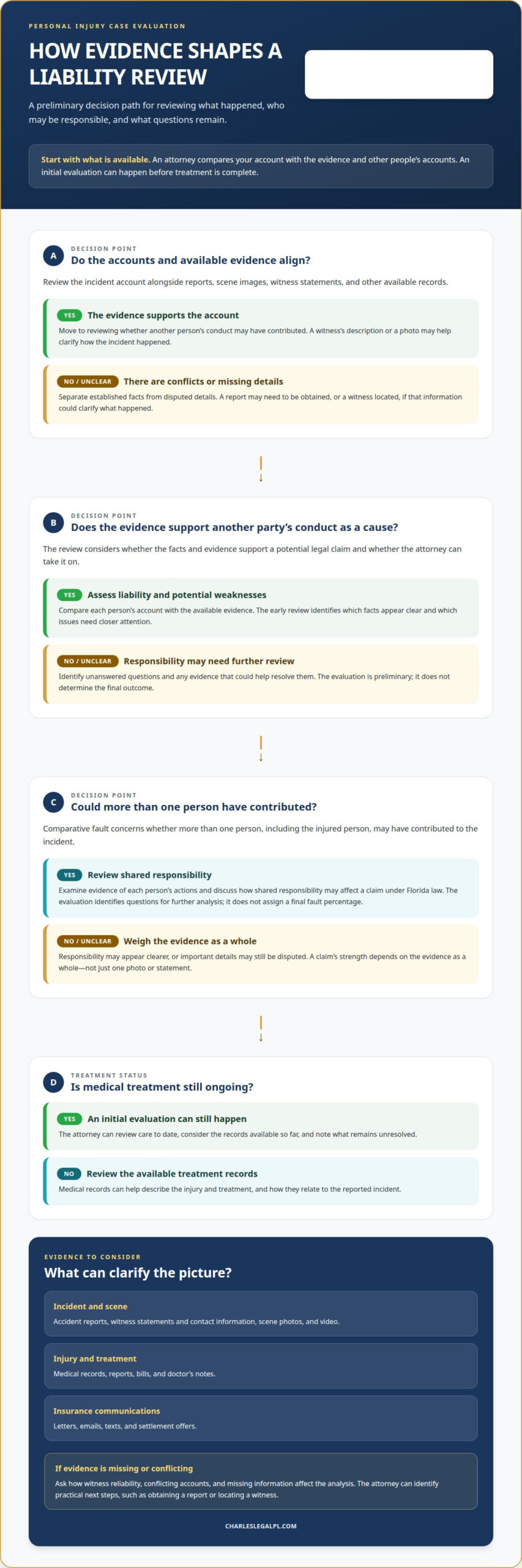
An attorney assesses liability by comparing available evidence with each person’s account of the incident. You can request an evaluation before treatment is complete; the attorney can review care to date and note what remains unresolved.
Whether a Claim Can Proceed
To assess whether a claim may proceed, a lawyer considers whether the facts and evidence support a potential legal claim and whether the lawyer can take it on. This early assessment helps you understand which issues need closer review.
For example, after a collision, the lawyer may compare the drivers’ accounts with a police report, photos, and witness statements. If accounts conflict, the lawyer can explain which evidence may clarify what happened and what additional information could matter. The evaluation is preliminary. It helps identify legal options, not determine the final outcome.
Evidence and Case Strength
A case’s strength depends on how well the evidence supports your account of the injury and its connection to another party’s conduct. That analysis helps show which facts appear clear and where questions remain unanswered.
A witness who saw the incident may offer a different perspective from someone who arrived afterward. Photos or video can document scene conditions, while medical records can describe the injury. Lawyers also consider whether responsibility appears clear and whether the evidence is reliable. If an account conflicts with other evidence, the lawyer can explain how that disagreement may affect the injury claim.
Comparative fault concerns whether more than one person, including the injured person, may have contributed to the incident. The attorney examines evidence of each party’s actions and explains how shared responsibility may affect the claim under Florida law. For instance, in a fall, the review may consider the condition of the walking surface and what the evidence shows about each person’s conduct. The evaluation doesn’t assign a final fault percentage; it identifies questions for further analysis.
Ask how the attorney weighs witness reliability, conflicting accounts, and missing evidence. A useful explanation distinguishes established facts from disputed details. It should also identify practical next steps, such as obtaining a report or locating a witness, if those items could clarify liability. A claim’s strength depends on the evidence as a whole, not just one photo or statement.
Ongoing medical treatment does not prevent an initial evaluation. The attorney can consider the records available so far, discuss how treatment relates to the reported incident, and explain which unanswered questions could affect the analysis. If you want to discuss the evidence and potential claim, contact the firm.
What are the next steps?
After the meeting, the attorney may identify records still needed, explain possible next steps, or arrange another discussion. The plan depends on the available evidence and the questions that remain about the accident or injury.
Gathering Records and Documents
The attorney may request records that clarify the accident, treatment, insurance communications, or financial effects. These materials can fill gaps in the personal injury claim and help keep important details organized.
For example, the attorney may ask for a police report, medical bills, doctor’s notes, photos, or witness contact information. An insurer’s letter or settlement offer may also help explain the claim’s status. Share the records you have, even if some documents are outstanding. The attorney can identify what else may be useful.
Preparing Evidence with the Attorney
Preparing evidence means organizing available materials so the attorney can understand what each item shows and what remains unclear. This can connect an accident report, treatment records, and communications to the timeline of events.
The attorney may sort documents by date, identify missing pages, and compare a police report with your account. A photograph can be labeled with when and where it was taken, while a witness’s contact details can help locate a person with firsthand knowledge. If records conflict, the attorney can flag the difference and explain what additional information may resolve it.
The attorney may then outline the work needed to move the matter forward. That could include requesting records, reviewing new evidence, arranging another meeting, or discussing whether to pursue an insurance claim or lawsuit. The sequence depends on the facts. If a report leaves out a key event, for instance, the attorney may first seek information that clarifies it.
Some materials come from you; others may require follow-up. The attorney can tell you which records to provide and how each relates to the claim. Medical records may document treatment, while insurer correspondence may show what has already been communicated. Keep original messages and documents, including emails and letters, so the attorney can review the full context rather than an isolated excerpt.
If you decide to hire the attorney, representation typically begins with a signed agreement describing the relationship and its terms. The attorney may then investigate the accident, handle case matters, and update you on the case’s status. You can take time after the evaluation to consider whether to proceed. If you do, the signed agreement starts representation, and the attorney can explain which documents are needed first.
What Happens During a Free Consultation?
A free consultation gives you time to discuss the injury, ask questions, and hear about possible legal options. You can also clarify how fees, expenses, and the evaluation work.
Contingency Fees and Expenses
A contingency fee is an attorney fee tied to recovering compensation; case expenses are the costs of handling a claim. Understanding both helps you assess the financial terms before agreeing to representation.
Ask the attorney to explain the proposed fee percentage, when it applies, and which expenses may arise. For example, clarify how costs for obtaining records or other case-related materials are handled. Ask whether expenses are separate from attorney fees and how they affect any recovery. The written agreement should describe the arrangement, so review its terms before signing.
With a contingency fee arrangement, attorney fees are not charged unless compensation is recovered. The specific agreement matters. Ask how a settlement or jury verdict would affect fees and costs, and what happens if the claim doesn’t result in compensation. These details help you understand the financial terms before moving forward.
Consultation Fees and Obligations
A free consultation has no upfront consultation charge and doesn’t obligate you to hire the attorney. You can hear an initial assessment before deciding whether to proceed.
Use the meeting to ask what the attorney can assess from the facts and records available. You can also ask whether the conversation commits you to representation. If you later decide to hire the attorney, a representation agreement sets out the terms. Read it carefully and ask the attorney to explain any language you don’t understand.
The conversation can also cover the lawyer’s role in communicating with insurers and protecting your position. For example, ask what the attorney would handle if an insurance company sends a settlement offer. A clear discussion distinguishes an initial consultation from ongoing legal work, so you know what you’re deciding at each stage.
Evaluation Duration
The evaluation’s length depends on how much there is to discuss, the accident’s complexity, and the records available. A straightforward account with organized documents may take less time than a matter involving multiple parties, conflicting accounts, or extensive treatment.
There’s no single duration for every consultation. The attorney needs time to hear what happened, understand the injury and treatment, review key documents, and answer your questions. If important records are missing or new issues arise, follow-up may be useful. Focus on covering the facts and fee terms rather than rushing through the meeting.
What a free injury case evaluation covers
The initial evaluation turns your account into a preliminary case map. The attorney reviews how the incident occurred, who was involved, what injuries followed, and which facts need further investigation. Knowing what to expect during a free injury case evaluation can help you understand its purpose: to clarify the claim’s strengths, open questions, and potential next steps, not to deliver a final ruling or guarantee a settlement.
First, the attorney builds a timeline: when and where the incident occurred, what happened immediately before and after, and when police or insurers were notified. Scene conditions matter. In a fall, wet pavement or a damaged walkway may be relevant. In a vehicle collision, the parties’ accounts and available photos or video can help explain how events unfolded.
Next, the attorney connects the incident to the reported injury. Medical records, bills, and treatment details can show what care followed and how the injury affected daily activities. If treatment is ongoing, the evaluation considers the information available so far and identifies remaining questions. The attorney may also review insurer letters, emails, texts, and settlement offers to understand claim communications.
The evaluation also examines potential damages. Economic losses may include medical expenses, lost wages, future treatment costs, and out-of-pocket expenses. Other claimed harms may include pain and suffering, emotional distress, disability, or loss of enjoyment of life. The attorney uses the records and your account to identify which categories may relate to the incident. The evaluation doesn’t assign a final dollar value.
Questions about compensation depend on the evidence, treatment, and effects of the injury. An attorney may discuss a preliminary estimate or range, but an early assessment isn’t an exact valuation. Ongoing treatment, for example, can leave future care needs unclear. The attorney can explain which records or developments may sharpen the analysis rather than offer an unsupported precise figure.
The review can also identify applicable filing deadlines and explain why they matter. The attorney considers whether the facts support pursuing an insurance claim, making a settlement demand, or filing a lawsuit if needed. These aren’t automatic steps. The evidence, liability issues, damages, and circumstances shape which options warrant discussion.
A clear view of what to expect during a free injury case evaluation includes understanding what the review can and cannot resolve. You should leave knowing the strongest established facts, potential weaknesses, and what information could change the assessment. A useful evaluation separates what the records establish from what still requires investigation. If you want an attorney to review the circumstances of your injury and explain possible next steps, contact the firm to discuss your case.
Personal Injury Attorney in Fort Lauderdale
Personal Injury Attorney in Fort Lauderdale can help you understand how an injury evaluation connects to a potential claim. Turn to the firm when you need an attorney to review the facts, explain liability questions, and discuss next steps after an accident.
The firm represents people injured in car, truck, and rideshare accidents, as well as pedestrians hurt while walking, jogging, or bicycling. An attorney can discuss how the incident happened, which evidence may matter, and what questions remain. This review can help you understand the issues before deciding how to proceed.
If you’re ready to discuss your situation, contact Personal Injury Attorney in Fort Lauderdale. Call Now: (954) 390-2228 Available 24 Hours a Day, 7 Days a Week.
Take the Next Step With a Clear Plan
An evaluation can help you decide how to address an injury and its effects. Knowing what to expect during a free injury case evaluation gives you a clearer sense of its purpose: to discuss your situation, understand potential legal options, and consider whether representation fits your needs. The decision about what to do next remains yours.
Charles Injury Law represents people injured in car accidents, truck and tractor-trailer accidents, and Uber and Lyft rideshare accidents. If one of these incidents has affected you, speaking with an attorney can help focus your questions and identify a practical direction. You don’t need every answer before seeking guidance.
When you’re ready to discuss your situation, Contact Charles Injury Law: Call Now: (954) 390-2228 Available 24 Hours a Day, 7 Days a Week. Take the next step when it feels right for you.
Frequently Asked Questions
What documents do you need for a thorough case evaluation?
There’s no required packet; you can start with the records you have. Organize digital copies by topic, such as treatment, accident documentation, and insurance correspondence. Keep original messages and files available because dates and context can matter. If a document is incomplete or unavailable, say so rather than guessing at its contents. The attorney can explain which gaps may affect the review.
What questions will the lawyer ask me?
The lawyer will ask you to describe the incident in your own words, including what happened before and afterward. Be ready to identify the people involved, when you first noticed symptoms, and how the injury affected work or daily activities. The attorney may also ask whom you notified and what insurers have communicated. These details help create a timeline and identify differences between accounts or records.
What role do insurance companies play in the evaluation process?
Insurance communications can show how a claim is being handled and whether an offer or request needs attention. The attorney may review letters, emails, or settlement proposals to understand what has been discussed. Don’t assume an insurer’s position resolves questions about fault or damages. If an adjuster contacts you, consider seeking legal guidance before responding, especially if you’re unsure what a question or document means.
What happens during a free personal injury case evaluation?
You discuss the incident and its effects with an attorney, who uses the information to identify potential issues and explain possible legal paths. For example, the attorney may distinguish confirmed details from disputed ones and note what evidence could clarify a conflict. The evaluation is an initial discussion, not a trial or final decision. You can ask questions, consider the explanation, and decide whether to take another step.
What questions will a personal injury lawyer ask during a free consultation?
Expect questions about where the incident happened, the sequence of events, who was involved, and what you did afterward. A lawyer may ask whether police or an insurer received a report, what treatment you’ve had, and whether anyone witnessed the event. You can also raise concerns about missed work, ongoing symptoms, or communications you don’t understand. Specific answers help the attorney identify important issues without requiring legal terminology.
Is a free injury case evaluation really free, and are there any fees or obligations?
The initial consultation is free, and discussing your situation doesn’t require you to hire the attorney. If you choose representation, review the written agreement to understand its terms. Charles Injury Law handles injury cases on a contingency fee basis, so clients pay no attorney’s fees unless the firm recovers compensation. Ask how case expenses are addressed; they are separate from attorney fees and should be explained in the agreement.
What happens after a personal injury lawyer evaluates my case?
After the evaluation, you can decide whether to proceed with the lawyer or take time to consider your options. If you hire the attorney, representation begins with a signed agreement. The lawyer may then investigate the incident, gather supporting records, communicate with insurers, and keep you informed about case developments. If documents or answers are needed first, the attorney can explain what would help clarify the next decision.
How do lawyers assess the value and strength of an injury claim?
Lawyers assess a case by weighing evidence of responsibility, the reliability of accounts, and how well records connect the injury to the incident. They consider damages such as medical expenses, lost income, and effects on daily life. Future care needs or disputed fault can change the analysis. An initial discussion can identify relevant factors, but it doesn’t establish a guaranteed settlement amount or final case value.
Disclaimer
The information provided on this blog is for general informational purposes only and does not constitute legal advice. Viewing this content does not create an attorney-client relationship with the firm. You should not act or rely on any information contained herein without seeking legal advice from a qualified attorney regarding your individual situation.