

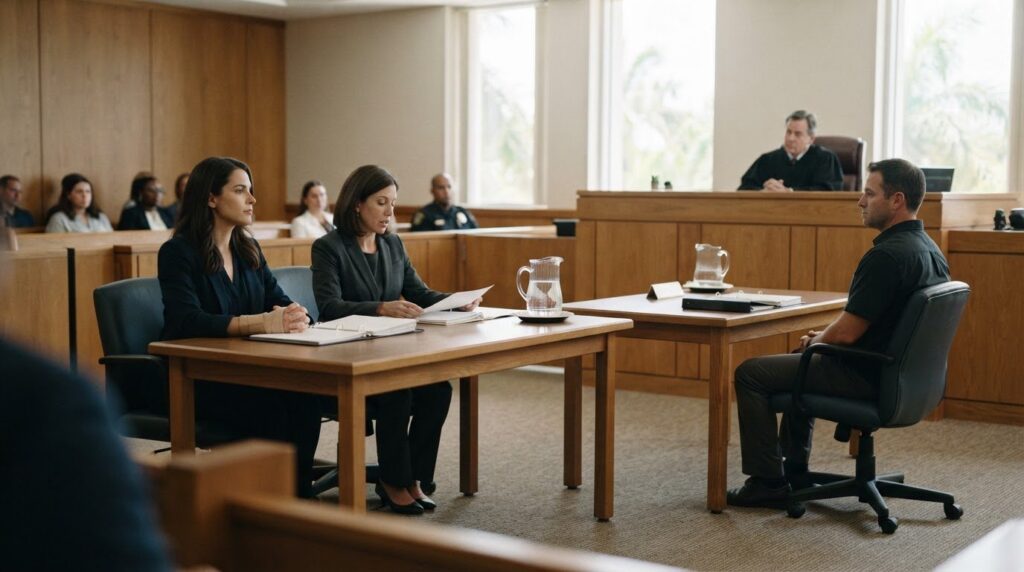

An uninsured driver can still be held personally responsible for a crash. If you’re asking, “Can I sue an uninsured driver personally?” in Florida, yes: you may bring a claim against the at-fault driver for losses caused by the collision. But winning a lawsuit does not necessarily mean the driver can pay a judgment.
That uncertainty can make an already painful situation more stressful. Your options may include seeking compensation through uninsured motorist coverage, if your policy includes it, and pursuing the driver’s personal assets through a lawsuit. The practical value of each option depends on your coverage, your losses, and what resources may be available to satisfy a judgment.
This article explains how uninsured motorist coverage may help, what a lawsuit can accomplish, and why an at-fault driver’s assets matter. You’ll also learn how legal representation from Personal Injury Attorney in Fort Lauderdale can help assess your options after a car, truck, or rideshare crash and pursue accountability while you focus on recovery.
Key Takeaways
- You may be able to pursue compensation through your own uninsured motorist coverage, depending on your policy.
- You can sue an at-fault uninsured driver, but a court judgment does not ensure you’ll collect payment.
- The driver’s available assets can affect whether a lawsuit is a practical path to recovering your losses.
- Evidence about the crash, your injuries, and your losses can support an insurance claim or lawsuit.
- Legal representation can help assess your options after a car, truck, rideshare, or pedestrian accident.
Uninsured motorist coverage
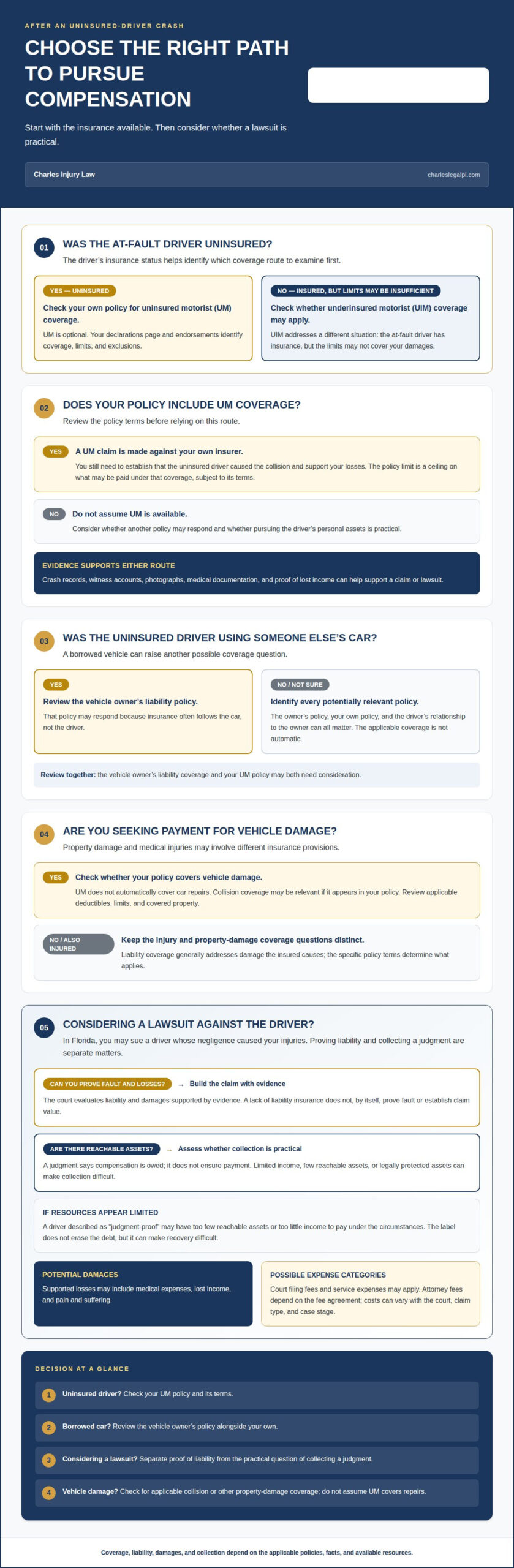
Uninsured motorist (UM) coverage may provide another route to compensation when an uninsured driver caused a crash. Drivers can add this protection to their auto insurance policies, but it is optional, so not every policy includes it. Your declarations page and endorsements identify the coverage, limits, and exclusions that apply. For example, a policy may cover an injured driver but set different terms for passengers or household members.
A UM claim is made against your own insurer, not through a lawsuit against the at-fault driver. You still need to establish that the uninsured motorist caused the collision and support your claimed losses. Medical records, wage information, and crash evidence can help document the collision’s effects. The policy limit sets a ceiling on what the insurer may pay under that coverage, subject to the policy’s terms.
A borrowed car raises another insurance question. When an uninsured driver was driving someone else’s car, the vehicle owner’s liability policy may respond because insurance often follows the car, not the driver. That does not automatically establish which policy covers your injuries. The owner’s policy, your own policy, and the driver’s relationship to the owner can all matter. For example, a claim may require reviewing both the vehicle owner’s liability coverage and your UM policy.
Property damage requires separate attention. UM coverage does not automatically cover car repairs; the policy must provide coverage that applies to vehicle damage. Collision coverage may be relevant if it appears in your policy, while liability coverage generally addresses damage the insured causes to others. Review the policy terms for deductibles, limits, and covered property. A damaged car and medical injuries may involve separate claims and different insurance provisions.
Underinsured motorist (UIM) coverage may apply when the at-fault driver has insurance, but the limits are insufficient to cover your damages. UM and UIM are related protections, but they address different insurance situations. Any recovery depends on the applicable policies, their limits, and the losses supported by evidence. An insurer may also dispute fault, coverage, or the amount claimed, so a claim can involve more than submitting bills.
If an insurer denies a claim or issues a reservation of rights, the wording matters. A denial states the insurer’s position that coverage or payment is unavailable; a reservation of rights means it is evaluating the claim while preserving specified coverage defenses. Neither document is a court judgment. The reasons, cited policy provisions, and supporting records should be reviewed together. A car accident claim can involve both liability questions and policy disputes, so identifying each potential source of coverage helps clarify the next steps.
Can I Sue an Uninsured Driver?
If you’re asking, “Can I sue an uninsured driver personally?” after a car accident, yes. In Florida, you may bring a lawsuit against a driver whose negligence caused your injuries. But proving liability and collecting a judgment are separate matters.
Collecting judgments from drivers with limited resources
A judgment is a court’s decision that the defendant owes compensation; collecting means pursuing payment. This distinction matters because an uninsured driver may have little income or property available. A court can award damages for supported losses, such as medical expenses, lost income, and pain and suffering. But if the defendant lacks reachable assets, the award may not provide immediate financial recovery.
Judgment-proof drivers and protected assets
A judgment-proof driver has too few reachable assets or too little income to pay a judgment under the circumstances. That label does not erase the debt, but it can make collection difficult. Some assets may have legal protections, so apparent property does not necessarily mean it can satisfy a judgment. A lawyer can assess available resources and applicable protections when evaluating whether collection is practical.
To win a personal injury lawsuit, you must prove that the other driver caused the accident and that it resulted in losses. Evidence may include crash records, witness accounts, photographs, medical documentation, and proof of lost income. The court evaluates liability and the damages supported by the evidence. The driver’s lack of liability insurance does not, by itself, prove fault or establish the value of your claim.
Filing costs may include court filing fees and expenses for serving legal papers. Attorney fees depend on the fee agreement, while the court and type of claim affect applicable filing costs. Small claims and other civil proceedings may have different requirements. A lawyer can explain potential expense categories before filing, including costs that may arise if the case moves beyond its initial stage.
Whether you can sue an uninsured driver personally is separate from whether the driver can pay. A licensing consequence, if applicable, does not itself compensate you for injuries or losses. The financial question remains whether the defendant has reachable resources. A lawyer can assess that issue alongside liability, evidence, and any available insurance.
A personal injury firm near me can assess these issues; so can attorneys for personal injuries or attorneys personal injury. An injury lawyer near me or personal injury lawyer near me can review the claim, while lawyers for auto accidents and auto accident lawyers near me may address crash-related cases. Contact Charles Injury Law. Call Now: (954) 390-2228 Available 24 Hours a Day, 7 Days a Week
Steps to take after an uninsured-driver crash
After immediate danger has passed, call 911 and seek medical care for crash injuries. An attorney can assess reporting, insurance, evidence, and losses before evaluating a lawsuit.
In Florida, crash reporting requirements depend on the circumstances, so do not assume every collision follows the same process. An attorney can review the incident details and available records to determine whether a report to law enforcement or the Florida Department of Highway Safety and Motor Vehicles is required. The attorney can also identify records that may help document the crash, such as a police report, witness information, photographs, and vehicle damage records.
Medical care creates an important record of injuries and treatment connected to the collision. Share medical records and bills, income-loss information, and crash documents with the attorney handling your claim. For example, if back pain begins after the crash but treatment starts later, the timeline may matter when connecting the injury to the accident. The attorney can organize those records and assess what evidence supports each claimed loss.
Crash-related damages may include medical bills, lost wages, future medical expenses, property damage, and pain and suffering. The evidence must connect each claimed loss to the collision. A repair estimate can help document vehicle damage, medical records can describe treatment and its relationship to the crash, and wage records can show missed work. An attorney evaluates these materials alongside evidence of fault before determining which damages to pursue.
Uninsured motorist coverage may provide a separate claim path if the relevant policy includes it. An attorney can review the policy, identify applicable limits, and address an insurer’s questions or coverage position. If the uninsured driver caused the crash, the attorney can also assess a claim against that driver. Each route requires evidence showing how the crash happened and how it affected you.
A car accident lawyer can investigate the collision, identify potential insurance policies, organize evidence, and communicate with insurers. The lawyer may examine the crash report, vehicle damage, witness accounts, medical records, and the driver’s role in the event. If a lawsuit is appropriate, the attorney can prepare the liability case and document your claimed losses. This work helps keep an insurance dispute from obscuring who caused the accident and what the injuries cost.
Provide the attorney with available crash records, insurance documents, medical bills, and information about missed work. Those materials help assess the situation and identify gaps in the evidence. If you were injured in a Florida car accident involving an uninsured driver, legal review can help clarify the reporting and compensation issues tied to your case.
Suing an uninsured or underinsured at-fault driver
In Florida, an injured person can sue a driver whose negligence caused a crash, even if the driver lacks liability insurance. A direct lawsuit can establish responsibility and seek compensation, but it does not identify funds available to pay.
Personal claims against uninsured drivers
A personal claim seeks damages from the at-fault driver rather than relying solely on an insurance policy. This matters because an uninsured driver may still be legally responsible for injuries and financial losses. For example, a person injured in a collision can pursue documented medical expenses, lost income, property damage, and pain and suffering in a lawsuit against that driver.
Direct suits against at-fault drivers
A direct lawsuit asks a court to decide whether the driver caused the accident and what damages the evidence supports. This route matters when the driver has no liability insurance or carries limits that cannot cover the losses. A lawsuit can address the full injury claim, while available insurance and personal resources affect where compensation may come from.
The case must establish more than the driver’s lack of insurance. Evidence should show how the collision happened, why the defendant was at fault, and how your injuries followed from the crash. A police report, witness account, photographs, medical records, and wage documents can each support a different part of the claim. If another person’s actions contributed, the facts may affect who should be named in the lawsuit.
For an underinsured driver, the liability policy may pay only up to its limits. You can consider a direct claim for damages beyond those limits and assess whether underinsured motorist coverage may apply. These are separate potential recovery paths. For example, if documented losses exceed the available liability coverage, the remaining amount may require reviewing your policy and the driver’s ability to pay.
A lawsuit also requires decisions about the claim’s evidence and the defendant’s role. The legal process can identify disputed facts, establish liability, and produce a judgment for supported damages. But a judgment is not the same as payment. The defendant’s resources and applicable protections can affect collection, so potential recovery sources matter when deciding whether to sue someone personally.
Before filing, an attorney can assess the crash evidence, available insurance, claimed damages, and practical collection prospects together. That review helps distinguish a strong liability case from a realistic path to compensation. If the at-fault driver was uninsured or underinsured, these issues shape whether a direct lawsuit, an insurance claim, or both may be appropriate.
Limits on recovering from a driver’s personal assets
A court judgment establishes the amount a defendant owes, but it does not guarantee payment. If an uninsured driver has limited income or property, the amount recovered may fall short of the damages awarded. The driver’s assets, available insurance, and legal protections all affect collection. That is why an attorney evaluates collectability alongside liability, rather than treating a judgment as money already secured.
A vehicle alone does not show what funds are available. The car may be financed, jointly owned, or worth less than the outstanding loan. Other property may also be subject to competing claims or legal protections. An attorney can examine what assets appear reachable and how ownership affects their value. For example, a vehicle registered to someone else may not be an asset belonging to the defendant.
Income presents a separate issue. A defendant may earn wages but have little money available after ordinary obligations and applicable protections. The person may also have irregular income or no readily available assets. These circumstances can make collection slow or limited, even after a court awards compensation. An injury lawyer considers the defendant’s financial picture when weighing whether continued litigation is likely to produce practical recovery.
Insurance limits matter, too. If a driver carries liability coverage, the policy may provide a source of payment up to its applicable limits. If there is no policy, or the coverage falls short, recovery may depend more heavily on the defendant’s personal resources and any other applicable insurance. An attorney can compare documented losses with available coverage and assess the remaining gap without assuming the defendant can pay it.
Accurate documents help clarify these questions. Medical bills, wage records, repair estimates, insurance correspondence, and the crash report can show the losses and potential payment sources. An attorney can organize these records, evaluate disputed coverage, and assess whether the driver has resources that could support collection. A consultation can also address how a judgment’s amount relates to what may realistically be recovered.
Before pursuing a claim, an attorney weighs the strength of the liability evidence against the available routes to payment. A clear case against the driver may still present collection challenges if assets are limited or protected. Conversely, applicable insurance or reachable property can change the assessment. The decision should account for both the compensation sought and the practical limits on recovery.
If you need an assessment of potential assets, insurance limits, and collection options after a Florida crash, discuss your case with an attorney.
Personal Injury Attorney in Fort Lauderdale
Charles Injury Law helps injured people assess their options after a Florida crash involving an uninsured driver. The legal team can review available insurance, examine evidence about who caused the collision, and evaluate documented injuries and losses. This analysis can help clarify whether an insurance claim, a lawsuit, or both may be appropriate.
Turn to a lawyer when the insurer disputes coverage, fault remains contested, or the at-fault driver has no insurance. Charles Injury Law represents people injured in car, truck, and rideshare crashes, as well as pedestrians hurt in public. The legal approach depends on the collision, applicable policies, evidence, and damages. Contact Charles Injury Law to discuss your situation and available legal options.
Choose Your Next Step With Confidence
If you’re still considering whether you can sue an uninsured driver personally, focus on the decisions specific to your situation. A careful legal review can help you understand the available options and make an informed choice about moving forward. The question is not only whether you can bring a claim, but what action best serves your recovery.
Charles Injury Law represents people injured in motor vehicle crashes. If you want to discuss your circumstances and legal options, contact Charles Injury Law. You don’t have to sort through the next steps alone. A clear plan can help you move forward with confidence.
Frequently Asked Questions
Can You Sue a Driver That Does Not Have Automobile Insurance?
Yes. A driver’s lack of automobile insurance does not prevent you from filing a personal injury lawsuit in Florida. The claim still requires evidence connecting the driver’s conduct to the crash and your injuries. For example, photographs, witness accounts, and medical records may help establish what happened and how it affected you. A separate question is whether the driver has insurance or assets available to pay a judgment.
Can I Sue?
Yes, you may sue the driver if evidence supports that the driver caused your injuries. A lawsuit can seek compensation for legally recoverable losses, but filing one does not automatically establish fault. The claim must be supported by relevant evidence, and the defendant may dispute responsibility or the amount sought. In Florida, a lawyer can evaluate the crash circumstances, available insurance, and evidence before explaining possible legal options.
Can You Sue an Uninsured Motorist After a Car Accident in Florida?
Florida law applies to claims arising from crashes in Florida. The crash location, the available evidence, and the terms of any applicable insurance policy may affect the claim. If the collision happened in Florida, these factors can help determine which claims may be available. A lawyer can review the circumstances and explain the legal options under Florida law.
Can the Defendant Afford to Pay?
There is no reliable answer without information about the defendant’s insurance, income, property, debts, and applicable protections. A person may own a vehicle, for example, but a loan or another owner’s legal interest can affect whether it represents available value. A lawyer can assess potential payment sources and compare them with the claimed losses. That assessment helps distinguish a court award from funds that may actually be collected.
What Does Florida Law Say?
Florida law governs claims arising from crashes in Florida, while the insurance policy’s wording affects what coverage may apply. Uninsured motorist coverage is optional, so a policy may not include it. The questions may include how the crash occurred, whether the driver was legally responsible, which losses are supported, and what insurance terms apply. A legal assessment should account for all these factors, not just the driver’s uninsured status.
What damages can you recover from an uninsured driver, including medical bills, lost wages, and pain and suffering?
Potential damages may include medical expenses, lost wages, future medical care, loss of earning capacity, pain and suffering, emotional distress, and property damage. The claimed losses must relate to the crash and be supported by appropriate evidence. For instance, treatment records can document care, while wage records can show income loss. The types and value of recoverable damages depend on the facts, liability, and applicable insurance coverage.
How long do you have to sue an uninsured driver in Florida?
Florida law sets deadlines for filing lawsuits, and the time limit may depend on the type of claim. This article addresses Florida law and does not provide a deadline for every individual claim. Because a filing deadline can affect whether a lawsuit may proceed, identify the circumstances of the crash and seek legal advice promptly. This FAQ provides general information, not legal advice about any individual claim.
Disclaimer
The information provided on this blog is for general informational purposes only and does not constitute legal advice. Viewing this content does not create an attorney-client relationship with the firm. You should not act or rely on any information contained herein without seeking legal advice from a qualified attorney regarding your individual situation.