

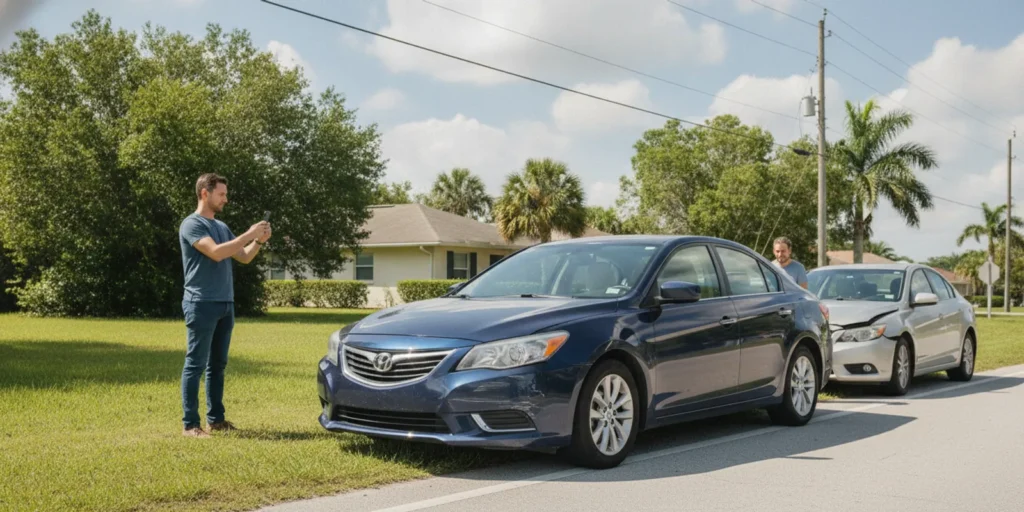
If you are asking, can you sue Uber for an accident, the answer depends on what happened and how the driver was using the app. A crash involving a rideshare vehicle does not automatically make Uber responsible. The driver’s role, app status, trip stage, who was injured, and evidence about the collision may affect which parties or insurance sources need review. This general information is not legal advice. Coverage, deadlines, and legal standards require review by an attorney.
Can you sue Uber for an accident?
Possibly, but “an Uber accident” can describe several different situations. A driver may be offline and using a car personally, logged in and waiting for a request, matched with a rider, traveling to a pickup, or carrying a passenger. The collision may also involve another motorist, a pedestrian, a cyclist, or a vehicle occupant who has no connection to the trip. Those distinctions can change what needs to be investigated.
It helps to separate three questions that are often blended together. First, what caused the collision? Second, which people or entities may have legal responsibility under the facts and applicable law? Third, what insurance policies or other sources may apply? The answer to one question does not automatically answer the others. For example, evidence that the driver was carrying a passenger may help establish trip status, but it does not by itself prove fault or determine the terms of coverage.
A potential claim may involve the rideshare driver, another motorist, or another person or organization whose conduct contributed to the crash. Whether the platform itself can be held legally responsible is a separate question. The driver’s use of an app alone is not enough to establish that Uber is responsible for an injury. Nor does the involvement of another driver necessarily eliminate questions about the rideshare driver’s conduct or insurance.
Your position matters, too. A passenger in the rideshare vehicle, an occupant of another car, a pedestrian, and a cyclist may have different access to trip information and different witnesses or records. The same collision can be evaluated differently for each injured person. A careful review starts with facts rather than assumptions about the word “Uber.”
For a practical first pass, treat the case as two connected timelines. One timeline describes the collision: where each person was, what each vehicle did, and what happened afterward. The other describes the rideshare activity: whether the driver was logged in, whether a request had been accepted, whether the driver was heading to a pickup, and whether a passenger was already in the vehicle. The timelines may overlap, but neither substitutes for the other. Keeping them separate can make missing information easier to see.
Why do app status and trip stage matter?
Rideshare activity has distinct stages, and the relevant point is the driver’s status when the collision occurred—not simply what the driver did later. A driver may have been offline, available for requests, newly matched, approaching a pickup, or transporting a passenger. Records that establish timing and trip stage may help identify the questions to ask about insurance. They do not establish legal responsibility by themselves.
Insurance rules and policy language can vary and may change. Do not rely on a general description of a rideshare coverage period to decide what applies to a particular collision. An attorney should examine the actual facts, policy terms, and governing law. The practical aim at the outset is to preserve information that could help establish the driver’s activity and the sequence of events.
It is useful to distinguish the words people use from the records that may confirm them. “The driver was working” might mean the driver was logged into an app, had accepted a trip, was waiting at a pickup, or was carrying a passenger. Those descriptions are not interchangeable. If you speak with a witness or insurer, ask what the person actually saw or which record they are referring to. Precise language helps prevent an assumption from becoming an apparent fact as the account is repeated.
Was the driver offline?
If the driver was not logged into the rideshare app, the incident may need to be considered differently from a crash during rideshare activity. The driver’s personal auto coverage and the conduct of every person involved may be among the initial questions. A rideshare decal, vehicle appearance, or the driver’s usual occupation does not prove that the app was active at the time.
For a person injured by a vehicle believed to be used for rideshare work, note the identifying details that are actually observable: license plate, make and model if known, driver’s name, and what the driver said about the app. Separate what you personally observed from what someone else told you. A later investigation may need to verify the app status rather than relying on memory or inference.
Was the driver logged in and waiting?
A driver who is logged in and waiting for a request may be in a different position from a driver who has accepted a trip. The important point is to establish the exact status at the moment of impact. If the driver accepted a request after the crash, that later event should not be confused with the pre-collision status. Likewise, a driver’s statement that the app was open may not answer whether a ride had already been matched.
Possible evidence may include app screens, trip records, communications, or other information available through the relevant parties. A passenger may have a trip confirmation or receipt; an injured person outside the vehicle may have only a description of the car, a witness account, or a response from the driver. Preserve what you have, and do not try to access another person’s account or device.
Had the driver accepted a request or picked up a passenger?
After a driver accepts a request, travels toward the pickup, or begins transporting a passenger, different insurance questions may arise. A pickup location, trip confirmation, and ride timeline may help clarify the stage. A passenger’s account of when the ride began and what the app displayed can be useful, but the details should be checked against available records when possible.
Do not assume that a ride receipt proves every detail about the crash, or that the absence of a receipt means no trip existed. A person may have limited access to records, and a record may need context. The responsible next step is to keep the original material and identify what remains uncertain for legal review.
For an overview of the firm’s rideshare practice, see the Uber and Lyft rideshare accident page. That page describes the service area and practice; it does not decide whether a particular person has a claim or establish coverage for an individual crash.
Who may be involved in an Uber accident claim?
Identifying people and entities for investigation is not the same as deciding who is legally at fault. The circumstances may call for review of each driver’s actions, the road and traffic conditions, and any other factor that contributed. A starting list can prevent an early focus on only one person from obscuring other relevant facts.
- Did the rideshare driver appear to be distracted, fail to obey a traffic control, or follow too closely?
- Did another motorist make a turn, change lanes, stop, or enter an intersection in a way that contributed?
- Were pedestrians, cyclists, or other road users involved, and what could each person see?
- Was a vehicle defect, roadway condition, or other hazard part of the event?
- What was the rideshare driver’s app and trip status at the exact time?
- Which people suffered injuries or property damage, and what records support each loss?
These are investigation questions, not findings. A crash report may document statements, observations, and the responding agency’s initial information. It may not answer every disputed question or contain every witness’s account. Photographs, video, physical damage, medical records, trip records, and later witness interviews may add context. Keep the report number and obtain a copy through the appropriate process when available.
More than one person’s conduct may be relevant. A rideshare driver and another motorist might each need to be considered; alternatively, early evidence may point toward one driver or an outside factor. Do not turn a preliminary impression into a legal conclusion. Write down what you know and what you do not know, then let a qualified attorney assess how the facts and law fit together.
A useful way to avoid prematurely narrowing the inquiry is to create a party-and-question list. Put each driver or other possible participant on a separate line. Beside that person, record the conduct that may need review, the evidence currently available, and the important missing information. For instance, for the rideshare driver you might list vehicle movement, app status, and any passenger account; for another motorist, you might list direction of travel, traffic signal observations, and witness accounts. The list is not a fault allocation. It is a map of topics that can be checked rather than guessed.
Sometimes a collision involves a vehicle that was stopping or turning near a pickup point. That setting may explain why a driver slowed or changed lanes, but it does not by itself establish whether the action was safe or caused the crash. Similarly, a passenger’s presence may explain a route or destination, but it does not answer who had the right of way. Keep contextual details in the timeline and let a legal review determine their significance.
Does your position in the vehicle change the questions?
Your role affects which information you may possess and what details are easiest to document. It does not automatically determine whether a claim exists. Think about what you directly witnessed, what records you can access, and what other people may have seen.
If you were an Uber passenger
Save the ride confirmation, receipt, driver and vehicle details shown in the app, and any trip-related messages. Record where you boarded, where you expected to go, and approximately when the collision occurred. If the trip was interrupted, note what the driver said and whether you saw any change in the app. Do not alter screenshots or delete the original messages.
Think through the ride in sequence: where you were seated, whether you were wearing a seat belt, what you noticed just before impact, and what happened immediately afterward. If you do not remember a detail, mark it as uncertain instead of filling the gap. If another vehicle was involved, its driver and insurer may also be relevant. The platform is not necessarily the only possible party or source of coverage.
A passenger can make a short ride chronology while the events are still fresh. Note the time you entered the car, any route changes you noticed, where you were when the impact occurred, and the first actions taken afterward. Distinguish what the app displayed from what you inferred. For example, “the app showed a trip receipt later that evening” is a record-based observation; “the driver was on the way to another passenger” should be marked unknown unless you have a source for it. This distinction is especially useful if you were shaken, distracted, or did not see the other vehicle before impact.
If the driver or another person gives you a trip detail, record who said it and when. Do not treat a casual statement as a verified app record. Keep the original receipt and messages even if you later receive a corrected document. If the app offers a way to report the incident, save the confirmation or reference information and keep a copy of your own factual notes. A platform report can be part of the record, but it does not replace medical documentation, witness information, or legal review.
If you were in another vehicle
Write down the direction each vehicle was traveling, the lanes involved, traffic signals or signs, and the sequence you observed. Note whether the rideshare vehicle was approaching a pickup, stopped, turning, or moving through traffic, but distinguish observation from assumption. Collect the other driver’s contact and insurance information and request witness contact details if it is safe.
Do not assume that the app status is the only issue because the other vehicle displayed rideshare branding. The conduct of the other driver may be important, as may the rideshare driver’s actions. If you have dash-camera footage, preserve the original file promptly and check whether the device overwrites recordings. Keep the device and file metadata intact where possible.
After the immediate scene is safe, make a simple diagram if that helps you remember the layout. Mark lanes, travel directions, traffic controls, points of impact, and where vehicles came to rest. Label it as your recollection and note when you drew it. A rough diagram is not a surveyed reconstruction; its value is that it records your present memory before details blur. Do not copy another person’s diagram or change yours to make it match someone else’s account.
If passengers were in your vehicle, ask them separately what they remember and write down their contact information. Avoid coaching or comparing stories before each person has recorded an independent recollection. One person may have seen a traffic signal while another noticed a vehicle position; different vantage points can explain why accounts are not identical. Preserve any relevant dash-camera recording from the full period around the crash, not only a short edited clip, and do not post it publicly.
If you were walking or cycling
Record the crossing point, sidewalk or roadway position, traffic controls, lighting, weather, and visibility as you remember them. A pedestrian or cyclist may have no access to trip details, so independent observations can be especially useful. Note nearby businesses, residences, transit stops, or vehicles that may have cameras, but do not assume footage exists or will be retained indefinitely.
Ask witnesses for their names and a way to reach them if it is safe and appropriate. If someone else is helping, ask them to record details rather than pressuring witnesses to agree on a version of events. Preserve clothing or a damaged bicycle or other property if relevant, and photograph it before repair or disposal when feasible. Medical attention and safety come first; evidence gathering should never delay care.
For a pedestrian, details about visibility and movement may be difficult to reconstruct later. If you can, note where you began crossing, whether you were at a marked crossing, what signals you remember, which direction you looked, and when you first noticed the vehicle. For a cyclist, note the route, lane position, lights or reflective items in use, and any road surface issue you observed. Do not assume a detail simply because it seems likely; indicate when you are unsure. A companion can help write down the account, but should identify which observations are yours and which are theirs.
What evidence should you preserve after a rideshare crash?
Evidence can become harder to locate over time. Take reasonable steps to preserve what you already have, without putting yourself at risk or interfering with emergency response. If you are injured, focus on care and ask a trusted person to help. Keep originals and make a simple inventory so you can tell what each item is and when you obtained it.
- Get emergency help when needed. Call for medical assistance if anyone may be hurt or the scene is unsafe. Follow responders’ instructions. Do not put yourself in traffic to photograph a vehicle or retrieve an item.
- Document the scene if safe. Take photographs of vehicle positions, visible damage, license plates, road conditions, traffic controls, skid marks, and the surrounding area. Capture wide views as well as close details. Avoid moving vehicles or objects solely to create a picture.
- Collect contact details. Exchange names and contact information with drivers and witnesses. Note the responding agency and any incident or report number. Do not confront anyone or try to prevent a person from leaving if doing so would be unsafe.
- Save app and trip records. Keep ride confirmations, receipts, messages, trip details, and screenshots that may show the ride stage or timing. Preserve full-screen images and originals. Do not edit, crop away context, or discard records just because a trip later disappears from view.
- Keep medical and expense documents. Save discharge instructions, appointment details, bills, receipts, prescriptions, and communications about missed work or other expenses. These records help create a timeline of what happened afterward; they do not by themselves resolve legal questions.
- Write a factual recollection. As soon as practical, note the time, route, weather, what you saw and heard, and the order of events. Mark estimates as estimates and uncertain details as uncertain. Avoid revising an original note silently; add a dated clarification if your memory changes.
- Preserve communications. Keep messages from the driver, platform, insurers, witnesses, and other parties. Record the date, sender, and method received. Save voicemail or email in its original form where possible.
- Check for video sources. If a vehicle camera captured the event, preserve the file before it can be overwritten. Note nearby cameras you observed, such as business or building cameras. Do not assume footage is available or attempt to obtain it unlawfully.
A useful organization method is to create folders labeled “scene,” “trip,” “medical,” “expenses,” and “communications.” Keep a short index with the date, item description, and where the original is stored. For example: “Oct. 30, passenger receipt, saved from account”; “Oct. 30, intersection photos, taken by companion”; “Oct. 31, clinic discharge sheet.” This makes it easier to identify missing pieces without blending sources or dates.
For a more detailed perspective on documenting a rideshare matter over time, see the firm’s guide to rideshare claim timelines. The timing of any particular matter depends on its facts and should not be predicted from a general article.
How can you preserve digital evidence clearly?
Digital records can be easy to overlook because they are spread across a phone, email account, app, and camera. Start with records already available to you. Save the original message or file where possible, then make a backup copy in a secure location. Keep the date and sender visible in screenshots, and do not crop out information that gives context. If you export a file, retain the original and note how and when you made the copy.
For photographs, keep both broad scene views and close-ups. A close photo can show a damaged area but may not show where the vehicle was positioned; a broad view can show the intersection but may not show the detail. If you take several images, do not rename them in a way that changes the sequence without keeping a record. A simple note such as “photo 1 faces north from sidewalk” may help explain a view later. If another person took the pictures, record the photographer’s name.
For trip information, preserve the receipt, confirmation, in-app messages, and any notice about the incident. A receipt may show a time or route detail, but it may not prove what happened at the moment of impact. Avoid relying on a single image as a complete account. If the app interface changes or an item becomes unavailable, record what you remember seeing and when; do not attempt to access someone else’s account or ask another person to share credentials.
How can you build a useful timeline?
A timeline is more useful when it distinguishes event time from record time. Event time means when something happened, such as the collision or a medical visit. Record time means when you received or saved a document. For example, you may save a trip receipt the morning after the crash even though it refers to the prior evening. Label both when possible so later readers do not mistake the date you saved an item for the date of the event.
Keep each entry short and source-based: “About 6:20 p.m.—impact near the intersection, my estimate”; “6:48 p.m.—companion called for assistance”; “next morning—saved ride receipt from my account.” If an exact time appears in a record, note the record that supplies it. If two sources give different times, preserve both and flag the difference rather than choosing one without explanation. Disagreement may have an ordinary explanation, such as a clock set differently, but it should not be silently erased.
Evidence preservation does not mean you must solve the case yourself. It means retaining information that may help an attorney investigate. A small, organized set of originals is often easier to review than many unlabeled copies. You do not need to create a formal case file, purchase special software, or make conclusions about who is responsible. Focus on accurate notes, careful storage, and a clear list of open questions.
What should you be careful about after the collision?
Try to keep your account accurate and consistent. If you do not know an answer, say that you do not know rather than guessing. You may remember more later, or a document may clarify a detail; make a dated note of the new information instead of changing the earlier account without explanation. A clear distinction between direct memory and later information helps avoid confusion.
Limit public posts about the collision and your injuries while facts are being reviewed. A short post may omit context, and images or comments can be misunderstood outside their original setting. Keep private records for your own use, but do not post detailed trip, medical, or claim information publicly. This is a practical caution, not a substitute for legal advice about your circumstances.
Insurance representatives may ask questions or request documents. You can ask who they represent and what information they need. Keep copies of what you send and note the date. Before signing a release or making a decision about a claim, consider getting legal advice about what the document means and whether it affects your situation. Do not treat a general article as a way to evaluate a particular offer, statement, or deadline.
Be careful not to speculate about fault when you are still trying to understand what happened. You can provide factual information without making a legal conclusion. If you are asked something you cannot answer, say so. Do not destroy records, alter images, or ask someone else to change an account. Honest uncertainty is more useful than a confident guess.
Also be cautious about signing or discarding documents simply because they appear routine. Read what you receive, keep a copy, and note who sent it and when. If a form asks for information you do not understand or authorizes access to records, you can ask for an explanation and seek legal advice before deciding how to respond. This article cannot tell you whether a specific form is appropriate or what effect it may have.
How can an attorney evaluate a potential Uber accident claim?
An initial review may begin with the date and location, the people involved, the driver’s app and trip status, the claimant’s position, and the records available. An attorney may consider a crash report, witness accounts, photographs, medical documentation, vehicle information, and rideshare records. The purpose is to identify what is known, what remains disputed, and what additional investigation may be appropriate.
The review can also distinguish liability questions from insurance questions. Evidence about how the collision happened may help assess conduct; trip records and policy documents may raise separate questions about potential coverage. Neither category should be treated as settled just because a driver was using a rideshare service. The specific policy language, parties, facts, and governing legal standards matter.
Charles Injury Law describes its injury practice as attorney-led and serving South Florida, including Fort Lauderdale and Miami. Its stated approach includes investigation, insurer communication, and preparation for possible litigation. Fort Lauderdale is a service market, not a confirmed firm office location. Whether the firm can review or accept a specific matter depends on its assessment; a general description of a practice is not a promise that a claim will be taken or succeed.
A free initial case review can provide an opportunity to explain what happened and ask questions. An inquiry or consultation does not itself create an attorney-client relationship; representation generally requires a written agreement. Any fee terms should be confirmed for the specific matter. Recovery-dependent injury fee language should not be read as a promise of recovery or a universal statement about costs.
To prepare for a conversation, gather the date and location, a short factual timeline, app or trip records, photographs, witness details, and documents already available. You do not need to decide who is legally responsible before asking for a review. If a record is missing, simply note that; do not delay an inquiry because you have not assembled a complete file.
What might the review examine first?
The first review often starts with a few basic questions, not a final conclusion. What happened, where and when did it happen, and who was involved? Which parts of the story come from direct observation, and which come from a document or another person? What is known about the rideshare driver’s activity at that moment? What records may help confirm the sequence? A clear answer to one question may lead to another, and some points may remain unknown until additional information is available.
For example, a passenger may have an app receipt and a medical record but no independent view of the intersection. A driver in another car may have photographs and a witness but no direct access to the rideshare trip record. The review can identify those different information positions and avoid treating the missing piece in one person’s file as proof that the event did not occur. It may also reveal that records conflict or that the collision sequence requires further inquiry.
An attorney may also want to understand what has already happened after the crash: whether an incident was reported, whether an insurer has contacted you, whether a document was signed, and whether additional medical care is ongoing. Share the available information accurately, including gaps and uncertainties. Do not withhold a document because you think it looks unhelpful; let the attorney determine its relevance. A review is a conversation about facts and questions, not a promise of a particular result.
What can you do if important facts are missing?
It is common for an injured person to lack information controlled by someone else. A pedestrian may not know whether a driver had accepted a request. A passenger may have a receipt but no access to internal trip records. A driver in another car may know the vehicle’s appearance but not the platform account involved. An incomplete picture at the beginning does not prove that a claim is either valid or invalid.
Start by making a “known, unknown, and source” list. Under “known,” write only facts you personally observed or documents you possess. Under “unknown,” list questions such as app status, trip stage, or whether a nearby camera recorded the event. Under “source,” note who might be able to clarify each point: a passenger’s account, a witness, a report, a business, or an attorney’s investigation. This keeps questions visible without turning assumptions into facts.
For example, suppose you were hit at an intersection by a car with a rideshare decal, but you did not speak to the driver and have no trip records. You can still record the date, intersection, vehicle description, direction of travel, and what you saw. Ask a witness for contact information, retain photos, and keep the report number. Mark “app status unknown” rather than concluding that the driver was working. An attorney can then assess what information may be available and what legal questions follow.
Or suppose you were a passenger and have a receipt showing the trip, but you did not see the other vehicle before impact. Preserve the receipt and write down what you remember about the ride and collision. Do not infer the other driver’s speed or the rideshare driver’s app state beyond what the record actually shows. Investigators may need additional sources to understand the sequence.
A third example is a person who sees a collision from a nearby storefront but does not know either driver. That witness may remember a vehicle color, direction, signal, or the order of impacts, but may not know who was using a rideshare app. Write down the witness’s name and what the person said in their own words as soon as practical. Do not ask the witness to decide who is legally responsible. Their observations can be evaluated alongside other evidence.
If a nearby camera may have captured the event, note the location and the person or business that controls it, if known. Do not trespass, pressure an employee, or assume you are entitled to obtain the recording yourself. A lawyer can assess appropriate ways to request information. Meanwhile, preserve your own photos and notes, and record when you identified the possible camera. Knowing about a potential source is useful even if no footage is ultimately available.
These examples illustrate a method, not a prediction about liability or coverage. The strongest practical step is often to preserve accurate information, note gaps clearly, and seek an individual review rather than relying on generalized assumptions.
How should you compare the different kinds of information?
Not every record answers the same question. A photo may show vehicle damage or position, but not necessarily who had a green light. A ride receipt may help identify a trip and timing, but not necessarily prove the collision sequence. A crash report may preserve observations and statements, but it may not resolve every disputed fact. Medical records may document care and reported symptoms, but they do not independently establish who caused the crash or what insurance applies.
When organizing evidence, write down both what an item can show and what it cannot show. For instance, note “receipt indicates a ride occurred on this date” rather than “receipt proves the driver was covered.” Note “photo shows damage on the rear door” rather than “photo proves the other car struck first.” This modest wording discipline keeps records useful without overstating their meaning. A legal review can connect pieces of evidence while considering the facts and applicable rules.
It can help to sort information into four categories:
- Identity and contact: names, vehicle descriptions, license plates, insurer information, and witness contacts.
- Sequence and scene: photographs, diagrams, observations, video, traffic controls, weather, and road conditions.
- Trip activity: receipts, confirmations, app messages, pickup details, and any reliable indication of the driver’s stage.
- Aftermath: medical and expense records, communications, incident numbers, and notes about follow-up.
This sorting method is not a legal test and does not rank one type of evidence above another. It simply gives an attorney a quick way to see what exists and where the gaps remain. If a document fits more than one category, keep one original and note the additional relevance in your index instead of creating confusing duplicate versions.
What questions should you ask during a case review?
A first conversation can be more useful when you arrive with specific questions. You can ask what facts appear most important, what documents would help clarify the app or trip stage, and whether more than one driver or policy may need to be examined. You can also ask how the firm handles communication and what the next step would be if it agrees to review the matter further.
- What facts about the driver’s app status or trip stage need clarification?
- Which evidence should I preserve, and how should I provide copies?
- Are there potential parties or insurance sources beyond the rideshare platform?
- What timing issues should an attorney assess for these specific facts?
- What written agreement and matter-specific fee terms would apply if representation is offered?
- Does contacting the firm create representation, or is a signed agreement needed?
You can bring questions even if you do not know all the answers. A lawyer should explain the limits of what can be determined from the information available and identify what requires further review. No consultation can guarantee a claim outcome, and a general article cannot replace advice based on your specific facts.
You may also ask how to send records securely, whether the firm wants originals or copies at the first stage, and whom to contact if you locate another document later. If a firm offers to represent you, ask for the proposed agreement in writing and make sure you understand the scope, fee terms, and cost provisions for that matter. Do not assume that general website language sets the terms of a particular engagement. The written agreement and attorney explanation are what you should review for your situation.
If you are not ready to have a complete conversation, prepare a one-page outline: date and location, your role, the basic sequence, known injuries or property damage, contact with insurers, and the records you have. Put unknowns in a separate section. This can help you communicate at a measured pace without trying to remember every detail at once. You can correct or supplement the outline later if you find another record or remember something more clearly.
Frequently asked questions
Can I sue Uber if the driver was logged into the app?
Being logged in is a relevant fact, but it does not automatically establish that Uber is liable. The trip status, collision circumstances, available insurance terms, and applicable legal standards need individual review.
Can an Uber passenger bring a claim after a crash?
An injured passenger may have questions about potential claims and coverage. The answer depends on what caused the collision, the parties involved, the ride stage, and the evidence. A lawyer can assess the specific circumstances.
What if another driver caused the collision?
Another motorist may be important to the investigation and insurance review. The rideshare driver’s actions and app status may still need consideration; the presence of another driver does not answer every question.
How long do I have to bring a claim?
Filing deadlines depend on the facts and applicable law. Ask an attorney to review timing promptly rather than relying on a general article or assuming the same deadline applies to every situation.
Does contacting a law firm mean it represents me?
No. An inquiry or consultation does not by itself form an attorney-client relationship. Representation generally begins only after the required written agreement is made.
Ask for a free initial case review
Because app status, trip stage, claimant position, evidence, insurance terms, and legal rules can all affect a rideshare claim, have an attorney review your circumstances before making decisions about a potential case.