

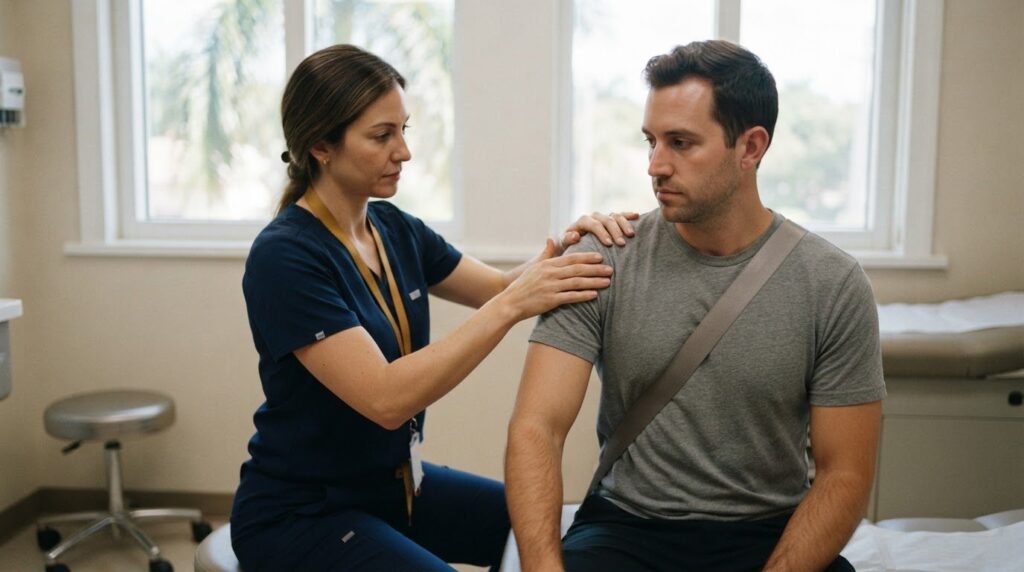

The first 14 days after a Florida crash can affect whether you qualify for PIP benefits. You must receive initial services and care within that period to be entitled to benefits, so getting treatment should not wait while you sort through claim paperwork.
It’s reasonable to want clear answers about what your policy may pay and which costs could remain yours. Florida PIP insurance explained in practical terms: coverage may include medical expenses and lost wages, subject to limits, deductibles, and an emergency medical condition determination.
Learn how these rules affect available benefits, when timing matters for a claim, and how premiums and deductibles shape out-of-pocket costs. A deductible can reduce the benefits available, while an emergency medical condition determination can affect the medical benefit limit. Understanding how these factors fit together can clarify what PIP may cover after a crash and when a denied or disputed claim may need attention.
Key Takeaways
- Learn how PIP medical coverage and wage-loss benefits are calculated, and why some expenses may remain unpaid.
- See how an emergency medical condition determination can affect the available medical benefit limit, according to the Florida Legislature.
- Understand how PIP claims may relate to liability and uninsured motorist claims after a crash.
- Find out how deductibles affect the benefits available and what can influence your PIP premium.
- Recognize when a disputed insurance claim or injuries from a car, truck, rideshare, or pedestrian accident may call for legal help.
What Does PIP Insurance Cover?
PIP in Florida may pay part of eligible, accident-related medical expenses, but coverage depends on the treatment, provider findings, and who was injured. Passengers, pedestrians, and bicyclists may also qualify in certain circumstances.
Eligible People Under PIP
For a crash in Florida, PIP may cover the policyholder, resident relatives, certain passengers who don’t own a vehicle, and people driving the insured car with permission. It can also cover pedestrians and bicyclists injured in a crash. That matters if you were struck while walking or riding, or hurt as a passenger in someone else’s vehicle. Coverage depends on the person’s relationship to the insured vehicle and the circumstances of the collision.
Eligible PIP Expenses
PIP medical benefits generally cover 80 percent of reasonable, accident-related medical expenses. That percentage doesn’t mean every bill is reimbursed at the same rate: reimbursement limits apply to different services. For most medical services, reimbursement is capped at 200 percent of the Medicare Part B allowable amount or the applicable participating-level amount, whichever is less. Hospital inpatient and outpatient services use a separate limit: 75 percent of usual and customary charges or the applicable Medicare rate, whichever is less.
Covered and Excluded Treatments
Eligible treatment must relate to injuries from the crash. PIP in Florida doesn’t cover massage therapy or acupuncture. Those exclusions matter when a treatment plan includes services beyond conventional medical care. A bill may also be reduced by reimbursement limits, even when the underlying service is accident-related. Keep bills and treatment records together so you can identify which services were provided and which charges the insurer disputes.
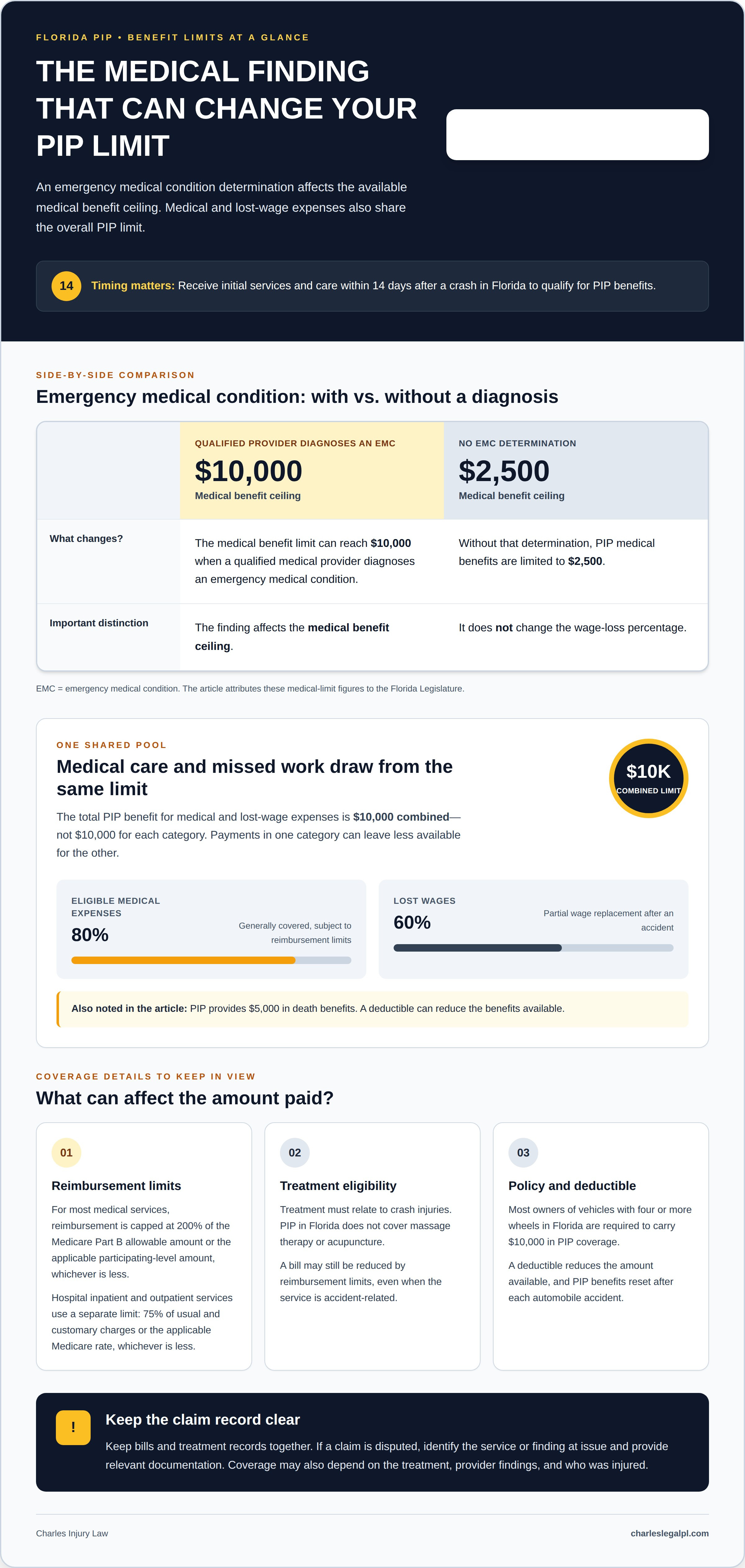
An emergency medical condition determination can change the medical benefit ceiling. According to the Florida Legislature, PIP medical coverage in Florida can reach $10,000 when a qualified medical provider diagnoses an emergency medical condition. Without that determination, PIP benefits are limited to $2,500, according to the Florida Legislature. In short, the distinction is whether a qualified provider diagnoses an emergency medical condition; that finding affects the available medical limit.
For a crash outside Florida, coverage is narrower. If the policyholder drives their own vehicle, PIP covers the policyholder and relatives who live in the policyholder’s home. This differs from coverage for a crash in Florida, which may include certain passengers, pedestrians, and bicyclists.
A dispute may concern whether treatment relates to the crash, whether someone qualifies, or whether an emergency medical condition exists. If an insurer suspects a false statement, preserve accurate medical records and bills. To challenge a denial, identify the disputed service or finding and provide relevant documentation.
What is PIP Insurance in Florida?
PIP in Florida is no-fault insurance that can pay eligible medical expenses and part of lost wages after a motor vehicle accident. For most owners of vehicles with four or more wheels in Florida, $10,000 in PIP coverage is required.
Medical and Income Benefits
PIP combines medical benefits with partial wage replacement, so an accident can affect both categories. According to the Florida Legislature, PIP in Florida pays 60 percent of lost wages resulting from an accident. Medical expenses and lost wages share the overall benefit limit rather than receiving separate full limits. A deductible can also reduce the amount available, so the policy’s benefit structure matters when bills and missed work accumulate.
Replacement Services and Death Benefits
Replacement services generally means help with tasks an injured person can’t manage, while lost wages means income missed from work. Don’t treat those terms as interchangeable when reviewing a PIP claim. PIP in Florida also provides $5,000 in death benefits. That benefit is separate in purpose from medical expenses and income replacement, and may apply after a crash results in a death.
Emergency Benefit Limits
An emergency medical condition finding affects the medical benefit ceiling, not the wage-loss percentage. According to the Florida Legislature, PIP benefits in Florida are limited to $2,500 if a doctor does not recognize an emergency medical condition. Medical expenses can therefore use up the available limit quickly, especially when treatment continues after an initial evaluation. The total PIP benefit for medical and lost-wage expenses is $10,000, not $10,000 for each category.
Required Benefits and Policy Limits
In Florida, owners of motor vehicles with four or more wheels are required to carry $10,000 of PIP insurance. That figure is the policy’s combined limit for medical and lost-wage expenses, subject to any deductible. PIP benefits reset after each automobile accident, so a later crash starts a separate benefit allocation. A permanent injury or expenses exceeding the available PIP limit may raise separate questions about pursuing a claim against a negligent driver.
For example, if medical bills and missed wages compete for the same policy limit, payments in one category can leave less available for the other. PIP generally pays first for accident-related medical expenses, while liability or uninsured motorist coverage may involve separate claims and eligibility rules. Understanding those distinctions helps prevent a coverage dispute from obscuring who may be responsible for remaining losses. For help assessing how an accident claim fits together, contact Personal Injury Attorney in Fort Lauderdale.
Emergency medical condition determinations
An emergency medical condition determination affects the medical benefit limit. Timing, examinations, and reimbursement rules can also shape a PIP claim. Keep the provider’s finding, any insurer-requested examination, and the billed services distinct when reviewing a dispute.
A qualified medical provider’s emergency medical condition diagnosis can raise the medical coverage ceiling. Without that diagnosis, PIP benefits in Florida are limited to $2,500. The finding does not mean every billed service will be reimbursed at its full charge. The insurer still applies coverage terms and medical reimbursement limits to eligible expenses.
The first treatment deadline is separate from the emergency determination. An injured person must receive initial services and care within 14 days after a motor vehicle accident to qualify for PIP benefits. A later diagnosis does not replace that initial-care requirement. For example, someone who waits beyond the deadline before seeking care may face an eligibility dispute, even if a provider later identifies an emergency medical condition.
Florida law also permits a PIP insurer to require an examination by a physician it selects under § 627.736(7). Attend scheduled examinations and keep appointment information. If an injured person fails to appear at two scheduled examinations, the insurer may presume that the refusal was unreasonable. That presumption can affect the claim, so promptly address scheduling conflicts rather than ignoring an examination notice.
Reimbursement schedules can reduce the amount paid even when treatment relates to the crash. For most medical services, reimbursement is capped at 200 percent of the Medicare Part B allowable amount or the applicable participating-level reimbursement, whichever is less. Hospital inpatient and outpatient services follow a separate calculation: 75 percent of usual and customary charges or the applicable Medicare rate, whichever is less. Review each bill against its service category.
The emergency medical condition test is not the same as the serious-injury threshold in Florida for suing an at-fault driver. According to the Florida Legislature, that threshold is set out in § 627.737. The distinction matters: an emergency finding affects PIP medical benefits, while the serious-injury threshold concerns stepping outside the no-fault system. One determination does not automatically establish the other.
When a claim is disputed, pinpoint the issue: treatment timing, the provider’s diagnosis, attendance at an insurer-required examination, or the reimbursement calculation. Keep appointment notices, medical records, and itemized bills together. If a fee schedule leaves a balance, compare the billed service with the insurer’s calculation. If the dispute involves a missed appointment, preserve the notice and any messages explaining the conflict.
Do I Have a Time Limit to File a PIP Claim?
The key early deadline in Florida concerns medical care: initial services and care must occur within 14 days after a motor vehicle accident for PIP benefits. That is different from submitting paperwork to the insurer. Report the crash promptly, ask how to open the claim, and keep the claim number and each communication together.
Notify your PIP insurer and identify the crash date, policy, and injured people. Provide requested claim information, medical bills, and treatment records. Keep copies of everything you submit and note the date. If a physician’s records are still being prepared, tell the adjuster that they will follow rather than leaving the request unanswered.
An auto insurer in Florida may take up to 60 days to investigate a PIP claim for possible falsehoods. The insurer must pay PIP damages within 30 days, even if it suspects a claim is false. An investigation does not erase the need to track bills, payment explanations, and outstanding requests. If the insurer disputes a charge, identify the specific bill or service at issue.
PIP generally pays first for accident-related medical expenses under § 627.736(4). A liability claim is different: it seeks recovery from a driver alleged to have caused the crash. A person may still pursue a claim against a negligent driver when medical bills or lost wages exceed $10,000, or when the person suffered a permanent injury. Keep those losses distinct from PIP payments.
Uninsured motorist coverage is separate from PIP and may provide another claim avenue. PIP concerns covered benefits under the insured’s policy, while an uninsured motorist claim concerns coverage under the applicable policy. Report the crash to the relevant insurer and preserve medical records, wage documentation, and communications. Opening a PIP claim doesn’t automatically open a liability or uninsured motorist claim.
Keep a clear record after a crash. Save the police report, insurer correspondence, itemized medical bills, and proof of missed work. Match each document to the date it was sent and the claim it concerns. If health insurance also receives a bill, track that separately from PIP to keep payment sources clear. A lawyer can review a denial, delayed payment, or disputed responsibility alongside the available bodily injury and policy records.
PIP premiums and deductibles
A PIP premium is the amount paid for coverage; a deductible is the portion of covered expenses applied before benefits pay. The deductible in Florida can be up to $1,000. A lower premium may come with a higher deductible, shifting more initial medical costs to you after an accident. Compare both figures, not just the payment for coverage.
That’s a broad estimate, not a price for every policy.
Work-loss coverage also affects the comparison. These figures illustrate the tradeoff between included benefits and the deductible. They aren’t interchangeable options: each amount corresponds to a specific coverage configuration.
The estimate methodology used six coverage levels, so one headline figure cannot represent every combination of benefits and deductible. To compare policies, consider the premium alongside the deductible and whether work-loss coverage is included. A lower price alone doesn’t show how much you might pay toward covered expenses after a crash.
For example, a $1,000 deductible means that amount may reduce what PIP pays toward covered expenses, subject to the policy terms. That can matter when medical costs arrive before any liability claim is resolved. PIP applies regardless of who caused the accident, but it doesn’t cover every loss or eliminate the need to assess other available coverage for damages.
Consider the financial tradeoff before choosing a deductible. A higher deductible reduces the listed premium estimates but leaves more of the initial cost with the insured. A lower deductible may reduce that immediate share while increasing the quoted premium. Neither option guarantees payment for every personal injury expense. PIP benefits remain subject to coverage limits and reimbursement rules.
If a deductible or PIP payment dispute is affecting your accident claim, discuss the claim with Charles Injury Law.
Personal Injury Attorney in Fort Lauderdale
Charles Injury Law helps people understand how PIP fits into a broader injury claim. If an insurer disputes benefits, delays payment, or leaves accident-related losses unpaid, a legal review can clarify the issues and available options. The firm represents people injured in car, truck, and rideshare accidents, along with pedestrians hurt while walking or bicycling.
PIP may not resolve every loss after a crash. When another driver may be responsible or damages remain unpaid, separate questions can arise about evidence, coverage, and accountability. Legal support can help clarify how those issues relate to your situation without conflating a PIP dispute with a separate injury claim.
To discuss your circumstances, contact Charles Injury Law. Call Now: (954) 390-2228 Available 24 Hours a Day, 7 Days a Week
Move Forward With a Clear Claim Strategy
Understanding PIP insurance in Florida can help distinguish a payment dispute from a disagreement about fault or unpaid losses. A focused review connects crash records, insurer communications, and claimed damages to the issues that need attention.
Charles Injury Law represents people injured in car, truck, and rideshare accidents. If you’re looking for a personal injury firm near me, attorneys for personal injuries, or an injury lawyer near me, the firm can assess your accident records. People also use terms like “attorneys personal injury,” “personal injury lawyer near me,” “lawyers for auto accidents,” and “auto accident lawyers near me” when seeking legal help. The right next step depends on the specific claim and records.
If you want guidance on your next step, contact Charles Injury Law. You can move forward with a clearer understanding of your options and a stronger focus on recovery.
Frequently Asked Questions
How Does Personal Injury Protection (PIP) Work in Florida?
PIP provides first-party benefits after a covered motor vehicle accident, regardless of fault. It may help pay eligible medical expenses and lost wages, subject to policy limits, deductibles, and reimbursement rules. A bill may relate to the crash but be reimbursed at a reduced rate under the applicable schedule. Keep explanations of benefits and provider invoices together to see which charges were paid and which remain disputed.
What if This Isn’t My First Accident?
A previous crash doesn’t use up benefits for a later, separate accident. PIP benefits in Florida reset after each automobile accident, giving the new claim its own benefit allocation. Keep medical records, bills, insurer letters, and claim numbers for each crash separate. If a provider’s record connects symptoms to an earlier collision, that may affect how the insurer evaluates which accident caused the treatment.
Are There PIP Death Benefits?
Yes. PIP in Florida provides $5,000 in death benefits. This benefit is distinct from payments for medical expenses or lost wages, and it does not describe every recovery that may be available after a fatal crash. For example, a family may have questions about both the PIP policy and a separate claim involving another party’s alleged negligence. The applicable policies and circumstances determine which issues need review.
Do I still need a lawyer if PIP is paying my bills?
Not necessarily. PIP payments don’t resolve every issue after a crash. A separate dispute may concern fault, losses beyond PIP, or an insurer’s decision to deny or reduce payment. Someone may still have unpaid damages while medical bills are being processed. This is general information, not legal advice. A lawyer can review the records and explain potential options for the specific situation.
Does PIP cover passengers?
Some passengers may qualify for PIP after a crash in Florida. Coverage may include certain passengers who don’t own a vehicle, depending on their circumstances and the policies involved. Identify the vehicle the passenger occupied and whether coverage may apply through a household policy. A passenger’s own vehicle ownership can affect which PIP coverage applies.
How Does PIP Coordinate with Health Insurance?
In Florida, PIP is generally the primary payer for accident-related medical expenses. Health insurance may become relevant if PIP doesn’t pay a bill in full, but payment depends on the policies and billing circumstances. Keep provider statements, PIP payment explanations, and health-plan notices together. If the same charge appears in more than one explanation, compare the dates and amounts before treating it as an unpaid balance.
What does PIP insurance in Florida cover?
PIP in Florida may cover eligible accident-related medical expenses, part of lost wages, and death benefits, subject to applicable limits and policy terms. It doesn’t necessarily pay every bill in full. Treatment type, provider reimbursement schedules, and the injured person’s eligibility can affect payment. Massage therapy and acupuncture aren’t covered under PIP in Florida, even when someone seeks them after a collision.
What are the minimum PIP coverage limits and deductibles in Florida?
Owners of motor vehicles with four or more wheels must carry $10,000 in PIP coverage in Florida. The policy may include a deductible of up to $1,000, which reduces the amount available for covered expenses. Review the declarations page to see the selected deductible and coverage. Remember that the $10,000 benefit limit applies to medical and lost-wage expenses together, rather than separately to each category.
Disclaimer
The information provided on this blog is for general informational purposes only and does not constitute legal advice. Viewing this content does not create an attorney-client relationship with the firm. You should not act or rely on any information contained herein without seeking legal advice from a qualified attorney regarding your individual situation.