



You may have to pay for rental-car damage upfront, but that does not automatically mean you are ultimately responsible for the loss. Who pays can depend on who caused the crash and whether personal auto insurance, credit-card coverage, or protection purchased through the rental company applies. A lawyer for a car accident involving a National Car Rental car can help sort through these overlapping claims.
It is understandable to worry about repair charges while also dealing with injuries, missed work, or damage to your own vehicle. Before accepting a bill as your responsibility, identify the available coverage and the parties who may be liable.
This article explains how rental-car damage and insurance claims may be handled, what injury compensation may include, and how a lawyer can help pursue rental costs and other losses after a crash in Miami or Fort Lauderdale. You’ll also learn what information can help clarify responsibility and when legal support may be useful.
Key Takeaways
- Rental-car damage may be covered by the at-fault driver’s insurance, your own policy, credit-card coverage, or protection purchased through the rental company.
- Before accepting responsibility for a rental-car bill, identify who caused the crash and review the policies that may apply.
- Responsibility may involve more than one driver; in some cases, a rental company or vehicle repair shop may also be relevant.
- An injury claim may include medical expenses, lost income, property damage, and compensation for pain and emotional effects.
- A lawyer can help pursue rental costs and injury damages. Call Now: (954) 390-2228 Available 24 Hours a Day, 7 Days a Week
Insurance coverage for rental car accidents
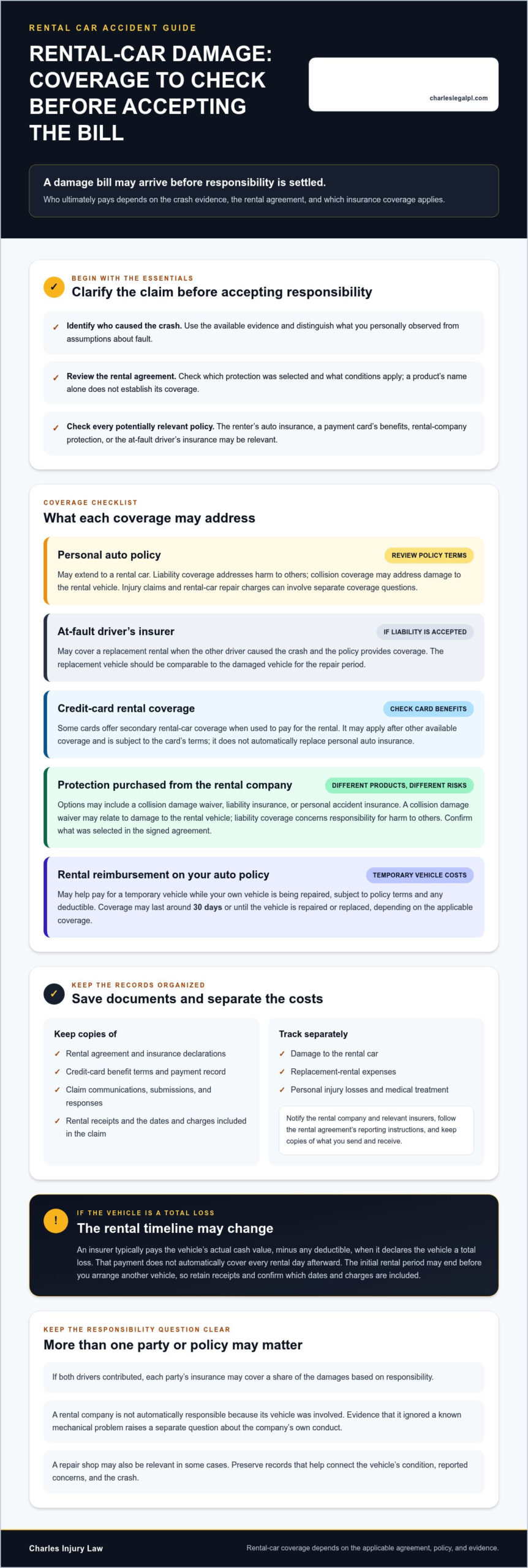
After a crash in a National Car Rental vehicle, available coverage depends on who caused the collision and which policies apply. The driver’s personal auto policy may extend to a rental car, but the details depend on its terms. Liability coverage addresses harm to others, while collision coverage may address damage to the rental vehicle. Injury claims and rental-car repair charges can therefore raise separate coverage questions.
Start with the rental agreement and insurance documents. Identify any protection purchased from the rental company, then review the renter’s auto policy and payment card benefits. Some credit cards offer secondary rental-car coverage when used to pay for the rental. This coverage may apply after other available coverage, subject to the card’s terms, and does not automatically replace personal auto insurance.
Rental companies may offer a collision damage waiver, liability insurance, or personal accident insurance. These options address different risks, so a product’s name alone does not establish what it covers. For example, a collision damage waiver may relate to damage to the rental vehicle, while liability coverage concerns responsibility for harm to others. Check the signed agreement to see what was selected and what conditions apply.
If your own vehicle is being repaired, rental reimbursement coverage on your auto policy may help pay for a temporary vehicle, subject to the policy’s terms and any deductible. When another driver caused the crash, that driver’s insurer may cover a replacement rental if it accepts liability and the policy provides coverage. The replacement vehicle should be comparable to the damaged vehicle for the repair period. Rental coverage may last around 30 days or until the vehicle is repaired or replaced, depending on the applicable coverage.
A total loss can change the repair timeline. An insurer typically pays the vehicle’s actual cash value, minus any deductible, when it declares the vehicle a total loss. That payment does not automatically cover every rental day afterward. The initial rental period may end before you arrange another vehicle, so keep rental receipts and confirm the dates and charges included in your claim.
- Save the rental agreement, insurance declarations, credit-card benefit terms, and payment record.
- Notify the rental company and relevant insurers, and keep copies of claim communications.
- Separate rental-car damage, replacement-rental expenses, and personal injury losses in your records.
These records help clarify which policy may respond and what expenses remain disputed. If you were injured, document medical treatment separately from vehicle-related bills. Call Now: (954) 390-2228 Available 24 Hours a Day, 7 Days a Week
Do I have to pay for damage to a rental car after an accident?
You may receive a rental-car damage bill before responsibility is resolved. Whether you ultimately bear that loss depends on the crash evidence, the rental agreement, and the insurance coverage that applies.
Negligent Rental Vehicle Liability
A rental company may be responsible if its own negligence contributed to the collision. For example, evidence that the company ignored a known mechanical problem raises a different issue from a crash caused only by a driver’s mistake. Look for records linking the vehicle’s condition to the accident, including maintenance documents, inspection information, and reports made before the rental.
In Florida, focus on what the company knew, what it did, and how its conduct relates to the crash. Photographs of a defect, repair records, and witness accounts can help show that connection. Keep the rental paperwork and note any vehicle problems you observed. Ownership alone does not establish responsibility.
Rental Company Liability in Florida
A rental company’s responsibility depends on evidence of its own conduct, not simply its name on the vehicle. A claim involving an ignored safety issue differs from one based only on the renter’s driving. Gather information about the vehicle’s condition and any prior reports, then compare it with the crash details and available repair records.
For an accident in Florida, focus on facts connecting the company to the harm. Identify who inspected or serviced the vehicle, what concerns were reported, and whether records show action or inaction. Those details help distinguish a potential company-negligence claim from one arising solely from a driver’s conduct.
Renter Actions and Company Liability
The renter’s actions and the rental company’s actions are separate issues. If the renter caused the crash, the renter’s personal insurance or optional rental-company coverage may apply. The company is not automatically responsible just because its vehicle was involved. Evidence of company negligence, such as ignoring a known mechanical hazard, raises a separate question.
Identify the driver, the cause of the collision, and the policies that may cover the loss. If both drivers contributed, each party’s insurance may cover a share of the damages based on responsibility. Keep statements about fault accurate and limited to what you personally observed.
Rental agreements commonly require prompt accident reporting. Notify the rental company and relevant insurer, follow the instructions in your agreement, and keep copies of all submissions and responses. To file a claim with National Car Rental or its insurance administrator, use the claim contact information in your rental documents, provide the requested accident details, and save the claim reference and correspondence.
To assess a Florida car accident lawyer’s qualifications, ask about authorization to practice in Florida and experience with rental-car injury claims. Personal Injury Attorney in Fort Lauderdale handles injury matters on a contingency-fee basis, with no attorney’s fees unless compensation is recovered.
After a National Car Rental crash, look for a Florida attorney who handles car-accident injury claims and can discuss the evidence and insurance issues involved. Bring the rental agreement, accident records, and insurer communications to the discussion.
Identifying liable parties and insurance policies
After a National Car Rental crash, identify each driver, vehicle, and insurance policy involved. Responsibility may rest with a driver or, in limited circumstances, another party.
At-Fault Driver Coverage
You may be able to seek rental-expense coverage through the other driver’s insurer, depending on the circumstances. Keep the rental agreement, receipts, and claim correspondence together. These records show which vehicle you rented, the dates, and the charges you are asking the insurer to consider. The insurer’s liability decision matters.
If the rental-car driver caused the collision, that driver’s personal auto policy or optional rental-company coverage may apply. Identify the named insured and vehicle listed in each policy. Separate claims for rental costs from claims for injuries or damage to other property. Different coverage terms may govern each loss, even when one collision caused them.
Shared Fault Responsibility
Sometimes both drivers contribute to a crash. In that situation, each party’s insurance may cover a share of the damages based on that party’s responsibility. The drivers’ accounts, vehicle damage, photographs, and witness details can help clarify how the collision happened.
Build a clear timeline from the evidence. Note each vehicle’s direction, the point of impact, and any statements made at the scene. Do not treat an insurer’s early view of fault as the whole story. Compare it with available records before deciding which party may be liable for rental costs or injury compensation.
Personal auto insurance may extend to a rental vehicle, depending on the renter’s policy. Review the declarations and coverage terms for liability and damage to the rental car. A credit card used to pay for the rental may provide secondary coverage, subject to its terms. Optional protection from the rental company may also apply. The documents can show which policies may respond.
Drivers are not the only parties to consider. Potentially responsible parties may include another driver, the renter, the rental company, or the rental company’s automotive shop. A vehicle defect may raise a question about the manufacturer. In rare cases involving a roadway issue or environmental hazard, a government entity may be involved. Evidence must connect the party’s conduct or product to the crash.
Organize the claim by party and type of loss. List each driver’s insurer, the rental company, and any shop that serviced the vehicle. Gather the rental contract, repair or inspection records, photographs, witness contacts, and receipts. This creates a practical map of the coverage and evidence involved, rather than relying on assumptions based only on whose name appears on the rental car.
Economic and non-economic damages
Crash-related damages may include measurable expenses and personal effects that do not appear on receipts. Organize medical, employment, and vehicle records to show how the collision changed daily life.
Economic Accident Damages
Economic losses are financial costs linked to the crash. They may include emergency treatment, hospital fees, surgery, rehabilitation, future medical care, and income lost during recovery. Someone unable to return to the same work may also face reduced earning capacity. Keep bills, treatment records, pay statements, and employer communications together to document each loss.
Keep property damage in a separate record. Save estimates and invoices for vehicle repairs or replacement, along with receipts for accident-related expenses. If you paid rental costs while your vehicle was unavailable, preserve the rental agreement and payment records. Auto insurance may address some vehicle losses, while an injury claim may involve medical expenses and lost income. Do not assume one payment resolves every category.
Build a timeline linking each expense to the collision. Note when treatment began, when you missed work, and which bills followed. A clear sequence helps explain why an expense arose and whether it relates to the accident. Attorneys reviewing damages may compare the timeline with medical records, wage information, repair documents, and insurance communications.
Document future losses carefully as well. Ongoing treatment, rehabilitation needs, or limits on returning to previous duties can affect the overall picture. Keep care records and work restrictions up to date. If a vehicle is declared a total loss, retain the insurer’s valuation and related correspondence alongside repair or replacement records.
Non-Economic and Wrongful Death Damages
Not every loss has a price printed on a bill. Accident-related claims may seek compensation for pain and suffering, emotional distress, physical disability, lasting disfigurement, and loss of enjoyment of life. A lasting injury, for example, may interfere with ordinary activities or cause ongoing emotional strain. A dated symptom journal can help record changes over time.
A fatal collision raises different concerns for surviving family members. The crash may have financial consequences as well as profound emotional effects. Preserve relevant medical records, insurance correspondence, and documents showing losses connected to the event. Do not treat a vehicle payment or one insurance decision as a full accounting of every consequence.
Non-economic losses need a clear explanation, not just a label. Describe specific changes, such as difficulty sleeping, reduced mobility, or withdrawing from activities you previously enjoyed. Treatment notes and personal records can help show when those effects began and how they continued. Keep descriptions accurate and consistent with the available records.
When injuries involve future care or reduced earning capacity, distinguish those issues from past bills and missed pay. For wrongful death, an attorney can explain how the available evidence relates to the family’s losses and claim. A complete damages file helps identify what the responsible party or insurer has addressed and what remains disputed.
How a car accident lawyer may help with rental costs
A lawyer for a car accident involving a National Car Rental car can organize rental expenses alongside injury and vehicle claims. When separate insurers are involved, the key tasks are identifying who caused the crash, matching each loss to potential coverage, and supporting the amount claimed with records.
First, counsel can map the people and policies involved by identifying the renter, other drivers, relevant insurers, and any rental-company coverage. If another driver caused the collision, their insurer may cover rental costs if it accepts liability and the policy includes that coverage. If responsibility is disputed, a lawyer can compare driver accounts, photographs, witness information, and vehicle damage to support the liability claim.
Rental expenses need separate documentation. Keep the rental agreement, invoices, payment records, and communications about extensions or return dates. A lawyer can compare those records with repair information and vehicle availability. If the damaged vehicle is declared a total loss, records can show when the initial rental ended and which later charges remain in dispute.
Insurers may examine whether rental expenses relate to the crash, how long the vehicle was needed, and whether the charges match the documents. A lawyer can present the timeline clearly, respond to questions, and challenge decisions that overlook relevant evidence. Repair records and dated rental invoices, for example, can help explain why a replacement vehicle remained necessary during repairs.
Injuries create another layer of claims. Medical bills, treatment records, lost-income documents, and rental receipts describe different losses, even when one collision caused them. A lawyer can keep the injury claim distinct from the rental-cost demand, coordinate information with the relevant insurer, and avoid treating a vehicle payment as resolution of every loss.
A lawyer for a car accident involving a National Car Rental car can also review whether the rental agreement identifies optional coverage, whether the renter’s personal auto policy applies, and whether a credit-card benefit may provide secondary coverage. These documents can affect which insurer receives a demand and what records support it.
- Gather the rental contract, invoices, payment proof, repair records, and insurer letters.
- Write a timeline linking the crash, vehicle downtime, rental dates, and each expense.
- Keep medical and wage documents separate from rental-car records.
Clear records give the claim a stronger factual foundation. If you need help pursuing rental costs and injury damages after a car accident, discuss your car accident claim with a lawyer.
Personal Injury Attorney in Fort Lauderdale: Injuries suffered from Car Accidents
Personal Injury Attorney in Fort Lauderdale represents people injured in car accidents, including crashes involving rental vehicles. If a collision caused injuries, the firm can help pursue a personal injury claim and address related insurance issues.
People looking for legal support may search phrases such as “personal injury firm near me,” “injury lawyer near me,” or “personal injury lawyer near me.” “Attorneys for personal injuries,” “attorneys personal injury,” “lawyers for auto accidents,” and “auto accident lawyers near me” are also searches for help with an injury claim. Focus on finding counsel whose work relates to the crash and resulting injuries.
The firm also represents people injured in truck, semi, and tractor-trailer accidents, Uber and Lyft rideshare accidents, and pedestrian incidents. To discuss a car accident injury claim, contact a car accident attorney.
Take the Next Step Toward Protecting Your Claim
A rental-car collision can leave you managing recovery while insurers and other parties dispute responsibility. You do not have to handle those conversations alone. A lawyer for a car accident involving a National Car Rental car can assess your injury claim and pursue accountability while you focus on what comes next.
Personal Injury Attorney in Fort Lauderdale handles injuries suffered in car accidents, truck, semi, and tractor-trailer accidents, and Uber and Lyft rideshare accidents. If your crash caused injuries and you need help understanding your options, take the next step and share what happened.
Contact Personal Injury Attorney in Fort Lauderdale to discuss your situation and the support available for your claim. A clear conversation can help you move forward with greater confidence and keep your attention on recovery.
Frequently Asked Questions
Does the At-Fault Driver Pay for the Rental Car?
The at-fault driver’s insurer may cover rental expenses if it accepts responsibility and the policy applies. If you paid the rental company yourself, keep the invoice and proof of payment. A receipt showing rental dates, for example, can help explain which charges followed the crash. The insurer’s position, available coverage, and records supporting the expense all affect whether reimbursement is available.
Who is liable when a rental car is involved in an accident in the United States?
Liability depends on who caused the collision and whether another party’s conduct contributed. A driver may be responsible, while evidence of a vehicle defect or negligent maintenance may raise questions about another party. A mechanical failure, for example, differs from a crash caused by a driver’s unsafe maneuver. Identify the drivers, vehicle condition, and available records before deciding who may be liable.
What insurance coverage applies when a rental car driver causes an accident?
The rental driver’s personal auto policy or optional rental-company coverage may apply, depending on the policy terms and rental agreement. A credit card used to pay for the rental may also provide secondary coverage under its benefits. Distinguish protection for rental-car damage from coverage for injuries or damage to others. Reviewing the documents can help identify which insurer should receive each part of a claim.
Can a rental car company be held liable for a driver’s accident under federal law?
For a Florida accident, a rental company’s ownership of the vehicle alone does not establish that it caused the crash. The key question is whether evidence shows that the company’s own negligence contributed, such as ignoring a known mechanical hazard. That differs from a claim based only on a renter’s careless driving. Inspection records, maintenance documents, and reports of vehicle problems can help clarify the company’s role.
What should I do after an accident involving a National Car Rental car?
Seek medical attention, report the collision to law enforcement, and notify National Car Rental and the relevant insurers. Photograph the vehicles and scene, and collect contact details for witnesses and other drivers. Keep copies of the rental agreement and all claim communications. Describe what you observed and avoid speculating about fault before the evidence is reviewed.
What damages can I recover after a rental car accident?
A claim may seek medical expenses, future care, lost income, reduced earning capacity, and property damage. It may also include non-economic losses, such as pain, emotional distress, or reduced enjoyment of daily activities. Keep records showing how the collision affected you, including treatment documents, missed-work information, and repair records. The evidence helps explain the losses claimed and their connection to the crash.
What evidence should I gather after a rental car accident?
Gather photographs of vehicle damage and the scene, witness contact details, and information exchanged with the other driver. Preserve the rental agreement, receipts, repair documents, and insurer correspondence. If you noticed a vehicle problem before the crash, write down what happened and when. Medical records and employer documents can support injury and income-loss claims. Keep digital copies to keep the records organized and accessible.
What is the average cost or contingency fee for a car accident lawyer?
The firm handles injury matters on a contingency-fee basis, with no attorney’s fees unless compensation is recovered. The fee terms are set out in the representation agreement.
Disclaimer
The information provided on this blog is for general informational purposes only and does not constitute legal advice. Viewing this content does not create an attorney-client relationship with the firm. You should not act or rely on any information contained herein without seeking legal advice from a qualified attorney regarding your individual situation.