

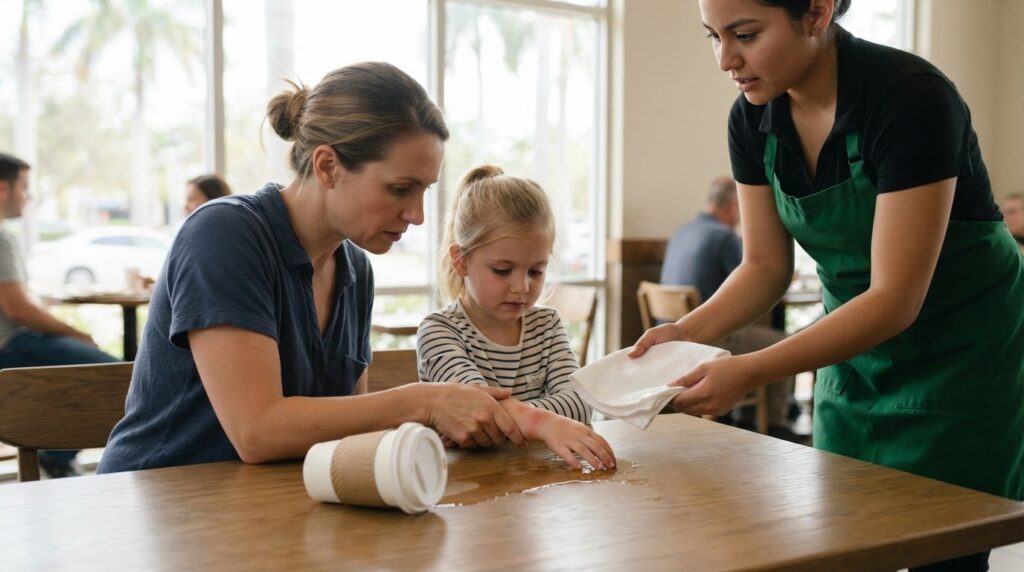

A child burned by Starbucks tea may have a claim if evidence shows that negligence caused the injury. Seek medical care promptly and preserve details about the incident, drink, and child’s injuries. An attorney can investigate what happened and explain the available options. If you’re looking for a lawyer for injury at Starbucks, the key is finding someone who can examine the evidence and clearly discuss your next steps.
This article explains how attorneys investigate Starbucks hazards, evaluate negligence, and handle slip-and-fall claims on a contingency-fee basis. You’ll learn what evidence may matter and what steps can help protect a claim. Whether you’re comparing a personal injury lawyer near me or attorneys personal injury practices, look for clear guidance on liability and case preparation. The same practical approach applies when considering lawyers for auto accidents or auto accident lawyers near me: understand how the attorney will assess the facts and guide your next decisions.
Key Takeaways
- Surveillance footage, witness accounts, and injury records can help show how a fall happened and who may be responsible.
- Spills, leaks, slippery floors, and unsafe walkways can create hazards that deserve close investigation.
- Negligence claims turn on evidence connecting an unsafe condition and the business’s response to the injury.
- Contingency-fee representation means legal fees are tied to the case outcome; understand the agreement before proceeding.
- Prompt medical care and preserving details about the incident can help protect both recovery and a potential claim.
How attorneys investigate Starbucks slip-and-fall claims
An investigation connects the hazard, the store’s response, and the injury. Evidence can clarify liability and support or challenge a personal injury claim.
Premises Liability for Injury Claims
Premises liability concerns injuries connected to unsafe property conditions. At a Starbucks, an attorney examines what caused the fall, where it happened, and whether the business knew or reasonably should have known about the hazard. A spilled drink, leak, or damaged walkway may call for different evidence. The central issue is how the condition and the business’s response relate to the injury.
Investigators may review surveillance footage, interview witnesses, and compare accounts with photographs and medical records. For example, a customer who fell beside a drink spill may have evidence showing the spill’s location and the resulting injury. Florida has a two-year deadline for personal injury claims, according to the Florida Legislature. The incident date should be recorded accurately when assessing next steps.
Evidence may support a claim when it connects an unsafe condition and the business’s negligence to the injury. A fall alone does not establish that connection. An attorney can compare witness accounts, store records, and available footage to evaluate how the hazard arose and what happened before the fall. Evidence that differs from an initial account also deserves careful review.
Reporting an Injury and Preserving Evidence
Report the incident to a Starbucks manager as soon as practical. Describe where the hazard was, what happened, and what injury followed. Ask that the incident be documented and keep any report or related communications. If witnesses saw the fall, note their names and contact information. Photograph the area and visible injuries when it is safe to do so.
Surveillance footage may help show what happened before and after a fall. An attorney can seek to preserve relevant footage and store records promptly. Keep medical records, treatment instructions, receipts, and photographs together. These materials can help establish a timeline and document the injury’s effects without relying only on memory.
If a child was burned by tea or hurt in a fall, prioritize medical care and keep records describing symptoms and treatment. A parent or guardian can report the incident and provide witness information. Tourists should keep copies of incident and treatment documents, along with reliable contact details for follow-up after leaving Miami or Fort Lauderdale. Being away from the store does not lessen the importance of preserving claim information.
If Starbucks says you contributed to the incident, don’t assume that statement settles responsibility. An attorney can assess the allegation against footage, witness accounts, the hazard’s location, and the circumstances of the fall. Each account should be compared with the available evidence. A careful review can clarify disputed facts and identify what remains unresolved.
For injuries in Miami, a review of Florida personal injury claims can help identify relevant issues and organize the evidence around the incident. Keep records of communications and treatment as the investigation develops.
Common spill, flooring, and walkway hazards at Starbucks
A spilled drink can cause burns or make a walking surface slippery. Investigators look at how the spill happened, where it spread, and whether the flooring or walkway added danger.
Hot Tea Spills and Burns
Tea spills can happen when a cup tips during pickup, a lid shifts, or a drink spills while someone carries it. The temperature matters: Starbucks tea water is described as ranging from 180°F to 200°F. Hot liquid can cause serious burns, especially when clothing holds it against the skin. The cup, lid, clothing, and injury records can help clarify what happened.
Hot Coffee Spill Burns
Hot coffee may spill as a customer takes a drink at the counter, carries it through the store, or receives it at a drive-through. One reported incident involved a venti hot coffee lid coming off during drive-through pickup, spilling onto a customer’s hand and sweatshirt. Starbucks coffee is often served between 170°F and 190°F. Investigators can examine the lid, cup, spill pattern, and reported burns.
Flooring and Walkway Hazards
A drink spilled near a pickup counter can spread into a walking path. Leaks, wet floors, uneven surfaces, and obstacles may also affect how customers move through a store. An investigator considers the hazard’s location, visibility, and whether it contributed to the fall. Photos can show whether a mat, furniture, or nearby queue narrowed the route around the spill.
Not every spill begins with a customer dropping a cup. A drink may slosh during handoff, spill when a lid is loose, or fall when a person navigates a crowded counter area. For hot drinks, the temperature and how long liquid contacts the skin help explain the injury. Starbucks coffee or tea requested extra hot may be served around 190 degrees Fahrenheit.
Spill evidence can change quickly as employees clean the floor or customers walk through the area. Photos of the surface, surrounding objects, warning signs, and cup or lid can help preserve details. A settlement assessment may consider the injury, treatment, recovery, and evidence connecting the spill or flooring condition to the harm. A prompt review can help identify useful evidence. Discuss a Starbucks spill injury with an attorney.
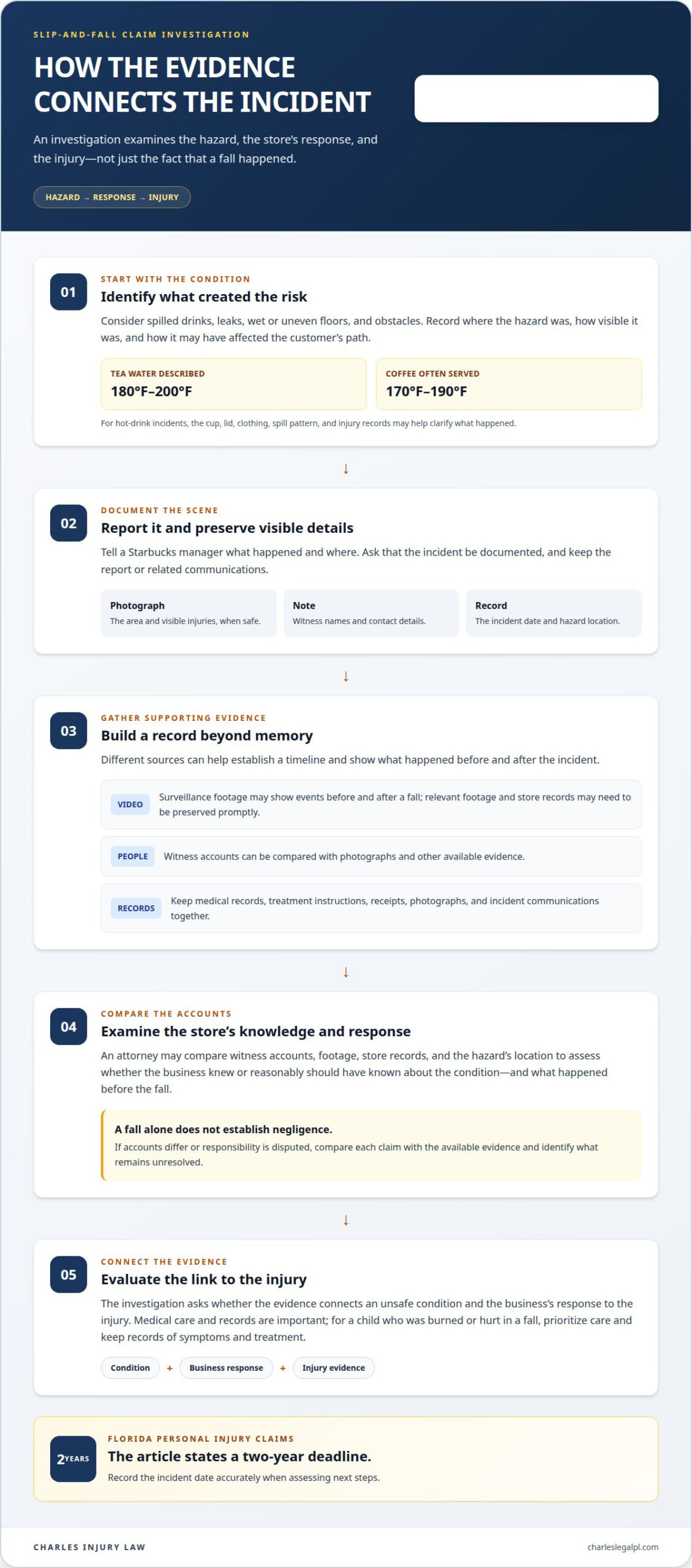
Negligence and hazardous conditions
A Starbucks accident claim turns on the condition, the business’s response, and the injury. Evidence must connect those facts to negligence, not merely show that a fall occurred.
Slip-and-Fall Hazards
A spilled drink near the pickup counter can make a walking route dangerous. A leak near a doorway, a freshly mopped floor, or a raised floor edge can also contribute to a fall. Investigators examine where the hazard was, how customers moved through the area, and whether a warning sign or other response appeared.
For example, a customer might slip beside a spill while carrying Starbucks coffee. The spill’s location, footwear, floor surface, and surrounding obstacles can help explain how the incident unfolded. Photos or video may also show whether the hazard affected a visible route or was outside the customer’s path.
These details matter because a fall alone doesn’t establish negligence. The evidence should help explain how the condition arose, whether the business knew or reasonably should have known about it, and how it caused harm. The store’s response, such as cleaning the spill or placing a warning sign, can help establish the sequence of events.
Proof in an Injury Claim
To support a claim, evidence must connect a dangerous condition and the business’s negligence to the injury. It should also document the harm. For instance, a witness may describe seeing a spill before the fall, while medical records document the resulting injury and treatment.
An attorney can compare the customer’s account with available surveillance footage, witness statements, incident reports, and photographs. The timeline matters: footage may show when a drink spilled, whether employees passed the area, and when someone responded. These details can help test differing accounts and preserve evidence that might otherwise be overlooked.
Common Starbucks accident hazards include drink spills, leaks, wet floors, and unsafe walkways. Each calls for a focused investigation. A report describing a wet floor is more useful when paired with its exact location, nearby signs, witness observations, and the customer’s route. Evidence of a warning or cleanup also helps explain what happened before the fall.
If Starbucks argues that a customer contributed to the incident, assess the allegation against the evidence. Investigators can examine where the customer walked, what was visible, and whether an obstruction or spill changed the route. A customer’s actions don’t eliminate the need to examine the condition and the store’s response. The full record helps clarify how responsibility should be evaluated.
Negligence is not established by a label or accusation. It requires a clear account supported by evidence: the hazard, the response, the fall, and the resulting injury. When those pieces align, they give the claim a stronger factual foundation.
Contingency-fee representation
Personal Injury Attorney in Fort Lauderdale handles personal injury cases on a contingency-fee basis, with no fees unless the firm recovers compensation. For someone hurt in a Starbucks slip and fall, this means no upfront attorney’s fees. The fee arrangement doesn’t prove negligence or guarantee compensation. Liability and the evidence still determine whether a claim can succeed.
Before signing, read the fee agreement carefully. Identify how it defines a recovery, when the fee becomes payable, and how it treats case expenses. Ask for an explanation of any term you don’t understand. A clear written agreement helps you understand the attorney’s fee and any other financial responsibilities.
Contingency-fee representation can help make legal assistance accessible when an injury disrupts work or requires medical care. For example, someone with a fractured wrist after a fall may face treatment needs and lost income while the claim is reviewed. The attorney investigates liability, organizes evidence, and presents the claimed losses. The fee arrangement doesn’t change the need to document the injury and its effects.
A serious injury claim needs more than a description of the fall. Medical records, treatment details, missed work, and evidence about the Starbucks hazard can help show the losses involved. The attorney can assess whether the evidence connects the dangerous condition to the injury and supports a request for compensation. The extent of recovery and any lasting effects also matter when evaluating damages.
Ask how settlement offers will be reviewed. You should understand the proposed amount, the losses it addresses, and what accepting it would mean for the claim. An attorney can explain the evidence supporting liability and the strengths or gaps in the case. A rushed decision may overlook treatment needs or ongoing effects.
A free consultation concerns the cost of an initial meeting, not the terms of contingency representation. Review the fee arrangement in writing before agreeing to legal work. Discuss how communication will happen, what documents the attorney needs, and how settlement offers will be assessed. These steps can prevent confusion as an injury claim moves forward.
Contingency fees don’t remove the importance of choosing representation carefully. Look for clear answers about the fee agreement, investigation plan, and how the attorney will evaluate a Starbucks slip-and-fall claim. If the facts show that a hazardous condition caused injury, focused advocacy can help pursue accountability. If the evidence doesn’t establish liability or damages, the claim may face serious challenges.
Legal help after a Starbucks slip-and-fall injury
After a Starbucks fall, legal help should address liability, documented harm, and practical next steps. A focused review can help you understand what information matters and how to prepare for decisions about a claim.
Comparing Injury Lawyers
Compare attorneys by their experience with commercial slip-and-fall claims and how they investigate disputed facts. Ask how they assess property conditions, organize medical documentation, and explain settlement options. A useful answer should address your situation, such as a fall near a busy pickup counter or an injury during a visit to Miami. Ask how you’ll communicate with the attorney and receive updates.
Look for a lawyer who explains a claim’s strengths and challenges without promising a result. Ask how settlement offers are discussed and what the written fee agreement covers. A lawyer for injury at Starbucks should explain how the evidence will shape the case assessment, including which records may still be needed. Clear answers help you compare the proposed approach and working relationship.
Lawyer Types for Starbucks Injuries
A personal injury attorney who handles premises liability claims is the right type of lawyer to consult about a Starbucks fall. This practice addresses injuries connected to property conditions, including spills, leaks, and unsafe walkways. The attorney evaluates how the condition and the business’s response relate to the injury. For a child’s injury, the review can include treatment records and information from a parent or guardian.
Legal help can turn an account of an incident into an organized claim. An attorney may gather treatment records, wage information, and other documentation of losses. For example, a wrist injury could affect someone’s work duties as well as require medical care. The claim should describe those effects and connect them to the incident with supporting records.
Before considering a settlement, understand what the proposed resolution covers. Medical expenses, lost income, future care, and effects on ordinary activities can all matter to the claim’s evaluation. Accepting an agreement may resolve the claim, so understand its terms before deciding. If liability or damages remain disputed, a lawsuit may become part of the process. The evidence and unresolved issues shape that decision.
If you’ve returned home, explain how to reach you and organize records digitally. A lawyer for injury at Starbucks can discuss the claim, identify information that may need follow-up, and help coordinate communications. Keep treatment documents and incident-related correspondence together. That preparation can make your first case discussion more focused, whether you live in Fort Lauderdale or elsewhere in Florida.
In Florida, premises-liability representation should focus on the specific condition and resulting injury. Ask how the attorney will evaluate disputed facts and explain any settlement proposal. If you were hurt in a Starbucks fall, contact an attorney about your slip-and-fall claim to discuss your circumstances and possible next steps.
Personal Injury Attorney in Fort Lauderdale
Charles Injury Law represents people injured in car, truck, and rideshare accidents, as well as pedestrians. After a Starbucks incident, the next step is to identify what happened, document the injury, and determine which legal issues the evidence raises. Charles Injury Law prepares cases for trial and uses a litigation-driven approach to assess claims. Contact the firm to discuss your situation and learn whether it handles the claim.
If you were also injured in a vehicle accident or as a pedestrian, Charles Injury Law handles those claims. Contact the firm to discuss your situation.
Take the Next Step Toward Accountability
Deciding what to do after an injury can feel difficult, especially while treatment and daily responsibilities compete for attention. A lawyer for injury at Starbucks can help you understand your options and make an informed choice about moving forward. You deserve clear guidance, not pressure.
Use your next conversation to raise the questions that matter most to you, including how the legal process may affect your priorities and decisions. A focused discussion can help turn uncertainty into a practical next step.
Contact an attorney to discuss your Starbucks injury claim. You can decide what to do after you understand your options. Your concerns deserve to be heard.
Call Now: (954) 390-2228 Available 24 Hours a Day, 7 Days a Week
Frequently Asked Questions
Do tourists have rights if burned?
Yes. A tourist injured by hot tea or coffee in Florida may have a claim if the evidence supports negligence and injury. Being away from home doesn’t prevent someone from documenting medical care, keeping receipts, or reporting the incident. If you’ve returned home, preserve relevant records and provide reliable contact details so communications about treatment and the incident can continue.
How long do I have to file?
Florida has a two-year deadline for personal injury claims, according to the Florida Legislature. Don’t wait until treatment ends to ask how that deadline applies to your situation. For example, a visitor who returns home after an injury can still organize medical records and incident documents while seeking guidance about the claim. Keep the date of the incident readily available.
How much is a Starbucks coffee burn case worth?
There’s no single value that applies to every coffee-burn claim. The assessment can depend on the burn’s severity, treatment, recovery, lasting effects, and evidence connecting the injury to the incident. For example, records showing follow-up care and missed work describe different losses than a brief clinic visit. Medical documentation and receipts help support the losses being considered.
How do I find a local premises liability lawyer for a Starbucks injury?
Look for a Florida personal injury attorney who handles premises-liability injuries and can explain how the facts of your incident will be investigated. Ask who will communicate with you, how evidence will be preserved, and how settlement proposals will be reviewed. If the injury happened in Miami or Fort Lauderdale, Charles Injury Law can discuss the Florida claim and your next steps.
What should I do immediately after being injured at Starbucks?
Get medical care first, then report the incident to a manager and describe what happened. Keep any incident report, medical paperwork, receipts, and packaging connected to the drink. Photograph visible injuries and relevant items if it’s safe to do so. Note witness names, too. Prompt legal help can address the preservation of relevant store footage and records.
What is the deadline to file a personal injury claim in my state?
If your injury occurred in Florida, personal injury claims generally have a two-year filing deadline. That deadline matters even if you’re a tourist or expect to recover fully. Record the incident date and keep documents together, including treatment records and communications about the event. An attorney can explain how the deadline relates to your circumstances.
How much is a Starbucks injury settlement typically worth?
A typical settlement amount can’t be stated reliably for every Starbucks injury claim. The case value depends on what happened, the injury’s severity, expected recovery, and supported losses. Economic losses may include medical expenses or lost wages; noneconomic losses may also be considered. A documented course of treatment and clear records of work impacts give a more specific picture than a general estimate.
Do personal injury lawyers charge upfront or work on contingency?
Charles Injury Law handles personal injury cases on a contingency-fee basis, with no attorney’s fees unless compensation is recovered. Before representation begins, review the written agreement and ask how it addresses case expenses and the fee after recovery. This information is general and isn’t legal advice. The agreement explains the terms for your specific case.
Disclaimer
The information provided on this blog is for general informational purposes only and does not constitute legal advice. Viewing this content does not create an attorney-client relationship with the firm. You should not act or rely on any information contained herein without seeking legal advice from a qualified attorney regarding your individual situation.