



Florida law may allow you to seek emotional distress damages after a car accident, usually as part of a claim involving physical injury. The impact rule generally requires physical contact or injury connected to the crash, although exceptions may apply. Suing for emotional distress after a car accident in Florida without physical injuries can be difficult, but may be possible in limited circumstances.
The crash may be over, but anxiety, sleep problems, or other emotional effects can continue to disrupt daily life. If you’re weighing options for a personal injury firm near me, attorneys for personal injuries, or attorneys personal injury, focus on finding guidance that addresses the facts of your accident and its effects.
This article explains how Florida’s impact rule affects emotional distress claims, when an exception may apply, and what records can help support your case. Whether you’re considering an injury lawyer near me, a personal injury lawyer near me, lawyers for auto accidents, or auto accident lawyers near me, you’ll learn which damages may be available and how evidence can shape a claim. Clear information can help you understand your options and decide what to do next.
Key Takeaways
- Emotional distress may be part of a car accident claim, but Florida’s impact rule can make physical contact or injury an important factor.
- Exceptions may apply in limited situations, including certain cases involving a close family member’s severe injury or death.
- Treatment records, witness accounts, and notes about changes to daily life can help document emotional harm.
- Potential damages may include emotional suffering and related treatment costs, depending on the evidence and circumstances of the claim.
- Learn how the law applies to your situation and what evidence may support your claim before deciding your next steps.
Can You Sue for Emotional Distress in Florida?
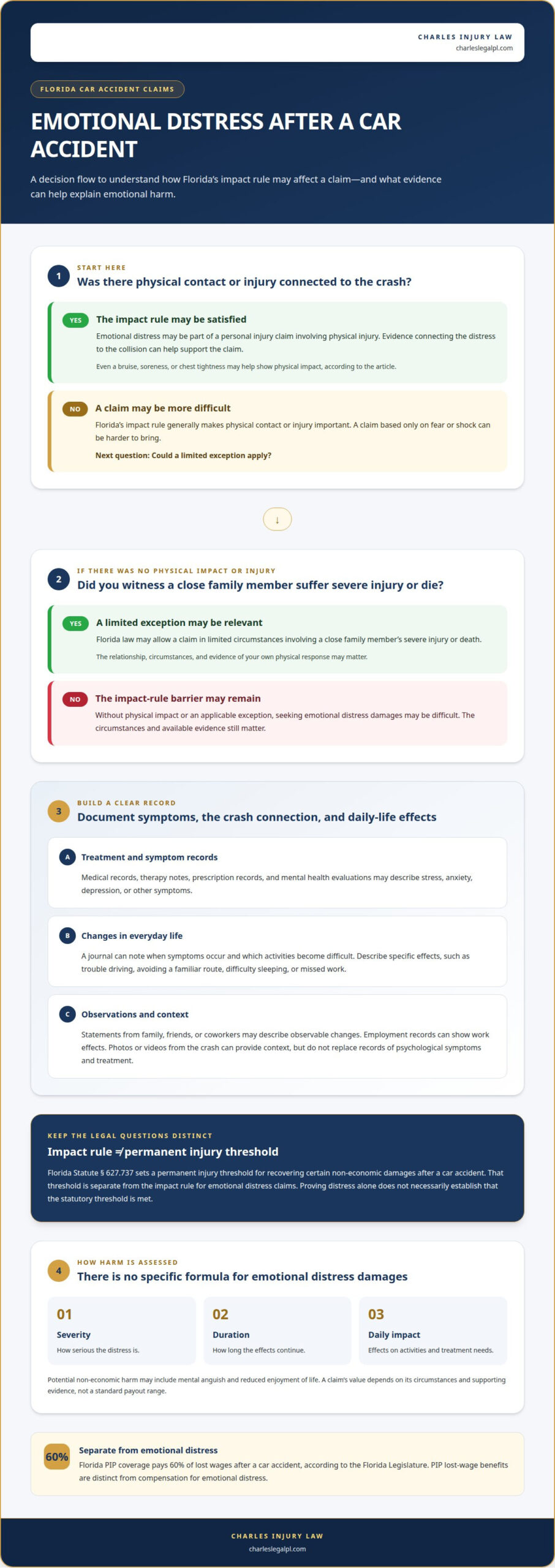
Yes, Florida law may allow emotional distress damages in a personal injury claim after a car accident, especially when physical injury is involved. Evidence connecting the crash to the distress, such as treatment records and documented changes in daily life, can help support the claim.
Evidence Supporting Emotional Distress Claims
Evidence for an emotional distress claim can document symptoms, their connection to the crash, and their effect on everyday life. Medical records, therapy notes, prescription records, and mental health evaluations may describe symptoms such as stress, anxiety, or depression. A journal can record when symptoms occur and which activities become difficult. Statements from family, friends, or coworkers may describe observable changes, while employment records can show effects on work.
Keep relevant records together. For example, a therapy note describing difficulty driving, alongside a journal entry about avoiding the car, may help explain how distress affects daily routines. Photos or videos from the crash can provide context, but they do not replace records of psychological symptoms and treatment.
Injury and Wrongful Death Grounds
Physical injury can provide a basis for seeking emotional distress damages as part of a personal injury claim. Someone injured in a crash may describe emotional harm alongside physical pain, using treatment records and other evidence to connect both to the collision. Emotional distress may also arise in wrongful death cases involving the loss of a loved one.
Can family members claim emotional distress after witnessing a car accident in Florida? In limited circumstances, Florida law may allow a claim when someone witnesses a close family member suffer a severe injury or die. The relationship, circumstances, and evidence of the claimant’s own physical response may matter.
Claim Value and Damage Caps
Emotional distress damages compensate for non-economic harm, including mental anguish and reduced enjoyment of life. How are emotional distress damages calculated in Florida car accident cases? There is no specific formula. Severity, duration, and effects on daily life help inform an assessment. Treatment needs and documented limitations also provide context for the harm.
Florida generally has no statutory cap on non-economic damages in personal injury cases outside medical malpractice cases. That does not assign a set value to distress. Evidence must support the claimed impact, and a claim’s value depends on its circumstances rather than a standard payout range.
Insurance Claims and Settlements
Insurance claims may address emotional distress alongside other losses in a car accident case. Florida PIP coverage pays 60% of lost wages after a car accident, according to the Florida Legislature. PIP lost-wage benefits are distinct from compensation for emotional distress. Insurers may review treatment records, statements, and evidence linking symptoms to the crash when evaluating a claim.
A settlement is one possible way to resolve a claim; if the parties do not agree, the dispute may proceed in court. When should you hire a Florida car accident attorney for an emotional distress claim? Consider legal help when an insurer disputes the connection between the crash and your symptoms, or when you need help evaluating evidence and settlement terms. A car accident claim may involve both physical injuries and psychological harm.
Florida’s impact rule and physical injury requirement
Florida’s impact rule can limit emotional distress claims when a crash causes no physical contact or injury. It is distinct from the permanent injury threshold that may apply to certain non-economic damages.
Generally, the impact rule requires a connection between physical impact and claimed emotional harm. A bruise, soreness, or chest tightness may help show physical impact, even when the injury seems minor. The rule can make a claim based only on fear or shock more difficult. Florida law recognizes exceptions, so the circumstances and evidence matter.
Permanent Injury Threshold
Florida Statute § 627.737 sets a permanent injury threshold for recovering non-economic damages after a car accident. That threshold is separate from the impact rule: one concerns eligibility for certain damages, while the other concerns emotional distress claims. For a psychological injury, this distinction matters because proving distress alone does not necessarily establish that the statutory threshold is met.
Physical and psychological harm should be evaluated separately. Treatment records can document each condition and how it affects daily activities.
Psychological Injuries After Car Accidents
Psychological injuries may include crash-related anxiety, depression, or other lasting distress. Someone might avoid driving, struggle to sleep, or find routine travel overwhelming after a collision. These effects can support a personal injury claim when evidence connects them to the accident. Mental health treatment can help document symptoms and their effects over time.
Describe specific changes, such as missed work or avoiding a familiar route. These examples provide context beyond simply saying the crash caused stress.
Proving Negligent Infliction of Emotional Distress
A negligent infliction claim generally requires evidence of negligent conduct, a causal connection, and legally recognized emotional harm. Florida’s impact rule may also require physical impact or injury, subject to exceptions. The facts must show more than distress in the abstract. Treatment records, witness observations, and documented effects can help explain the psychological injury and its connection to the crash.
What must be proven for negligent infliction of emotional distress in Florida? A claimant generally must establish negligence, causation, and qualifying emotional harm under the impact rule or an applicable exception. The evidence must connect the distress to the event.
Timing matters, too. Florida generally allows two years from the injury date to file a negligence-based personal injury lawsuit, which may include emotional distress damages. A delay can complicate evidence gathering, especially when treatment records or witness recollections are important. A personal injury attorney can assess how the impact rule, the statutory threshold, and the filing deadline apply to a specific claim.
Mental health treatment and documentation
Mental health care can address crash-related suffering while creating a clinical record of symptoms and progress. Consistent treatment notes can help explain how psychological effects influence your ability to work, travel, or sleep.
Medical and Mental Health Records
Medical and mental health records document symptoms, evaluations, treatment, and changes over time. They matter because a dated clinical account can connect psychological effects to the crash and show their impact. For example, a provider’s note about panic during car travel gives context beyond a general description of distress.
Records may include mental health evaluations, provider notes, prescription records, and other medical records. Together, they can show which symptoms were reported, what care was provided, and how treatment progressed. A witness may add observations, such as a family member noticing that the injured person stopped driving after the collision.
Keep the timeline clear. The date symptoms began, the first appointment, and later changes can help distinguish crash-related suffering from unrelated events. Medical records may also document physical injuries that occurred alongside psychological symptoms. Specific examples, such as needing help with ordinary travel, can show how the effects extend beyond the appointment room.
Mental Health Treatment Expenses
Mental health treatment expenses are costs connected to care, including therapy and prescribed medication. They matter because they can document the financial effects of ongoing symptoms alongside their emotional impact.
Keep appointment statements, receipts, and prescription records with their dates. These materials can show the type and frequency of care, as well as expenses associated with treatment. By themselves, they do not establish why the care was needed. Provider documentation can explain the symptoms being treated and their connection to the crash.
Seeking professional mental health care can support recovery and create records of a person’s emotional state and treatment progress. A provider’s assessment may describe symptoms such as anxiety or depression, the care plan, and changes noted at follow-up visits. That clinical perspective can help explain why treatment continued or changed.
Care should reflect a person’s needs, not a desired claim outcome. If a crash survivor struggles with sleep, driving, or concentration, those effects can be discussed during treatment. Clear, consistent medical documentation can show how symptoms affect daily activities and how care addresses them, while preserving an accurate account of the person’s experience.
Economic and non-economic damages
A car accident claim can involve financial losses and personal harms that don’t come with a receipt. Separating these categories helps show how physical injuries and emotional distress affect different parts of recovery.
Economic Damages
Economic damages cover measurable financial losses connected to an accident. Examples include medical treatment, therapy, medication, and lost wages when emotional distress prevents someone from working. Bills, payment records, and employment documents can show specific financial effects rather than describe them generally.
For example, someone who needs counseling and misses work because of crash-related anxiety may have treatment expenses and lost income to document. Keep records identifying the service, date, and amount paid, along with employment information showing missed work. These records help distinguish claimed expenses from unrelated costs.
Emotional Distress as Non-Economic Damage
Emotional distress is a non-economic damage because it reflects psychological harm, not a direct financial charge. It can include mental anguish, anxiety, depression, and loss of enjoyment of life after a crash. These damages matter because an injury’s effects can continue beyond physical pain or treatment bills.
For instance, a crash survivor who stops enjoying a regular hobby may describe that change alongside treatment records and observations from people close to them. The severity and duration of distress, and its effects on daily life, help explain the harm. Florida has no specific formula for assigning emotional distress damages.
Compensation can include economic and non-economic damages when supported by the claim. Medical records may show treatment for physical injuries, while mental health records describe psychological effects. Evidence of lost work or disrupted activities adds context. Florida generally has no statutory cap on non-economic damages in personal injury cases outside medical malpractice cases, but Florida Statute § 627.737 sets a permanent injury threshold for certain non-economic damages after car accidents.
Punitive damages serve a different purpose from compensation for losses. They may be available when the at-fault party acted with gross carelessness or intentional malice. Florida generally caps punitive damages at three times compensatory damages or $500,000, whichever is greater, with exceptions for intentional misconduct. They are not a substitute for proving actual harm.
Loss of enjoyment of life can describe activities a person can no longer enjoy because of accident-related harm. Loss of consortium may address harm to a spouse or family relationship, including loss of companionship or affection. If distress interferes with work, treatment, or relationships, identify each effect separately. Clear evidence helps connect each claimed damage to the crash and distinguish emotional suffering from financial losses.
Exceptions to the impact rule
Florida’s impact rule generally requires physical contact or injury connected to the emotional distress being claimed. Limited exceptions may apply when circumstances involve a close family member’s catastrophic injury or death, fear for one’s own safety, or another recognized legal basis. These exceptions depend on specific facts, not distress alone.
A family member who witnesses a loved one suffer catastrophic harm in a crash may have a potential claim, even without direct impact. Florida case law requires a direct physical response to emotional distress in certain claims involving a witnessed accident and an injured close family member. Evidence of the relationship, what the witness saw, and the response afterward may therefore matter.
Florida courts have also recognized a narrow exception in a severe case involving emotional distress. In Champion v. Gray, 478 So. 2d 17 (Fla. 1985), the Florida Supreme Court allowed an exception to the impact rule. That decision does not make every trauma-related claim recoverable. The circumstances and supporting evidence remain central to whether a claim fits an exception.
Being in the zone of danger may also support an argument for an exception when someone fears for their life during a crash. For example, someone who narrowly escapes a collision may experience serious distress despite having no visible wound. That fear alone does not establish eligibility. The surrounding events and evidence of resulting harm must support the claim.
Verifiable physical symptoms caused by emotional distress may also be relevant. Someone might experience chest tightness or another documented physical response after witnessing a crash. Mental health professionals can document symptoms, evaluations, and treatment. Those records help explain the claimed connection, but the legal question also involves whether Florida law recognizes the circumstances as an exception.
Extreme and outrageous conduct may raise a different legal theory: intentional infliction of emotional distress. A separate claim may be brought in rare cases when conduct was extreme and outrageous and intentionally or recklessly caused severe distress. This is a demanding standard, not a label for ordinary negligence or the trauma of a serious collision alone. Evidence must support both the conduct and the severity of the harm.
For any exception, organize the account around what happened, who was present, and what physical or psychological effects followed. Witness statements, treatment records, and a clear timeline can help an attorney assess the claim. An attorney can evaluate whether the facts support an exception or whether another personal injury claim is a stronger path. That analysis keeps emotional distress claims focused on evidence and applicable Florida law.
Personal Injury Attorney in Fort Lauderdale: Failure to Return Security Deposit by landlord after moving out apartment or commercial building
Charles Injury Law can assess a car accident claim involving physical injuries and emotional harm. If a crash has affected your health, work, or daily routine, the firm can review available evidence and explain how it may support a personal injury claim. The firm also represents people injured in Truck Accidents and Uber & Lyft Rideshare Accidents. Charles Injury Law serves people across Florida, including Fort Lauderdale, Miami, West Palm Beach, Boca Raton, Delray Beach, Boynton Beach, Lake Worth, Orlando, and Tampa. A landlord’s failure to return a security deposit is a separate matter, not part of a car accident claim.
Consider reaching out when an insurer disputes responsibility, questions the connection between the crash and your distress, or presents settlement terms you don’t understand. You can discuss the accident and the records that may help clarify your options. Contact Personal Injury Attorney in Fort Lauderdale to talk about your car accident claim.
Choose your next step with clarity
If you’re considering suing for emotional distress after a car accident in Florida, the next step is to decide whether to pursue a claim and how to protect your interests as it moves forward. The answer depends on the facts, the evidence, and how the crash affected you.
Charles Injury Law represents people injured in car accidents, truck, semi, and tractor-trailer accidents, and Uber and Lyft rideshare accidents. If you want help evaluating your accident claim and discussing possible next steps, contact Charles Injury Law.
Call Now: (954) 390-2228 Available 24 Hours a Day, 7 Days a Week. You can take the next step at your own pace, with a clearer understanding of your options.
Frequently Asked Questions
Can You Sue Without Physical Injuries?
Sometimes, but claims without physical injury face a higher hurdle under Florida’s impact rule. Someone who witnessed a close family member suffer catastrophic harm or die may have a possible claim under an exception. Being in danger and fearing for one’s life may also matter. The specific circumstances, direct connection to the distress, and supporting proof all affect whether a claim can proceed.
How Much Compensation Can You Receive?
There’s no fixed Florida formula or standard amount for emotional distress damages. An evaluation can consider the severity and duration of distress, its effects on daily life, and related treatment or financial losses. For example, inability to work may add documented lost wages to the losses being assessed. A settlement figure from another case cannot reliably predict compensation in a different claim.
What Evidence Is Needed?
Useful evidence can show when symptoms began, how they changed, and how they affected routine activities. A dated calendar of missed work, canceled plans, or driving difficulties can add a practical timeline to clinical documentation. Statements from people who observed changes may provide another perspective. Keep records accurate and consistent, and avoid exaggerating symptoms. Credibility matters when an insurer or court evaluates a claim.
What Is the Impact Rule in Florida?
Florida’s impact rule generally requires physical contact or injury connected to the emotional distress being claimed. It can make a claim based only on shock or fear difficult, even after a frightening crash. The rule is not absolute: Florida law recognizes limited exceptions. A bruise, soreness, or other physical response may be relevant, but the facts and applicable legal theory determine how the rule applies.
What’s the Deadline?
Florida generally gives an injured person two years from the injury date to file a negligence-based personal injury lawsuit, which may include emotional distress damages. Don’t assume that an insurance claim or settlement discussion pauses the court filing deadline. Record the crash date and get legal guidance early, especially if treatment continues or the responsible parties are still being identified. Missing a filing deadline can put a claim at risk.
Can you sue for emotional distress after a car accident in Florida?
Yes, Florida law may allow emotional distress damages in a car accident claim. Physical injury commonly supports including those damages, while a claim without physical injury may depend on a narrow exception. Evidence should connect the distress to the crash and establish its effects. A legal review can assess the impact rule, possible exceptions, and how the claim relates to other accident losses.
Does Florida’s no-fault PIP law affect emotional distress claims?
Yes. Florida’s no-fault system provides Personal Injury Protection benefits for certain medical expenses and lost wages after a crash. PIP pays 80% of medical expenses and 60% of lost wages; the Florida Legislature states the 60% lost-wage rate. PIP benefits are distinct from emotional distress damages. Receiving PIP benefits does not by itself establish whether a separate claim for emotional distress can proceed.
What injury threshold allows a Florida car accident lawsuit for pain and suffering?
Florida Statute § 627.737 sets a permanent injury threshold for recovering non-economic damages after a car accident. Pain and suffering are non-economic damages, so the threshold may matter to that part of a claim. The statutory standard is separate from whether emotional distress evidence exists. A claim assessment should consider the injury findings, treatment record, and the relationship between the claimed damages and the crash.
This information is general and is not legal advice. Every case is different.
Disclaimer
The information provided on this blog is for general informational purposes only and does not constitute legal advice. Viewing this content does not create an attorney-client relationship with the firm. You should not act or rely on any information contained herein without seeking legal advice from a qualified attorney regarding your individual situation.