

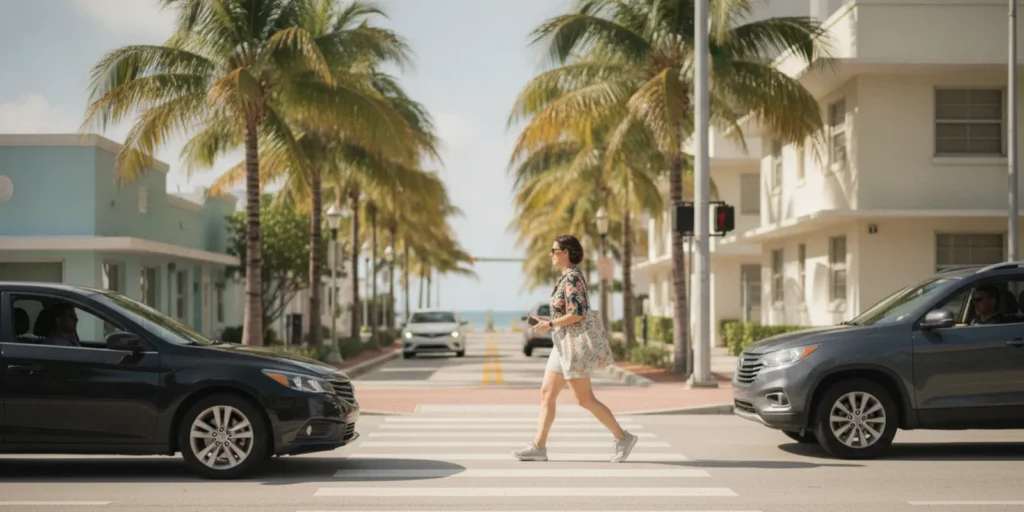
After a pedestrian collision, it is common to wonder which insurer should hear from you first. The answer to what insurance covers a pedestrian accident depends on the people involved, the policies in force, and the circumstances of the crash. Several sources may be worth checking, but none should be assumed to apply automatically.
This is general information, not legal advice. Florida rules and policy language can change, and an attorney should review current law and the actual documents before anyone relies on a conclusion. An inquiry does not create an attorney-client relationship.
Which insurance policies may be involved?
Begin by separating the possible sources instead of asking one insurer to answer every question. Coverage might relate to the driver or vehicle, the injured pedestrian’s own household, a health plan, or another party whose conduct may matter. These are distinct inquiries. A policy can exist without covering a particular person or event, and an initial response may not resolve every issue.
| Possible source | What it may relate to | What to verify |
|---|---|---|
| Driver or vehicle auto policy | Coverage connected with the driver or vehicle involved | Covered people, limits, exclusions, conditions, and how the event is classified |
| Personal injury protection (PIP) | Potential benefits under an applicable auto policy | Whether the injured person or household has an applicable policy and what notice or records are required |
| Uninsured/underinsured motorist (UM/UIM) | Potential coverage if the responsible driver has no insurance or insufficient limits | Who qualifies, limits, policy definitions, and conditions |
| Health insurance | Processing or payment of medical care under a health plan | Network rules, coordination, reimbursement terms, and unpaid balances |
| Another potentially responsible party’s policy | A separate policy if another party may have legal responsibility | Evidence, the party’s role, and the policy wording |
Use the table as an organizing checklist, not a promise that any source will pay. More than one insurer may need notice, and policies can interact. Keep letters, claim numbers, and explanations of benefits. When an insurer gives an answer, ask which policy and provisions it is discussing.
Could the driver’s auto insurance apply?
The driver’s auto policy is one source to identify, but the presence of a vehicle and an injury does not itself establish coverage or responsibility. The contract may contain definitions, limits, exclusions, and conditions. The driver’s identity, vehicle ownership, permission to use the vehicle, and collision details may all matter.
Write down the driver’s name, vehicle details, insurer, and policy information if available. Ask for a claim number and adjuster contact details. If the driver left or information is incomplete, record what you know and share it with responding authorities and insurers. Do not fill gaps with guesses.
Liability coverage associated with a driver and first-party coverage available to an injured person are different questions. An insurer may investigate policy coverage and responsibility separately. Keep copies of requests for statements or documents. If you do not understand a request, consider getting legal advice before responding.
Do not assume the first insurer contacted is responsible for every bill. The insurer may be evaluating only its own policy, while a health plan or another auto policy follows separate procedures. Ask what the insurer needs next and whether its position concerns one benefit, one person, or the entire claim. Keep the response with the relevant claim file.
How might personal injury protection fit?
Personal injury protection, commonly called PIP, is a type of auto coverage that may be relevant under Florida rules. Whether a pedestrian can seek benefits under a particular policy depends on the circumstances and law. Potentially relevant details may include the pedestrian’s own auto insurance, household relationships, the vehicle involved, and policy wording. Being a pedestrian alone does not establish that PIP is available or unavailable.
Eligibility and deadlines are legal and policy-specific. Confirm current requirements with an attorney or the insurer handling the claim rather than relying on a general article. Keep a timeline that includes the collision date, reporting date, first treatment date, and dates of requests or submissions. Save bills, receipts, medical records, and correspondence. When sending forms, retain a copy and note how and when they were delivered.
For general consumer information about insurance in Florida, you can consult the Florida Office of Insurance Regulation. General agency information cannot decide whether a specific person qualifies for benefits under a particular contract. Have the policy and facts reviewed for that question.
A practical way to avoid confusion is to keep a separate folder for each insurer. Put the policy or claim number on the folder, then save each letter, email, form, and call note there. If an insurer asks for a document twice, check whether it was sent already. You can then give the date and delivery method instead of relying on memory.
For broader questions about injury claims, see the firm’s personal injury FAQs. General information cannot determine how an individual policy applies.
When could uninsured or underinsured motorist coverage matter?
Uninsured or underinsured motorist coverage, often shortened to UM/UIM, may be worth checking if the driver has no applicable liability insurance or limits that may be insufficient. A pedestrian’s own policy or a policy connected to a household member might be relevant in some situations. Availability depends on insured status, policy definitions, limits, and conditions.
Locate declarations pages and, where possible, the complete policies—not just insurance cards. Declarations pages can help identify coverage names and limits, but may not contain all terms. If several household or vehicle policies exist, keep them distinct and record which insurer received notice. Ask the insurer to identify the provisions it believes control.
For example, suppose a pedestrian finds an auto policy in a household file and the driver involved appears to have limited coverage. Those facts are reasons to ask questions, not proof that the household policy covers the pedestrian. The policy’s definition of an insured, its treatment of the collision, and any notice or cooperation conditions still need review. An uninsured driver does not automatically make UM/UIM benefits available.
When speaking with an insurer, ask whether it has received notice and what documents it needs to evaluate the claim. Ask for important explanations in writing. Do not interpret a request for information as confirmation that coverage exists, and do not treat a preliminary discussion as a final decision.
Can health insurance help with medical bills?
Health insurance may help arrange or pay for care, depending on plan terms and treatment. It is distinct from a liability claim against a driver. A health plan may have network rules, referral requirements, coordination provisions, or reimbursement terms if another party later pays. Details vary by plan.
Ask providers for itemized statements and keep explanations of benefits. If you receive a reimbursement, recovery, or lien notice, save it and ask what it means before paying or disputing it. Do not ignore a bill because another insurer may eventually be responsible. Confirm with both the provider and plan how the charge is being processed.
Maintain a basic treatment and expense record. Include appointment dates, prescriptions, travel for care, missed work, and out-of-pocket spending. This helps organize information; it does not prove that every item is covered or recoverable. Keep originals safe and retain dated copies of correspondence.
If coverage changes while treatment is ongoing, tell providers and the plan what has changed and ask what they need to update their records. Keep a note of whom you spoke with and the date. If a bill is disputed or a plan asks for repayment, do not assume the issue will be resolved by a separate liability claim; get an explanation of the specific plan terms involved.
Could another party’s policy be relevant?
Some facts may raise questions about a party beyond the driver. The location, vehicle use, or role of another person or entity might warrant investigation. But a collision on or near property does not, by itself, establish that a property owner is responsible or that its insurance applies.
Preserve photographs, witness names, incident reports, and notes about the location. If a business or property manager prepared an incident report, ask how to request a copy. Do not enter restricted areas or put yourself at risk to gather evidence. Focus on facts that can be checked rather than assumptions about who must pay.
Charles Injury Law describes its injury practice as handling pedestrian and other personal-injury matters. Read about the pedestrian accident practice to understand the type of inquiry the firm reviews. That page does not determine whether a particular claim exists or a policy covers it.
How should you organize a coverage review?
A short written inventory can keep multiple insurance conversations from becoming one confusing thread. List each possible policy, its named insured if known, the insurer, claim number, date of notice, documents requested, and next stated step. Mark unconfirmed details as unknown rather than treating them as established facts.
- Policy source: Note whether the document is your auto policy, a household policy, the driver’s insurance information, or a health plan.
- People and roles: Record who owns the vehicle, who was driving, who was injured, and whose household or policy relationship is under review.
- Dates: Record the collision, notice, treatment, and document-submission dates. Confirm any deadline with the insurer and an attorney rather than calculating legal deadlines from a general article.
- Open questions: Write down terms you do not understand, such as insured status, coordination, exclusions, or reimbursement.
- Follow-up: Note who said they would respond and when. An informal estimate does not change the policy.
This inventory is especially useful when different companies handle auto and health coverage. It can help you ask focused questions: Which policy are you addressing? What document supports the answer? Is the decision limited to one benefit or the entire claim? Request important explanations in writing, and keep dated notes of calls.
For instance, if a health plan processes a clinic bill while an auto insurer is still reviewing a claim, list both matters separately. Record the date each company received documents and what each one said it would do next. The fact that one plan processed a bill does not settle the other insurer’s coverage decision. This simple separation makes it easier to spot a missing response without assuming that the companies coordinate automatically.
What should you do after a pedestrian collision?
- Address safety and care. Seek appropriate medical attention and follow your provider’s instructions. Do not delay urgent care to sort out insurance.
- Report and preserve basic details. When appropriate, report the collision and retain any report number. Write down the date, time, location, driver and vehicle information, and witness contacts.
- Identify possible policies. Gather available auto declarations pages, driver insurance information, and relevant health-plan documents. A card or summary may not be the full contract.
- Give notices carefully. Follow policy instructions, keep copies, and record when and how you submitted information. Ask for unclear requests in writing.
- Track treatment and bills. Save records, receipts, explanations of benefits, and provider statements. Tell providers if insurance details change.
- Get advice on legal questions. Coverage, fault, eligibility, and deadlines require attention to current law, actual policies, and specific facts.
Consider a common situation: a driver is identified, but the pedestrian has not learned the driver’s policy limits and is receiving bills from several providers. A useful next step is not to promise that one insurer will cover everything. Preserve the claim information, ask providers and the health plan how bills are being processed, and request the relevant auto policy details. Each response addresses a different issue, and none replaces review of the full record.
What information helps with a case review?
You do not need to resolve every insurance question before asking for an initial review. Bring what is available and identify what is missing. Avoid altering original documents or sending sensitive records through an unverified channel.
- Collision or incident report information, if available
- Driver, vehicle, insurer, and claim details
- Your auto declarations page and relevant health-plan information
- Photographs, witness contacts, and notes made soon after the collision
- Medical bills, treatment records, and explanations of benefits
- Letters, emails, forms, and dated notes of insurer calls
Charles Injury Law offers a free initial case review for injury inquiries. Any decision about representation, coverage, fees, or next steps depends on individual review. An inquiry does not create an attorney-client relationship, and no outcome is promised. You can also read questions to consider when choosing a personal injury lawyer before deciding whom to consult.
What questions can you ask each insurer?
Keep questions specific to the company’s role. An auto insurer may be evaluating a driver or vehicle policy; a health plan may be processing treatment; and an insurer connected to your household may be reviewing a different policy. Ask the representative to identify the policy or plan, claim number, and issue being considered. If an answer is unclear, request the relevant provision or explanation in writing.
- Which policy or plan are you reviewing, and who is the named insured or member?
- What records are still needed, and how should they be submitted?
- Does your response address one bill, one benefit, or the broader claim?
- Are there notice, cooperation, or documentation requirements I should review in the policy?
- Who should receive future updates, and how can I confirm that a document arrived?
These are organizational questions, not a substitute for legal advice or a request to make a coverage decision without the full record. Avoid guessing at answers about household status, vehicle use, or treatment. If a form asks for information you do not know, ask how to mark it accurately rather than filling in an assumption. Keep the submitted form and the insurer’s response together.
It can also help to distinguish a coverage question from a responsibility question. An insurer may discuss whether a person is insured under a contract without deciding who caused the collision. A separate conversation may concern the facts of the incident. Write down which issue is being discussed so that an early answer on one point is not mistaken for a decision on all aspects of the matter.
Frequently asked questions
Does the driver’s insurance always pay a pedestrian’s medical bills?
No. Coverage and responsibility depend on the facts, policy language, and current law. An insurer may investigate whether its policy applies as well as whether its insured was responsible.
Can a pedestrian use PIP in Florida?
Possibly, but being a pedestrian alone does not establish eligibility. The person’s policies, household circumstances, collision details, and current legal requirements may matter. Have the actual policy and facts reviewed.
What if the driver has no insurance?
Ask whether UM/UIM coverage may apply through a policy connected to you or your household. It is not automatic; insured status, policy definitions, limits, and conditions need to be checked.
Should I contact my health insurer?
Review the plan’s instructions or contact it to understand how treatment bills should be submitted. Keep explanations of benefits and ask about unclear coordination or reimbursement terms.
A careful next step
Insurance questions after a pedestrian collision can involve several policies, and the answer depends on the actual documents and circumstances. Keep records, ask clear questions, and seek an attorney’s review of current Florida rules before relying on a coverage conclusion.