

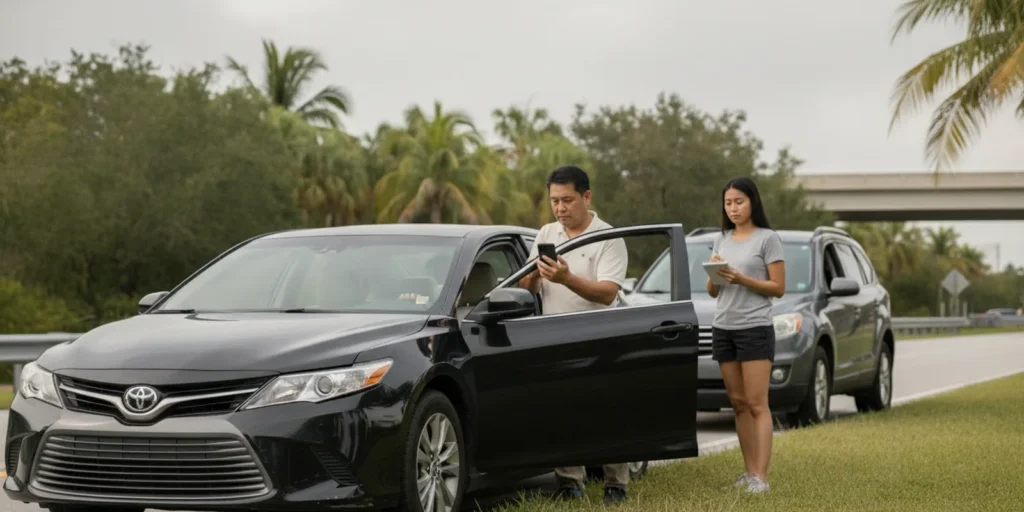
If you are asking what to do after a rideshare accident, begin with safety and urgent medical needs. Once you are out of danger, preserve trip information, document what you personally observed, and keep records organized. The right steps differ depending on whether you were a passenger, driver, pedestrian, cyclist, or occupant of another vehicle.
What should you do first at the scene?
Look for immediate hazards before gathering evidence. If anyone may be seriously hurt, request emergency assistance. Move away from traffic only if safe, and follow responders’ instructions. Do not step into a roadway, approach moving vehicles, or delay needed care to take photographs.
- Check for urgent needs. Ask whether anyone needs emergency help, without attempting care beyond your training.
- Call for help when needed. Report serious injuries, a dangerous roadway, or another urgent hazard.
- Get to a safer place. If it is safe and responders do not direct otherwise, move away from traffic.
- Exchange basic information. Share names and contact and vehicle details as appropriate. Do not argue about blame.
- Make a short factual note. Record the time, location, and what you remember seeing or hearing.
Be accurate and distinguish what you saw from what someone else told you. If you are unsure about speed, direction, timing, or another detail, say so rather than filling a gap. A calm factual account is more useful than a confident guess.
How should passengers respond after an Uber or Lyft crash?
If you were a passenger, note whether you were in the rideshare vehicle or another car. Save the ride receipt, confirmation email, and screenshots of the trip screen if available. Record the date, pickup and drop-off points, driver information displayed, trip status, and any messages in the app. Preserve original records rather than relying on memory alone.
Use the platform’s safety or incident-reporting option if one is available. Keep a copy of your report and any response, including dates and reference numbers. An app report documents what you submitted; it does not by itself decide who caused a crash, establish insurance coverage, or resolve an injury claim.
Do not delete the app, trip history, or relevant messages. If a screen later changes or information is no longer visible, note what you remember and when you captured it. Keep original phone or account records intact where practical. For more context, see the firm’s rideshare accident service page.
What if you were the rideshare driver?
Address safety and medical needs first. Then preserve information about your driving status in the app. Save trip request, acceptance and completion details, app messages, and the times you went online or offline if available. Make a brief timeline, including whether a ride had been accepted and whether a passenger was in the vehicle.
Report the collision through channels required by the platform and keep copies of what you submit. Record the date, method, and reference number for each report. If you have personal auto insurance, review your policy and promptly ask the insurer how to report the incident. Do not assume that the platform, a personal policy, or another driver’s insurer automatically covers every loss.
A driver may face separate administrative steps: sharing basic incident information, notifying the platform, and contacting an insurer. Keep those communications distinct. If a request is unclear, ask what information is being requested and preserve a copy of the answer. Avoid deleting app data or modifying trip records.
What should pedestrians and occupants of other vehicles do?
If you were walking, cycling, or riding in another vehicle, document the rideshare vehicle and surrounding scene only when safe. Note the vehicle description and license plate, location, and any visible trip or driver details you can lawfully observe. Do not follow a vehicle, enter a dangerous area, or approach someone in a way that creates another risk.
People in another vehicle should exchange information with each involved driver where possible and preserve their own records. A rideshare vehicle may involve a driver, platform, and multiple insurance policies, but the presence of an app alone does not answer responsibility. Keep vehicle photographs, repair documents, medical records, and communications separate from assumptions about another person’s coverage.
When should you seek medical care?
Seek emergency care for urgent symptoms or serious concerns. For other pain or symptoms, contact a qualified medical professional promptly and describe the collision accurately. Do not use how you feel in the first few minutes as a test for whether an injury occurred, and do not delay needed care while collecting evidence.
Keep visit summaries, referrals, prescriptions, and follow-up instructions. Make dated notes in your own words about when symptoms began and how they change. Include practical details, such as activities that became difficult, without trying to diagnose yourself or decide what a claim is worth. Follow your provider’s guidance and ask questions about treatment or follow-up.
If you did not seek care immediately, preserve a clear account of why and when you later sought help. Avoid altering dates or making a timeline appear more complete than it is. Medical records reflect care documented by a provider; personal notes record your recollection. They serve different purposes.
How can you preserve useful information?
Build a simple record while details are fresh, but do not put yourself at risk to complete it. Organize the file so you can locate an item later. A folder on a device or a paper envelope can work; choose a method you can maintain. Use dates in file names, such as the date of the collision followed by “trip receipt” or “scene photo,” and keep originals unchanged.
- Scene and timeline: Write down the date, approximate time, exact location, direction of travel, weather, road conditions, traffic signals, and sequence of events. Mark uncertain details as uncertain.
- People and vehicles: Save names and contact details exchanged, vehicle descriptions, license plates, and witness contact information. Do not pressure witnesses to agree with your account.
- Photographs and video: If safe, capture wide views and closer images of visible damage, vehicle positions, road markings, signals, and surroundings. Keep original files and avoid edits that change meaning.
- Rideshare records: Keep the receipt, trip screens, app messages, support reports, and available status information. Record when each screenshot was taken.
- Care and expenses: Retain medical paperwork, prescriptions, follow-up instructions, repair records, and receipts for damaged belongings when practical.
- Communications: Save insurer, platform, and agency correspondence, along with dates, names, and reference numbers.
Back up important files when possible and keep a copy in a secure location. Do not post sensitive trip, medical, or personal information publicly. If you share records with an insurer or platform, provide accurate information and retain a copy of what you sent. Preserve damaged belongings when practical, and photograph them before repair or disposal.
Use a simple index so you can find records without repeatedly searching your phone. For example, list “June 4: trip receipt, two scene photos, incident report number” and note where each item is stored. Keep a separate list of missing records, such as a witness number you were unable to obtain. This avoids treating an incomplete file as a complete one and helps you remember what may need follow-up.
How can you make a useful timeline?
A timeline does not need to be elaborate. It should help separate the order of events from later interpretations. Start with the ride or travel period, then add the collision, immediate response, reports, and follow-up. Add entries in sequence, and label the source of each detail: memory, a phone timestamp, a receipt, or a message.
- Write the date, approximate time, and location, noting whether the time comes from a phone, receipt, or memory.
- Record the trip status you observed, such as whether a ride was underway or a request had been accepted, without drawing a coverage conclusion.
- Describe the sequence in plain language: where you were, what you noticed, what happened next, and what you did afterward.
- Add the names of people or agencies contacted and the date and method of each contact.
- Attach related records, such as screenshots, photos, report numbers, and medical documents, and identify what each file shows.
For example, you might write: “Around 6:20 p.m., after pickup, the car was traveling east on the named road. I felt an impact and then the car stopped. I called for help at about 6:25 p.m.” If you do not know the exact time or direction, label it as approximate. This preserves what you remember without presenting an estimate as verified fact.
Keep revisions transparent. If you add a detail later because you found a receipt or spoke with a witness, date the addition and identify its source rather than silently changing an older entry. If two sources appear inconsistent—for example, a phone timestamp and a remembered time—write down both and mark the discrepancy. Do not choose one simply because it makes the story seem clearer.
What reports should you make?
Follow directions from law enforcement and other responders. Ask how to obtain a report or reference number, and keep it with your records. The process and availability of a report can depend on circumstances. A report is one account of an incident; it may not contain every detail or settle responsibility.
Notify the relevant platform and insurance companies as appropriate. Provide factual information and do not speculate when you do not know an answer. Keep a log of calls, messages, documents sent, and follow-up dates. If someone asks for a recorded statement or asks you to sign a document, take time to understand what is being requested. You may seek legal guidance before responding to questions about a potential injury claim.
When making a report, note whether you are reporting an injury, property damage, or both, and state what you know rather than adopting language you cannot verify. If symptoms develop or change after an initial report, record when you noticed that change and ask the appropriate reporting contact how to update the information. Keep the update and any response with the original submission. Avoid assuming that one report automatically reaches every other organization involved.
A practical contact log can include the organization, person or department, date and time, channel used, reference number, documents requested, documents sent, and a reminder date. If you speak by phone, write a short factual note immediately after the call. Distinguish a person’s explanation from a final decision, and preserve emails or portal messages that confirm what was discussed.
Why do app status and insurance questions matter?
Insurance questions can turn on details such as who was driving, whether the driver was logged in, whether a ride request had been accepted, whether a passenger was present, and which policies may apply. App trip status and records may help explain the timeline, but they do not alone establish coverage or a right to payment.
Keep separate records of what the app displayed, what the driver or platform reported, and what an insurer later communicated. Those accounts may differ because they refer to different times or sources. Rather than deciding which explanation is correct on the spot, preserve each version and note when it was provided.
| Situation | Records to preserve | What the records may help clarify |
|---|---|---|
| Passenger on a ride | Receipt, trip screen, driver details, app messages | Ride timing, trip status, and available platform communications |
| Driver using the app | Request and trip status, online period, reports, insurer messages | Sequence of app activity and notices made |
| Pedestrian or cyclist | Safe scene photos, vehicle details, witness contacts, care records | Observed circumstances and records of subsequent care |
| Occupant of another vehicle | Exchange details, vehicle photos, repair documents, correspondence | Vehicle damage and available accounts or communications |
| Any person involved | Timeline, report number, original images, medical records | How preserved information fits together without deciding fault |
Think of the table as a sorting aid, not a checklist that guarantees an answer. One record may show a trip was underway at a particular time; another may describe what a person saw at the scene. A receipt may contain a pickup time but not explain the collision. Each item has limits. Preserve context, including the date captured and who provided it, rather than relying on a cropped screenshot with no surrounding information.
For instance, a passenger might have a receipt showing the trip began shortly before impact, while a platform response later describes a different status category. Save both, note when each was created or received, and avoid deciding that either record alone resolves insurance. Similarly, a driver’s app screen may establish what the driver saw, not every policy term. Coverage depends on the facts and applicable policy language.
How should you think about deadlines?
Do not assume that every rideshare crash has the same deadline. Time limits may depend on the facts, the parties, and the type of issue involved. An insurer’s review or a platform report should not be treated as proof that a legal deadline has been extended or satisfied.
Keep a record of when the collision happened and when you made reports or received communications. If you have questions about a particular situation, seek advice based on its facts and current law. The firm’s personal injury FAQs may help explain general process questions, but general information is not a substitute for individualized legal advice. Because legal content about deadlines requires attorney review, this article is general information and should be reviewed by an attorney before publication.
Calendar reminders can help you follow up on practical tasks, such as requesting a report or responding to a message, but they are not a way to calculate a legal deadline. Do not wait for a platform or insurer to finish its review before asking a qualified attorney about a time-sensitive legal question. The correct analysis depends on the circumstances and current law, not on a general online checklist.
What mistakes should you avoid?
- Do not risk your safety to photograph a vehicle or roadway.
- Do not guess about speed, distance, fault, or app status when you are unsure.
- Do not delete trip records, app messages, photographs, or relevant correspondence.
- Do not assume that one platform or insurer must cover the collision.
- Do not ignore symptoms or postpone needed medical attention to gather evidence.
- Do not treat an app report, police report, or initial insurer response as a complete resolution of every issue.
- Do not post sensitive personal, trip, or medical details publicly.
- Do not sign or submit something you do not understand; ask what it is and take time to review it.
Also avoid trying to make all records tell one perfectly smooth story. Real accounts may contain estimates, gaps, or differences in wording. Preserve the original, explain what you know, and flag what you cannot confirm. If you find an error in a report or form, ask the organization how to submit a correction or clarification and keep a copy of that request.
How can you prepare for a free case review?
If you want to discuss a potential injury matter, gather what is available rather than waiting for a perfect file. A short, honest timeline can be more useful than a polished narrative. Bring the trip receipt or app details, report number, photos, witness contacts, and medical records or follow-up information you have. Note what is missing or uncertain.
It can help to organize your questions into three groups: what happened and what remains unclear; what care or property-related follow-up is underway; and what reports or insurer communications you have received. This makes it easier to explain the situation without assuming that a particular policy applies or that a legal conclusion has already been reached. Keep copies of documents you bring or send.
A free case review is an initial inquiry; it does not itself create an attorney-client relationship. The firm’s legal disclaimer explains that boundary, and legal questions about a specific event require review of its facts. For background on the firm’s approach to these incidents, see its rideshare accident page and its contact page.
After a rideshare crash, prioritize safety and care, preserve original information, and keep your account factual. Questions about insurance, responsibility, and deadlines depend on the circumstances, so avoid conclusions until the relevant facts can be reviewed.