

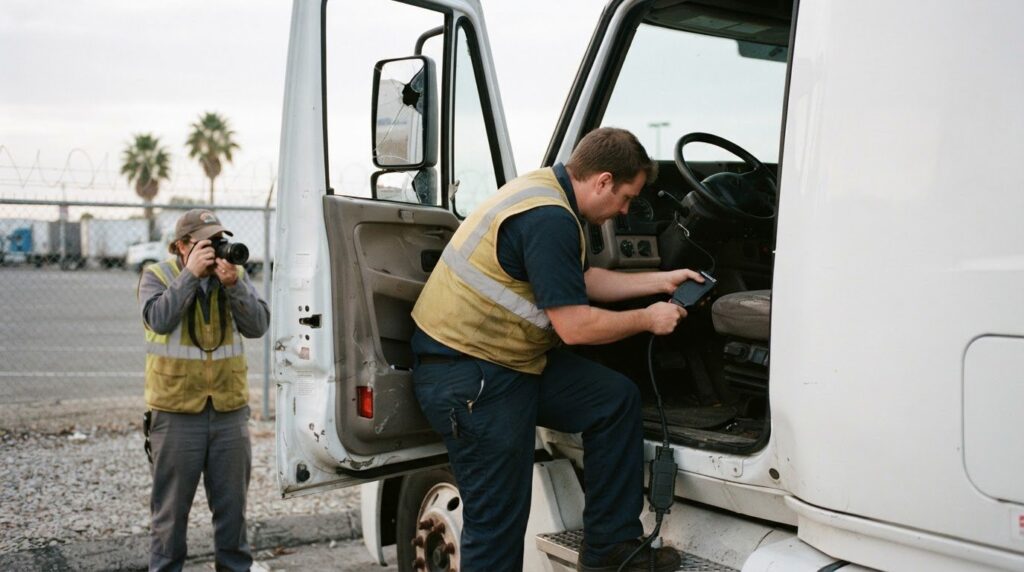

The clock can start running on truck crash evidence before the injured person leaves the scene. Preserving evidence after a commercial truck crash means acting quickly: some records or footage may begin expiring within hours, while other evidence may last only a few days. If you’re able, call 911 after the crash, document what you can safely observe, and contact a lawyer as soon as possible.
It’s understandable to focus first on medical care and getting through the immediate aftermath. A prompt investigation can also help preserve evidence that may explain how the collision happened, including vehicle damage, witness accounts, camera footage, and electronic truck data. Florida law may allow relevant evidence to be sought through the legal process, but no single retention period protects every type of evidence.
This article explains what to preserve, why black-box data and other records can matter, and how a preservation letter can notify a trucking company to keep relevant evidence. It also explains when to seek legal help and how an attorney can support a truck accident claim while you focus on recovery.
Key Takeaways
- Document the crash scene, vehicle damage, road conditions, and witness contact details while the information is available and it is safe to do so.
- Electronic logging device records can help show a truck driver’s hours-of-service activity; applicable record-retention requirements should be evaluated under Florida law.
- A preservation letter can identify evidence the trucking company should retain, including vehicle records, driver logs, camera footage, and cargo information.
- Black-box data may reveal speed and braking activity, but it can be overwritten, so prompt preservation matters.
- Early legal help can support evidence collection, witness interviews, and investigation of the crash before important details are lost.
How Do I Preserve Evidence for a Truck Accident Claim?
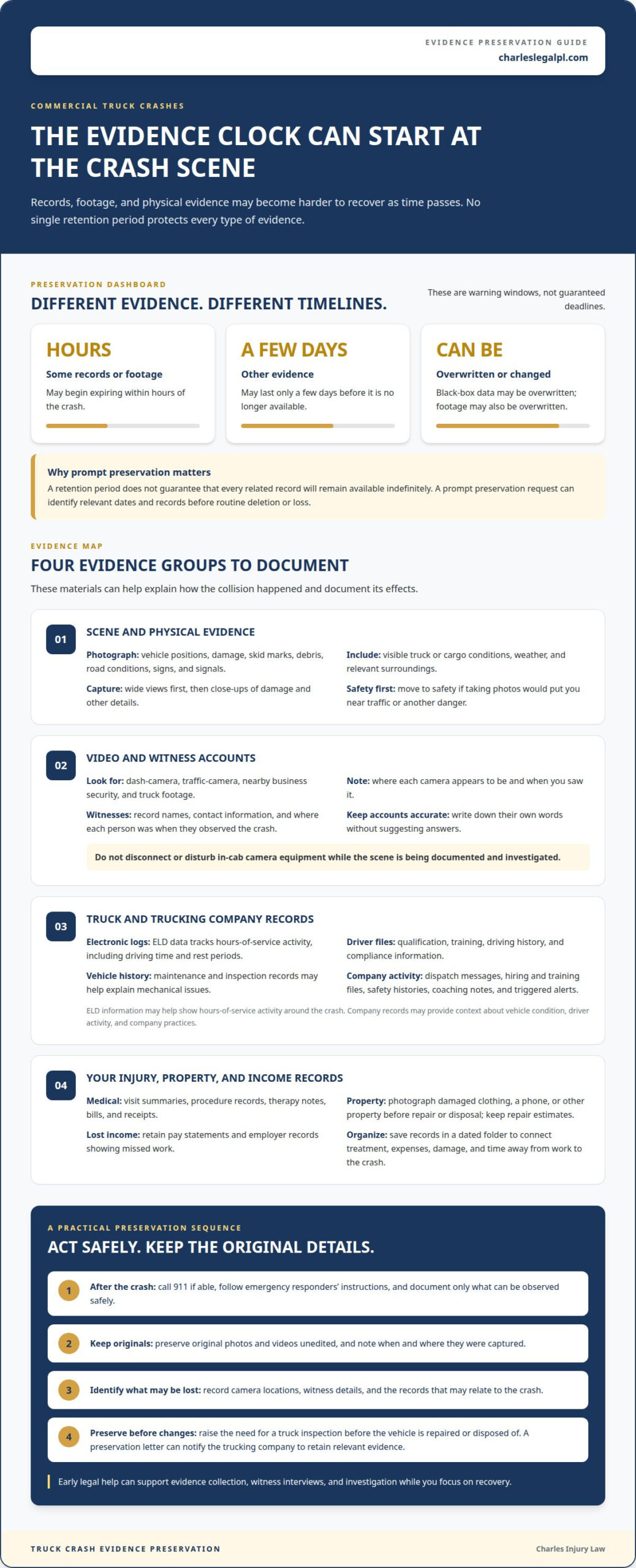
Preserve information that may connect the driver, vehicle, trucking company, and crash. Electronic logs, inspection records, and medical bills can help explain what happened and document injuries.
Trucking Company Records
Trucking company records may reveal safety failures or help explain a crash. Relevant materials include driver qualification files, hours-of-service logs, vehicle maintenance and inspection records, hiring and training files, and safety histories. Dispatch messages may show instructions or deadline pressure. Driver coaching notes and triggered-alert records may show what the company knew and how it responded.
Record Preservation Rules and Deadlines
Record-retention requirements may depend on the type of document and the claim. Florida law governs applicable claim-filing deadlines. Claim deadlines are separate from record-retention periods, and the Florida requirements that apply depend on the claim.
Electronic logging device (ELD) records track a commercial driver’s hours-of-service activity, including driving time and rest periods. ELD data may help show whether a driver violated hours-of-service rules around the crash. A retention period does not guarantee that every related record will remain available indefinitely. A prompt preservation request can identify relevant dates and records before routine deletion or loss.
Driver qualification files may contain training, driving history, and compliance information. Maintenance and inspection records may help show whether brake failures, tire problems, or other mechanical issues relate to the vehicle’s history. Hiring files, prior violations, and safety records can provide context about company practices. Dispatch records and internal communications may reveal whether a driver faced unrealistic deadlines. Coaching notes, triggered alerts, and company responses may show what the fleet knew before or after the crash.
You can preserve your own evidence while company records are being pursued. Save medical visit summaries, procedure records, therapy notes, bills, and receipts in a dated folder. Photograph damaged clothing, a phone, or other property before repair or disposal, and keep repair estimates. To document lost income, retain pay statements and employer records showing missed work. These records can connect treatment, expenses, property damage, and time away from work to the crash.
How Soon After a Truck Accident Should You Call a Lawyer?
Contact a truck accident lawyer as soon as you can after getting medical help. Scene details, video, and witness recollections can become harder to recover over time, and some evidence may start expiring within hours. If you’re physically able, call 911, follow emergency responders’ instructions, and document what you safely can.
At the scene, take wide photographs showing where the vehicles stopped, followed by close-ups of damage, skid marks, debris, road conditions, traffic signs, and any cargo spill. Include visible weather conditions and relevant surroundings. If taking photos would put you near traffic or another danger, move to safety and leave documentation to responders or investigators.
Video can capture details that still photographs miss. Preserve available dash-camera footage, traffic-camera recordings, nearby business security video, and footage from the truck. Note where each camera appears to be and when you saw it, because recordings may be overwritten. Do not disconnect or disturb in-cab camera equipment while the scene is being documented and investigated.
Witness accounts may help establish what each person saw before and after impact. Ask witnesses for their names and contact information, and note where they were standing or driving. Record their own words as accurately as possible without suggesting answers. A witness’s recollection may become harder to recover over time, so prompt identification matters.
Useful scene documentation can include:
- Vehicle positions, damage, and visible truck or cargo conditions.
- Skid marks, debris patterns, road hazards, signs, and signals.
- Witness names and contact details, plus where each person observed the accident.
- Nearby cameras and the locations of businesses or vehicles that may hold footage.
These details give investigators a starting point for comparing accounts with physical evidence. Driver logs, vehicle inspections, and electronic data may add context, but they do not replace a careful record of the scene. Keep original photos and videos unedited, and note when and where you captured them. If someone contacts you about the crash, record who called and what they requested.
Should an attorney or accident reconstruction specialist inspect the truck before it is repaired or disposed of? Yes. An attorney can help arrange an inspection, and reconstruction specialists can analyze physical evidence to assess how the collision occurred. If the truck is moved or repaired first, visible damage and other evidence may change. Raise the need for an inspection promptly, before that happens.
If you need help arranging an early investigation, contact an attorney about the crash scene.
Evidence preservation letters
A preservation letter gives the trucking company and insurer formal notice to retain evidence related to a crash. Send it promptly because footage, electronic data, and physical evidence may be lost or changed.
Preservation Letters to Companies and Insurers
A preservation letter, also called a spoliation letter, identifies the crash and specifies what evidence to keep. A lawyer can send it to the trucking company and insurer, identifying the truck, involved parties, and relevant time period. The request may cover dash-camera footage, electronic data, driver logs, vehicle inspection and maintenance records, cargo information, and physical parts. Specific categories help focus the request on evidence connected to the collision.
The letter creates a written record that the company received notice. It can ask the recipient to suspend routine deletion or alteration of relevant files and preserve them in their original formats. For example, a request can identify truck-camera footage and related event data rather than broadly demanding every company document. A personal injury claim may depend on comparing those records with the crash scene, witness accounts, and medical evidence.
Timing a Legal Hold Letter
Send a legal hold or spoliation letter as soon as possible after the crash, once the trucking company and relevant vehicle are identified. Applicable Florida law governs any deadlines for preserving or addressing relevant evidence. Prompt notice matters because footage and electronic data may be overwritten before ordinary litigation steps begin.
A consultation can help identify recipients and tailor the request to the crash. The letter should state the crash date and location, identify the parties and truck when known, and list evidence categories. It should request preservation of relevant electronic files, documents, and physical items, including vehicle parts that may need inspection. Keep a copy of the letter and proof of delivery.
A preservation request does not replace collecting independent evidence. If a witness recorded the truck or a nearby business has surveillance footage, identify the recording and its custodian promptly. A lawyer can also coordinate an inspection before repairs or disposal change the vehicle’s condition. The letter should distinguish evidence already identified from categories that may need further investigation.
If a recipient destroys or significantly alters relevant evidence after receiving notice, the issue may be raised as spoliation. Depending on the circumstances and applicable Florida law, a court may impose sanctions. Destruction alone does not automatically establish liability for the crash. The item’s importance, when it was lost, and its connection to disputed facts may all matter.
Keep the request focused and factual. A clear letter identifies the incident, the evidence to preserve, and why each category may relate to the claim. This record can help protect an injured person’s ability to investigate responsibility and assess a personal injury case.
Electronic control module and black-box data
A commercial truck’s electronic control module (ECM), often called its black box, can record operational details surrounding a collision. Depending on the system, data may include speed, braking, engine performance, clutch status, and cruise-control activity. These records can help investigators compare the truck’s operation with physical evidence and witness accounts.
ECM data can be vulnerable to loss. Commercial truck onboard computer data may be overwritten within 30 days or sooner, and some systems record information on a last-stop basis. If a truck restarts or moves after impact, stored data may be overwritten. Recording behavior varies by manufacturer, so an inspection should identify the specific system and preserve its data promptly.
That data can help answer focused questions: Did the truck slow before impact? Were the brakes applied? Did engine performance change? An event data recorder may capture speed, steering input, and brake application before a collision. Some systems lock data for a manufacturer-dependent number of seconds after sudden deceleration. A minor stop, sideswipe, or low-impact crash may not trigger a recording.
Electronic evidence extends beyond the ECM. GPS tracking can show the truck’s route, stops, and speed patterns over time. Electronic logging device records can provide context about driving activity, while dispatch communications may help explain the trip’s circumstances. Investigators can compare these sources, but they serve different purposes: GPS reflects movement, logs document duty activity, and ECM data captures vehicle operation.
Dash-camera footage may show the road, driver actions, and events immediately before impact. Fleet cameras may retain footage for less time than ECM data, and routine recording may overwrite earlier clips. Some in-cab systems have notification buttons drivers can use to bookmark footage after a crash, even if a low-inertia impact triggers no alert. Keep camera equipment connected and undisturbed while the scene is documented.
Prompt preservation should identify each data source, the truck, and the relevant period around the crash. A qualified inspection can determine which module or camera systems are installed and how to download their files without changing the evidence. Attorneys can request preservation of the vehicle and its electronic records, then coordinate an inspection before repairs or continued use affect the data.
Reviewing the files requires context, not just a printout. Investigators may compare timestamps, vehicle movement, braking information, road evidence, and available footage. They should document how the data was extracted and retain the original files alongside working copies. If the defense disputes how the crash happened, those records may help test competing accounts. Missing or incomplete data may limit what the electronic evidence can establish.
Time-sensitive preservation of truck crash evidence
After a serious truck crash, evidence can be lost at different rates. Some footage or electronic records may begin expiring within hours, while other evidence may last only a few days. A lawyer can prioritize what needs immediate attention because routine trucking operations may overwrite or change records before a claim is filed.
Start with evidence that may disappear from the scene. Passing vehicles can scatter debris, weather can alter skid marks, and a damaged truck may be moved or repaired. When safe, photograph vehicle positions, visible damage, road conditions, cargo spills, and nearby cameras. Record where each image was taken, and keep the original files intact. A photograph of a shifted load, for example, may capture a condition that later changes.
Video needs prompt attention. Dash cameras and nearby business security systems may retain footage for a limited time before overwriting it. Identify the truck camera and nearby camera locations, and send a preservation request promptly. If a driver can safely use an in-cab notification button, it may bookmark footage, including after a low-inertia crash that did not trigger an alert. Leave camera equipment connected and undisturbed during documentation.
Vehicle data can also be at risk before anyone discusses a lawsuit. Truck electronic data may be overwritten if not downloaded promptly; restarting or moving the vehicle can affect some systems. A lawyer can seek access for an inspection before repairs or continued use change the evidence. If the trucking company plans to move or repair the truck, counsel may seek an emergency court order to preserve it.
Witness information also loses value with time. Someone who saw a truck change lanes or cargo shift may remember the event differently later. A witness’s clear recollection can become difficult to recover six months after a crash. Preserve each witness’s name, contact details, location, and own description of what happened. Don’t coach or pressure anyone; accurate, independent accounts matter.
Medical documentation develops as treatment continues, so keep records together. Save visit summaries, procedure records, therapy notes, bills, and receipts. Dated records can show how symptoms and care progressed after the collision. Preserve damaged property and repair estimates as well; photographs taken before disposal or repair may document its condition.
The practical priority is clear: address evidence that can be overwritten or altered first, then maintain records that build over the course of recovery. If a trucking company controls the truck, footage, or electronic files, contact a lawyer promptly about preserving that evidence.
Personal Injury Attorney in Fort Lauderdale: Injuries suffered from Truck, Semi, and Tractor Trailer Accidents
Personal Injury Attorney in Fort Lauderdale represents people injured in truck, semi, and tractor-trailer accidents. When a trucking company controls vehicle records, camera footage, or black-box data, the firm can pursue prompt preservation requests and investigate the crash. This may matter when repairs or continued use could change evidence related to the collision and your injuries.
A case review can consider the crash timeline, available records, physical evidence, medical documentation, and communications from insurers or trucking companies. The goal is to identify evidence that may support accountability while you focus on treatment and recovery. Learn more about truck accident representation.
To discuss injuries from a truck crash, contact Personal Injury Attorney in Fort Lauderdale. Call Now: (954) 390-2228 Available 24 Hours a Day, 7 Days a Week
Take the Next Step Toward Protecting Your Claim
Preserving evidence after a commercial truck crash can determine which questions remain answerable later. Organize what you already have and identify what still needs attention. A simple timeline of events, treatment, and communications can bring clarity to a stressful process without requiring you to resolve every issue alone.
If you’re unsure what to do with a record, image, or company response, consider getting guidance before making decisions that could affect your claim. A focused review can help clarify which issues deserve attention and what steps may come next. You can discuss your questions with Charles Injury Law and decide how you want to move forward.
Taking one informed step at a time can make the process feel more manageable. Keep your records organized, prioritize your recovery, and seek support when you need it.
Frequently Asked Questions
What Is Spoliation of Evidence in a Trucking Case?
Spoliation is a legal issue that may arise when evidence relevant to a claim is lost or changed. In a Florida case, the court’s assessment depends on the circumstances, including the evidence’s importance and the effect of its loss. If you are evaluating a personal injury firm near me, look for help assessing how missing material relates to disputed facts. Its absence does not automatically prove fault.
What Is a Spoliation Letter and Why Does It Matter?
A spoliation letter can create a clear record of what evidence a party was asked to protect and when notice was given. For example, a letter can identify the trucking company’s records custodian and specify the crash. That detail may help clarify whether a later dispute concerns the requested material. An attorney can also assess how the notice fits the circumstances of the claim.
What Evidence Should Be Preserved After a Commercial Truck Crash?
Beyond the truck’s electronic files, claim documentation can include cargo paperwork, records of post-crash testing, and communications about safety alerts. Keep a separate timeline noting when documents or images were received and from whom. That can help distinguish firsthand material from later summaries. People comparing attorneys personal injury may want to understand how the case team organizes evidence alongside medical and property records. Attorneys for personal injuries may also help assess these issues.
What Electronic Data Is Stored in a Truck’s Event Data Recorder, and How Long Is It Retained?
An event data recorder may capture operational information, but available details depend on the truck’s system and the event that activated it. A collision may not produce a complete recording, so investigators shouldn’t treat a data file as the entire account. Retention also varies by system and use. An injury lawyer near me can help assess what the available data does, and does not, establish.
How Can a Truck’s Electronic Logging Device, GPS, and Dashcam Data Be Preserved?
Preservation should maintain the connection between each file and its source. Record which system supplied the material, the date received, and whether it is an original or a copy. Keep files unedited and store them separately from notes or summaries. A personal injury lawyer near me can help address questions about collection and handling. Lawyers for auto accidents and auto accident lawyers near me may also be relevant after other vehicle collisions.
What Are the Risks and Legal Consequences of Failing to Preserve Truck Crash Evidence?
Evidence loss can complicate an investigation, settlement discussions, or a lawsuit by leaving parties unable to compare an account with the original material. The legal response depends on the case and applicable Florida law; missing evidence is not automatic proof of responsibility. If a record appears to be missing, note what it was, who controlled it, and when you learned of its absence. This information may help an attorney assess the issue.
How Do Florida Evidence Preservation Rules and Deadlines Apply?
Applicable evidence-retention requirements and claim-filing deadlines are governed by Florida law. Spoliation issues depend on the circumstances, including whether the carrier received notice to preserve evidence.
Disclaimer
The information provided on this blog is for general informational purposes only and does not constitute legal advice. Viewing this content does not create an attorney-client relationship with the firm. You should not act or rely on any information contained herein without seeking legal advice from a qualified attorney regarding your individual situation.